Home Blog Page 53

Do Broken or Cracked Solar Cells Still Work?

If you have damaged or broken some of your solar cells or you are trying to build a solar panel on a budget, you may want to consider using broken cells as a part of your panel.

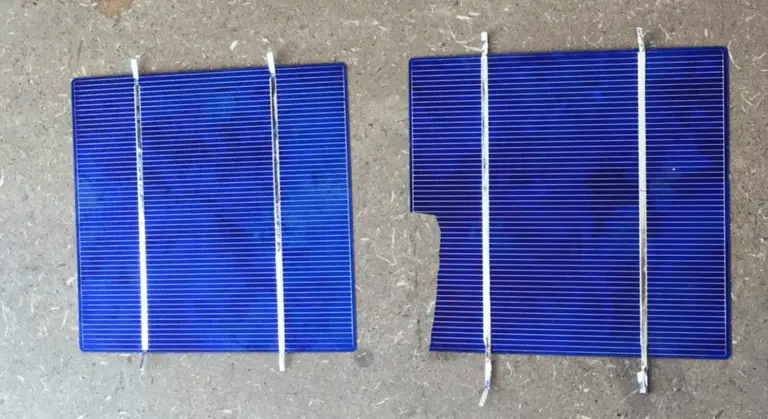
Despite popular belief, although solar cells themselves are extremely fragile and break with the slightest bump or nick, they do still produce the majority of their rated voltage even when they are slightly damaged. The power output of the cell will be affected depending on how much of the cell is damaged although it is not usually more than 10-20% of the cell that is damaged.

As long as the tabs and most of the cell is still in tact, the cell can usually still be used in a panel. Try to take a voltage measurement across the cell tabs with the cells exposed to full sunlight, if the cells are not too badly damaged, they should still produce 85-100% of the rated voltage.

Unfortunately, without the cells connected to a load, it is very difficult to determine how much of the cell’s power has been lost due to the break or crack. It is however ok to assume that the cell’s power output will be reduced by a similar percentage to the area that has been broken off.

The video below demonstrates how a broken cell still produces a comparable voltage to a new cell. The output voltage of both cells is a bit lower than the rated voltage as the measurement was done indoors.

So if the surface area of your solar panel is not a major consideration and you have cheap access to a number of broken solar cells then it may be worth your while to build your next solar panel using broken solar cells.

Have you used broken solar cells to build a solar panel? Let us know your tips and tricks in the comments section below.

How to Split a Solar Cell into Two, Increase Panel Voltage

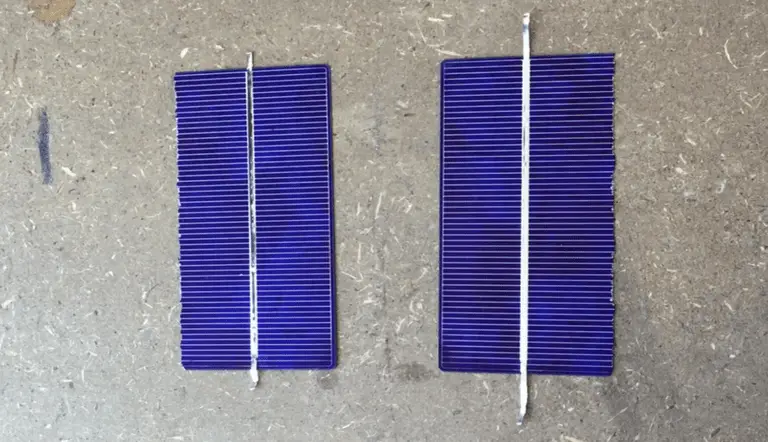
When you need to boost the voltage output of your homemade solar panel and you do not want to buy a voltage regulator, you could split your solar cells into two. With two halves of a 0.5V cell, you can connect them in series and get a voltage output of 1V. All that happens is your power output from the original cell is divided in two as well, so you will be left with two 0.5V 2W cells from one original 0.5V 4W cell.

Solar cells are not damaged by cutting them in half. As long as you retain the full tabs on the front and back of the cell, the divided cells with still produce the full voltage. This means that a solar cell can only be divided along lines parallel to the tab lines and can only be divided by the number of tabs. For example, if you have a double tabbed cell, you can split it into two while if you have a triple tabbed cell, you can split it into three smaller cells.

Anyone who has worked with solar cells knows that they are extremely fragile, even a small bump or nick can cause them to break in half. So you need to be extremely careful when cutting a solar cell into two. If you do land up breaking a solar cell, don’t throw it out, you can still use broken solar cells to build a solar panel.

What You Will Need To Split A Solar Cell

  • A Solar Cell
  • A Ruler
  • A Sharp Craft Knife

How To Split A Solar Cell Into Two

To cut the cell, place the cell face down on a clean an flat surface. Place the ruler down the centre line along where you wish to split the cell. Now repeatedly run the craft knife lightly along the edge of the ruler. Do not apply too much pressure or the cell will crack. Do this until you feel parts of the cell splitting underneath the knife (the knife movement will become slightly jerky). Lift the ruler and break the cell in half along the line.

The video below shows how to do it in detail as well as the voltage measurements:

Have you tried splitting a solar cell? Let us know your tips and tricks for cutting solar cells in the comments section below.

How to Build a Solar Panel From Scratch

Commercially built solar panels are still quite expensive however they don’t need to be. Solar cells are available from a range of suppliers all over the world and can be easily assembled into your own custom built solar panel.

Cell Voltages

The nice thing about building your own solar panel is that you can make it to suite your needs. Solar cells are typically available in 0.5V and a range of power outputs. They can be arranged in series to get any output voltage you require in multiples of 0.5V. If you are looking to charge a 12V deep cycle battery for an off grid application then you need an 18V panel which will consist of 36 cells in series (36 x 0.5V = 18V output). You need 18V so that even when the panel is not in full sun it is able to charge the battery.

In order to reduce the number of cells you need, you could try splitting your solar cells to get a higher voltage out of each cell.

solar cells
0.5V Solar Cells

Solar Panel Power Output

The second consideration is the power output you require. To calculate how many solar cells you need, divide the total power you need by the power of each cell. For example, if you need a 200W panel and you are using 4W cells then you need 200W / 4W = 50 cells. It is important to note that the power output is not related to whether the cells are connected in series or parallel. You can read this article on sizing your solar panel system correctly for your home for help estimating your home’s power consumption. There is also a spreadsheet available to assist you with the household power consumption calculations.

Solar Panel Frame

Lastly you need a frame for your solar cells. Solar cells are extremely fragile and need to be protected, usually with a perspex sheet or glass. Additionally you need to protect the back of the cells although this sheet does not have to be clear and can be made from wood, plywood, glass or plastic. You will also need to make a frame which attached to the backing for mounting the panel.

How To Assemble The Panel

In this guide, we will make a small 36W panel although the methodology to create a larger 200W or 300W panel is the same.

What You Will Need For One Panel

  • 9 Solar Cells (0.5V 4W) – Buy Here
  • 2 Sheets of 3mm Safety/Shatterproof Glass 0.5m x 0.6m (20″ x 24″) – Buy Here
  • Silicon Sealant – Buy Here
  • Solar Bus Wire – Buy Here
  • Solar Tabbing Wire – Buy Here
  • Flux Pen / Solar Pen – Buy Here
  • Soldering Iron – Buy Here – Buy Here

How To Build Your Panel

First you need to start by planning your panel layout. This is usually done according to the space you have available for the panel, you may be restricted by length or width of the panel and you can adjust the other dimensions to suite. For the 9 solar cells, a sheet of glass 0.5m x 6m (20″ x 24″) was used and the cells were laid out as shown below:

Solar Cells Layout

The next step and possibly the most time consuming step to building your panel is tabbing your solar cells. You can buy pre-tabbed cells and this is recommended if you are not familiar with using a soldering iron although most solar cell suppliers will supply you with un-tabbed cells. It is not complicated once you have the correct technique but you may need to practice on one or two cells first as the tabbing wire is not easy to remove.

Cut the tabbing wire to a little (1cm / 1/2″) over the length of one cell for the end tabs and double the length of each cell for the interconnecting tabs. Now begin soldering the tabbing wire to the solar cell. First draw a line with the flux pen down the length of the silver tab lines. Line the tabbing wire over the tab lines and then run the hot soldering iron down the length of the tab. Do not leave the soldering iron in one area for too long as it will overheat and damage the cell. There is no need to add solder to the wire as tabbing wire comes pre-soldered.

tabbing close up

Here is a video guide to soldering the tabs onto your solar cells:

Once you have tabbed all of you cells, you need to connect them together. The front of each cell is negative and the back of the cell positive. These need to be connected like batteries in series to form a string of cells back to front. Solder the tabbing wires from the back of one cell to the front of the adjacent cell until you have completed each line. You then use the bus wire to connect the lines. The end layout should look like the diagram below:

Solar & Bus Layout

Remember when connecting the lines that they too need to be connected positive to negative so the adjacent lines should run in opposite directions.

tabbed solar cells

When you are done connecting your lines together, you should have one positive bus and one negative bus which will be your solar panel outputs. These can be terminated in a special solar panel box or soldered directly onto wires for smaller panels.

bus layout

Once your bus wires are completed, you can add the protective glass or perspex cover over your solar cells. Run a continuous bead of silicon around the perimeter of the backing board and then carefully lower the glass onto the backing board over the cells. The silicon should form a continuous seal around the edges of the panel and the cells will now be protected.

silicon bead around edges

Clamp the glass and the backing board together (in this case the backing board is a glass sheet as well) and allow the silicon to cure overnight.

clamped glass

Mount the terminal box on the backing board and solder your outgoing bus terminals to the terminal strip. The box can be mounted with screws on a wood backing board or can be attached with silicon as well if a glass backing board is used.

solar panel terminal box

Lastly attached any mounting bracket you require to the back board and your solar panel is completed.

Connect it up to a solar charge controller to charge batteries or connect it directly to your DC load. If you are powering an AC load then you will need to connect a power inverter, read this guide on selecting a power inverter.

Read our full guide on switching to solar power for more information on designing a solar power system.

7 Tips to Reduce Home Allergies

Do you suffer from sneezing, couching, itchy skin or eyes, trouble breathing or rashes? If you have experienced one or more of these symptoms, it could be due to an allergic reaction. Allergies plague a large portion of adults and children and since there is no cure for it, prevention is the key to living happily and healthily. Your home may be harbouring a large number of allergens and allergy triggers, including those you can’t see. So follow this guide, reduce your home allergies and start living a healthier life.

Minimise Clutter

cluttered home

Cluttered desks, shelves, tables and other items of furniture are a breeding ground for insects, rodents and bacteria. Cluttered surfaces are seldom cleaned and gather thick layers of dust. Go on a home de-cluttering spree and get rid of all of the unwanted papers, magazines, book and decor. You’ll soon find that living a minimalist life is cleaner and leaves you feeling healthier.

Wash Linen & Air Your Bed

bedding

Be sure to wash your bed linen at least once a month in hot water. Water that is 65C (150F) hot kills bed bugs and dust mites. Don’t forget about washing your curtains, comforters and rugs at least once every six months as well. Another popular tip is to leave your bed unmade with the windows open once a week to allow the sunlight to dry it out completely, killing the dust mites and bacteria. If you cannot open your bed up to the sun, vacuum the mattress regularly with a HEPA filter vacuum cleaner.

Go Green With Cleaning

While mopping and dusting go a long way to reducing allergies, consider going green on the products you use for cleaning. Make your own cleaning products with baking soda or buy products which are allergy tested or natural and eco-friendly.

Get An Air Purifier For Allergies

air purifier

If you don’t have a central air purification system, buy a stand alone room air purifier. The best ones are able to remove airborne allergens, kill viruses and bacteria and also capture dangerous VOC’s and other gases. Place one in your bedroom and main living spaces for the best results.

Ditch The Carpets

While carpets are warm and cozy for winter, the are the perfect breeding ground for millions of nasty things and they are difficult to clean. Vacuuming only removes dust and dirt from the surface of the carpet and doesn’t get anywhere near the base layers. Rather install laminate wood flooring, tiles or concrete which can be easily cleaned.

Keep Your Pets Clean

Every household needs a pet, however, a large portion of allergies are cause by our furry friends. Train your pet to sleep in his or her own bed and shampoo or groom them regularly to keep them clean and free from loose hair and dander.

Open the Windows & Doors

open window

Opening the windows (not in allergy season) to allow a breeze to flow through your home removes toxins and dust from your home.

How do you deal with allergies in your home? Let us know your tips and tricks in the comments section below.

Use Old Coffee Grounds in the Garden

Next time your make a pot of coffee, think twice before throwing out the used coffee grounds. They are rich in minerals such as nitrogen and potassium which are critical for plant growth and improve the quality of the soil. Here are some uses for your spent coffee grounds.

garden-soil

Composting

Mix your them into your compost bin, they are a naturally high source of nitrogen, which is a natural fertilizer, try making a liquid fertilizer as mentioned below before throwing them into the compost.

Pest Control

Snails, slugs and some insects don’t like the smell or taste of them. Sprinkling a bit of coffee around the stems of plants will help deter pests.

Fertilizer

As mentioned with composting, they are a great natural source of nitrogen. Additionally, they increase the acidity of the soil which is beneficial for roses, gardenias, holly etc. You can also make an easy liquid fertilizer by mixing them with water and allowing it to brew overnight to draw out the remaining nutrients. Strain out the coffee grounds and you have a great liquid fertilizer. You can then throw the further spent grounds into the compost pile.

Coffee Grounds As Mulch

Use them as mulch to prevent and control weed growth as well as lock moisture into the soil during the heat of the day. Although you probably won’t be able to mulch your own garden with your spent coffee grounds (unless you drink A LOT of coffee), you could always go down to your local coffee shop and ask for theirs. They have no use for them and will usually be happy to get rid of them.

If you are a avid coffee drinker, why not build a coffee station in your home? Do you have any other uses for your used coffee grounds? Let us know in the comments section below.

Share This Guide

Amazing benefits Of Using Old Coffee Grounds In The Garden

Make Your Own Fabric Softener

Save money by making your own fabric softener easily at home using only three ingredients. This recipe leaves your clothes smelling and feeling great!

What You Will Need To Make Your Own Fabric Softener

  • 3 Cups of White Spirit Vinegar
  • 2 Cups of Hair Conditioner
  • 5 Cups of Hot Water
  • Fabric Softener Container

How To Make Your Own Fabric Softener

Making the fabric softener is actually really easy. When choosing your hair conditioner, get the cheapest and most basic one you can. There are often large containers of conditioner available at dollar stores or discount wholesalers, these are perfect for this recipes.

The first step is to dissolve the conditioner in the hot water, mix the two together in a large bowl and stir until the conditioner is dissolved entirely, do this step with a spoon or whisk and stir it slowly to avoid foaming the mixture. Now add the vinegar and again stir or mix with an electric mixer until the mixture is smooth and consistent, the mixture should still be quite thick and have the consistency of fabric softener. If it is too thick then add a bit more hot water, if it is too thin, add a bit more conditioner.

fabric softener in spoon

Your homemade fabric softener is now complete, just use two tablespoons in your washing machine softener tray for a large load and one tablespoon for a smaller load.

The fabric fragrance comes from the conditioner so try out a range of different fragrances and types of conditioners to find one you like.

If you enjoyed this recipe, you may also enjoy making your own natural cleaning wipes, they’re cheap to make and chemical free.

Have you tried making this recipe or do you have any other recipes for homemade cleaning products which you love? Let us know in the comments section below. We love these alternate uses for baking soda around the house.

Share This Guide

Make Your Own Fabric Softener Easily At Home

Easy Oatmeal Crunchies, Quick To Bake

A crunchie is the perfect side for the mornings hot cup of coffee or afternoon tea. This easy recipe makes about 20 of the tastiest crunchies without a huge amount of effort and you’ll be done in half an hour.

Makes About 20 Crunchies, Prep Time 12 Minutes, Cooking Time 15-20 Minutes

  • 200g Salted Butter
  • 2 Cups of Raw Oats
  • 1 Cup of Flour
  • 1 Cup of Shredded Coconut
  • 1 Cup of Sugar
  • 1 Tbsp Syrup
  • 1 Tsp Baking Soda

How To Make The Oatmeal Crunchies

Melt the butter in the microwave taking care not to burn it. Once the butter is fully melted, stir in the syrup. In a separate bowl, mix all of the dry ingredients together thoroughly. Add the melted butter mixture and mix until well combined. Press the  mixture out into a greased or lined flat baking tray. Bake in a preheated oven at 160°C (320°F) for 15-20 minutes until golden brown. Check them regularly in the last five minutes as the edges burn quickly.

If you have a thermofan oven, place the baking sheet on one of the lower racks in the oven and shorten the cooking time by two or three minutes otherwise they will burn on the edges.

Remove the sheet from the oven and cut them out before they cool, the crunchies will crisp up on cooling making them difficult to cut without breaking. Cut them into small squares about 50-70mm (2-3″) wide by cutting a few rows in each direction with a sharp kitchen knife. Be careful not to touch the pan when it is hot, use a tea towel or oven glove as required.

pre cooked oatmeal crunchies

Have you tried this recipe or do you have any suggestions for ingredients to add to your favorite crunchies recipe? Lot of people enjoy raisins or nuts such as almonds, walnuts and pecans. Let us know your favorite additions in the comments section below.

Start Collecting Rainwater

Rainwater collection is a simple and relatively inexpensive way to make the most of your properties natural resources. Rainwater collection may sound complicated and expensive but in actual fact, if you have a house with a roof and gutter system then you have already accomplished a major step in harvesting your own rainwater.

Houses with a gutter system generally divert the water to one location on each side of the roof. These are the points at which you will be placing a barrel to collect the diverted rainwater. If you are on a tight budget then start with the larger side of the roof first.

rainwater collection in use

Choosing a barrel is quite simple, to start you need about a 200-500 litre (55-130 gallon) barrel or drum. The barrel needs to have an external pipe and valve so that you can connect a hose in order to water your garden or decant water into a bucket for use around the house. It also needs to have a hole in the top or the lid into which the gutter down-pipe can be channeled in order to fill the barrel.

When considering the location for your collection barrel, firstly look at which portion of your roof will provide the most collected water (if you cannot collect from the whole roof), look for the largest area of the roof which is channeled to a single down-pipe. Secondly look at the height of the barrel, you want the barrel to be as high as possible relative to your garden where the water will be used. The higher the barrel the higher the water pressure will be at the hose outlet. You could build a frame or stand on which to mount the barrel so that it is higher up off the ground and closer to the roof.

rainwater collection modification

Now you need to install the barrel. Remember that a full barrel of water is quite heavy and therefore the surface on which it is sitting needs to be sturdy. Use pavers or gravel to create a level surface. Place the barrel next to the down-pipe and mark off on the down-pipe where the diverter will need to be installed. Install the diverter on the down-pipe and place the outlet into the top of the barrel.

Your rainwater collection barrel is now complete and ready for your first rainfall. Remember that while rain water is generally quite pure, the roof and gutter system contaminates the water as it is collected, the stagnant water in the barrel is also a breeding ground for algae and small bacteria so you should never drink your harvested rainwater without suitable processing first. A water purification system can be bought online which processes and filters collected rainwater in order to make it safe to drink.

rainwater barrel

Do you have a rainwater collection setup? Let us know how it works for you in the comments section below.

Laundry Sign for Lost Socks

Anyone who has done laundry in their life knows that with every load, one or two single socks seem to escape to some sort of sock island for a get together. The monthly loads of laundry always result in a collection of sock singles. How about making a board to pin up the sock singles in the laundry in case their friends come looking for them again? This is a really easy project and can be customised to suite what you have available, there are a few different ideas at the end.

What You Will Need To Build A Socks Laundry Sign

  • A Sheet of Wood (Plywood works well around the size of an A3 page)
  • Paint (For the background)
  • Lettering (Either stickers, cutouts or stenciling)
  • Some Clothes Pegs (5-10 depending on the board size)
  • Small Wood Screws (The name number as clothes pegs)

How To Build Your Socks Laundry Sign

Start out by painting your board with the background colour, this colour should work well with your lettering so that it stands out. Try a dark background with light lettering or light lettering with a dark background.

paint board

When the paint has dried, you can stick on the lettering. Stick the lettering to the top two thirds of the board so that there is space for a line of pegs to be screwed onto the board below them. You can also modge podge lettering onto the board or use a stencil and paint the lettering on.

screws in pegs

Finally, you can screw the pegs onto the board. Drill a small hole through each peg and then screw through them and into the board to secure them. If you are not comfortable with using a drill or screw driver, you could also use double sided tape or a glue gun although screws will be the most robust.

sock board option 2

Your pin up sign is now ready to be hung up in your laundry. Hang it up using a screw in picture hanger, a string tied across the back, screw it into the wall or again use double sided tape and tape it to the wall. All of your single socks can now be pinned up to wait for their better halves to be found. Here’s a guide to hanging pictures.

Here are some more ideas:

This article was adapted from: 100 Things to Do

Get Rid of Unwanted Wall Anchors, An Easy Trick To Hide Them

A common problem encountered when remodeling is removing the wall anchors used for mounting shelves, racks and accessories. If they can’t be covered with new accessories then you either need to pull them out (which has its own complications) or hide them. Fortunately there is an easy way to hide them so that they are virtually invisible.

What You Will Need To Hide Your Unused Wall Anchors

  • Hammer
  • Philips Screwdriver
  • Crack Filler or Drywall Compound
  • Sandpaper – 180 Grit

Hiding Your Unused Wall Anchors

Once you have removed the screw from the wall anchor, you’re left with the plastic or metal anchor stuck beneath the surface of the wall. Before you try to cover it up, its worth trying to grab it with a long nosed pliers first to try to pull it out. If it is stuck or there’s no easy way to grab it then you’ll need to cover it up.

First you will need to sink the head of the wall anchor below the surface of the wall. To do this, seat the tip of the screwdriver over the centre of the wall anchor. Now hammer the screwdriver lightly so that the anchor is pushed deeper into the wall. Eventually you want the top of the anchor to be about 2mm (1/8″) below the surface of the wall. Be careful not to hammer too hard as the drywall may dent or crack which will require a repair. Follow this link if you do need to repair your drywall.

Once the anchor is sunk, you can patch the hole over the anchor with crack filler or drywall compound, wait for it to dry and then sand it flush. Paint over it with your new paint (or a bit of the old paint if you are not changing colours) and your unsightly wall anchor have been hidden, its that easy.

Do you have any tips and tricks for removing or hiding wall anchors? Let us know in the comments section below.