

Home Blog Page 27

Make A Mosaic Mirror Picture Frame

Making your own mosaic mirror picture frame is a great way to add a customised and inexpensive feature to a bare wall in your home. By making your own, you have full control over the size, how many pictures you want to include and the colour of the grout and frame to match or compliment existing decor. This is a great weekend project as you’ll need to allow time for the tile cement and grout to set between working on it.

Make sure that you wear proper protective gloves and eyewear when working with and cutting the mirror sections. Glass edges and shards can be extremely sharp and cause sever cuts and permanent damage to your eyes.

What You’ll Need To Make Your Mosaic Mirror Picture Frame

  • Large Wood Backboard – Cut to Size or a Standard Size
  • Picture Hanging Kit – For Heavy Frames
  • Large Center Mirror – Cut to Size or Standard
  • Smaller Pieces of Mirror – Mirror Mosaic Kit or a Large Piece and Glass Cutting Tool
  • Good Quality Picture Prints – 8 to 12 Work Well
  • Clear Glass For Pictures, Cut To Picture Size
  • Wood Trim For Frame – Length to Fit around Backboard
  • Wood Mitre Saw
  • Wood Glue
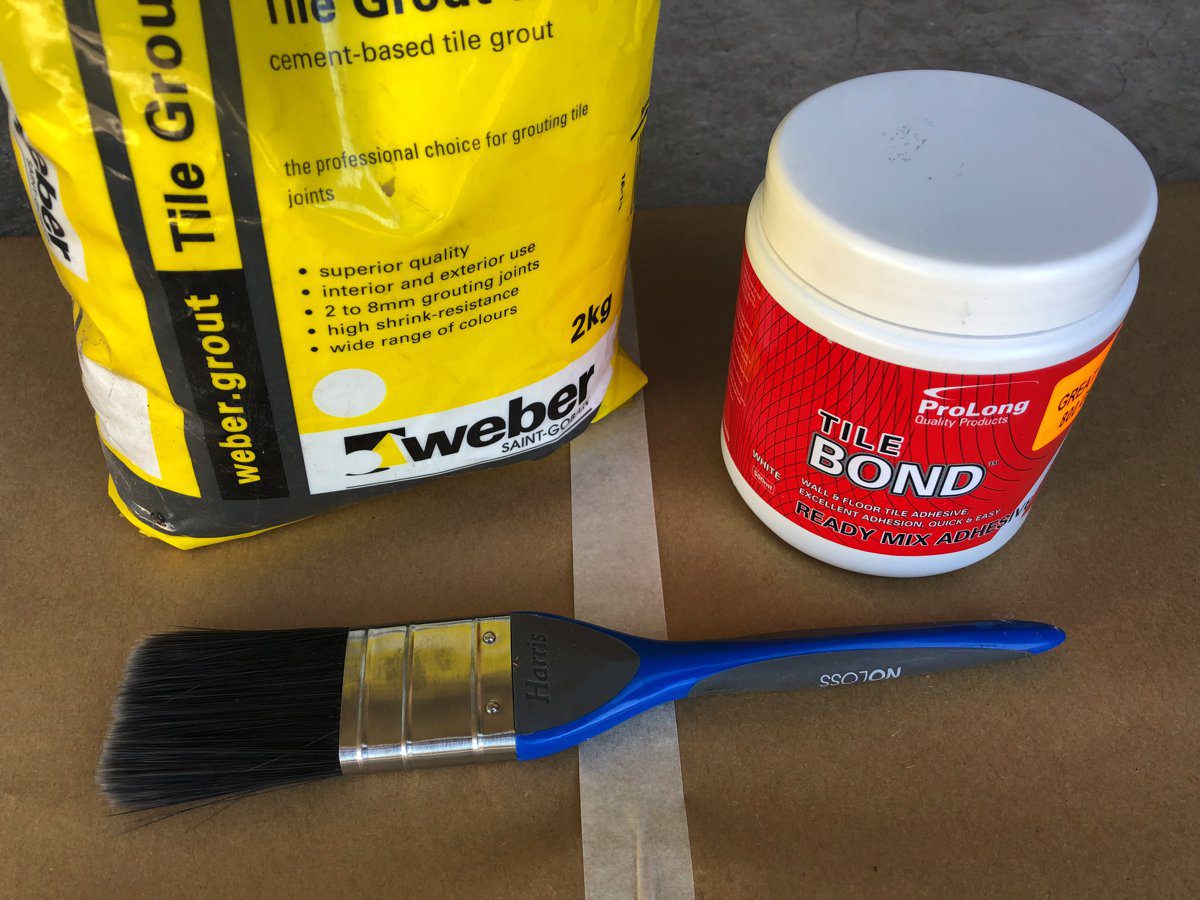
  • Premix Flexible Tile Cement or Mirror Adhesive
  • White Tile Grout – Or Colour to Suit your Decor
  • White or Coloured Paint For Frame
  • Grout Sponge
  • Paint Brush

What you need to build a mosaic mirror picture frame

How To Make Your Picture Frame

Depending on what your local hardware store stocks and the services they offer, this project can be really easy to assemble or be a little more involved.

You’ll need a sturdy wooden backboard which is larger than your centre mirror, about 10-20cm (4-8″) around the edges works well. You may get lucky and find a standard size board and mirror which pair well together or you may need to ask your hardware store to cut the mirror or board to size or you may need to cut either yourself.

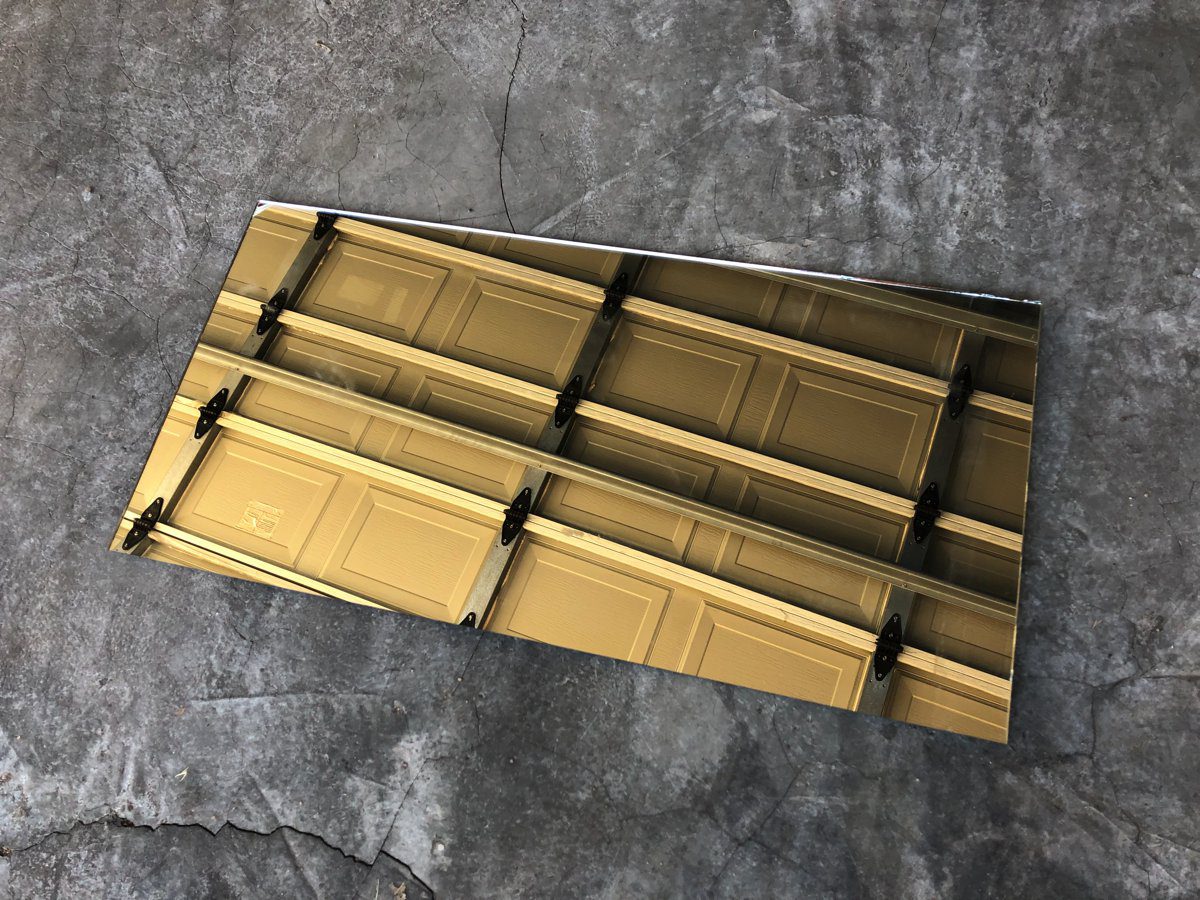
large centre mirror

Once you’ve got the board and mirror together, you’ll need the mirror mosaic pieces. Some hardware stores sell mosaic mirror pieces in kits for crafts, theses are great if you’re not comfortable with using a glass cutter to cut a larger piece of mirror into smaller pieces. They are also usually safer to work with as they don’t have sharp edges.

If you can’t find a mosaic kit then buy a regular sized mirror with enough surface area (and a little more) to fill in the gaps between your centre mirror and the edge of the board. Use a glass cutter to cut/break this mirror up into smaller pieces to make a mosaic around the outside of your centre mirror. Although this takes a lot more time, it also gives you the flexibility to cut pieces to the exact size you need and tailor your mosaic to fit around your photos.

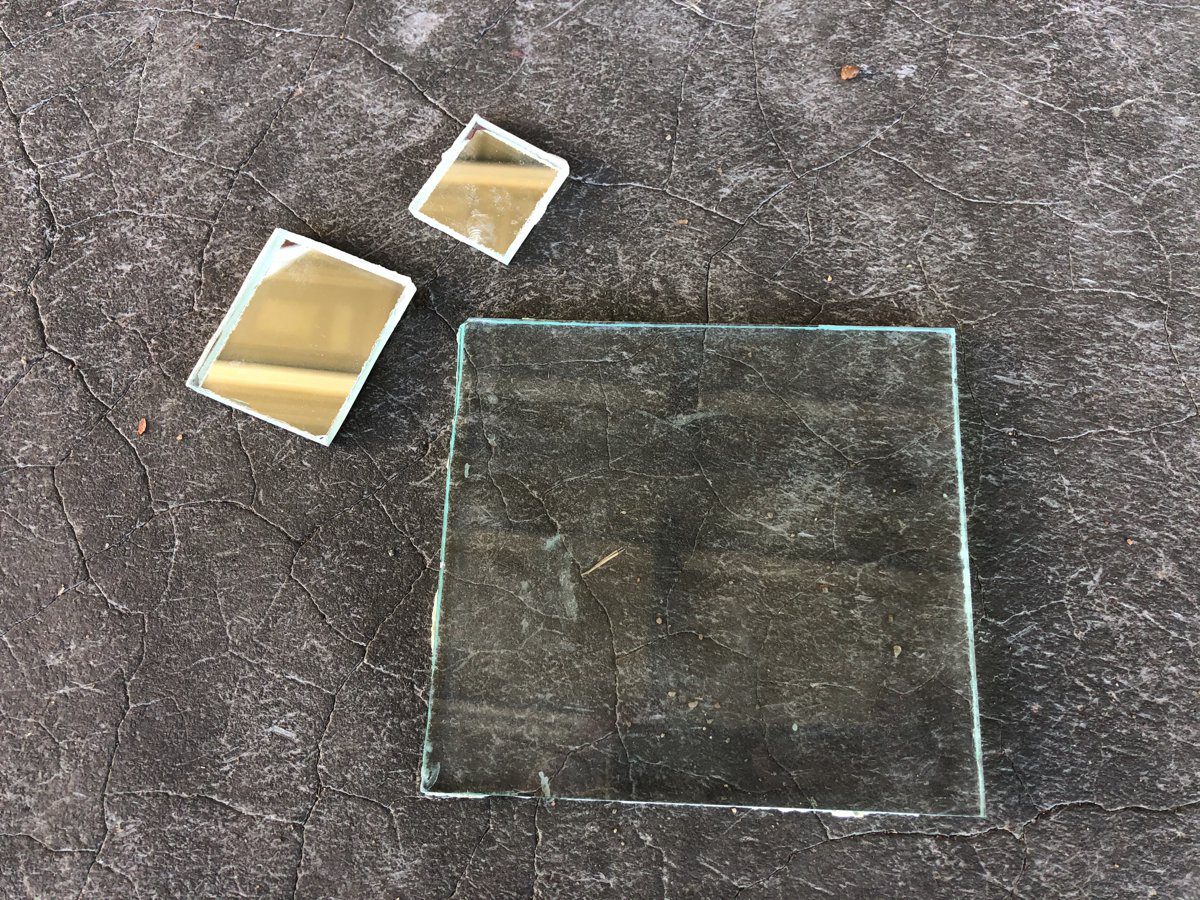
mirror and glass pieces

Next you’ll need to cut your glass, or get your hardware store to cut your glass to the size of your pictures. The glass should be cut to the exact dimensions of your pictures.

Finally, you’ll need to cut your wooden trim to size to build a frame around your larger baseboard. Use a mitre saw to cut 45 degree cuts with the inside edge, the edge to be stuck to the baseboard, cut to the dimensions of your baseboard. Lay out your frame after each cut to make sure that you are cutting the correct orientation and length.

Once you’ve got your materials together, its time to start assembling your frame. Start by using your flexible tile cement to glue your large centre mirror into the centre of your backboard. Make sure that the mirror is straight and that there is an equal amount of space on the opposite sides of the mirror.

lay out your pictures and mirror

Now you can start laying out and gluing your mosaic. Start by placing your pictures around your centre mirror. Secure the pictures to the back of the glass with a small piece of tape along the top and bottom edges. Then use a drop or two of wood glue on the back of the picture to glue the picture to the backboard. The pictures don’t need to be really well stuck down as the grout around the edges of the glass will further help to hold them in place. Make sure you leave a small and consistent gap around all of your pictures and mosaic pieces to grout.

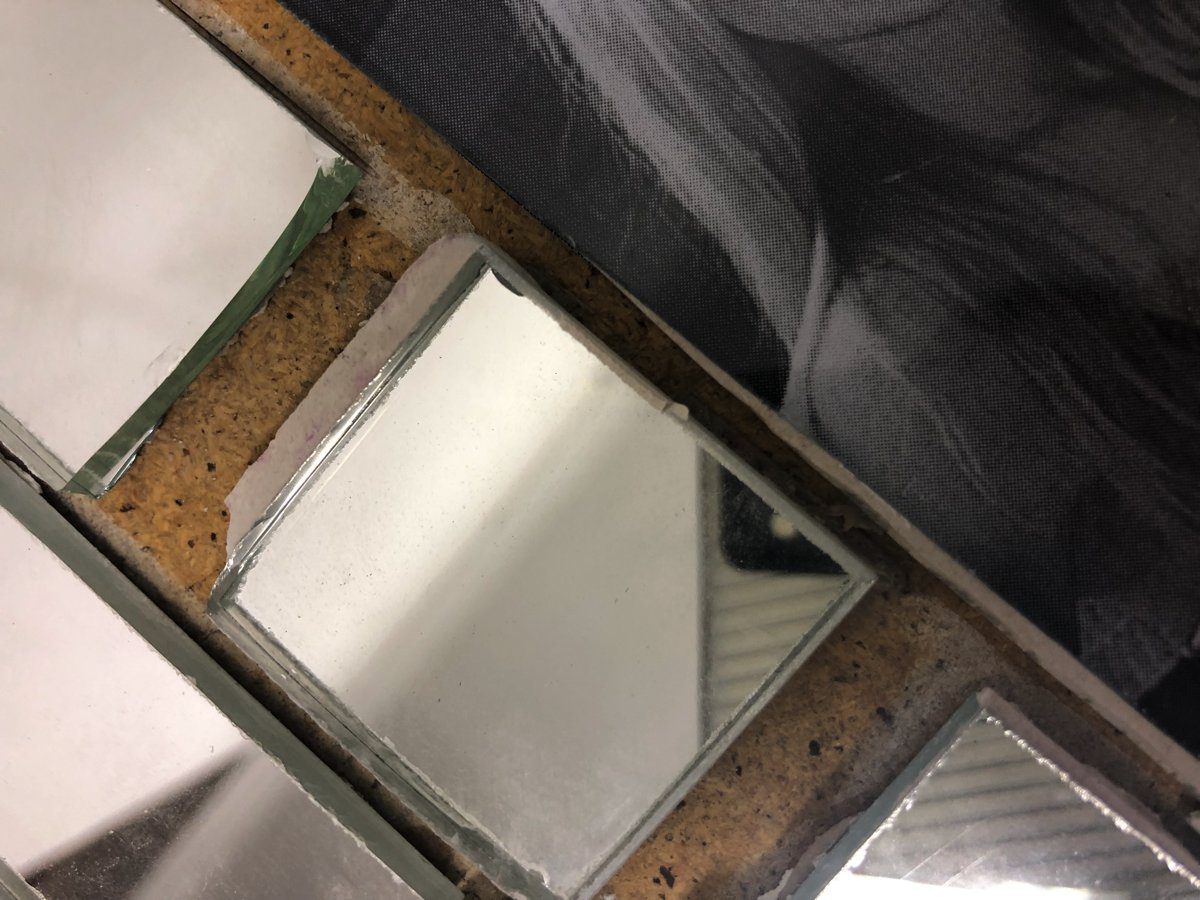
position your mosaic pieces

Allow a half hour or so for the glue to dry and then start positioning (and cutting if you’re not using a kit) your mosaic pieces. Lay out a small section of around ten to fifteen pieces to make sure you’re happy with the spacing and then glue them into place with the tile adhesive. Try and work from one corner or edge across to the opposite edge.

Once your mosaics have been glued into place, allow the adhesive to set according to the manufacturers recommendations.

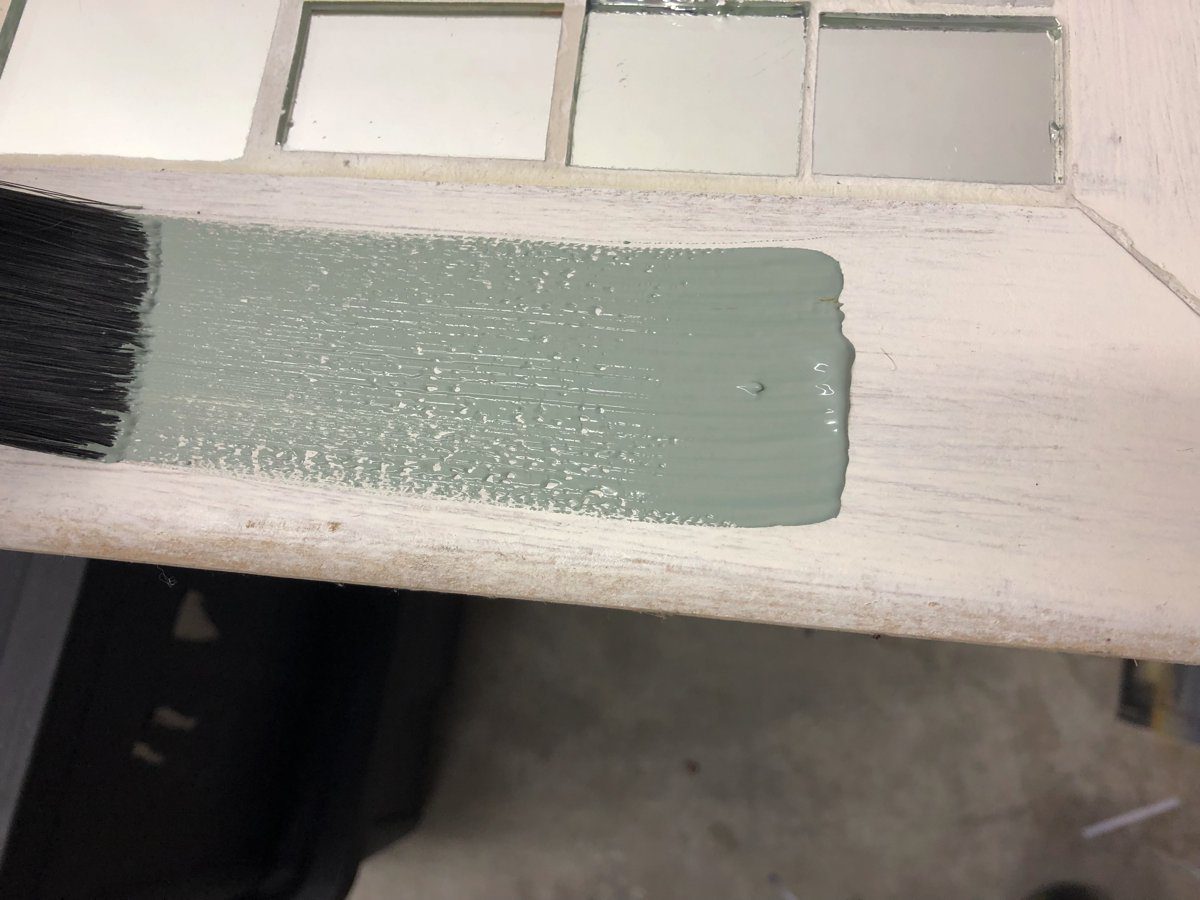
When the glue has set, you can start assembling your wooden trim around the backboard to build a frame. Glue the trim along the edges and corners, making sure that the top of the trim is flush with the top of the mosaic pieces – all on one level. I used some old wooden trim which had been whitewashed and then painted a colour over it with chalk paint. Have a look at this guide on making your own chalk paint.

Its probably best to leave the frame overnight at this stage so that the frame glue and tile adhesive has enough time to set properly.

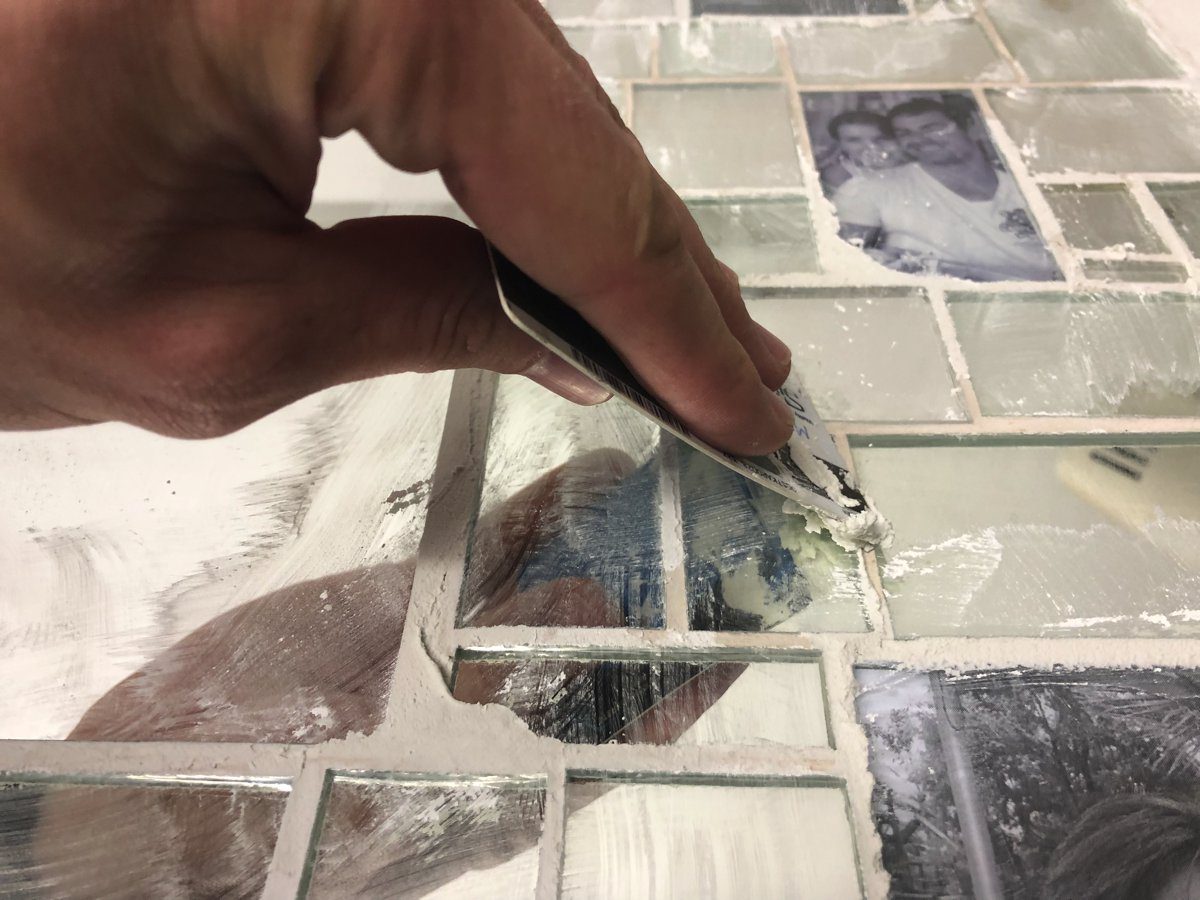
apply your tile grout

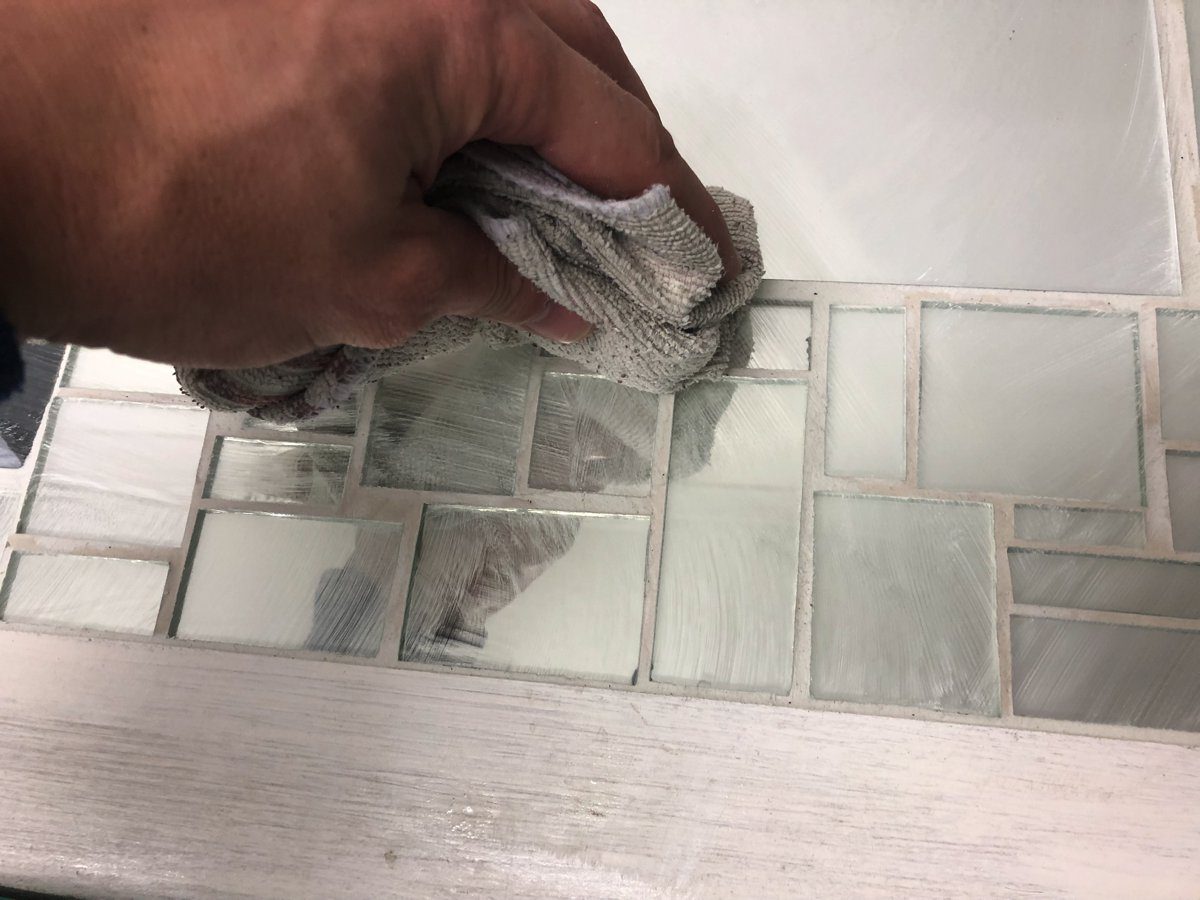
The next day, mix up a batch of tile grout and use a grout sponge, old credit card,  rubber scraper or cloth to grout the gaps between the mosaic pieces and pictures. Follow the grout directions on your packaging to ensure that the consistency and application procedure is correct. You usually have to use an applicator to push the grout into the gap, then wait a half hour or so for the grout to set and then use a wet cloth to wipe the excess grout away.

wipe away the excess grout

Try not to add too much grout around the pictures, this allows you to change the pictures in the future by gently chipping the grout away and pulling the glass out. You could also try make a slot in the backboard to allow you to swap out the pictures quickly and easily but this is quite a bit more involved.

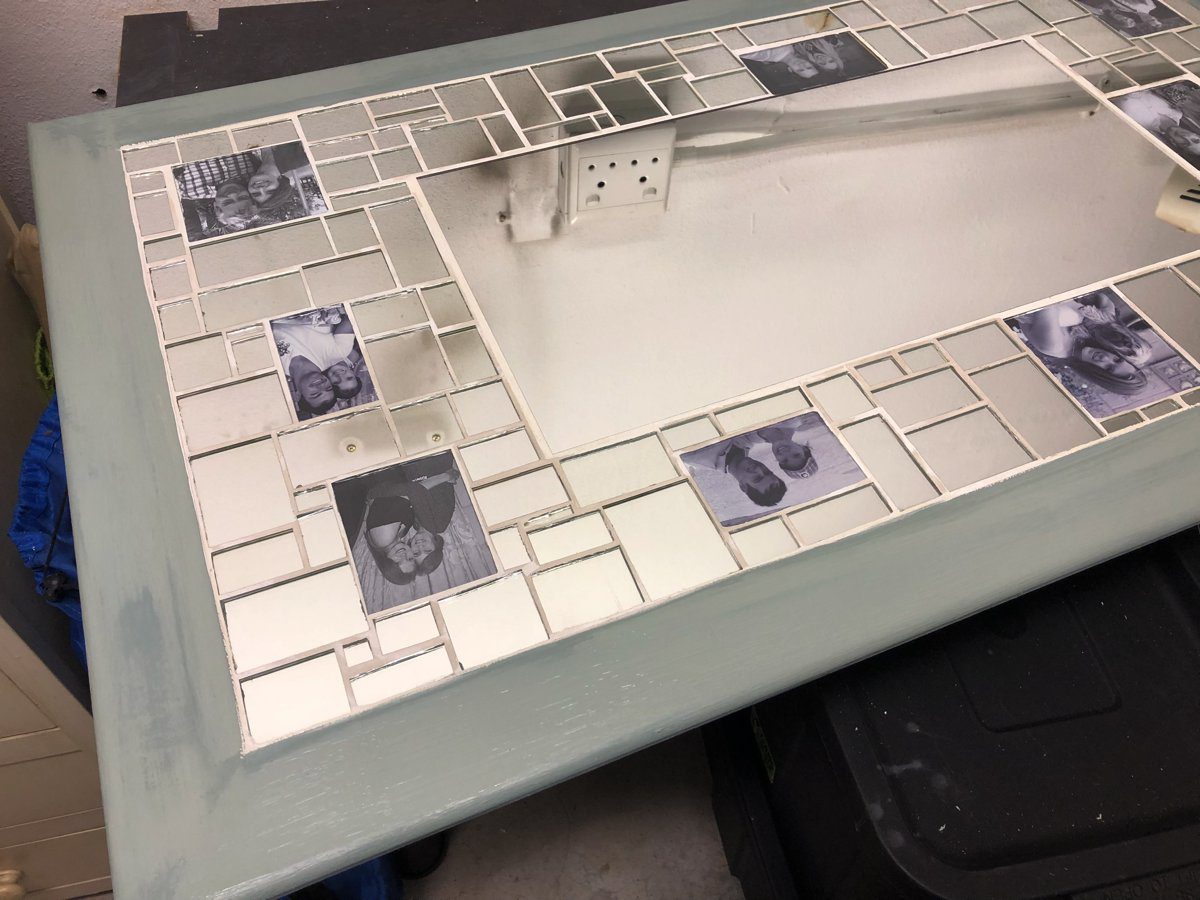
paint your frame

Now you can paint your frame and then add your picture hanging kit to the back of the backboard.

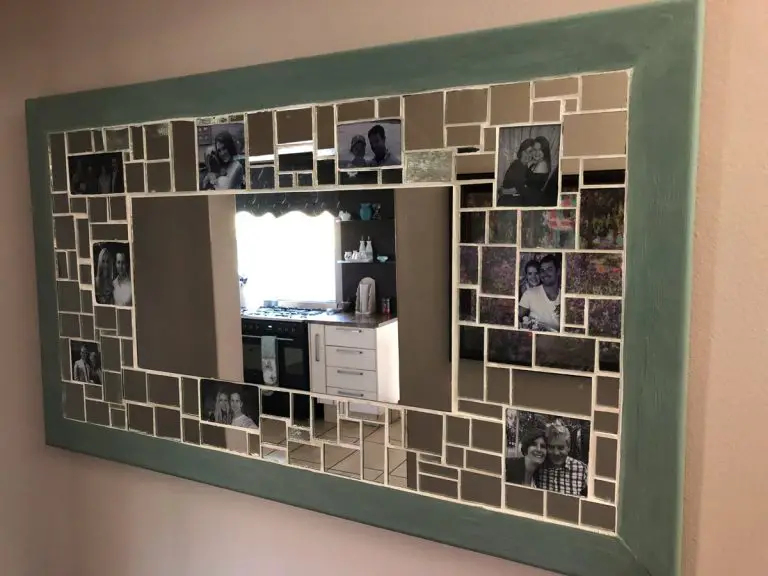
the painted mosaic mirror picture frame

Allow the paint and grout to dry completely. Lastly, hang your new mosaic mirror picture frame on your wall.

Clean Your Silver Cutlery Easily Without Any Polish, Scrubing Or Rubbing

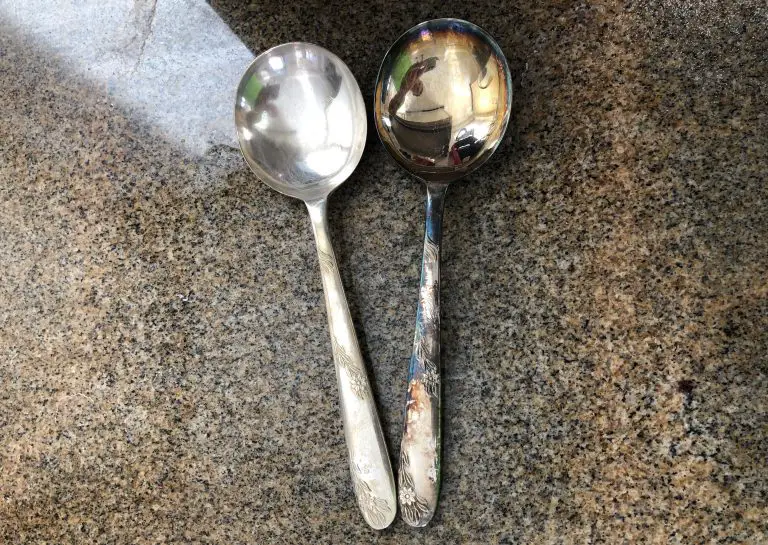
For those of you with silver cutlery, you probably know the frustration involved in getting it all clean if its been unused for any period of time. It can be really time consuming to sit and polish each and every piece from top to bottom. Fortunately, these is an easier way. This trick uses a chemical reaction to reverse the oxidation on the silver by using aluminium foil. Aluminium has a higher affinity for sulphur than silver and so the silver sulphide tarnish is removed from the silverware and becomes aluminium sulphide on the foil. The best part is that you don’t need to do any polishing or rubbing and its a really cheap method of cleaning your silverware, silver jewellery or coins.

What You Need To Clean Your Silver Cutlery

  • Glass or Ceramic Boil or Container
  • Aluminium Foil – Buy Here
  • 2 Tbsp Baking Soda – Buy Here
  • 1 Tsp Table Salt – Buy Here
  • Boiling Water

How To Clean Your Silver Cutlery

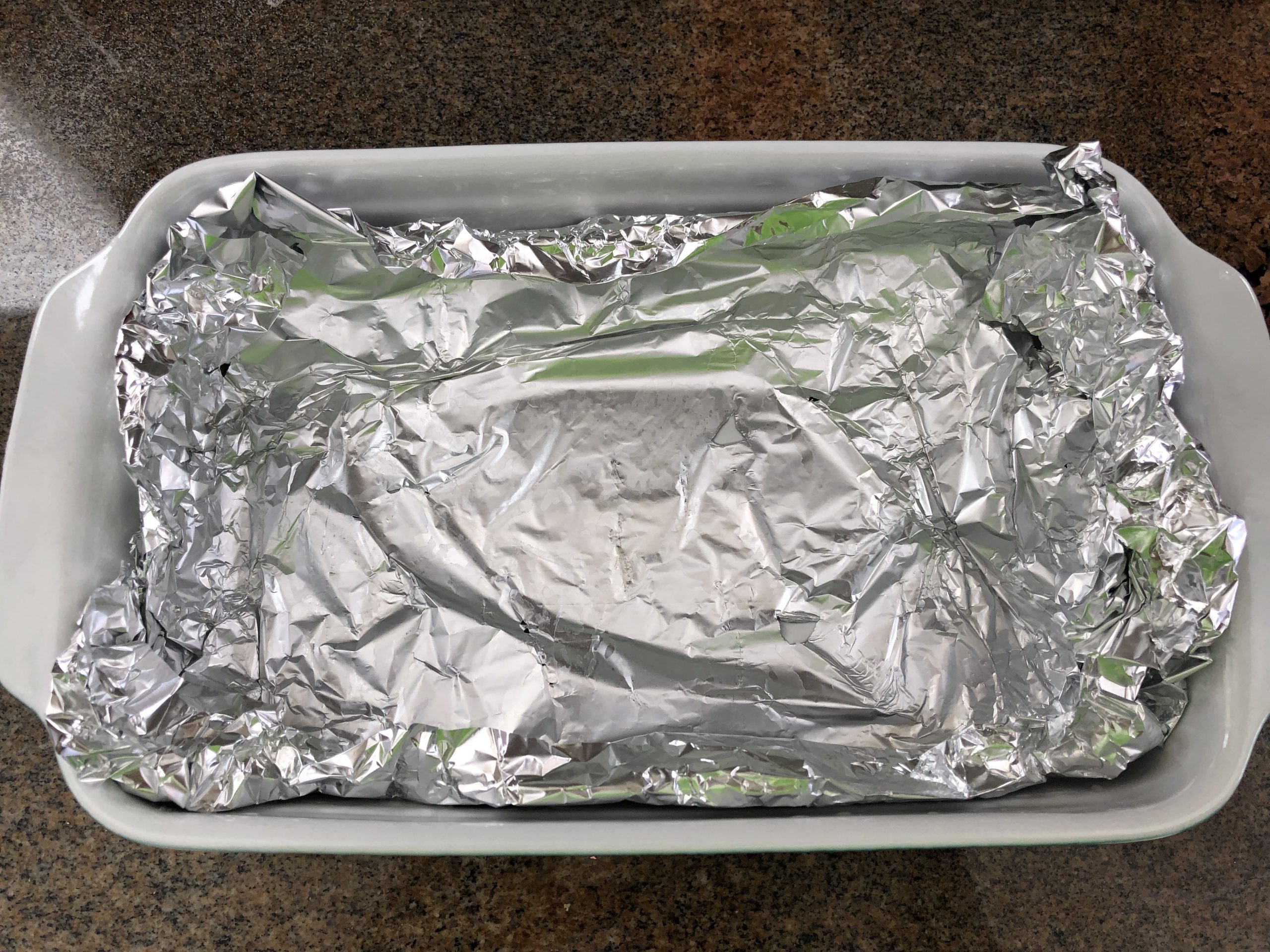
Place a sheet of aluminium foil, a single layer is fine, into the bottom of your bowl or container. The container needs to be able to handle boiling water.

line your container with aluminium foil

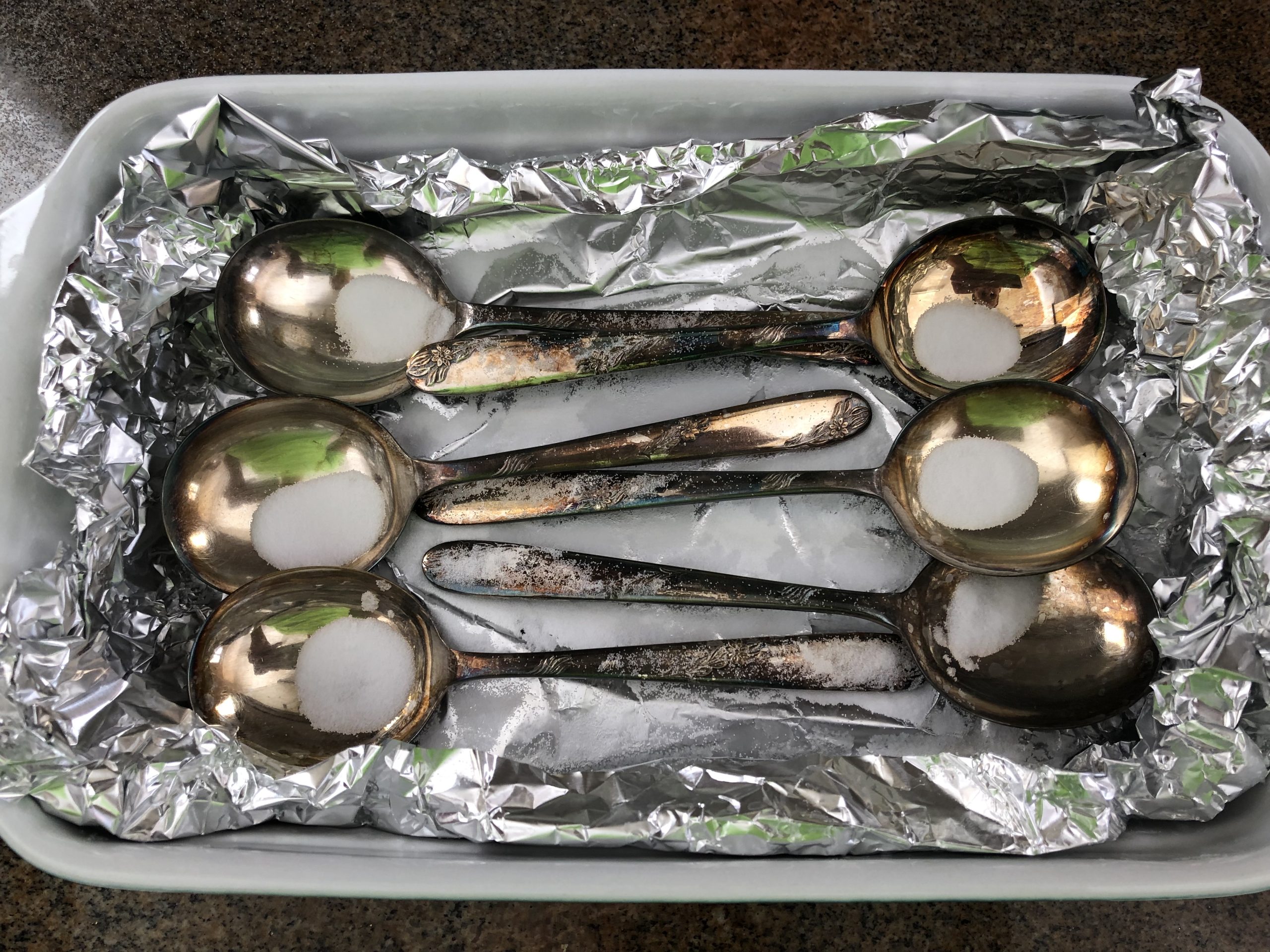
Place the silverware or cutlery which you’d like to clean onto the aluminium foil. Don’t put too much in at once, add a few pieces at a time and change the aluminium foil between cleaning as the tarnish builds up on the foil and reduces its effectiveness.

place your cutlery into the container

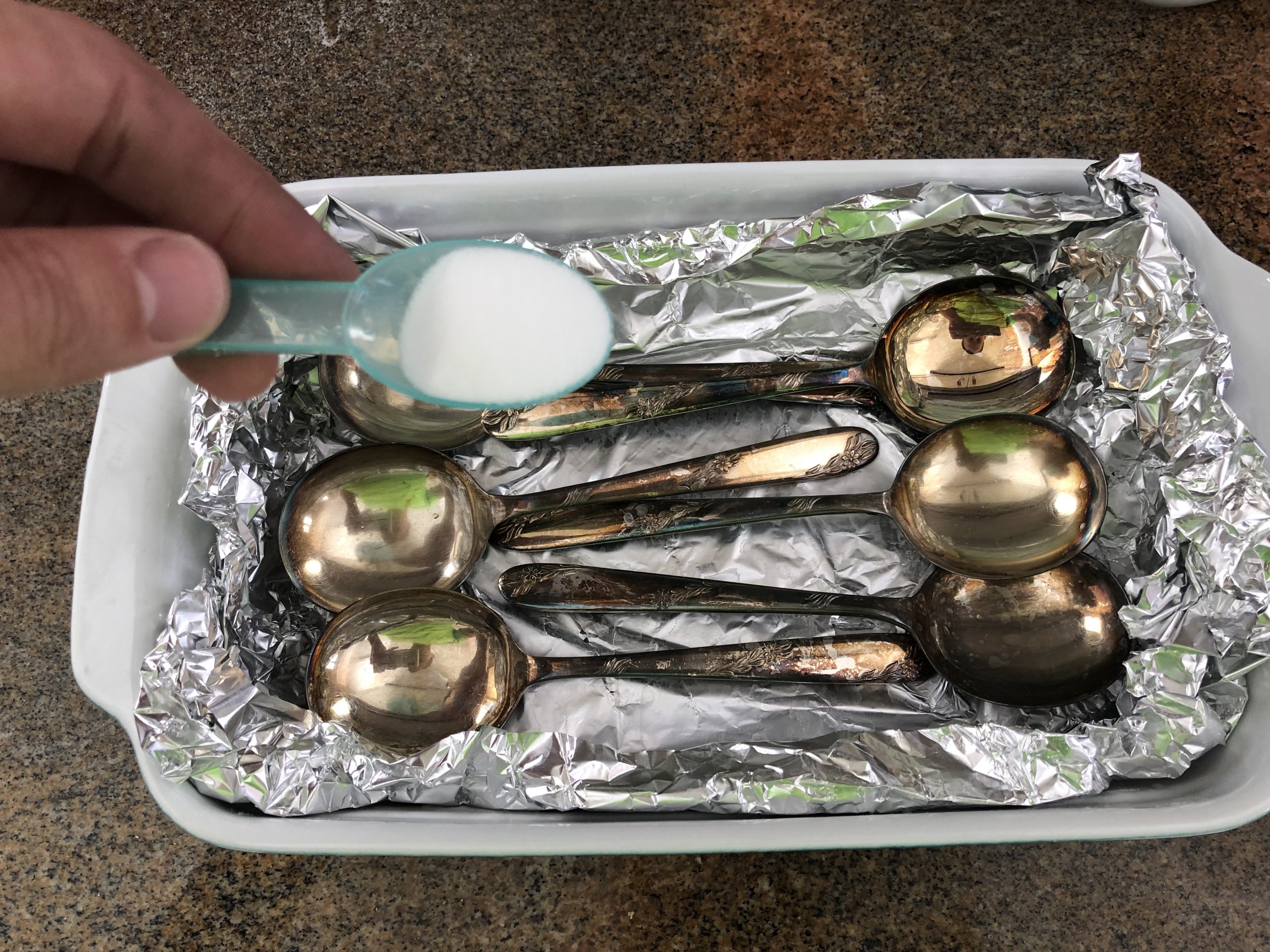
Sprinkle the baking soda and salt over the silverware or cutlery.

place your cutlery into the container

baking soda and salt in the container

Pour boiling water over the silverware so that all of the pieces are completely submerged. Try and pour the water over the baking soda to dissolve it, don’t just add the water in one place. You should see bubbles start appearing on the silverware.

baking soda and salt in the container

Watch as the tarnish is removed from your cutlery and deposited onto the aluminium foil. Wait a minute or so for the cutlery to be completely cleaned and then remove it and rinse it under cold water before drying it off with a dish towel.

You may get a pungent sulphur smell if your cutlery is particularly tarnished. Don’t worry about it, it is not harmful to you or the cutlery. Just make sure that you work in a well ventilated area.

Watch The Reaction Below

https://youtu.be/QwkWHjWJ-wo

As mentioned before, this trick works for any silver products, you can use it to clean mugs, tea sets, cutlery, plates, coins and jewellery.

If you’d like to read up a bit more on the science behind this cleaning trick and the chemical reaction involved, have a look at this article.

Have you tried this on any of your silverware at home? Let us know how it went for you in the comments section below. We would love to hear from you.

 

Top Devices To Turn Your Ordinary Home Into A Smart Home

Turning your home into a “smart home” is not nearly as daunting a task as it was a couple of years ago. You no longer need to hire contractors to rewire your home, there is now a huge range of products which have been designed to fit seamlessly with your home’s existing wiring and equipment to turn your ordinary home into a smart home without breaking the bank or requiring a degree to operate.

If you’re new to the smart home scene then a good place to start is perhaps by looking at Google Home or Amazon’s Alexa devices which include smart light bulbs, plugs and security devices which connect to your home’s wifi and enable you to access and control them from your phone or pc from anywhere in the world with an internet connection.

To help you get started, we’ve put together a list of our favourite devices to have a look at this fall to turn your ordinary home into a smart home.

If you enjoy this post, have a look at these 5 High Tech Investments To Include In Your Next Home Improvement.

Amazon Echo Dot (3rd Gen)

Amazon Echo Dot 3rd Gen

One of the most simple and affordable smart home hubs to set up and operate has been through another update. The Third Generation Amazon Echo Dot features a significant improvement to its sound and music playing capabilities, turning the small hub into a capable and discrete voice assistant and music device for almost any room.

The echo device is the heart of your smart home, you can ask it to play you the news headlines, give you a weather update, find out how long it will take you to get to work or simply call another echo device in your home as an intercom system. You can also pair it with most popular music streaming services to play your favourite song or playlist.

With the huge range of Alexa enabled smart home devices available online, and hundreds of new products being added every month, you really can’t go wrong with an Echo or Echo Dot. You’ll even love the price as they come in as one of the cheapest smart home hubs on the market.

Phillips Hue Smart Lighting Solution

Phillips Hue Starter Set

Phillips are arguably the leaders in the smart home lighting scene with a wide range of lighting products which all integrate with the Phillips Hue smartphone app and with Amazon’s Alexa devices. With Phillips Hue, you can easily control your entire home’s lighting with your voice, set up moods and scenes, day night timers and even get your home’s lighting to turn off when you leave home and turn back on when you arrive home again.

Here Are Some Of Our Favourites To Get You Started:

Although they are quite pricey, Phillips claim that their bulbs last up to 25,000 hours each which should get you over 20 years of evening use. They also have something for every pocket with simple dimmable white bulbs being the cheapest, right through to multi-coloured dimmable spotlights and feature lights.

We love how easy the Phillips Hue products are to set up and use as well as integrate with your existing smart home hub.

Nest Thermostat

Nest Learning Thermostat

There really is only one go-to smart home thermostat, and that’s the Nest Thermostat. It allows you to control your home’s heating and cooling system from your phone or with your voice through your smart home system. The Nest Thermostat has earned an Energy Star certification, meaning that it has been shown to significantly reduce energy consumption, leading to a more environmentally friendly living space.

It allows you to turn off the heating or cooling during the day and then turn it back on again before you get home so you don’t arrive to a freezing cold or unexpectedly hot home.

Smart Home Door Lock

Smart Home Door Lock

A smart door lock like this Schlage Sense Smart Deadbolt is really useful to provide access to your home when you’re away without having to leave keys out for guests, cleaners or delivery services. You can lock and unlock your home straight from your smartphone and with keypad locks you can provide guests or delivery services with a one time code to allow temporary access to your home.

This product works especially well with a WiFi enabled doorbell, mentioned below.

Wifi Enabled Doorbell

Ring WiFi Video Door Bell

A Ring WiFi Enabled Doorbell is a great addition to the home for anyone who works full days or travels a lot. It allows you to answer the door remotely, talk to your guests and the higher end ones are able to stream full HD video back to your smart phone to keep an eye on who’s at your front door.

A motion sensor will automatically send an alert to your smart phone when someone arrives at your door so that you can keep track of packages being delivered or unexpected guests.

Have we left anything off of our list? Let us know what your favourite smart home products and devices are in the comments section below. We’d love to hear from you.
Make Your Own Stylish Picture Frame Shelf

Picture frame shelves or ledges are a great way to display your collection of family photos for all to see without overcrowding a bookshelf or mantle. It’s also super easy to swap out pictures or re-arrange the wall for a fresh look. You can build your own picture frame shelf using the simple plan below for a couple of dollars using timber lengths available from your local hardware store.

If you’re looking for a more functional shelf for your home, have a look at these 6 easy DIY shelf ideas.

picture frame shelf large

What You Need To Your Picture Frame Shelf

  • Length of 1×4″ or 20x80mm timber
  • Length of 1×3″ or 20x60mm timber
  • Length of 1×2″ or 20x40mm tinber

Depending on the lengths of timber available at your local hardware store, the above will either make one long shelf or two shorter shelves if you cut the lengths in half. It looks great to have three or four shelves on a large wall as a feature.

How To Build Your Picture Frame Shelf

You can decide whether you’re more comfortable with screws or wood glue, but the basic idea is the same. Use the 4″ or 80mm section as the back of the shelf, the 3″ or 60mm section as the bottom and the 2″ or 40mm section as the front lip to keep the frames in place.

picture frame shelf wood layout plan

Glue or screw the pieces together to form a shelf as pictured. If you want a shelf which is shorter than the lengths of timber available at your hardware store or you’re dividing the timber lengths in half, be sure to cut them to size before assembly. It is a lot easier to cut the timber to length in individual pieces.

Once your shelf is assembled and the glue is completely cured, you can stain, varnish or paint the shelves to suite your decor. It often looks good to paint your shelves in white or a dark wood stain. Some people also add pieces of thin moulding to the shelves for some extra styling and detail.

picture frame shelf trim

Have you made your own picture frame shelves? Let us know in the comments section below. We’d love to share your ideas and pictures.

Easy DIY Projects for Creating Stylish Backyard Shade This August

Summer is the perfect time for making upgrades that will boost the functionality of your backyard. Whether they’re major or minor, home improvement projects are a great way to liven up your home and make it look fresh and new. Lacking inspiration? No worries. There are numerous DIY projects that are super easy, don’t cost much, and the impact they make is immense. In this article, we’re sharing a list of four simple DIY backyard projects you can tackle and create the perfect, shade oasis you’ll enjoy this August. Take a look!

A DIY canvas shade sail as a cheap and effective solution

An affordable and unique idea for creating your backyard shade, a canvas shade sail is probably one of the easiest outdoor DIYs you can tackle this summer. A durable and effective shade solution for your patio or outdoor lounge, it’s sure to last for more than a season, and installing it is pretty easy. First, you’ll need to find a proper location and make sure it has four anchor points so it can be installed properly. If there aren’t enough natural anchor points in your outdoor area, don’t worry – you can still improvise and use a wire rope to anchor the shade sail to nearby trees. Tighten the four anchor points to the desired tension, and voila – you’ve got yourself a comfy, DIY outdoor oasis.

A DIY canvas shade sail as a cheap and effective solution

DIY privacy screen as a practical backyard shade

A privacy screen is a great way to add shade to your backyard, but also create a sense of privacy, thus avoiding curious looks of passers-by. It’s also DIY-friendly to build when you’ve got all the materials needed for the project. However, there will be times when you won’t have all the necessary hardware, and that’s when you’ll need to find a good hardware shop. It’s a widely known fact that Australians simply love DIYs and all things renovation, and when they’re tackling any kind of renovation, big or small, Aussies opt for Paddington hardware to ensure they use only the best, high-quality tools and hardware products for their projects. Do the same – find a reliable hardware store like the one mentioned above to ensure you’ve got everything you need for your simple DIY project.

DIY privacy screen as a practical backyard shade

Sheer curtain divider for a romantic backyard

Is there anything more romantic than an outdoor space with sheer materials? See-through materials are becoming more and more popular among homeowners, and it’s easy to see why. The fabric is lightweight which helps create a better flow and ensure a sensual, romantic atmosphere in your outdoor lounge. In addition to that, simply installing a sheer curtain divider will help add a stylish pop to your outdoor space, transforming your backyard into a cozy corner for relaxation after a long day at work. If you’d like some more privacy, opt for outdoor curtains that aren’t as see-through and come in white, gray, or another neutral color, so they can easily blend into your outdoor space.

Sheer curtain divider for a romantic backyard shade

Hanging curtains for a luxurious vibe

If you’re aiming for a more luxurious look instead of casual, there is a shade solution for that too. Depending on your budget as well as the size of your backyard space, you could hang luxurious shade  curtains above each seating area to enhance the visual interest of your outdoor space. For this, you’ll need to select a location that has a couple of trees where you can hang your shade curtains. After you’ve acquired the necessary tools for this DIY project which includes a wire basket, a hook, and a curtain panel, it is time to create your hanging shade curtains. Pull the rope through the bottom of the basket, tie the knot, and hot glue the curtain panels inside the rim of the basket. Finally, mount the screw hook on a tree branch, tie the rope around the hook, and voila – you’ve got the perfect outdoor seating area.

Hanging shade curtains for a luxurious vibe

There you have it – four easy DIY projects you can tackle this August. Use some of these ideas to create the perfect shade in your backyard and design a space that is perfect for unwinding.

Tips on Prepping Your Home for Hot Weather

In preparation for the summer month’s hot weather, many make positive lifestyle changes to improve their bodies and appearances. For example, people visit the dentist to whiten their teeth for a smile as radiant as the sun. The most common change is a healthier diet and increased exercise. Sweets, sugars, and starches are substituted for vegetables and lean meats. In the gym, going the extra mile coupled with all the extra repetitions of weights, push-ups, and sit-ups will have your summer body looking great.

As you prepare your body for summer, don’t forget to prepare your home. There are several steps you can take before the temperatures rise to ensure your house can withstand the heat and rain of summer. Read below to learn more about preparing your home for the hot summer months!

Annual Air Conditioning Maintenance and Upgrades

One of the most important ways to prepare your home for the hot summer months is annual air conditioner maintenance. You’ll want to escape from skyrocketing outside temperatures in the comfort of your own home and, therefore, you’ll need your air conditioner operating at peak efficiency and capacity. There is some air conditioner maintenance homeowners can complete themselves. For example, all air filters in the air conditioner require regular cleaning. Simply remove the filter and wipe it off with a dry cloth every four to six weeks. When the filter is extremely dirty, use warm water (below 110°F) to clean it, and then dry the filter before replacing.

However, all other HVAC maintenance must be completed by a professionally trained technician. HVAC maintenance is recommended annually, and the months leading up to summer is the perfect time to schedule service. Your system will likely see an increase in usage as the temperatures climb, and you’ll want to make sure there are no problems beforehand. According to the U.S. Department of Energy, two of the most common problems with air conditioners involve faulty installation and maintenance. These are often the end results of homeowners installing and maintaining their units themselves. Additionally, this could void the warranty of your products.

If you want or need to upgrade your air conditioning for the summer, there are a variety of options. For example, ductless units are an affordable way to heat any room. They do not require extensive duct system like many central HVAC systems, which makes their installation very simple. Some also come with heating options, making them viable all year round. Finally, they are so efficient and eco-friendly that they reduce your energy bill and minimize harmful emissions.

There are also technological updates available for your air conditioner. Many air conditioners are now compatible with smartphone applications, meaning that you can control the temperature and airflow from your phone! There are also sensors that adjust the temperature when you enter or exit the room. By taking the necessary steps to prepare your air conditioner system, you’ll be able to relax inside after a fun-filled day in the sun!

Attic Insulation

Air conditioning is not the only way to keep your home cool this summer. You should consider upgrading your home’s insulation to prepare for the hot weather. Your attic is one area that must be properly insulated, and you should check this before the summer. If it is not, the temperature increases drastically and eventually impacts your entire house. Additionally, there is another indirect benefit of checking your attic insulation. Animals look for places to escape the cold winter, so there could be an unwanted tenant living rent-free in your attic. If so, you must call a professional for their humane and safe removal.

Awnings

Another way to prepare for the warmer months is to install awnings. Awnings provide a litany of benefits for homeowners, especially in the summer months. When installed over your windows, they keep sunlight out of your home. This decreases the indoor temperature and reduces strain on your air conditioner. This also lowers your energy bill and eliminates glare on your television if there is one in the room. Awnings can also sit over a deck or patio to provide a cool, shaded hangout spot.

Deck, Patio, and Sun-room Preparation

Homeowners want to take advantage of the hot weather and socialize outside instead of in their living room. Therefore, you’ll want to prepare any warm weather hangout spots such as your deck, patio, or sun-room. After installing an awning over your deck and patio, make sure the other necessities such as chairs, tables, and your grill are clean and ready for use. The same principle applies in a sun-room. You could also add a ceiling fan to keep your sun-room cool. They are an efficient, cheap, and easy way to cool off your sun-room on a hot day.

Outside Yard Work

Outside Yard Work

After the winter, you’ll finally be able to get outside and tidy up your yard. Make sure your lawnmower and other tools are ready for use, and you’ll have your yard looking pristine and manicured in no time. Many homeowners also garden as a therapeutic escape, and the warmer months are the perfect time to resume this activity.

You’ll also want to make sure your outdoor plumbing such as hoses and sprinklers are ready to hydrate your yard. Finally, you’ll also want to make sure any outdoor play accessories are clean and safe for your children. The warmer months are a rejuvenating time period, so watch as your yard springs back to life!

Roofing Work and Gutters

The warmer months of the year often see an increase in rainfall, and your home must be able to withstand the occasional summer storm. Your roof and gutters serve an important purpose as the first line of defense from rainwater. They must be properly maintained to direct water off and away from your home.

Before the weather warms, clean your gutters of debris such as leaves so rainwater can flow properly. You should also make sure your roof is in prime condition. Clogged gutters and faulty roofing cause leaks, which leads to costly repairs down the road. Leaks can also cause mold and mildew, which lead to health problems for your family.

Roofing Works And Gutters

Prepare Your Home for the Summer!

Summer is a season full of happiness, but you must be ready for its arrival. The preparation for summer begins months in advance, and there are many ways you can make sure your home and property can handle whatever summer throws its way. Make sure your home is ready for the hot weather before the temperatures rise!

Decor Tips to Revive Your Older Home While Keeping Its Character

Living in an old house is definitely not a walk in the park. Sure, old houses are most certainly beautiful and they have something about them not many people can resist. However, it’s important to also understand that old houses are full of surprises and hidden costs that can add up fairly quickly, especially when trying to revive your older home.

All of that being said, if you live in an old house, you are probably already familiar with the majority of its problems. On the other hand, if you’ve remodelled your old home and eliminated all of its downsides, you’ll be left with a beautiful property that will serve you well for many years to come. And now, the only thing you’re left with is deciding how to decorate the space while still managing to keep the beauty of its old character.

Keep all the original ornaments and architecture elements when reviving your older home

When older homes are concerned, more often than not they feature pretty stunning architectural elements, such as exposed wooden beams, stained-glass windows or a stunning carved staircase. The first thing you should do is embrace these elements instead of trying to get rid of them. Of course, if necessary, see to it that they are renovated and repaired during your revive. This way, you will be only enhancing the beauty and the vibe of your old home instead of trying to turn it into something it’s not.

Keep all the original ornaments and architecture elements when reviving your older home

Decide on the overall vibe

Furthermore, you should think about the overall vibe you want to have when you revive your older home. The Victorian style is definitely something you should consider but, unless your home is built in this style, it might look out of place in the end. However, the vintage style or even rustic modern are certainly two of the most beautiful styles you can choose to incorporate in an old home, that are very adjustable and work excellently in any setting. No matter which style you choose to implement, make sure you follow the 80-20 rule to avoid making your home look too staged or impractical.

Choose furniture pieces carefully

As already mentioned, the furniture pieces you choose to implement in your design need to be carefully chosen to offer both the practicality and aesthetic appeal. Therefore, you can go with vintage end tables and a vintage coffee table to bring some of that old charm into the space but choose a more modern seating solution that will offer comfort and style. For instance, practical King Living modular sofas offer the freedom to arrange and rearrange them as you see fit while also having the ability to blend in virtually any design style. This way, you’ll be able to achieve the perfect balance between modern and rustic or vintage, which will look absolutely stunning in an older home.

Choose furniture pieces carefully

Illuminate the space properly

Older homes are usually not opulent with lighting solutions, so that’s definitely another thing you need to pay attention to. First and foremost, make sure you install enough lighting fixtures so that your space and all of its elements are well-illuminated and that you have enough light in all the areas of your home. Furthermore, see to it that you also install lighting dimmers wherever possible so that you can control the level of illumination you want to have in any given moment. Finally, make sure you go with eco-friendly and energy efficient LED light bulbs to save energy, reduce your overhead costs and provide your housemates with the best and the healthiest possible artificial lighting.

Illuminate the space properly

These were, of course, just some of the ways you can redecorate and revive your old home while keeping its old shine intact. Simply put, you should embrace its old beauty and instead of trying to change it, you should accentuate it as much as possible.

What are some of your decor tips to revive your older home? Let us know in the comments section below, we’d love to hear from you.

8 Amazingly Affordable Ideas For A Kitchen Makeover

It’s a great feeling to give a room in your home a complete makeover, and it doesn’t need to be an expensive exercise. We’ve put together this list of 8 things you can do for a DIY kitchen makeover while sticking to a tight budget. These also don’t require any extensive remodelling work to be done, so you can get most of these done in a day or two – the perfect project for your weekend at home.

Let have a look at what you can do…

A Coat Of Paint Can Make A Big Difference

Before deciding to throw out your old cabinets, consider just giving them a coat of paint. If the wood isn’t damaged and they’re in reasonably good condition, a fresh coat of paint and some new handles can make a huge difference and transform old dated cabinets into modern looking cabinets without spending much money on them. Whites and light greys are really effective at modernising old cabinets.

Just upscaling your existing cabinets can really go a long way to transforming your kitchen and making it look brand new!

a coat of paint can make a big difference

Replace Your Cabinet Handles

This one goes hand in hand with the previous tip, replacing your handles once you’ve given your cabinet’s a few coat of paint can make them look like they’ve just been installed. Even simply replacing dated looking handles on your old cabinets without painting them can give your kitchen an instant modern touch.

Remove The Doors On One Overhead Cabinet

Remove the doors on one of your overhead cabinets and replace the inside shelves with thick shelves to match your countertops for a beautifully modern touch. It is quite common for modern kitchen to feature a set of overhanding shelves or glass door cabinets to display glassware or some stylish kitchen decor.

Pick An Accent Colour For Your Kitchen Makeover

An accent colour gives your kitchen a bit of life without making it look cluttered or messy. Pick one accent colour to compliment your kitchens primary, white, grey or black colour and choose your ornaments and decor to match. Pack away any items which don’t fit your colour scheme so that they aren’t visible.

You can even add a splash of colour with some paint to a shelf, vase or edging to compliment your decor. Have a look at these natural upgrades you can do to give your home a touch of rustic serenity.

Replace The Lighting

New light fittings can really modernise your kitchen, especially if your home still has the original or really simple light fittings. There is a huge selection of modern light fittings and they’ve become really affordable. For under $100 you can upscale your kitchen with a bright and modern light fitting which shouldn’t take more than an hour to fit.

upgrade your kitchen lighting

Install Under Cabinet LED Light Strips Or Downlight

Lets be honest, no modern kitchen is complete without under cabinet led lighting or down lights which can be dimmed to create a luxurious feel. LED light strips can be bought for just a few dollars and they plug right in to your kitchen sockets. Dimmable LED strip lights which have been well placed under your overhanging  cabinets can be really effective in complimenting your new light fitting.

De-Clutter Your Shelves And Countertops

This one should go without saying, clutter detracts from your kitchens style. Pack away any loose items or appliances which you do not regularly use. Try to keep only the essentials and appliances which compliment your colour scheme out on your counters, everything else should find a home in a cupboard or cabinet. Have a look at these tips and tricks to make your kitchen a more organised and clutter free space.

Put Up A Notice Board

The kitchen is often the hub of your home. Whether you’re enjoying a family dinner or getting your kids ready for school, a notice board can help with your organisation and remembering what needs to be done or bought. Instead of hanging notes and slips of paper on your refrigerator, put up a nice big, framed notice board as a decor piece in your kitchen.

Hopefully this list has given you the inspiration required to get your going on your kitchen makeover! Do you have any other ideas for a budget kitchen makeover? Let us know in the comments section below.

Make Your Own Privacy Screen From Old PVC Piping

I’ve you’ve spent some time on Pinterest or reading through home decor magazines lately then you would have seen that one of the latest garden trends is CNC cut privacy screens in various patterns. They really look amazing but can be quite costly to have manufactured, especially in custom sizes. Fortunately, DIY for Homeowners have found a way to make your own privacy screens which look just as great as the CNC cut ones using some old (or new if you don’t have lying around) PVC piping.

You may also want to have a look at making these stylish and modern hanging garden planters to go along with your new privacy screen.

What You Need To Make Your Own DIY Privacy Screen

  • PVC Piping In Various Sizes – 100mm / 50mm / 25mm (4″ / 2″ / 1″)
  • 2 x 50mm / 2″ PVC Elbows
  • 2 x 50mm / 2″ PVC T-Pieces
  • Sandpaper and Sander (If you have one)
  • Hacksaw or Mitre Saw
  • PVC Cement / Glue
  • Spray Paint – Optional for Colour

How To Make Your PVC Piping Screen

Start by lightly sanding the outside of all of your lengths of piping which you’re going to be using. This helps to remove any dirt, stains or marks on the piping and provides a nice rough surface for the adhesive to work on.

Sand The Pipes Before Cutting

Next you need to cut your piping into a number of pieces of equal length. The length should be the same as the diameter of the piping you’re going to be using for the frame. This will usually be 50mm or 2″ piping, so you’ll cut your pieces to this length.

Cut Sections Of Piping From Each Length

While you’re cutting, you need to cut four lengths of piping to build the frame for your screen, a length for each side. Cut two longer pieces for the long side and two shorter pieces for the short side of your screen. The top corners will be joined with the elbows and the bottom with t-pieces such that you can mount the screen over a dowel or piece of rebar hammered into the ground.

PVC Screen Frame

Once your frame is built, its time to start gluing the pieces of piping into place, this takes a lot of patience and you’ll likely find that you need significantly more pieces than you initially thought. Be careful with the PVC adhesive, it can be quite messy. Try to work over an old drip sheet or piece of plastic to avoid damaging your floor or work surface.

Stack The Pieces Into The Frame

Once you’ve glued all of your pieces into place, allow the glue to cure for 24 hours before attempting to paint it.

If you do decide to spray it, make sure that you spray it with a high quality, UV resistant outdoor paint so that the colour lasts and the paint doesn’t start peeling off.

To mount or support the screen, hammer two lengths of dowel or rebar into the ground and slide the screen over the pieces at the t-piece end.

DIY PVC Privacy Screen

Place these screens in and around your garden wherever you need to close an area off or hide something you don’t want to be seen – like your dustbins or compost bin.

This post by DIY For Homeowners has been used and modified under the Creative Commons license CC-BY-NC-SA.

Super Effective DIY Home Cleaning Tips That Professional Cleaners Use

It’s not easy to find time to clean the house, especially if you’re working eight hours a day. There are times when you might feel the need to hire professional cleaners to work in your home just to avoid exhausting energy. Cleaning services come at a cost, but more often than not you get what you pay for since these professionals are well-trained and can surely bring your home back to pristine condition.

But what if we told you that there are ways to clean your house just like a professional cleaner would, minus the costs? In this article, we will provide you with some simple yet effective do-it-yourself home cleaning tips that will make other people think cleaning experts handled the task.

Organized Cleaning is Key

In order to clean your house as well as a professional would, it is important to adopt a specific and routine cleaning system. Professional cleaners save a lot of time and energy by using an organized and systematic way of cleaning the house. You can devise your own method to better suit your priorities, but make sure that you stick to your routine to avoid wasting time.

The first thing cleaning experts consider in devising a system is the cleaning pattern. The recommended pattern is top to bottom, making sure you clean the rooms on the upper floor of the house first before touching the areas below. Some experts suggest going at it on a task-per-task basis instead of room-to-room; meaning you perform a specific cleaning task on every room first, before coming back to each room for a second cleaning task, if necessary. Determine your priorities as well as comfort levels in choosing which pattern to work with. For instance, if you’d rather keep specific rooms clean, room-to-room cleaning might suit you better because you get to focus on areas of the house you favour more than others. This pattern could also go better with people who get tired easily since they won’t have to keep returning to the same room for additional tasks once they’ve finished cleaning it.
Stock Up on Cleaning Products

Professional cleaners are able to do their job well because aside from their training, they also have the necessary cleaning materials and equipment for different types of houses and surfaces. If you want your cleaning to resemble theirs in any way, then you will also need to make sure you stock up on the right cleaning products.

There are several cleaning products available in stores, so you need to know exactly what you’re looking for. You can do research first by browsing online and checking which products work well with the surfaces you have at home, and which of these products are recommended by experts. You can also compare prices to ensure you won’t be breaking the bank with your purchases. If possible, go for multi-use products to increase efficiency without sacrificing quality.

Stock Up On Cleaning Products

Vacuuming the Floor is a Must

The floor is one of the dirtiest parts of the house and with good reason. It interacts the most with people’s shoes, slippers or feet as they go about the house, and this movement brings the dirt all over your home. It is also where most, if not all of the stored dirt from the ceilings and the walls fall off. Vacuuming the floor is a priority if you want to keep your house clean and germ-free.

It’s not enough that you bring the vacuum inside every room and hoover away. You also need to be careful and meticulous. After cleaning the floors, vacuum the furniture as well because dirt can easily gather in the corners and edges of chairs and sofa sets. The corners of the dining room and the kitchen areas can collect food leftovers easily, and crumbs tend to give a foul smell over time, so you surely would want to prevent that by closely vacuuming these places. Even lamp shades can gather dirt if left untouched, so use the vacuum cleaner on them, too. Remember that there are certain types of floors that dirt can stick especially well to, and sometimes the vacuum cleaner simply can’t remove stuck-on debris. Use a mop and wet water (or cleaning products, depending on the surface) to scrub off the dirt if necessary.

Learn to Declutter

Before cleaning the house, make sure that the rooms have also been decluttered. While most people think cleaning and clearing clutter can be done at the same time, it would be ideal if you can focus on cleaning instead. Professional cleaners usually ask homeowners to declutter first before they arrive. This actually works as a favour to homeowners, since the time they pay the cleaner can then be used to actually clean the house instead of helping them organize their possessions. Declutter whenever possible so that when your cleaning schedule comes up, you can work more efficiently.

What are some of the cleaning tips or routines which you use to keep your home looking like it’s just been professionally cleaned? Let us know in the comments section below.