

Home Blog Page 55

Delicious Carrot Top Pesto

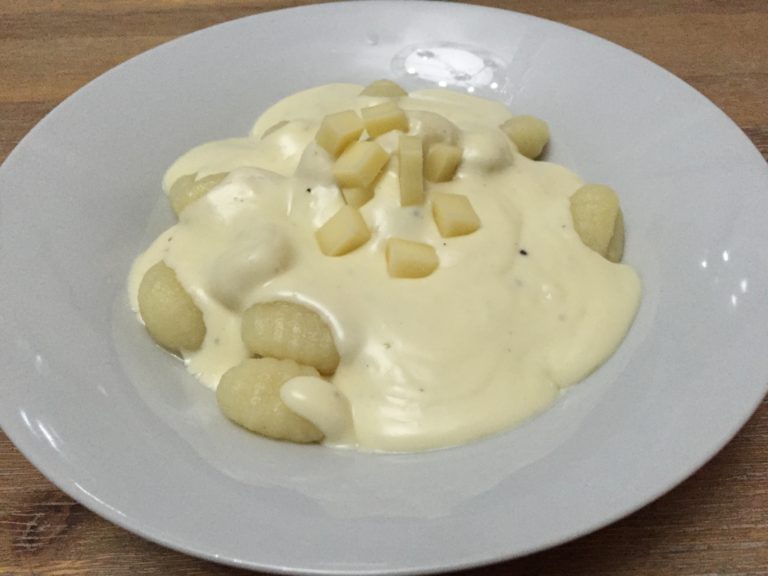
Have you ever bought a bunch of organic carrots and thought it’s a waste to throw out the tops but wondered what you could do with them? Next time, save the carrot tops and turn them into a delicious pesto which can be used in a pasta sauce on homemade gnocchi or to  make a cracker topping using pesto, sun-dried tomatoes and cream cheese.

carrot tops

What You Will Need For 1 Cup Of Carrot Top Pesto

  • 3 Tbsp Nuts – Pecans, Cashews & Walnuts Work Well
  • 2 Cups Roughly Chopped Carrot Tops
  • 1/2 Cup Roughly Chopped Fresh Basil
  • 1 Garlic Clove
  • 1/2 Cup of Olive Oil

How To Make The Carrot Top Pesto

Place the nuts and garlic into a food processor and pulse into a rough paste. Add the carrot tops and basil and pulse again until a thicker green paste forms. Add the half cup of olive oil and finally blend the mixture until the paste becomes smooth. If the paste is too thick, add some olive oil, one teaspoon at a time, until the correct consistency is reached. The paste should be thick but easily spreadable. Season with some salt and pepper before giving it a final few pulses and you are done.

The pesto can be stored in an air tight jar in the fridge for a few weeks. Occasionally the pesto may solidify in the fridge, allow it to stand at room temperature for about 15 minutes and it will return to it’s paste consistency.

For some other twists on the recipe, consider interchanging the nuts and herbs for equal quantities of other types. You can use peanuts and coriander/cilantro for stronger herb and nut flavors or macadamias and Italian parsley for more subtle flavours.

What are some of the combinations you have tried? Let us know in the comments section below.

Regrow Used Veggies In Water, Don’t Throw Them Out

Did you know that you can regrow a whole range of veggies after using them using only water? Here is a full list of veggies which can be easily regrown and used over and over again using only some water and a sunny spot on the window sill. This is great for those who buy a lot of organic vegetables and is a simple water to stretch your grocery budget a little further.

Just to be clear, this list is only those vegetables which can be re-grown to the point where they can be used again purely in water. There are plenty of plants which can be started in water and then transplanted into soil but unless the vegetable can be re-grown into something that is again usable in only water, they didn’t make it onto this list.

Here is the full list of veggies which can be re-grown:

  • Cabbage – Place the root end in a shallow bowl of water.
  • Carrot Greens – Place cutoff carrot tops in a shallow dish of water.
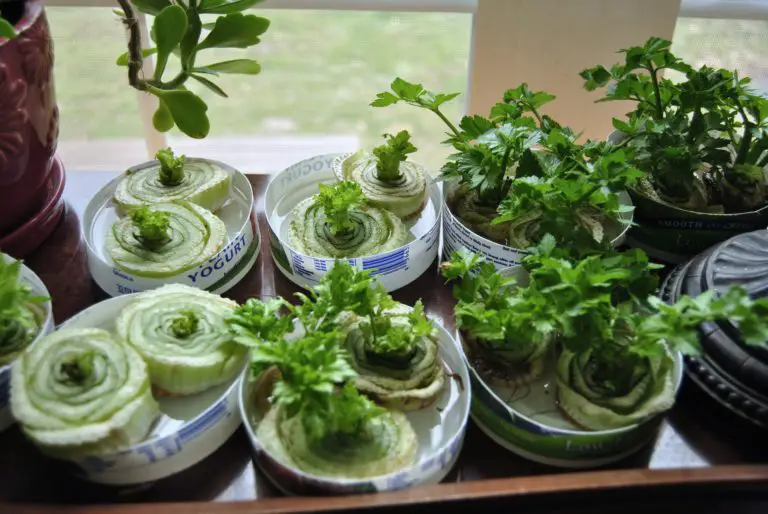
  • Celery – Cut the bottom 5cm (2″) off the stalk to regrow.
  • Fennel – Cut the bottom 3cm (1″) off the stalk.
  • Green Onion – Place the white bulb in water.
  • Leeks – Cut the bottom 5cm (2″) off the stalk.
  • Lemongrass
  • Lettuce
  • Basil
  • Beet Greens
  • Coriander/Cilantro
  • Ginger
  • Mint
  • Mushrooms – The undamaged stalks can be re-grown.
  • Pineapple
  • Potatoes – The middle section of any unpeeled potato will regrow.
  • Rosemary

regrow celery

Some General Tips

  • Don’t use too much water. The water only needs to cover the roots of the vegetable otherwise the leaves and stems will go slimy. Remove any leaves which wilt and land up in the water as these will also cause the water to go slimy.
  • You can regrow multiple plants in the same container as long as they are not squashed together. For example, two to three lemongrass stalks will grow in one glass.
  • Lettuce and celery should be grown in shallow bowls while green onions and lemongrass can be grown in taller glasses.
  • You can add a tiny amount of liquid fertilizer to the water to encourage vegetable growth.

Homemade Citronella Candle

You can never be over prepared when it comes to bugs and mosquitoes, keep these annoying pests away with natural citronella oils in a homemade candle. Making your own candles is really easy and you can usually find most of what you need to make them laying around the house.

What You Will Need To Make 4 Citronella Candles

  • 3-4 Ceramic or Metal Pots, Jars or Containers – Buy Here
  • 500g (1lb) Wax – Buy Here
  • 30ml (1oz) Citronella oil – Buy Here
  • 3-4 Candle Wicks – Buy Here
  • Clear Tape – Buy Here
  • Pencils or Sticks (To Keep Wicks Upright While They Set)
  • Double Boiler – Buy Here

How To Make The Citronella Candles

Finding The Ingredients

For the pot or jar, you can re-use tins from canned goods, empty food jars, coffee pots or small ceramic flower pots (the ones without holes). The most expensive part of these candles is the wax however most households have a couple of almost burnt out candles lying around to get you started. Alternately, wax pellets are available at most craft stores. You could also save up the remaining candle wax from your burnt out candles throughout the year so that you have a collection for the summer. Lastly, you need some wicks. If you are starting out with candle making then its probably best to go out and buy a few from a craft store, they are relatively inexpensive and and guaranteed to work. If you are feeling a bit more adventurous (or frugal) you can make your own with cotton, twine, string, shoe laces etc. Just soak the string in some melted wax and lay them out straight to harden and you have a wick.

Remember that different types of waxes burn at different rates and temperatures so you may need to experiment with different size wicks and mixtures of waxes until you find a combination which works well for you. If you make a candle and it doesn’t work too well you can always remelt the wax, substitute the wick and pour it back into the container so you don’t have to throw the candle out. If you have a very fast burning wax, like beeswax, you can slow down the burning by adding an oil such as coconut or palm oil to the molten wax.

Making The Candles

Place all of your wax into the double boiler and heat the wax over a medium heat until it has all melted. This usually takes between 15 to 30 minutes depending on the type of wax being used.

Add the citronella oil and any other oils if you wish to slow down the burn rate of your candles. Stir the oil in well.

Place one wick into each of the jar and tape the end to the centre of the bottom of the jar to keep the wick in place. Use a tablespoon and drop a few spoons of wax onto the taped area to really secure the wick and keep the tape from pulling loose. Place a pencil or stick across the top of the jars and rest the wick on it in an upright position.

candle wicks

Now pour the hot wax into the jars, fill the jars to about 2cm (1″) from the top. Once all of the jars are filled, place them in a sheltered and warm place with a dish towel around them and allow them to cool. You want them to cool as slowly as possible to prevent the wax from cracking.

Once they are cool, allow them to stand and cure for 48 hours before using them. Trim the wicks to 1cm (1/2″) before lighting them.

Have you ever made your own candles? If you have any tips, tricks or advice, please tell us in the comments section below.

citronella candles in buckets

If you are making these candles as a gift, consider presenting them on a homemade mini wooden pallet. If you enjoyed making these citronella candles, you may also like these soy candles with free printable labels.

Tips for Laying Tiles

Laying your own tiles is a cost effective and relatively easy way to remodel a room. Here are some tips to assist you in getting the best results. If you already have a tiled surface in good condition which could do with a face-lift, why not try tiling over the existing tiles?

Level the Floor

If your floor has any cracks, broken concrete or deep pockets, mix up some floor leveling compound and pour it into the cracks or low spots. The most common problem experienced with floor leveler is an incorrect consistency. People tend to mix it too thick but it actually needs to be fluid enough to allow gravity to draw it into the low spots. It should only be slightly more viscous than water. When it begins to set, smooth out the edges with a flat trowel.

Use the Right Tools For Laying Tiles

As with any DIY job, having the right tools can make a project significantly easier and less time consuming. There are four important tools to any tiling job. Knee-pads – These spongy pads strap onto your knees and provide you with some cushioning instead of kneeling on bare knees for the day. A drill – not for drilling holes but for mixing tile cement, a cordless drill with an electronic speed control is best to get the low speed required for mixing. A slotted trowel – for scooping cement from the bucket, spreading it out on the floor and finally combing it out with the notched section. A wet cutting tile saw – for cutting tiles into sections and cutting sections out around doors, pillars etc.

Plan The Tiling Layout

As easy as it may be to follow the previous line of tiles, small errors made across a large room may result in tiles being skewed by a row or two. You need to plan the layout ahead and plot some chalk guide lines on the floor before you begin. Use a line laser to cast some lines down the centre of the room and mark them in chalk.

Adhesive Mix

The consistency of your mixed adhesive should be similar to that of peanut butter. It should be easily spreadable but when combed it should stand up and keep its form. If the adhesive is mixed too watery, it is not able to bridge the gap between the floor and tile surface in lower spots which creates hollows under the tiles which are susceptible to working loose and tile cracking.

Crack Isolation

If you are tiling over an area which already has visible cracks or any wood base floor, chances are the floor is going to continue moving. Prevent cracks from showing up in your tiling work by painting down a bond-breaking product which acts like rosin paper under a wood floor. Simply roll it onto the floor like paint and wait for it to dry. After tiling over it, if any movement occurs under the tiles, the product releases itself from the base layer and prevents your tiles from cracking.

Grouting

The last step to any tile job is grouting. One important tip to grouting is to replace the cleaning water often. It is much easier to clean excess grout away with clean water. Use a damp cloth and clean water for the best results.

Do you have any more tips or tricks for laying tiles? Let us know in the comments section below.

2 Minute Mug Brownie

When the craving strikes for something sweet and sticky in a hurry, try this two minute microwave brownie for instant satisfaction. This recipe works best as a single cup serving, additional servings should be made individually in their own mug, do not double the recipe.

The best thing about this recipe is that your brownie is always freshly made so it really tastes great.

Ingredients To Make A Mug Brownie

Makes 1 Serving, Prep Time 30seconds, Cooking Time 1 Minute 30 Seconds (1000W Microwave)

  • 1 Medium Egg
  • 4 Tbsp Sugar
  • 1 Tbsp Flour
  • 2 Tbsp Cocoa
  • 2 Tbsp Sunflower Oil

How To Make The Mug Brownie

Crack the egg into a cup, add the sugar then oil then flour and finally the cocoa. Mix together with a fork until a thick, smooth and creamy brown batter is formed.

Microwave on high for 1 minutes and 30 seconds in an 1000W microwave. Cooking time will vary with microwave wattage, a 700W microwave will take about 1 minute and 40 seconds while a 1200W microwave will wake only 1 minutes and 20 seconds. You may need to experiment a bit in the beginning to get used to how quickly your microwave cooks your brownie but once you’ve got it right, write down the time and keep it for next time.

Be careful when you take your brownie out of the microwave as the cup is going to be extremely hot. Allow it to stand for a minute or so before serving so that it cools down.

Serve the brownie with a dash of custard (preferably cold) or a dollop of vanilla ice cream.

If you still have a sweet tooth after indulging in this brownie, why not try our butter toffee popcorn, its the perfect sweet snack for a movie night.

Have you tried this recipe or your own mug brownie recipe? Let us know in the comments section below.

Patch Drywall like a Pro

People often avoid projects which involve repairing or modifying drywall because a bad patch up job really looks terrible. Here are some tips and tricks which will really help you improve any drywall patching job you take on. If you need to remove and patch wall anchors, follow this link for an easy solution.

Don’t be Afraid to Make the Hole Bigger

make the hole bigger

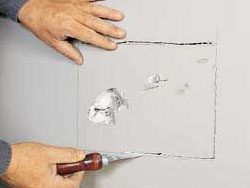
Don’t be afraid to cut out a larger portion than that which is damaged. Start out by cutting a shape which is easy to replicate, usually a square or rectangle works well. Cut a new piece of drywall using the cutout as a template.

Back the Drywall with Short Board

use a short board patch

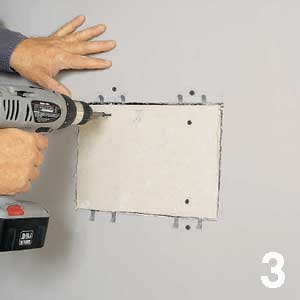
Install a piece of short board behind the patch to hold it in place. Cut a piece of short board roughly 10cm (4″) wider than the patch and secure it behind the dry wall patch by screwing two screws through the drywall and into the short board. This provides a solid foundation for the drywall patch.

Use Drywall Mesh Tape

drywall mesh tape

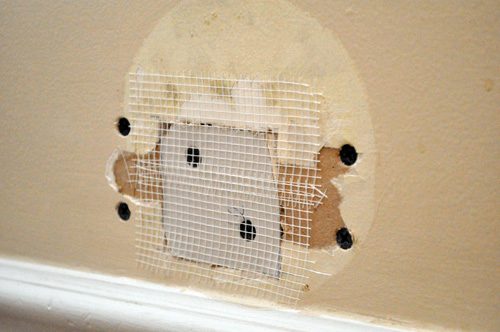
Apply a piece of mesh tape over the patch and apply joint compound over it. Spread the joint compound over the entire mesh tape area with some overlap. Once the joint compound has fully cured, apply spackle/crack filler over the joints with the flat scrapper to get a smooth and even finish. Let it dry for 24 hours before sanding and painting.

Texture your Sanding

sanding drywall patch

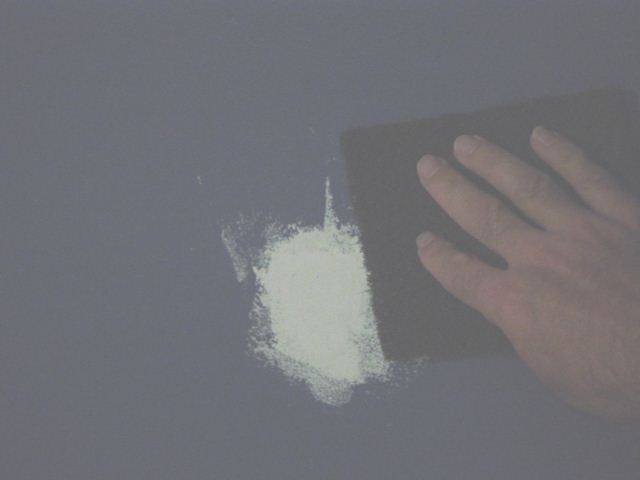
Use very rough grit for rough walls and fine grit for smoother walls to try to match your sanded area’s surface to the wall around the patch.

Use a Primer

use primer

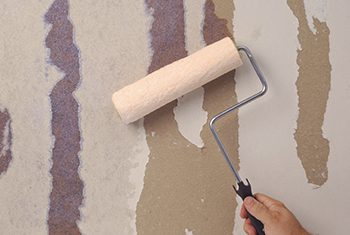
Primer is often left out when patching a hole but it important. A layer of primer helps to conceal any color mismatches and surface imperfections as well as providing a good surface for the final paint layer to adhere to. Also ensure that you get paint that is an exact color match for the last coat. If you can’t get the exact color then consider painting the entire wall to all of the corners with a color as close as possible to the other walls as this will be the least noticeable.

Do you have any further tips, tricks and suggestions for repairing drywall? Let us know in the comments section below.

Tips & Tricks for Painting Cabinets

Repainting existing cabinets in your bathroom or kitchen can save you loads of money and is often the most effective part of a room makeover. It is extremely rewarding and quite straight forward, however, it is worth taking the time to do proper preparation work to get a long lasting and professional finish. Here are some tips and tricks to get the most out of your repainting project.

Take Your Time Sanding The Cabinets

This is often a rushed job and not many people take the time to properly sand down all of the edges and corners. This is partially due to the electric sander not being able to fit into the tight corners. Invest in or borrow a detail orbital sander like the Bosch Mouse to really get into all of the nooks and crannies. Sanding properly will take much longer but it is critical to get a smooth and even paint finish.

Tint Your Primer

White primer requires a few coats  over it to fully cover. Try adding a small amount of your colored paint to the primer to tint it. That way you’ll get away with fewer coats of paint which will save you time and money.

Label the Hinges

All of the hinges on your cabinets look the same, so you just remove them all, put them in a bag and replace them right? Wrong. This is often the biggest mistake people make when repainting cabinets. All of the hinges are slightly different, aligned differently and the holes are in slightly different places. They are not noticeable but when you try and put them back together, doors are skew, holes don’t line up and cabinet doors don’t fit together nicely anymore. Save yourself hours of frustration by labeling each hinge as you take it off and put it back in the same position.

If you are having trouble with aligning your cabinet hinges, have a look at our article on adjusting your cabinet hinges.

Label your Cabinet Doors as Well

For the same reasons mentioned above, its a good idea to label all of the doors as well and make sure that you put them back in the same place. It sounds straight forward but doors easily get mixed up and swapped around while turning them over or waiting for coats of paint to dry.

Once you’ve painted your cabinets, have a look at these kitchen tips and tricks to make your kitchen instantly more functional and livable.

Follow these four tips and painting your cabinets will be an easy and rewarding project. Do you have any more tips, tricks and suggestions? Let us know in the comments section below.

10 Minute Pillow Covers

Making pillow covers used to take some time but with this guide you can make your own pillow covers using scraps of material in only 10 minutes. Each cover only requires one piece of fabric and two lines to be sewed. These covers also make great slip overs for existing pillows which have become faded or outdated.

What You Will Need To Make A Pillow Cover

  • 1 Pieces of Fabric Per Pillow 40cm x 90cm (16″ x 36″)
  • Sewing Machine With Matching Thread
  • Iron
  • Pillow Insert

How To Make A Pillow Cover

Start by cutting your fabric to the correct size, 40cm x 90cm (16″ x 36″) works well for a lounge scatter cushion.

pillow covers template

Next iron the cushion in four places. Firstly fold the edges over about 1cm (1/2″) and iron the edges flat. Next measure out a 40cm (16″) section in the middle (roughly) of the fabric and iron the edges to form the pillow edges.

pillow covers sewing lines

Fold the ironed edges back over with the patterned side of the fabric facing inwards. Sew along the full length of the two edges as shown below.

pillow covers on couch

That’s it! Your cover is now complete, stuff the insert into the folded over sections, fluff it out and place it on the couch. As with all pillows, the trick to getting them looking good lies with the insert, a good quality down or micro-fiber insert will make all the difference and give your pillows a professional finish.

While you’re updating your lounge or bedroom, why not try making your own designer mirror? If costs way less than a store bought one, can be made to suite your wall size and really adds size to your room, making it feel more spacious. You could also have a look at our guide to decorating on a budget for some inspiration.

Original Article Taken From: Creek Line House


Coffee Pot Terrarium, Make Use Of Your old Coffee Pots

Do you have an old coffee machine or a spare coffee pot lying around? Why not turn it into a decorative terrarium for the kitchen.

If you enjoy a good cup of coffee in the mornings, on your way to work or after dinner, build yourself a home coffee station and start saving money on take out coffees.

What You Will Need To Make A Coffee Pot Terrarium

  • Old Coffee Pot
  • Beige River Sand
  • White Gravel
  • Preserved Green Reindeer Moss
  • A Selection of Air Plants

How To Make A Coffee Pot Terrarium

First wash the coffee pot out and make sure the glass is clean. Add a layer of river sand as the base layer which should come up to the top of the steel band around the bottom of the coffee pot. Arrange your air plants and moss on the bed of sand. Once you are happy with the arrangement, fill in the uncovered sand with the white gravel.

If you can’t find air plants in your area, as an alternative, you could use a cactus or other succulent but make sure you don’t give them too much water as the water will stain the bottom of the coffee pot and discolour the sand.

coffee pot terrarium

Its as easy as that. Your terrarium can be put on a shelf or counter and requires no maintenance, just a dusting of the outside every now and again. Please share your terrarium ideas and suggestions with us in the comments section below.

As your next project, you could try building a shelf to display your coffee pot terrarium. Or turn an old whiskey barrel into a coffee table for your lounge.

Butter Toffee Popcorn

Butter toffee popcorn is the perfect snack for a birthday party or for the couch potato settling in for a movie. Alternately you can package it in cups and cellophane as an awesome gift.

Makes About 18 Cups, Preparation Time 10 Minutes, Cooking Time 85 Minutes.

  • 3/4 Cup Popcorn Kernels
  • 3 Tbsp Oil
  • Cheat – Ditch the Popcorn Kernels & Oil and Use 4 Bags of Slightly Slated Microwave Popcorn.
  • 2 Sticks Butter
  • 2 1/4 Cups Brown Sugar
  • 3/4 Cup Dark Corn Syrup
  • 1/2 Tsp Salt
  • 2 Tsp Vanilla Extract
  • 1 Tsp Baking Soda
  • 2 Cups Salted Roasted Peanuts

If you are using traditional popcorn kernels, pop them over a high heat by frying them in the oil in a large pot with the lid on. If you are using microwave popcorn, follow the instructions on the packaging and pop all 4 bags. Remove any of the un-popped kernels then place popcorn and the peanuts in a large bowl.

Preheat the oven to 120C (250F) and lightly butter a large baking tray.

Melt butter in a large saucepan over a medium heat. Slowly add the brown sugar, corn syrup and salt while stirring consistently. Bring the mixture to the boil and simmer for three minutes while stirring. Remove from the heat and add the baking soda and vanilla extract. The mixture will foam a little with the addition of the baking soda but with continuous stirring will settle.

Pour the toffee mixture over the popcorn and peanuts and use a large spatula to slowly combine the toffee and fully coat the popcorn. Stir carefully so that the popcorn is not broken up.

Spread the covered popcorn out on a baking sheet and bake in the oven for 1 hour. When complete, remove from the oven, allow to cool and then break apart and serve. Alternately the popcorn can be stored in an air tight container for about a week.