
Home Blog

Pi 5 NAS With Custom Carbon Fibre Panels, Made on the Makera Z1!

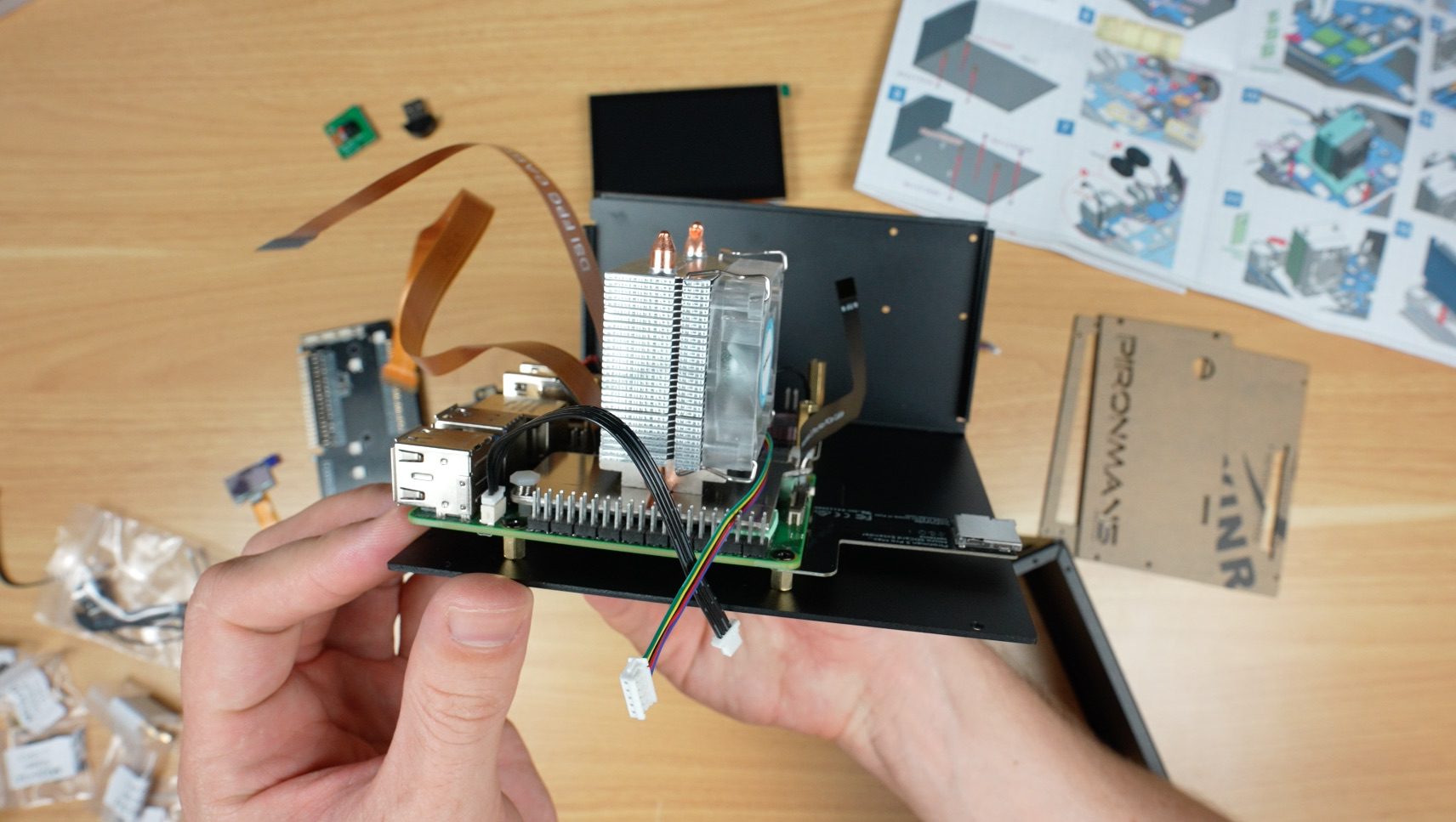
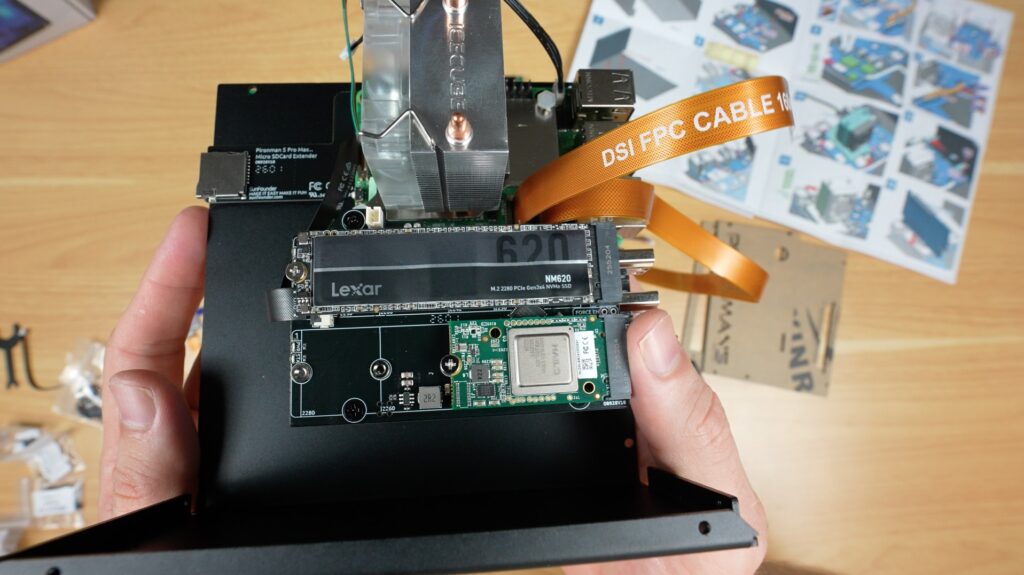
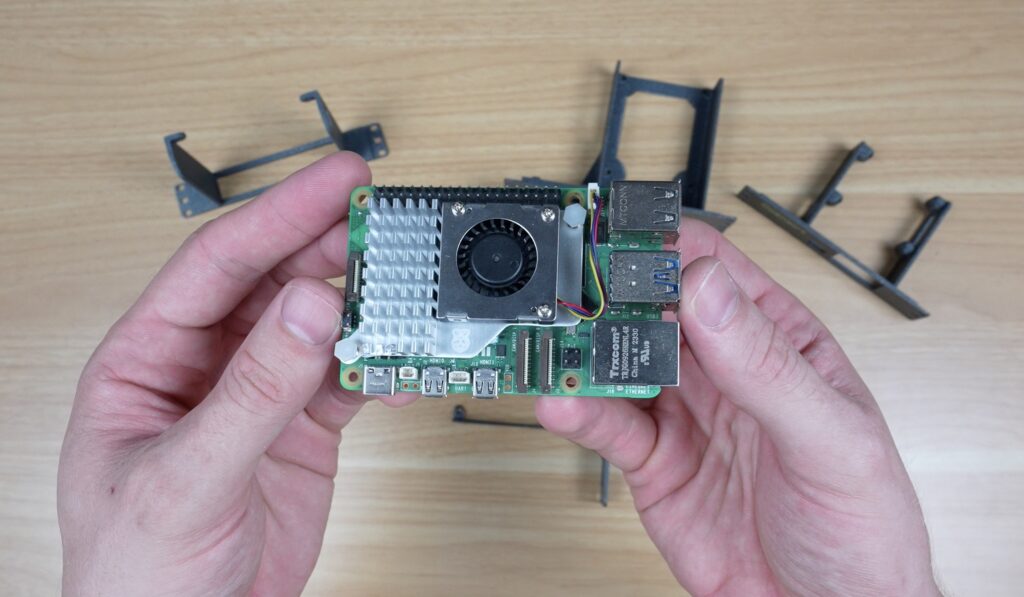
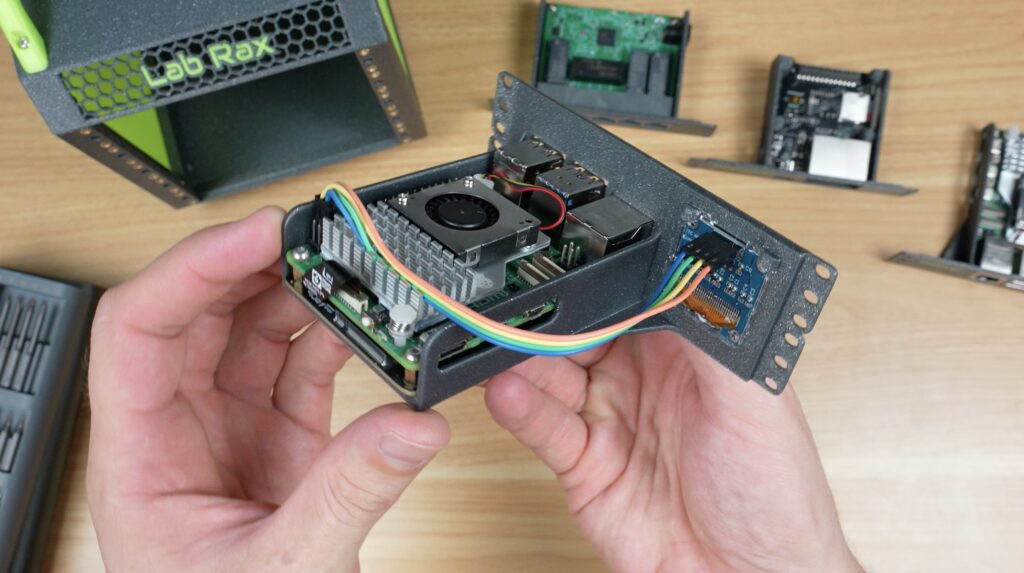
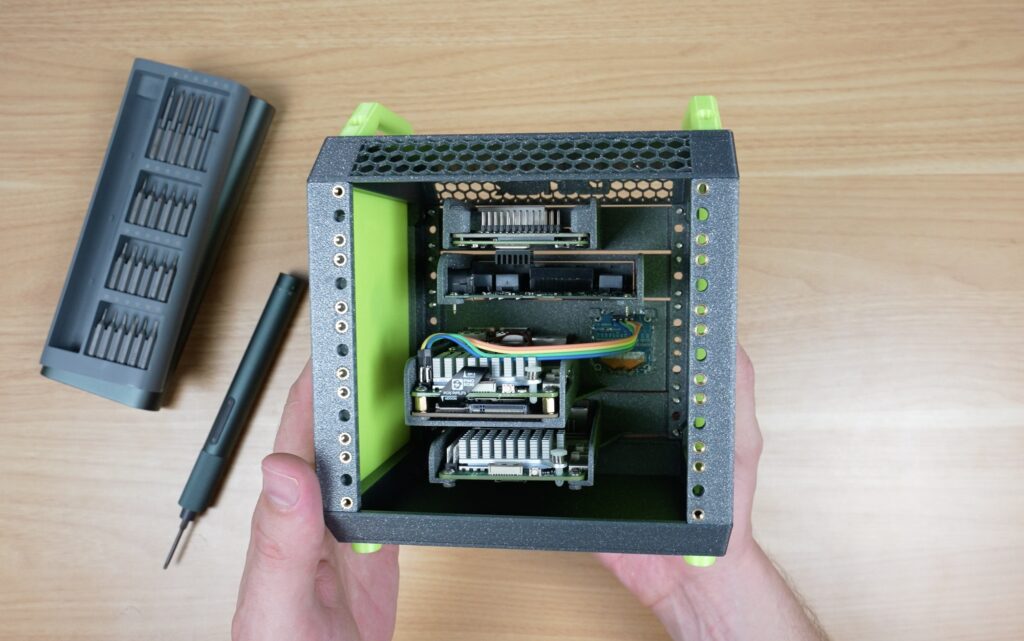
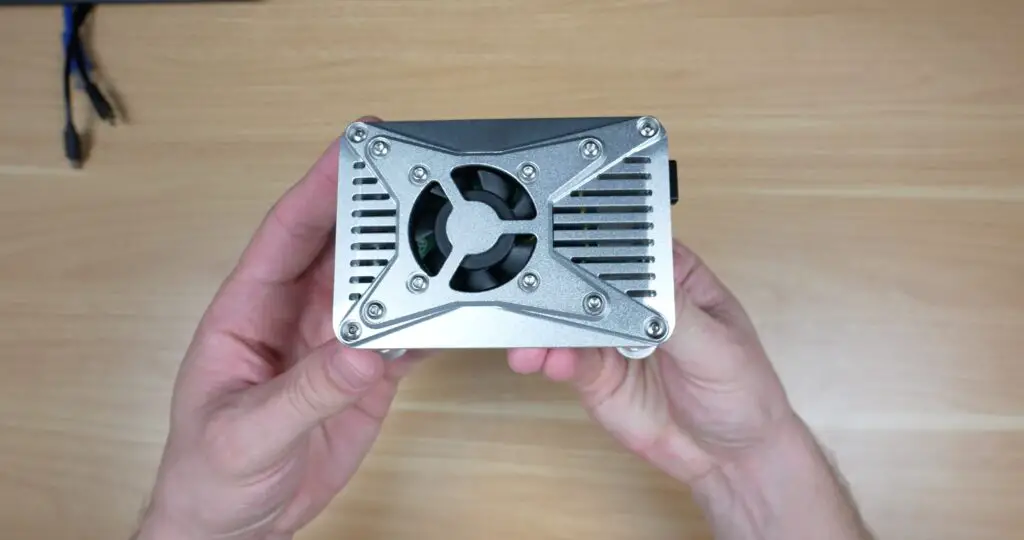
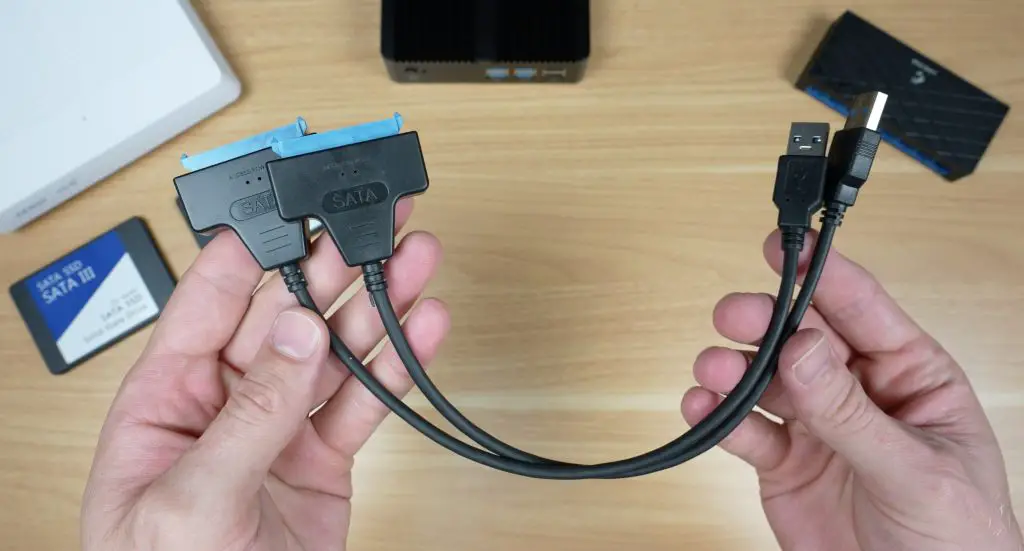
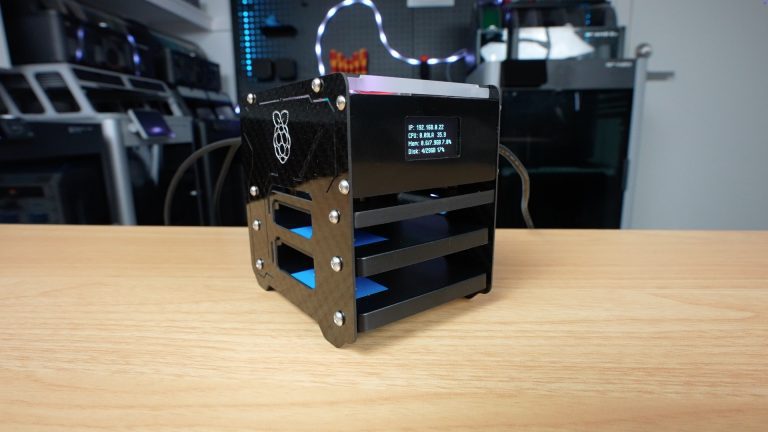
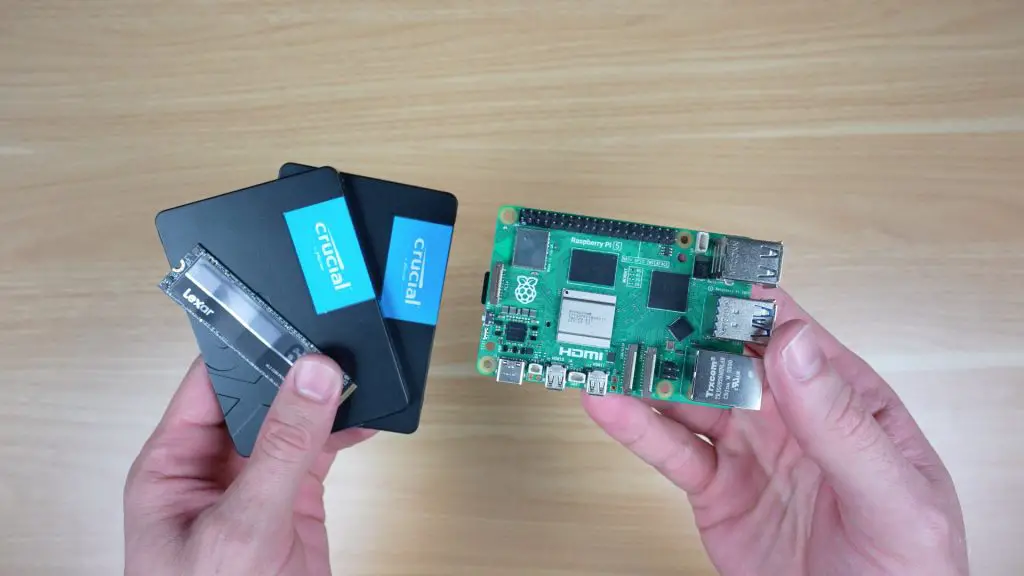
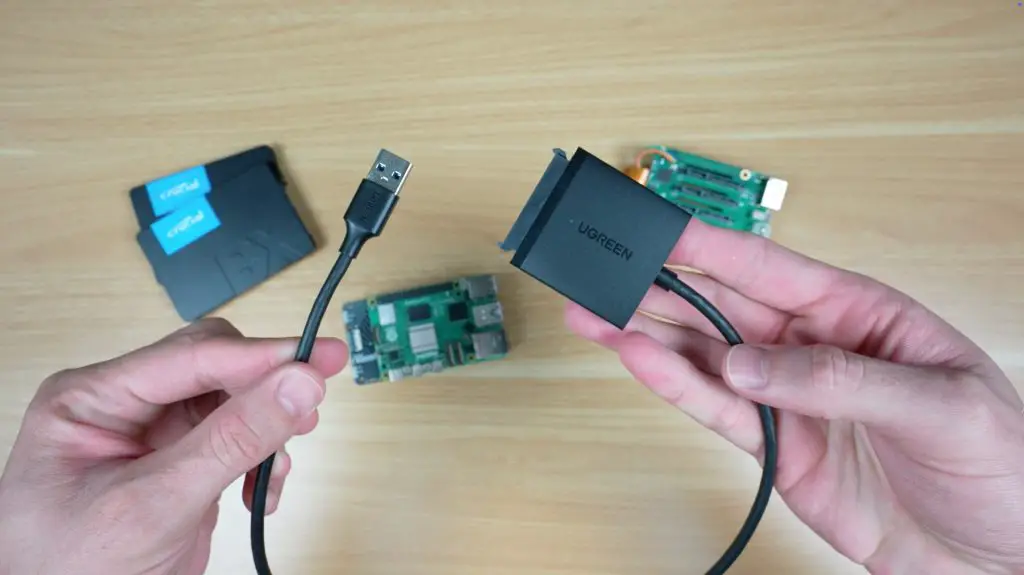
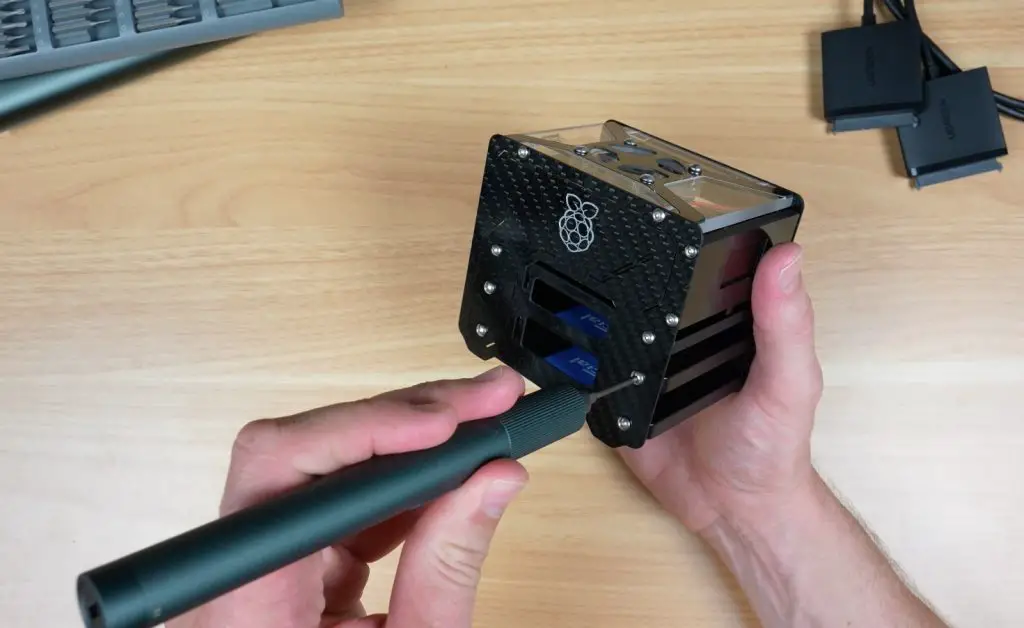
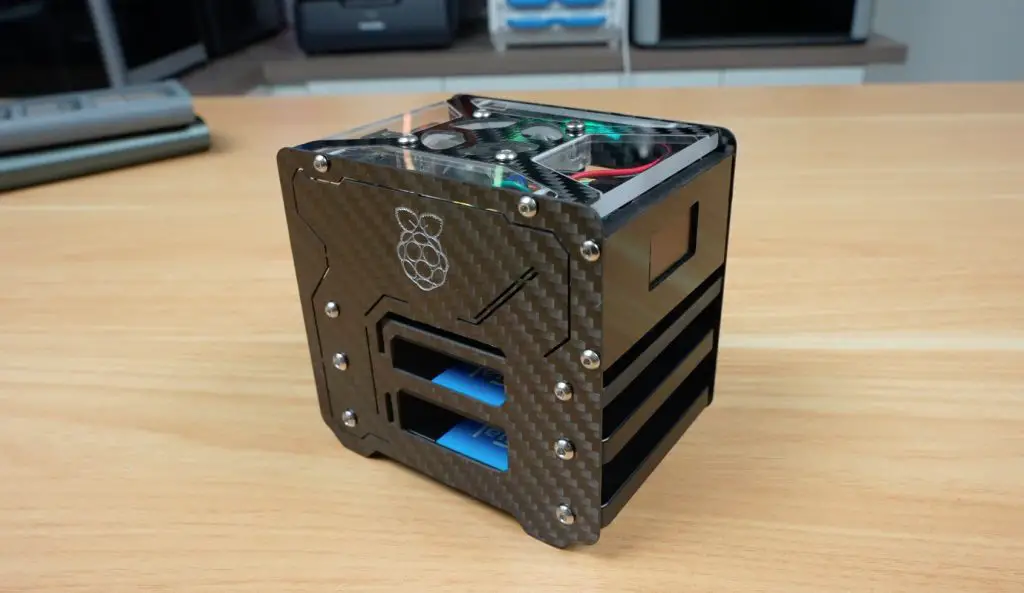
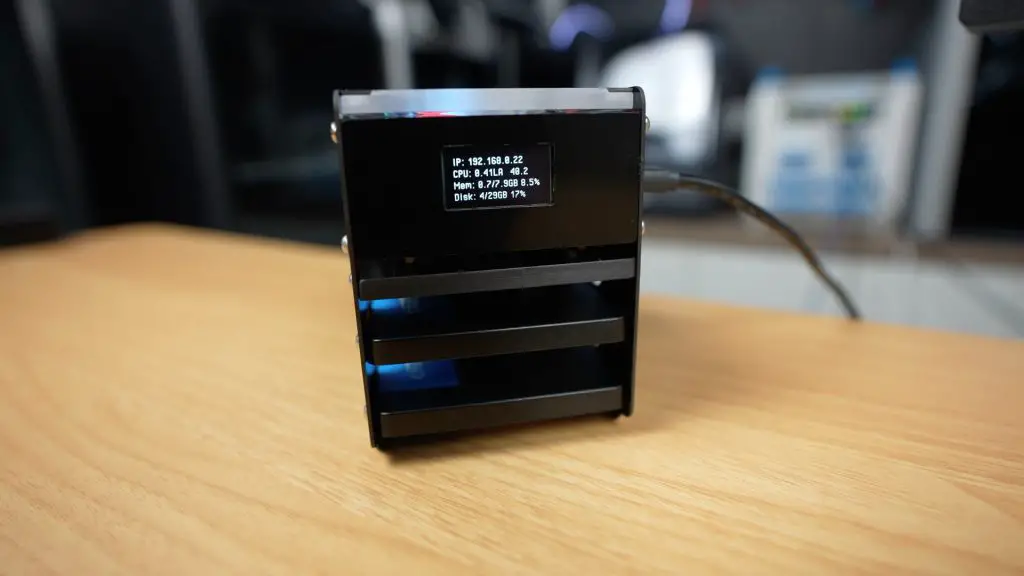
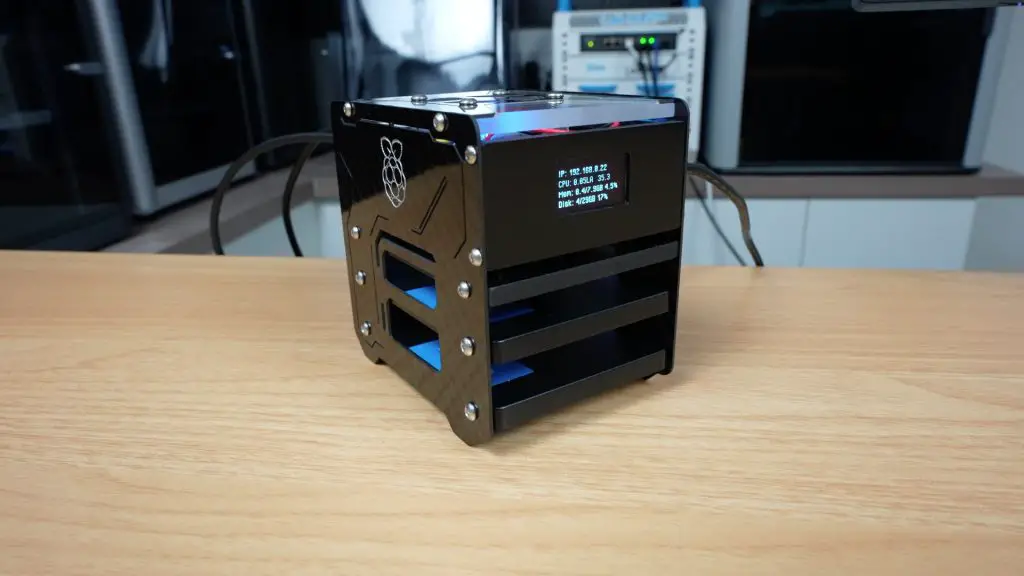
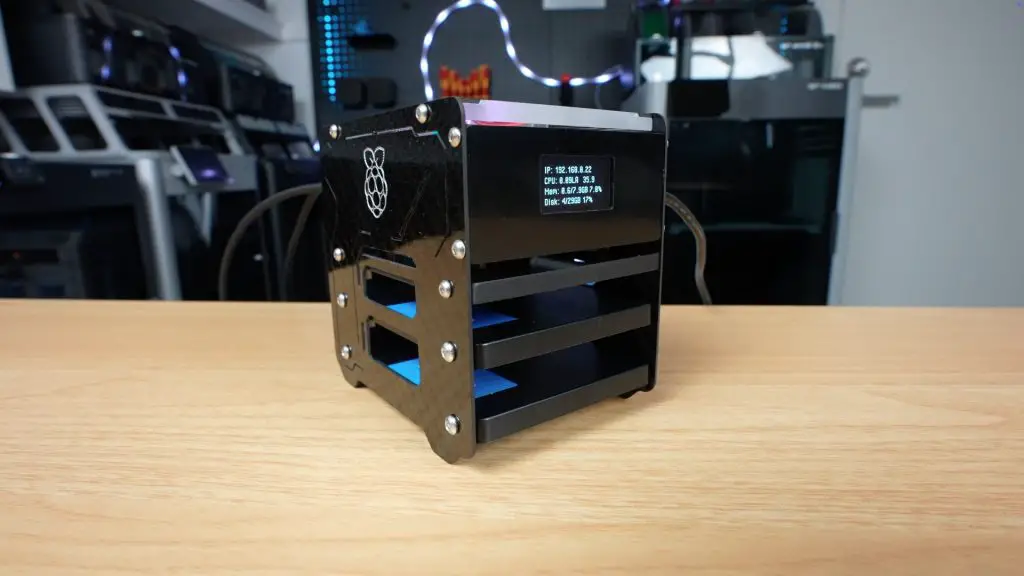
Today, I’m going to be building a low-power SSD NAS that is built around the Raspberry Pi 5. This Pi 5 NAS offers flexible storage options, a stats display, and custom carbon fibre panels. To build a NAS on a Raspberry Pi, you typically need to use one of two hats, a SATA hat to connect 2.5″ SSDs or an NVMe hat to connect M.2 NVMe SSDs. I wanted to do things a little differently for this build, so this NAS uses both 2.5-inch SATA SSDs and NVMe storage drives. This is achieved by using an NVMe hat for the M.2 storage, along with USB to SATA adaptors for the 2.5″ drives.

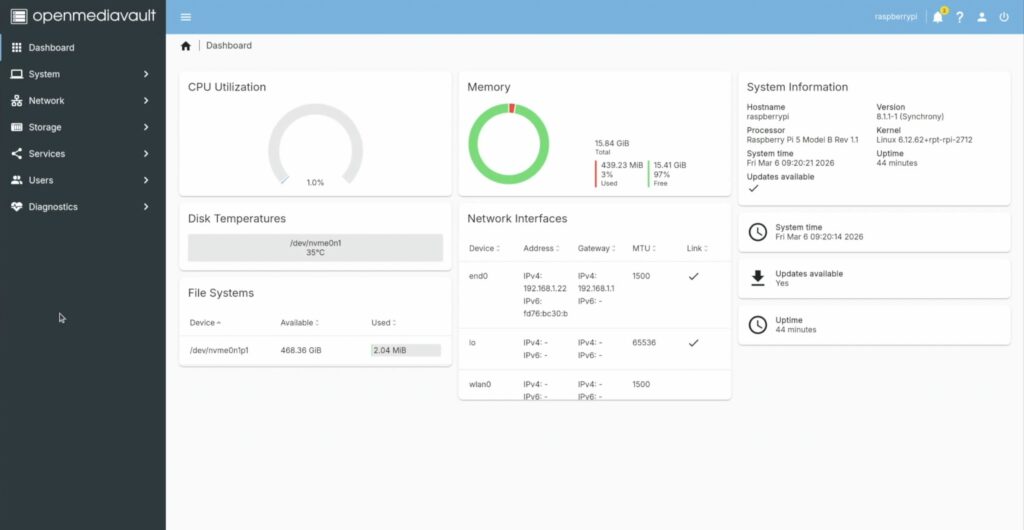
I’ve used OpenMediaVault (OMV) as the NAS operating system, and I’ll run some real-world tests on the NAs to evaluate real-world performance across different drive options.

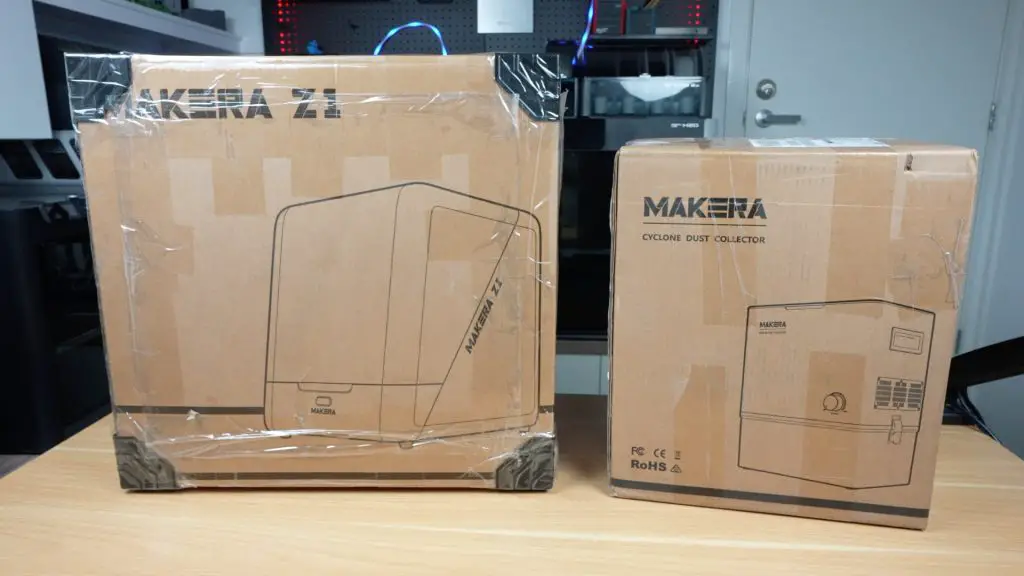
Makera recently reached out and asked if I’d be interested in trying out their new Makera Z1 Desktop CNC machine, so I’ve used that to create some custom components to assemble the NAS into a compact and standalone device.

Here’s my video of the build, read on for the write-up:

What You Need To Build Your Own Pi 5 NAS

Tools & Equipment Used:

Use my coupon code below to get $100 off the Carvera or Carvera Air

MichaelK100off

Once per order, one use per customer

Some of the above parts are affiliate links. By purchasing products through the above links, you’ll be supporting this channel, at no additional cost to you.

Hardware Used To Build The NAS

As mentioned in the introduction, the Raspberry Pi 5 provides a single PCIe port, which typically forces you to choose between a SATA or an NVMe expansion hat. I wanted to try use both for this build, so in order to avoid the performance limitations of a PCIe switch, this build uses an NVMe hat connected to the PCIe port, while the SATA drives use USB-to-SATA adapters to take advantage of the USB 3.0 ports.

So, all up in hardware, the list includes:

  • A Raspberry Pi 5 with40mm fan and heatsink
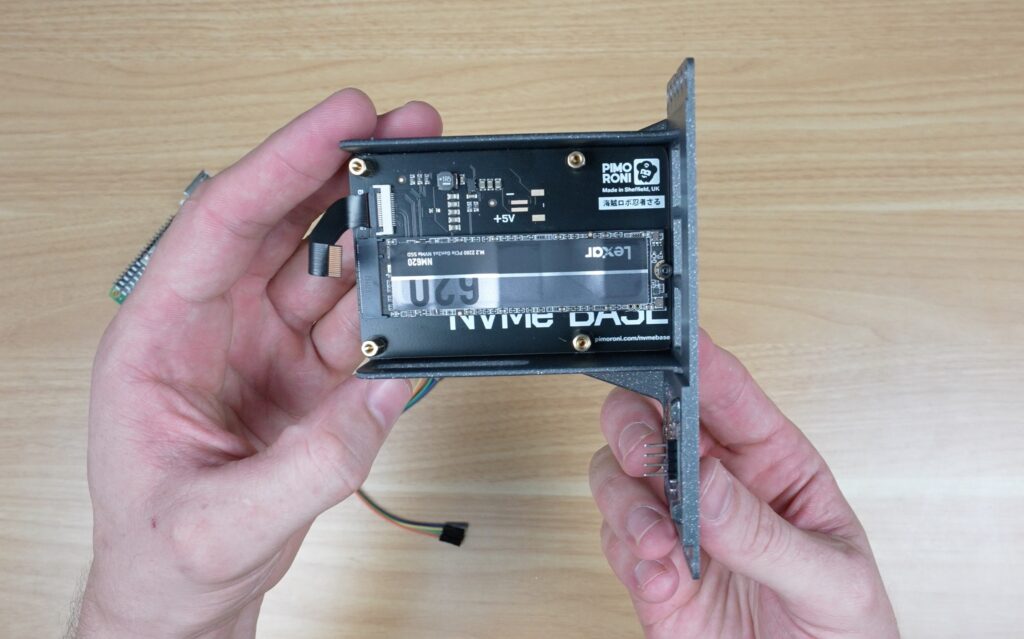
  • An NVMe hat and NVMe storage drive, although a dual hat and two drives could also be used.
  • Two 2.5-inch SATA SSDs with USB adapters
  • An I2C OLED display for system stats.
  • To assemble these components, custom carbon fibre and acrylic panels will be made up.

Designing the Assembly

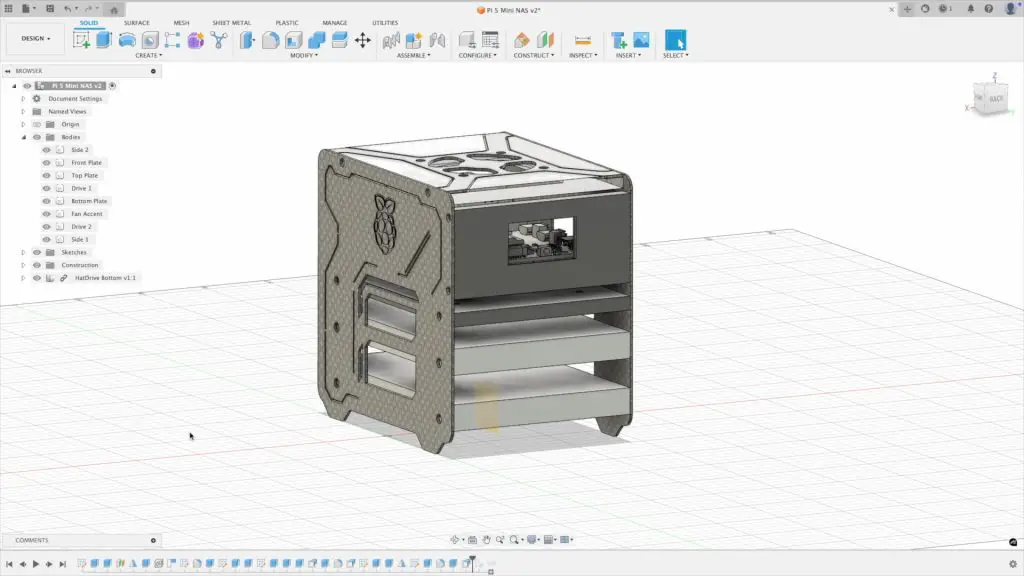
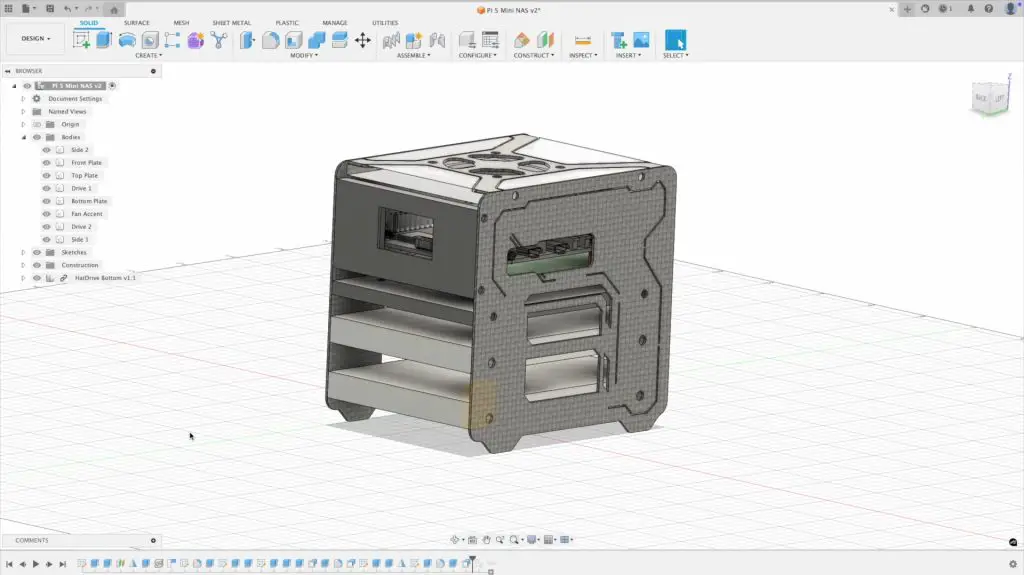
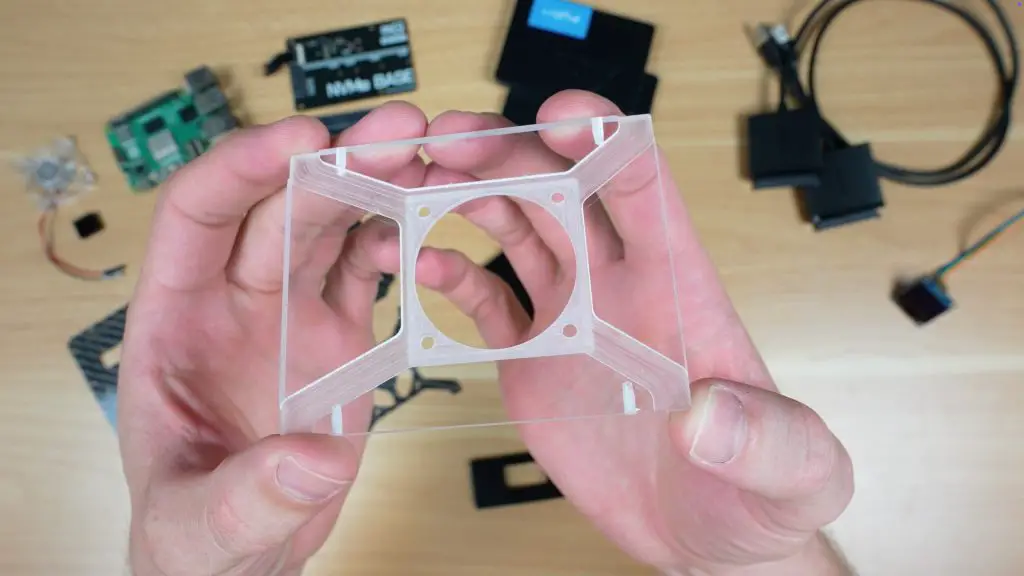
As with most of my projects, the enclosure was designed in Fusion360. Two carbon fibre side panels support the 2.5-inch drives and the acrylic base for the Pi stack. A clear acrylic top panel holds a fan above the Pi’s heatsink, with a carbon fibre accent piece tying it into the side panels. A black acrylic front panel houses the OLED display. The layout is designed around easy of assembly and providing airflow to the drives and Pi.

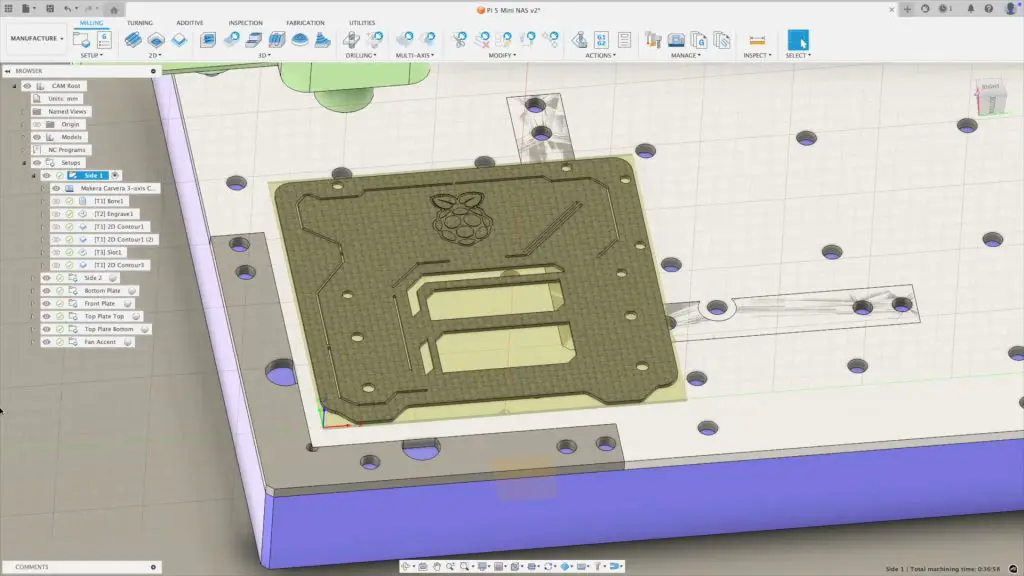
I then used Fusion360’s manufacturing options to generate the NC toolpaths. It’s simulation function is particularly helpful to validate the cutting processes before moving onto the machine.

Tool Paths For CNC

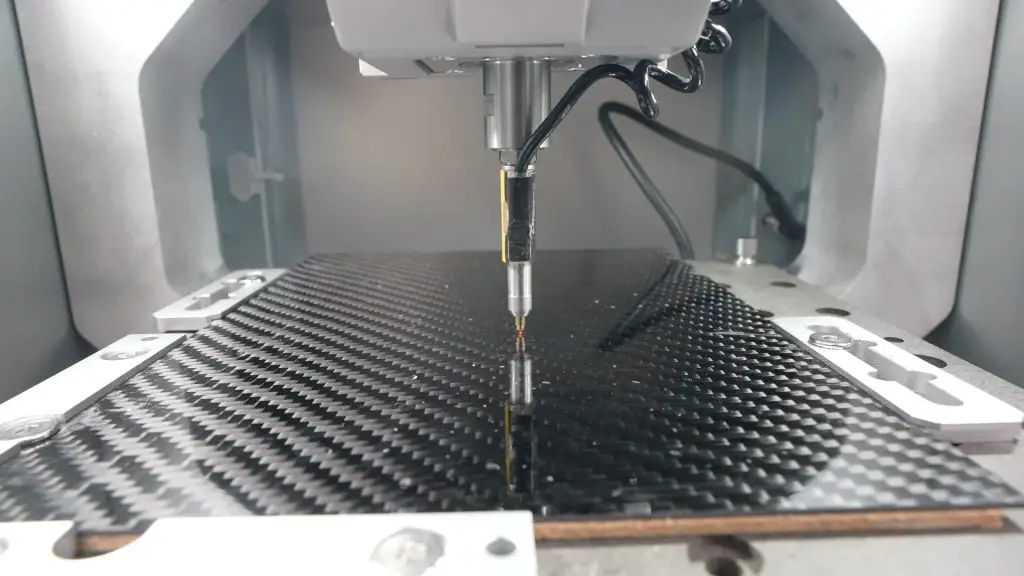
Cutting the Panels on the Makera Z1

Once the toolpaths were prepared, the NC files were exported and loaded into Carvera Controller for machining.

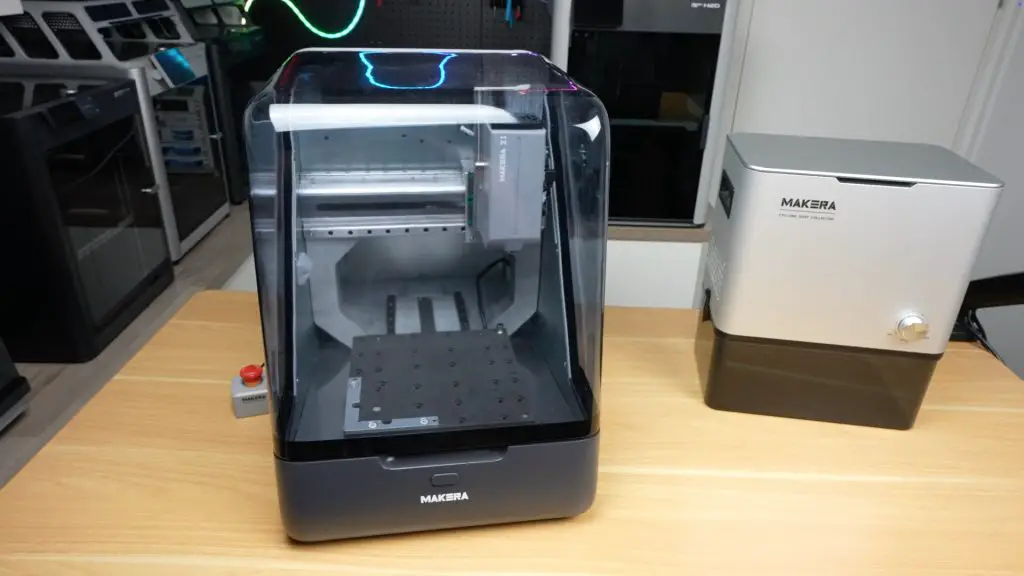
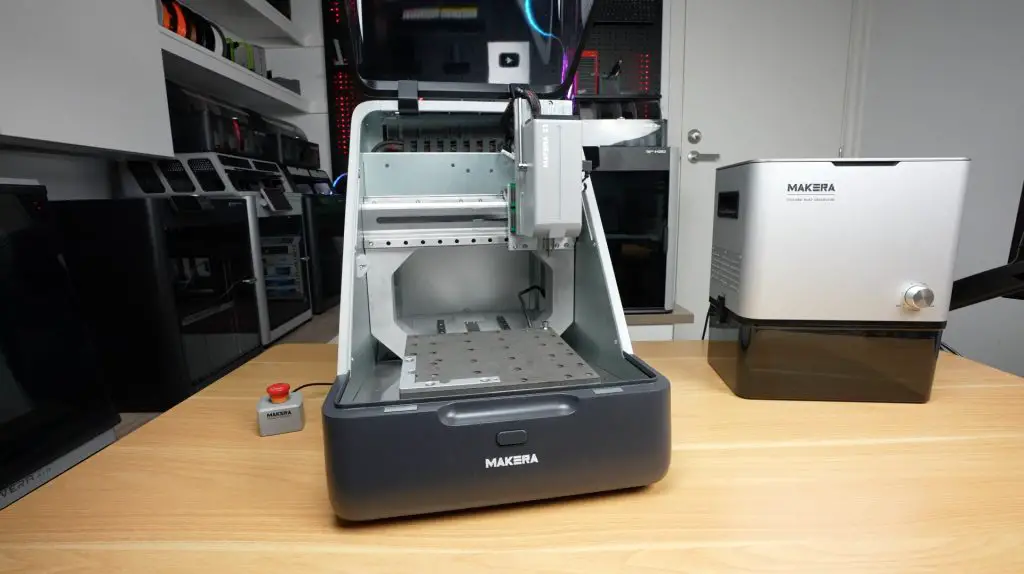
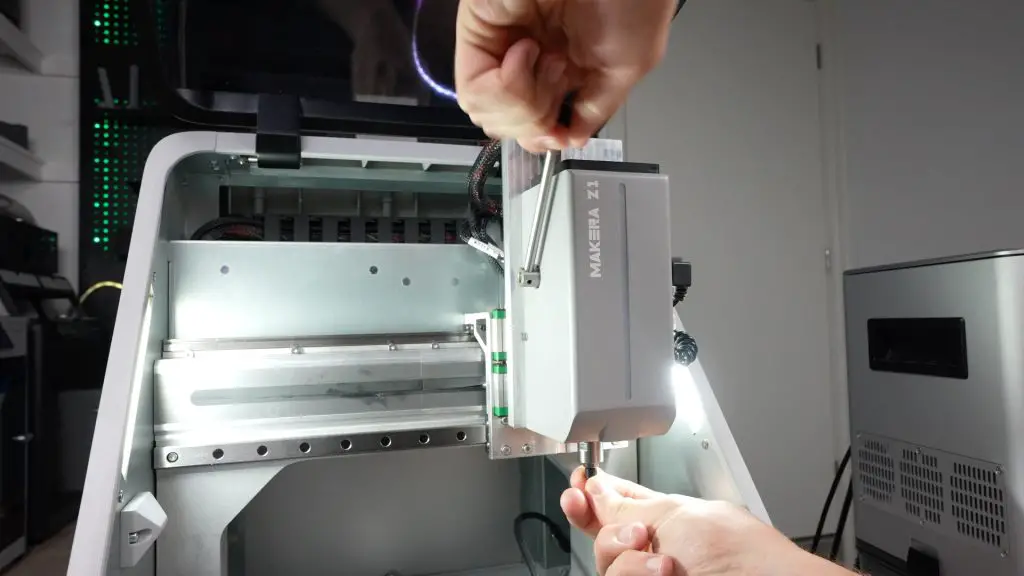
The Z1 is Makera’s new beginner-friendly CNC, with a 200×200 mm bed and 100 mm of cutting height. This provides more than enough volume for smaller projects like this NAS enclosure.

Like with the Carvera Air, the Z1 uses an integrated auto-levelling probe to probe the stock at a number of places across the surface before machining to account for any height differences. This probe also has an integrated laser pointer so it can be used to trace an outline or cutting margins on your stock for you start cutting, which is a helpful check and useful for alignment.

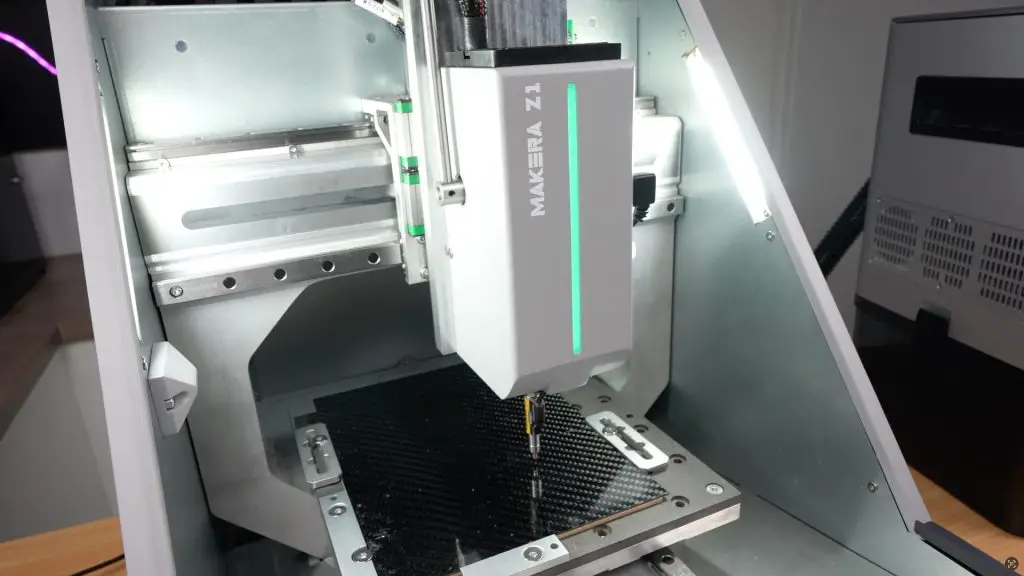
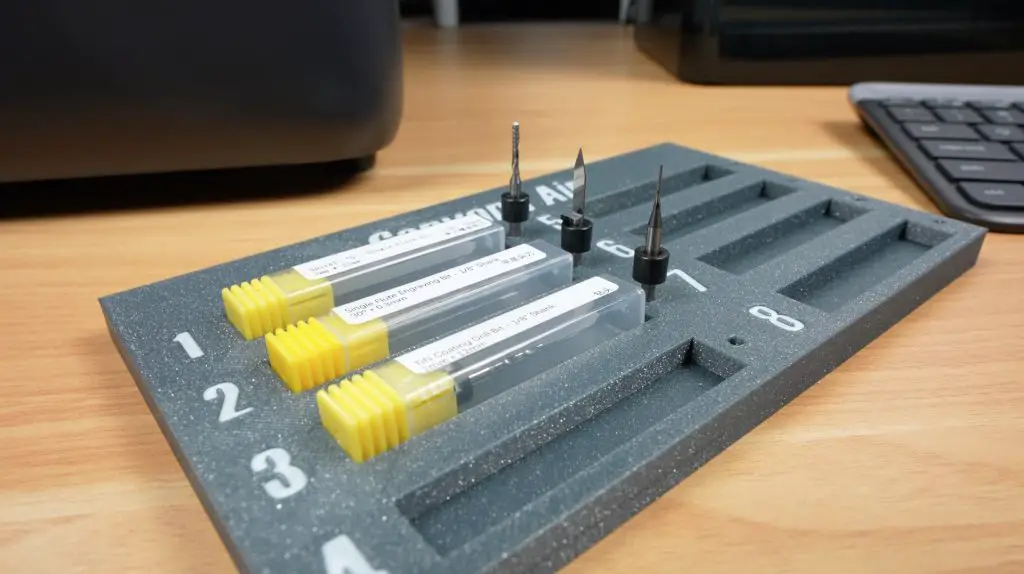
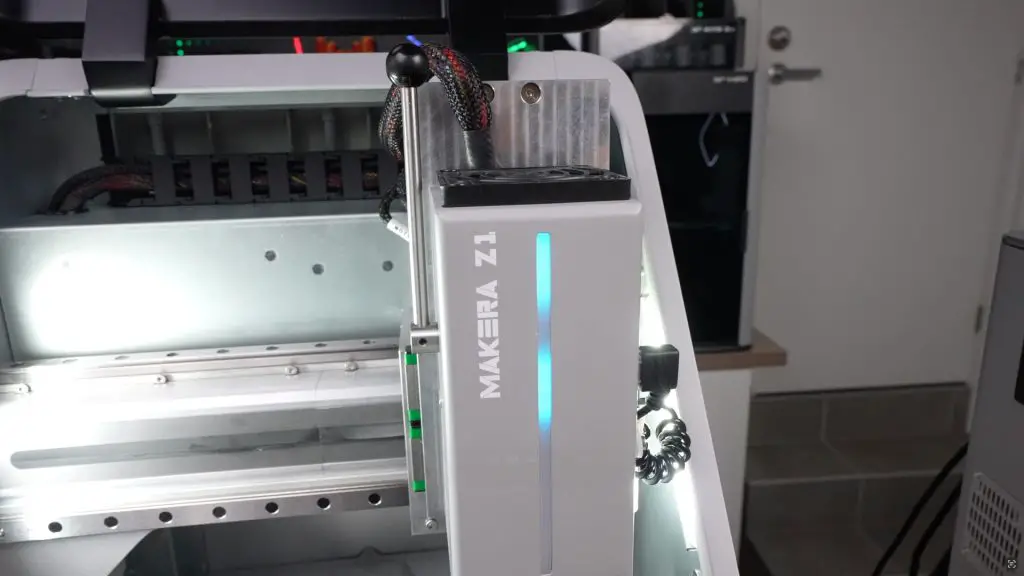
Once auto-levelling is done, again like the Carvera Air, it also has single level based tool changer which allows you to quickly and easily switch between tools. I’m using three tools for this project, a 2mm single flute endmill for the larger profile cuts, a 0.3mm engraving bit for the Raspberry Pi logo and a 0.6mm corn bit for the small accent details. The Z1 has an LED strip light integrated into the tool head, which amonst other things, helpfully indicates which tool number to change to.

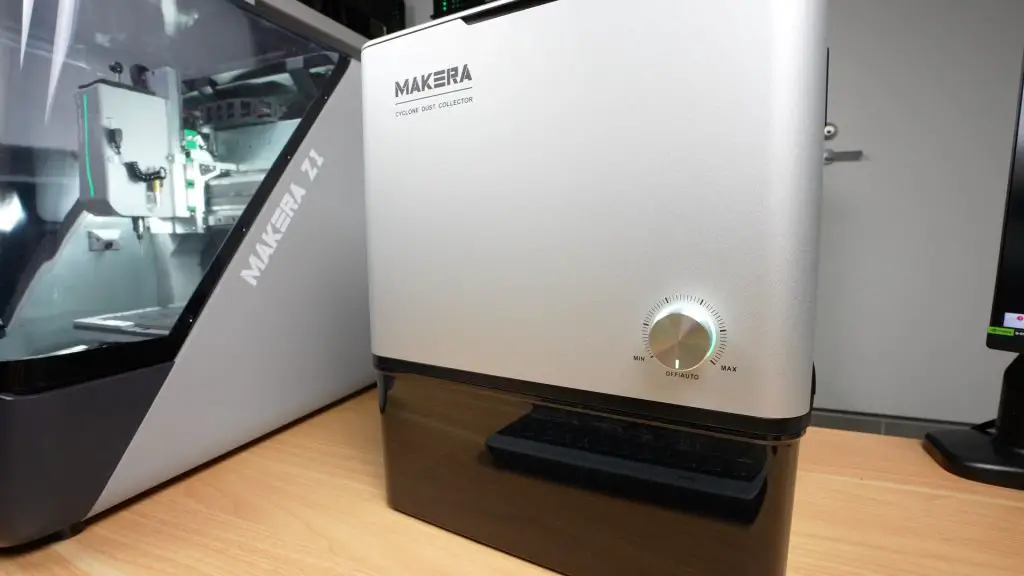
The dust port can connect to either a standard shop vacuum or Makera’s Cyclone Dust Collector. The Cyclone offers several advantages: automatic control via the Z1, quieter operation (under 70 dB), compact desktop sizing, and a 6 L capacity with a 200 W motor and HEPA filtration. While it does not capture all debris, it reliably removes 80–90% of chips, significantly improving visibility during machining.

One thing that has changed quite a bit between this machine and the larger Carvera and Carvera Air is how it handles chips and dust. The Z1 has a blower integrated into the tool head. This blows chips and dust away from the work area and towards the back of the machine where there is a port for a vacuum. The base under the bed is also slanted towards the back so chips vibrate their way to the vacumm port on the back of the machine as well.

This port allows you to hook up a shop vac or Makera’s Cyclone Dust Collector.

Their Cyclone Dust Collector has a few advantages over a shop vac, it can be automatically controlled by the Z1, both in switching it on or off and in setting the power level, it’s also noticeably quieter than a shop vac, running at under 70dB, and its compact enough to sit on the desk next to the Z1.

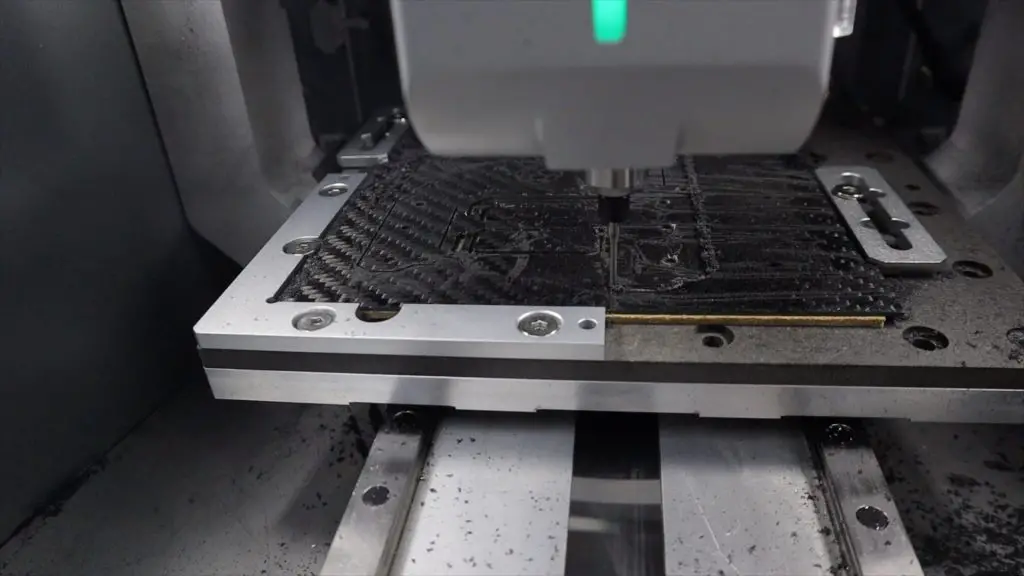
This dust extraction system obviously doesn’t catch everything but it does get 80-90% of the chips and particles out of the way so you can keep an eye on your project while it’s cutting. For comparison, this is what is looks like when you turn the blower and extraction off while cutting a side panel.

To make up the panels, this is what I used for each:

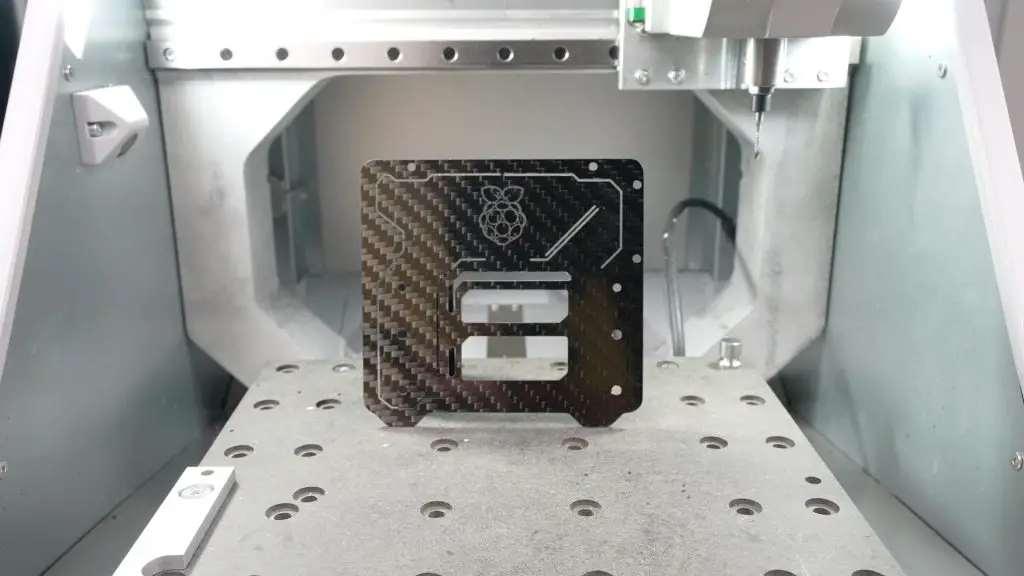
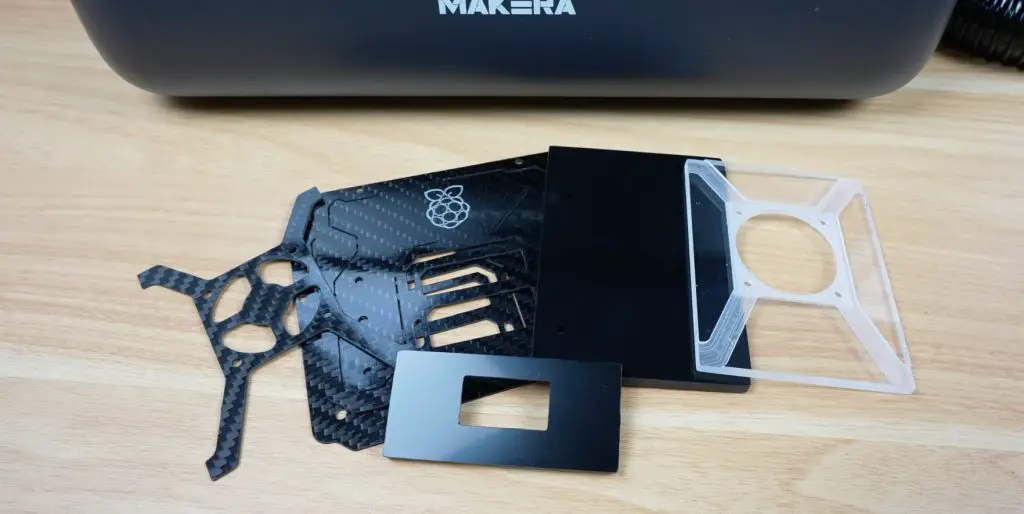
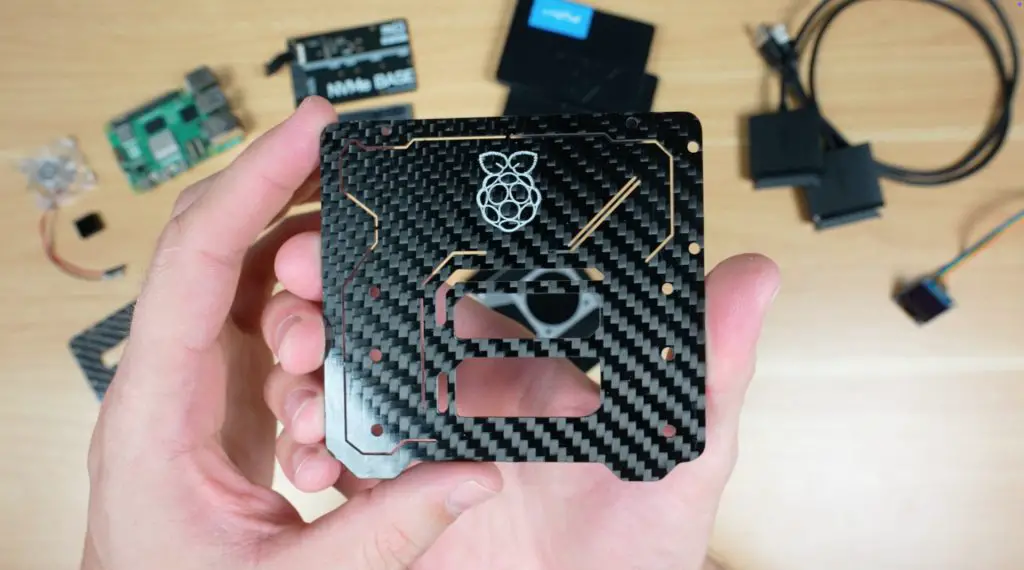
  • Side Panels: Cut from 1 mm carbon fibre using a 2 mm endmill, 0.3 mm engraving bit for the Raspberry Pi logo, and a 0.6 mm corn bit for accent details.
  • Acrylic Base Panel: Cut from 5 mm black acrylicusing a 2 mm endmill, requiring only contour and hole cuts.
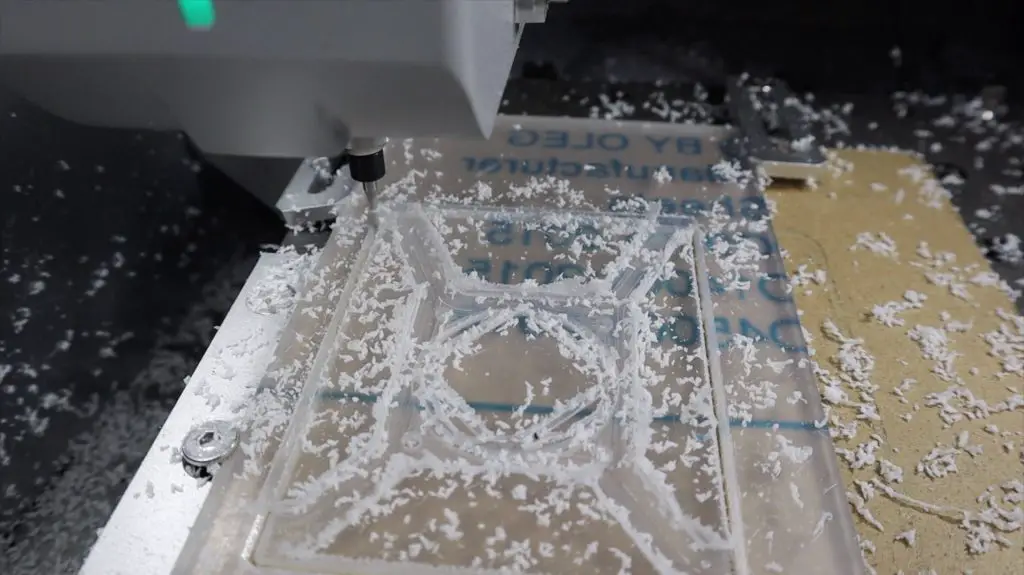
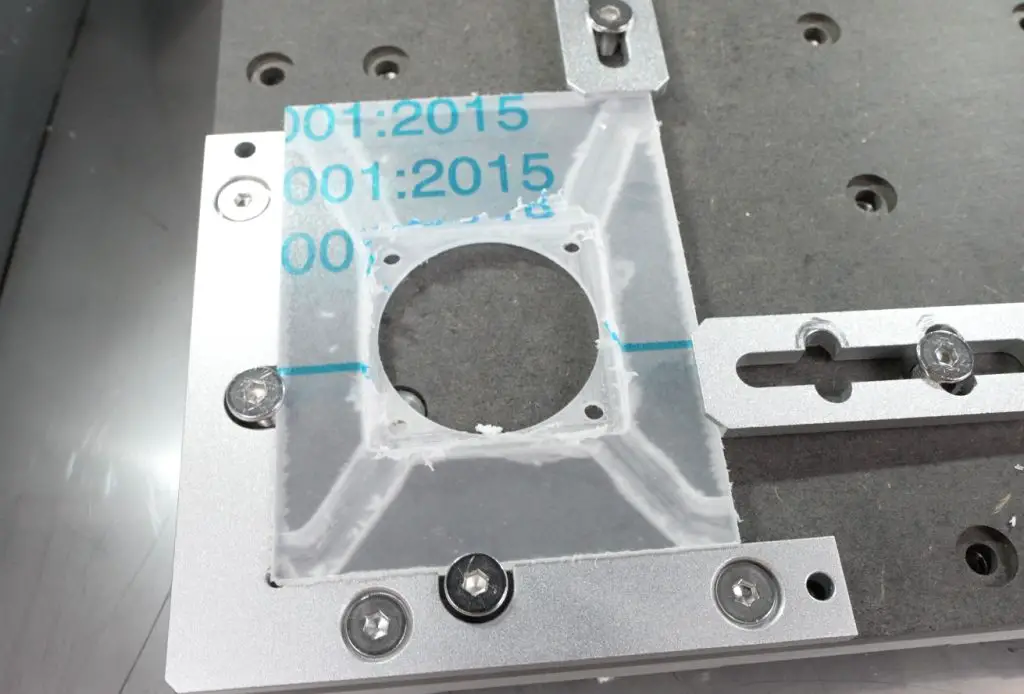
  • Clear Acrylic Top Panel: Double-sided machining for fan mount pockets and contours using a 2 mm endmill. The laser outline assisted in aligning the fan cutout after flipping the stock over.
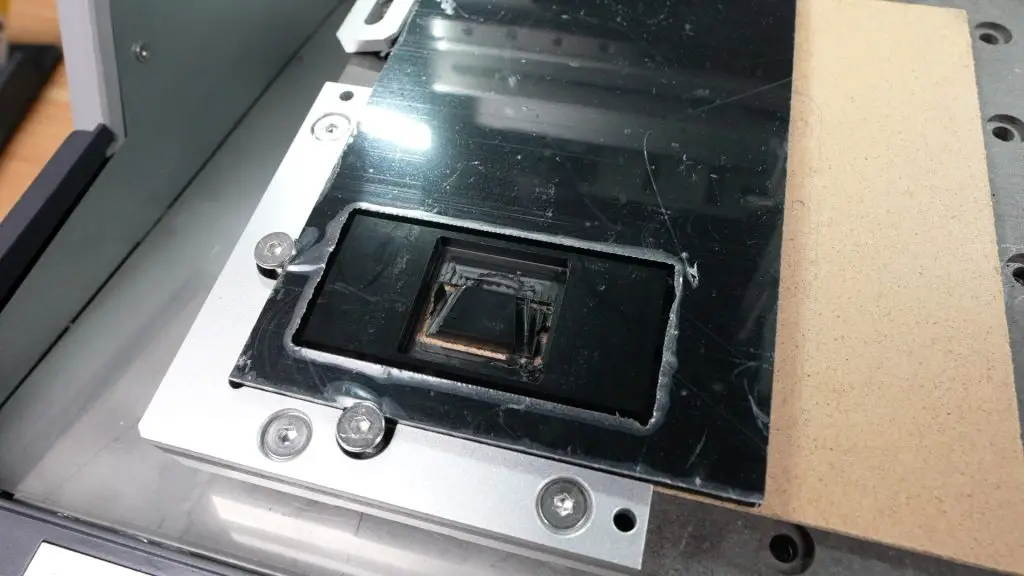
  • Front Panel: Machined with the pocket and cutout for the OLED display, again using a 2 mm endmill.

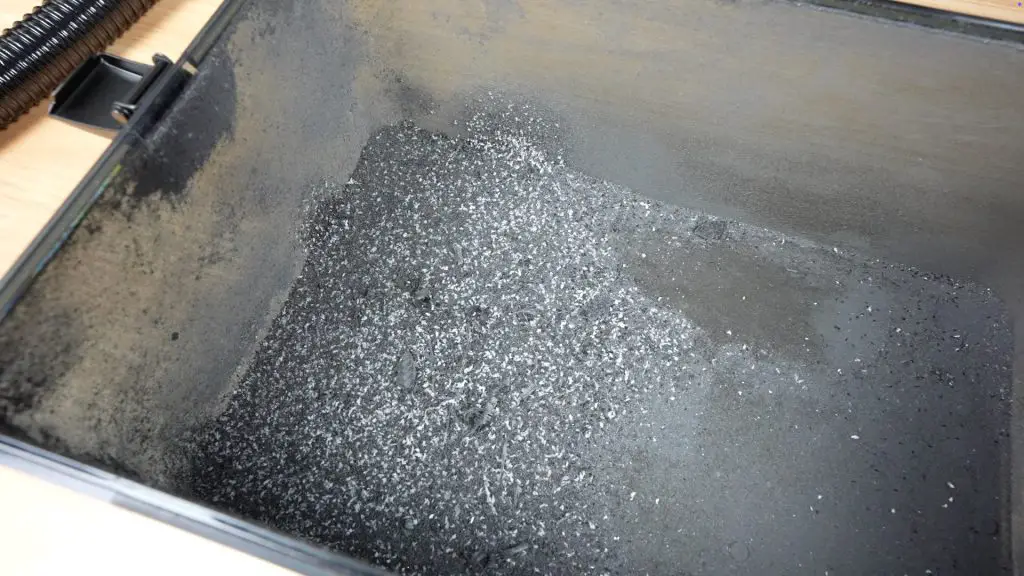
The Cyclone dust collector looks like it’s worked really well, you don’t realise how much it’s collected until you open it up.

Dust & Chips Collected By Cyclone Dust Collector

To finish the components off, I’ve sanded the edges and added the holes for the side screws to screw into.

Clear Acrylic Top Panel Finished Off With Tapped Holes & Sanded

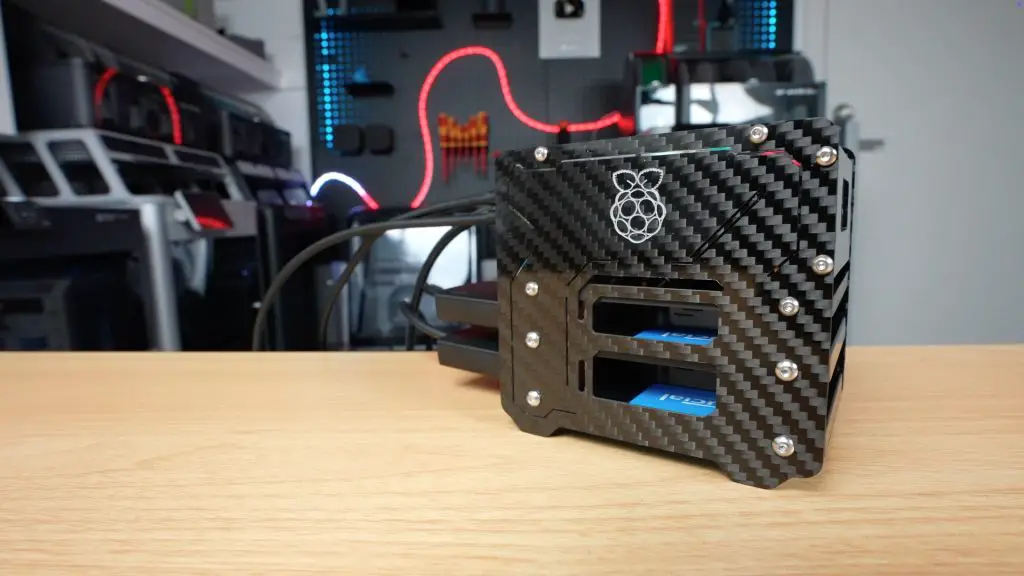
I’ve also added some metallic silver paint to the engraved portion of the Pi logo so that it stands out a bit more. Carbon fibre always looks great, but machining it this cleanly on a desktop machine is really satisfying.

Carbon Fibre Side Panel With Engraving

Assembling the Pi 5 NAS

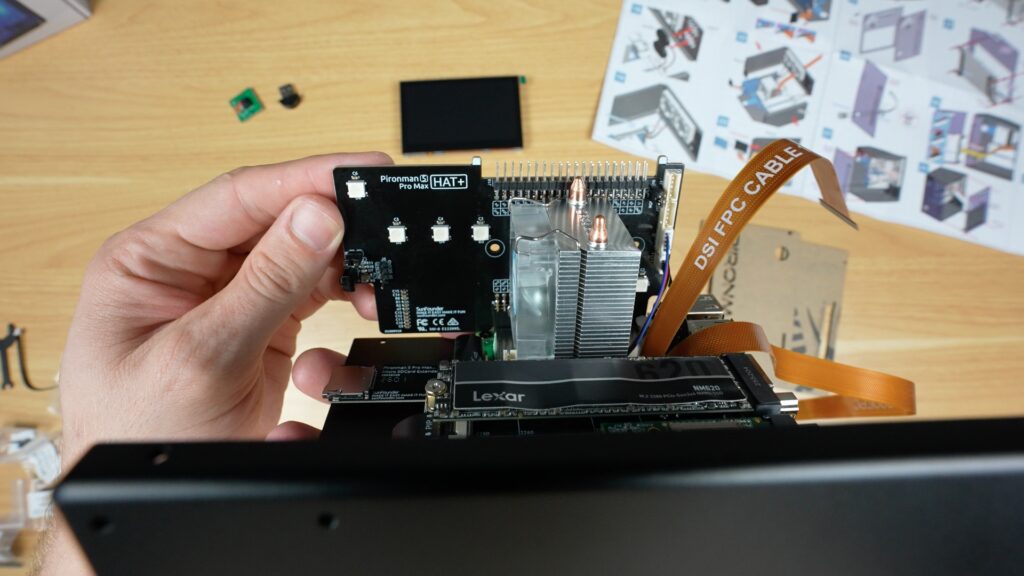
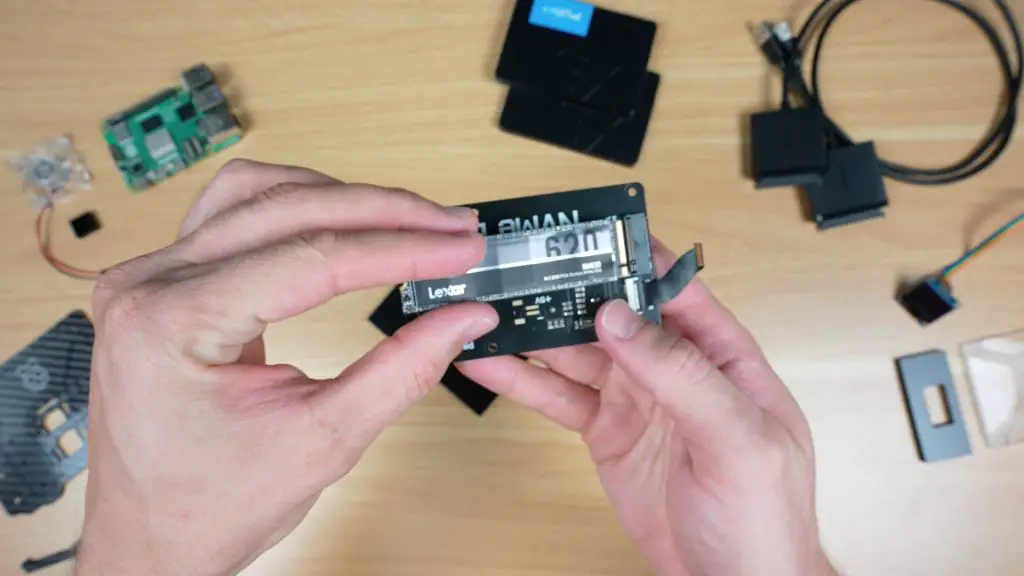
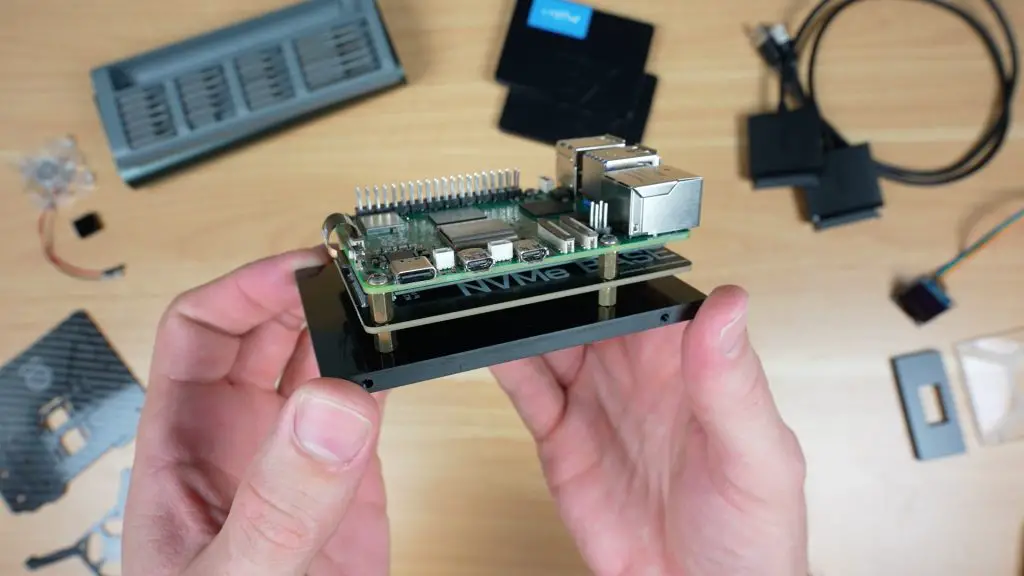
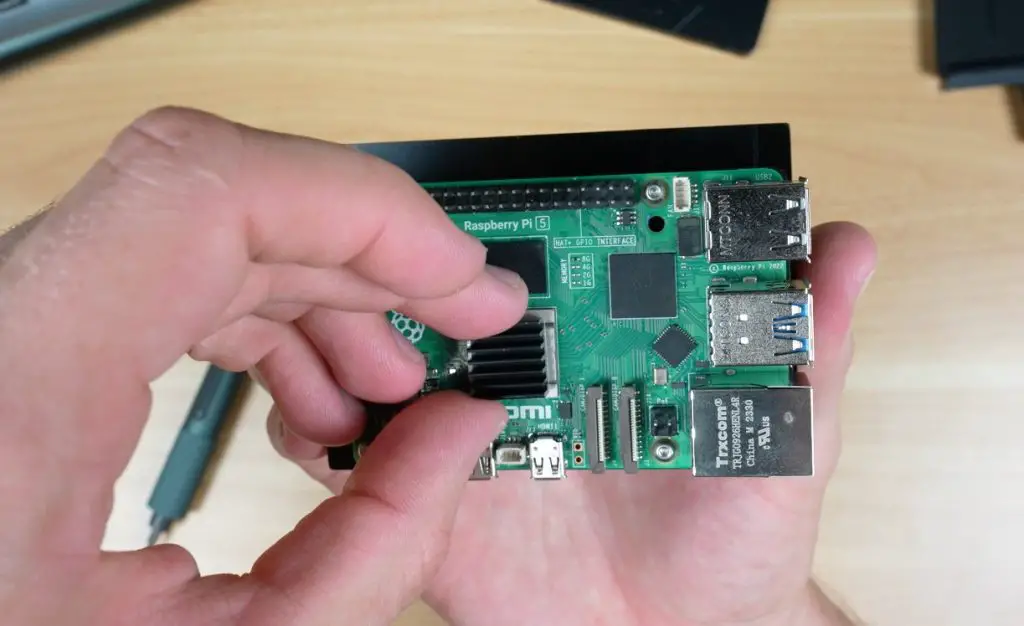
With the components all made up, we can get the Pi 5 NAS assembled. Let’s start with installing the NVMe drive onto the hat and connecting it to the Pi’s PCIe port. The hat mounts beneath the Pi using the included standoffs, and the Pi stack is then mounted onto the acrylic base plate using four 5 mm brass standoffs. A small stick-on aluminium heatsink is added to the CPU.

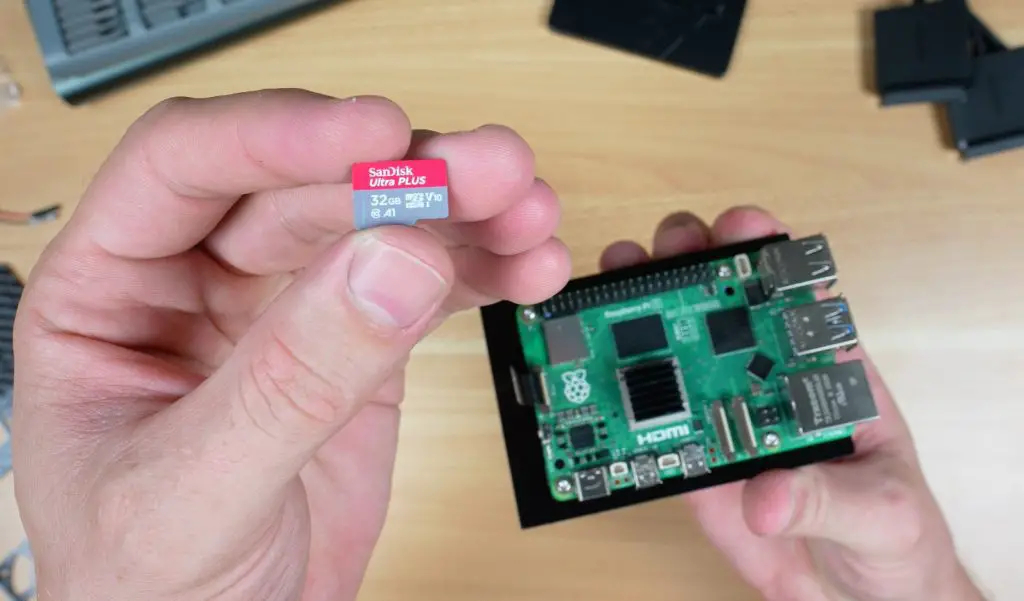
I’ve installed Pi OS Lite, along with OMV onto a microSD card and I’ll be using that to run the OS. If you’d prefer, you can use a dual NVMe hat and run the OS from one of your NVMe drives, keeping the other for storage, or you can use my configuration but run the OS from one of the available drives and keep the others for storage.

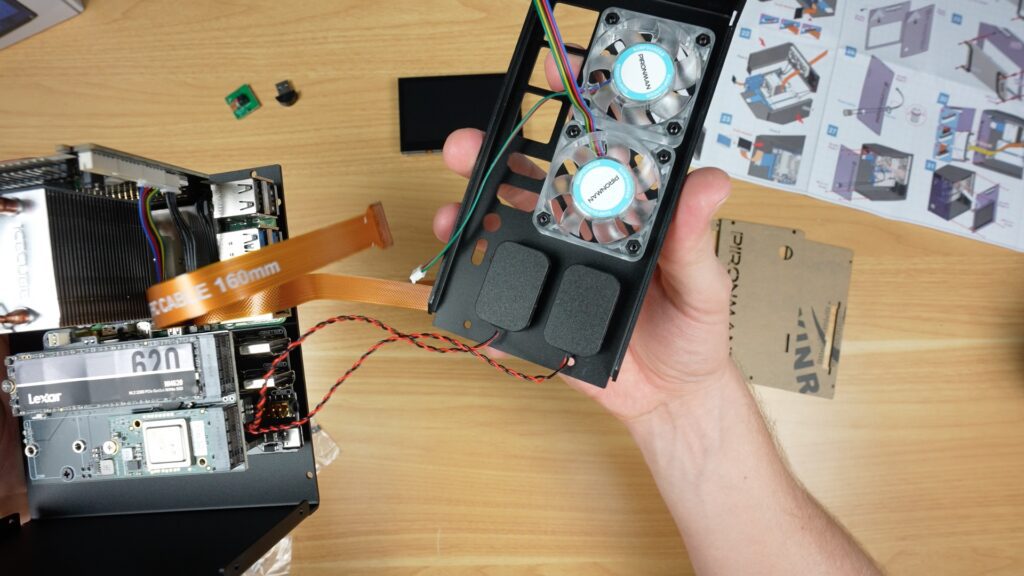
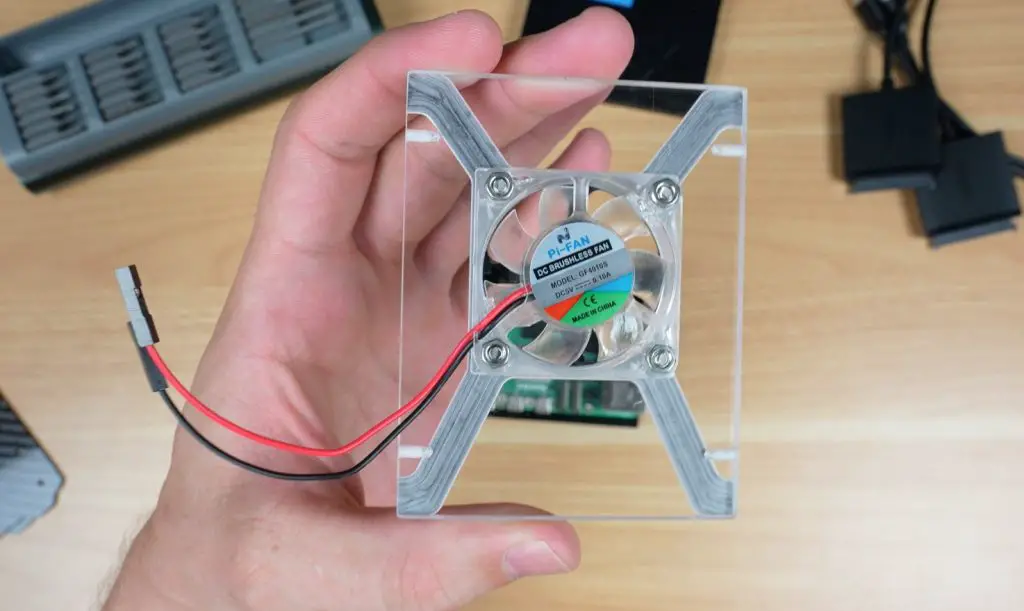
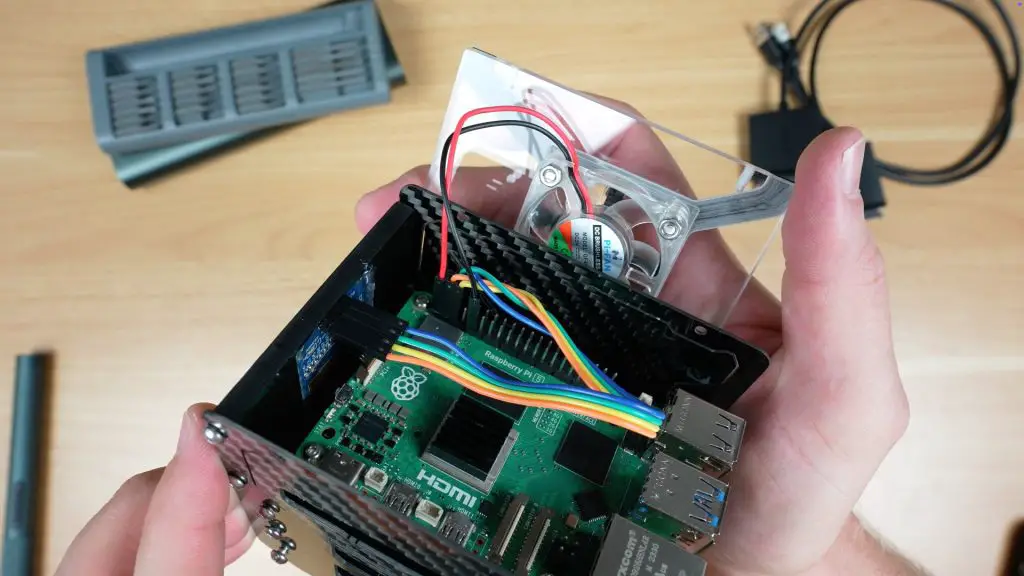
To make up the fan assembly, we need to mount the 40mm fan beneath the clear acrylic and carbon fibre accent piece, and then secure it with four M3x16mm screws and nuts.

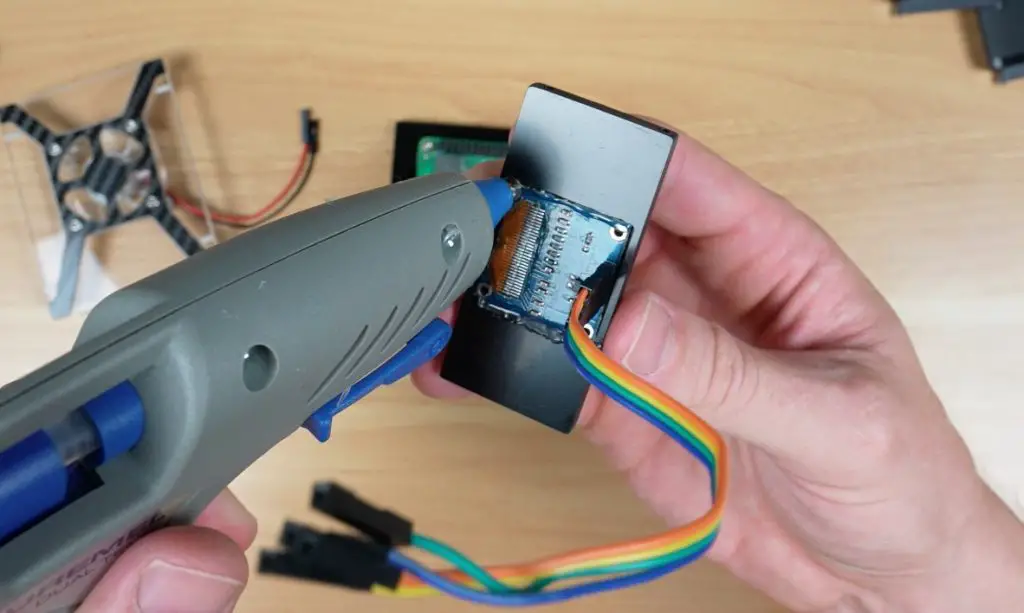
Lastly, the I2C OLED display is held in place with some hot glue along the edges. I didn’t want to use screws to mount the display as I prefer this clean look on the front.

Gluing OLED Display Into Place

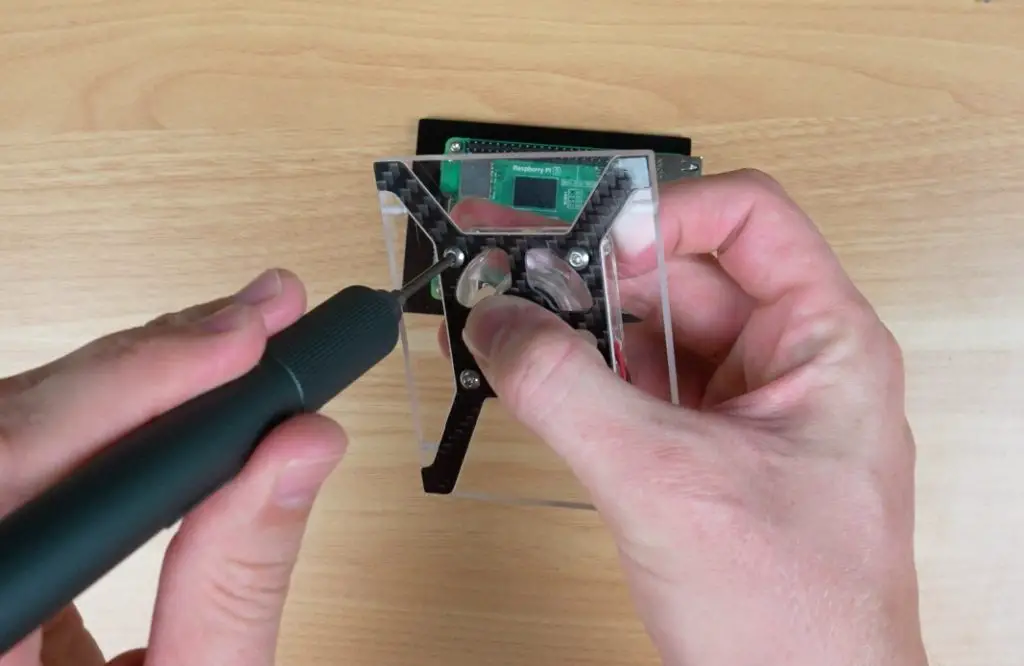
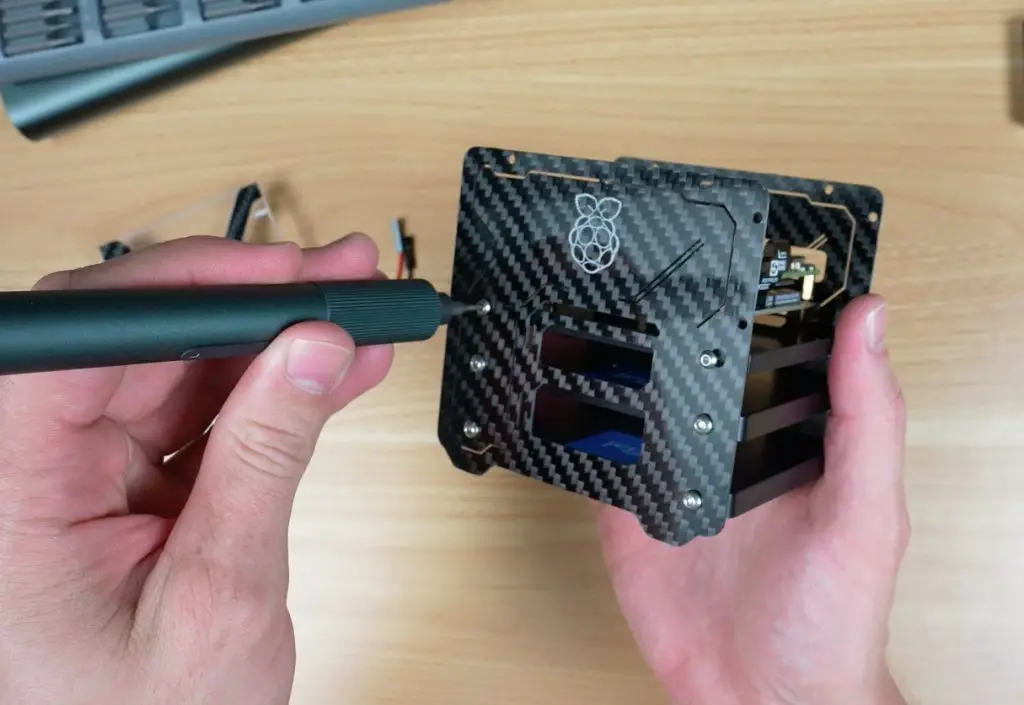
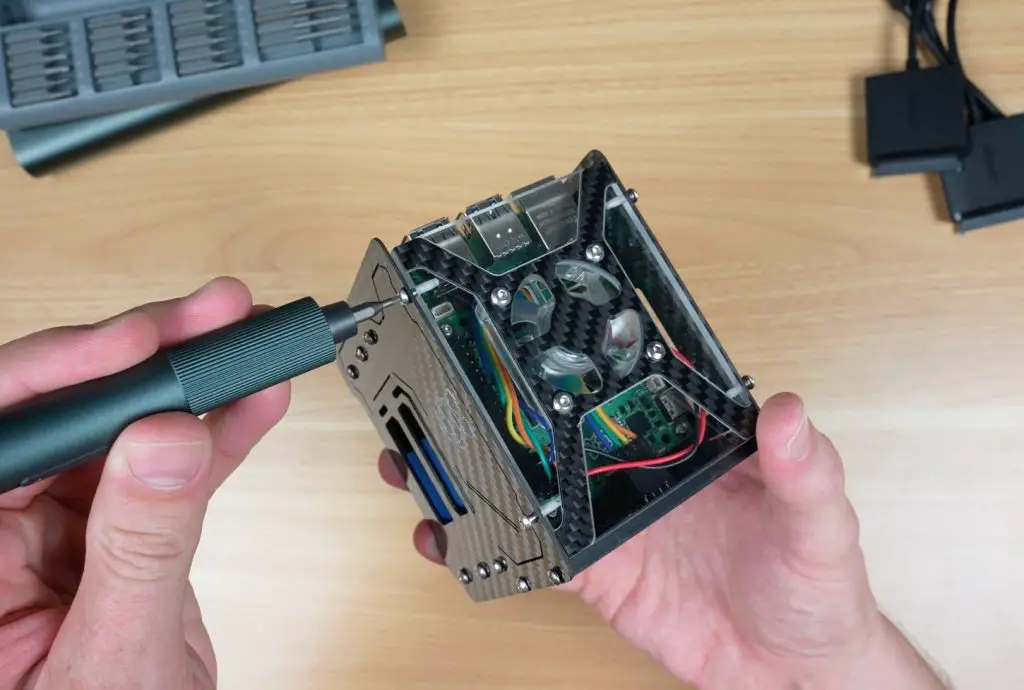
The storage drives are mounted between the carbon fibre side panels, followed by installation of the Pi stack, front panel, and top fan panel. The drives are held in place with M3x8mm button head screws and the acrylic components with M2.5x6mm button head screws. The display connects to 5V, GND, SCL, and SDA. The fan connects to 3.3 V and GND.

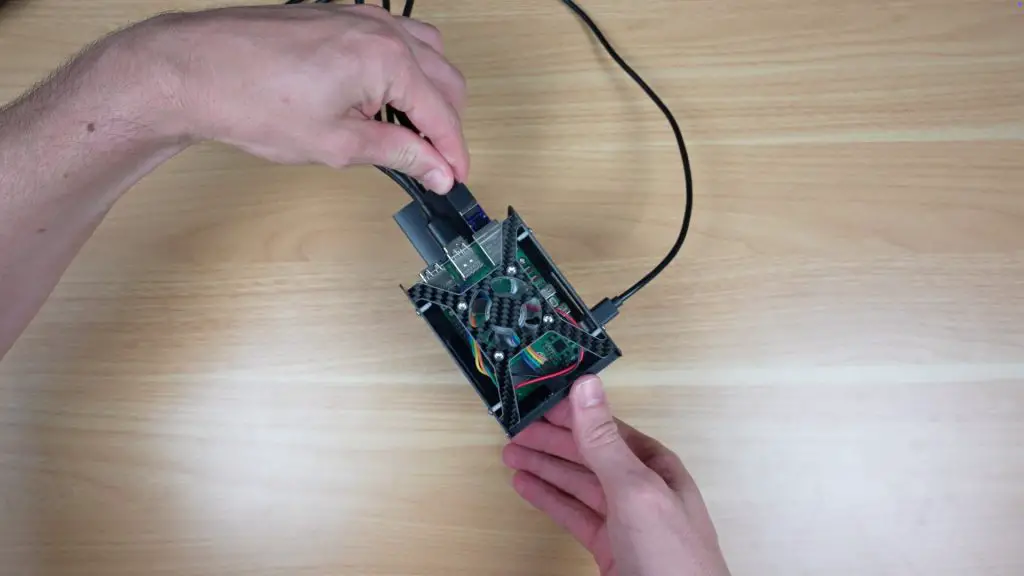
Once fully assembled and squared up, the screws can be tightened up. Then the SATA adapters, power cable, and Ethernet cable are connected to finish off the Pi 5 NAS.

And thats the Mini Pi 5 NAS complete.

Configuring OMV and Testing the NAS

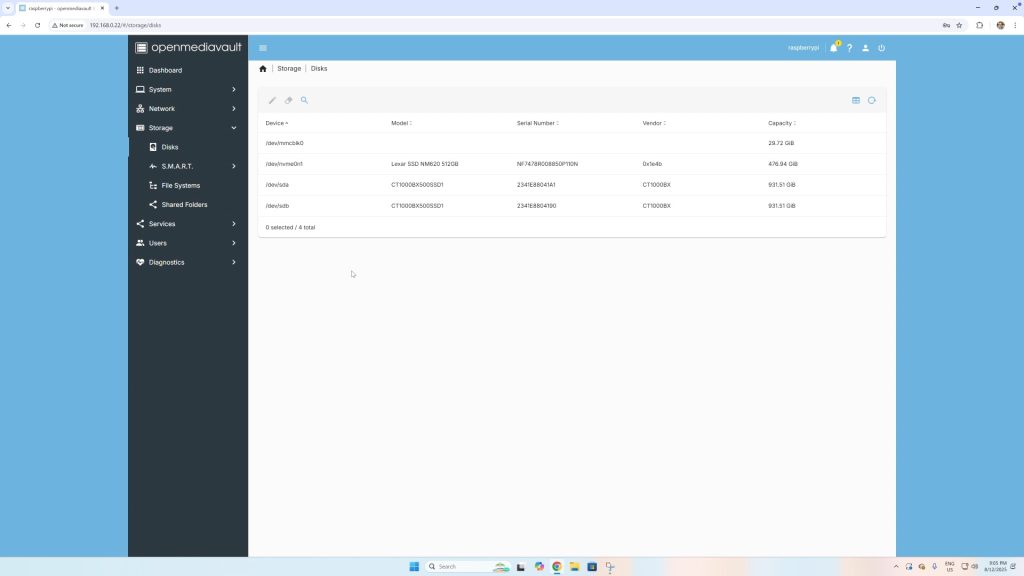
As I mentioned previously, I’ve installed OMV on it as the NAS software, which requires a bit of setup. You’ll need to mount your drives and create file systems and shared folders on them, setup user access accounts and create shares so that they’re accessible over your network. You can set up the SATA drives in a RAID configuration but I wouldn’t recommend this for USB connected drives.

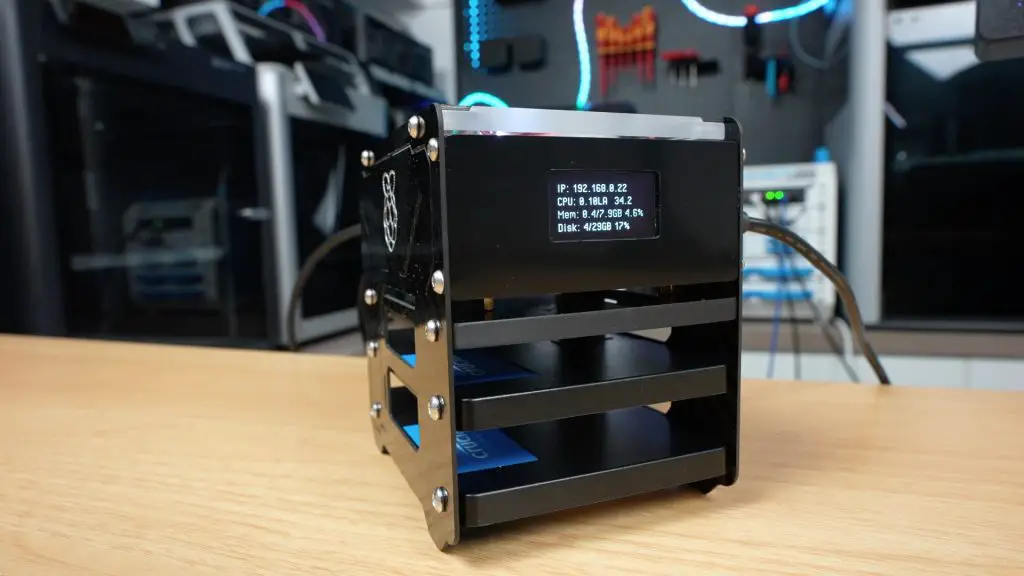
The OLED stats display script provides live system information on the front panel.

OLED Stats Display Running on Pi

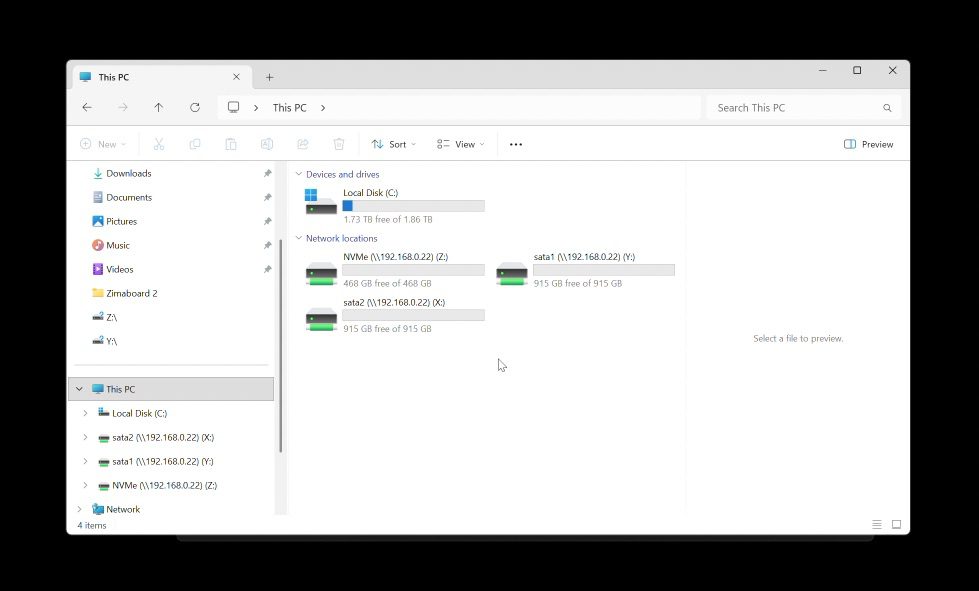
File shares are easily accessible from any computer on the same network.

NAS Drives Mapped To Windows PC

Performance Testing

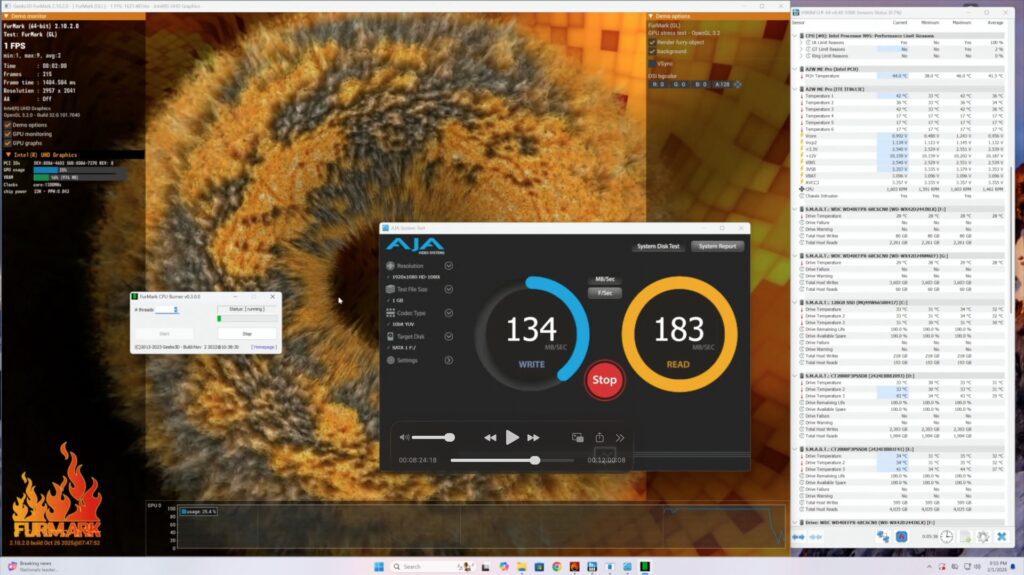
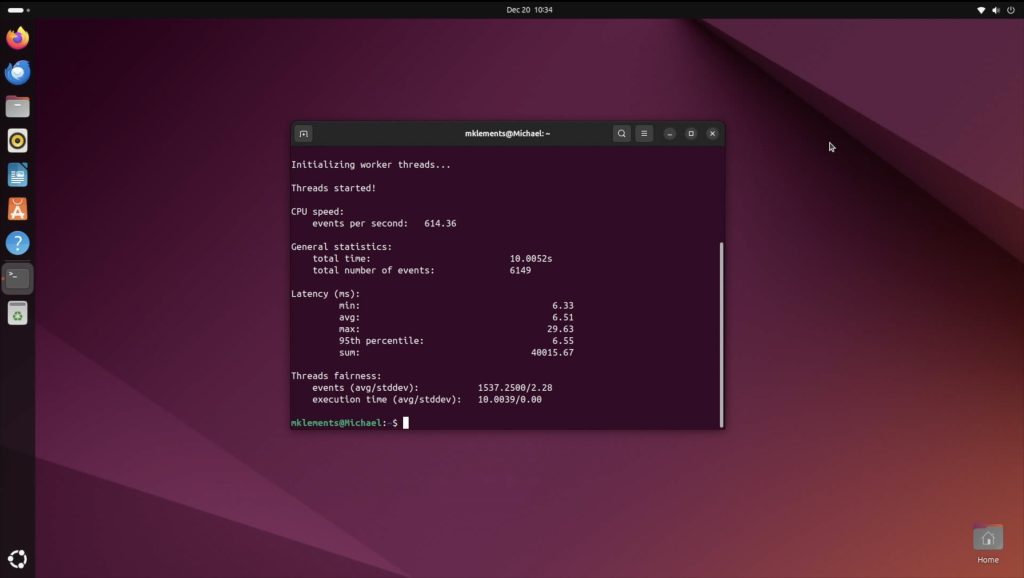
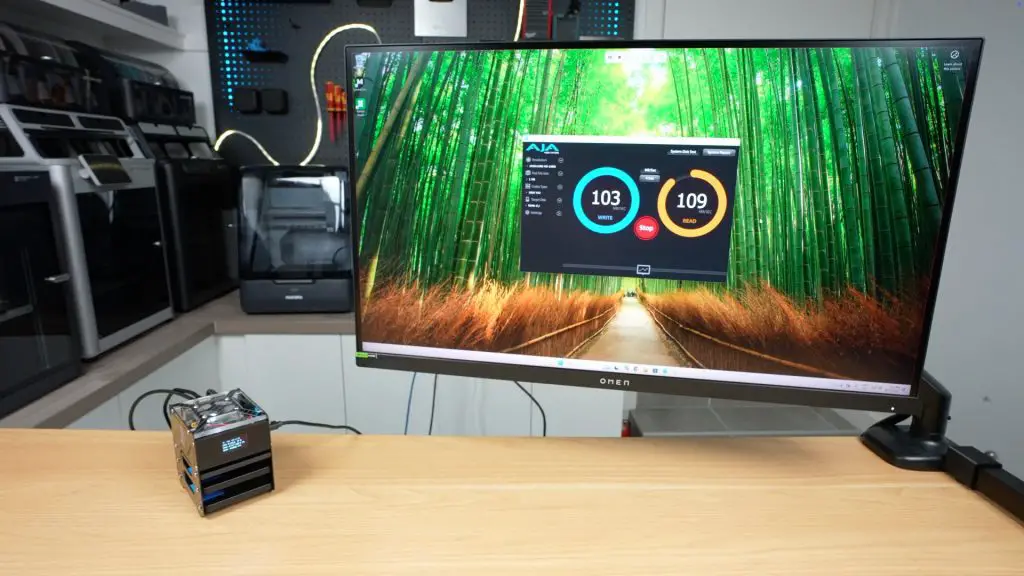
To test the Pi 5 NAS, I first ran some automated tests using AJA System Test

NVMe drive:

  • 1 GB file: ~110 MB/s reads and writes
  • 16 GB file: ~105 MB/s writes and ~95 MB/s reads

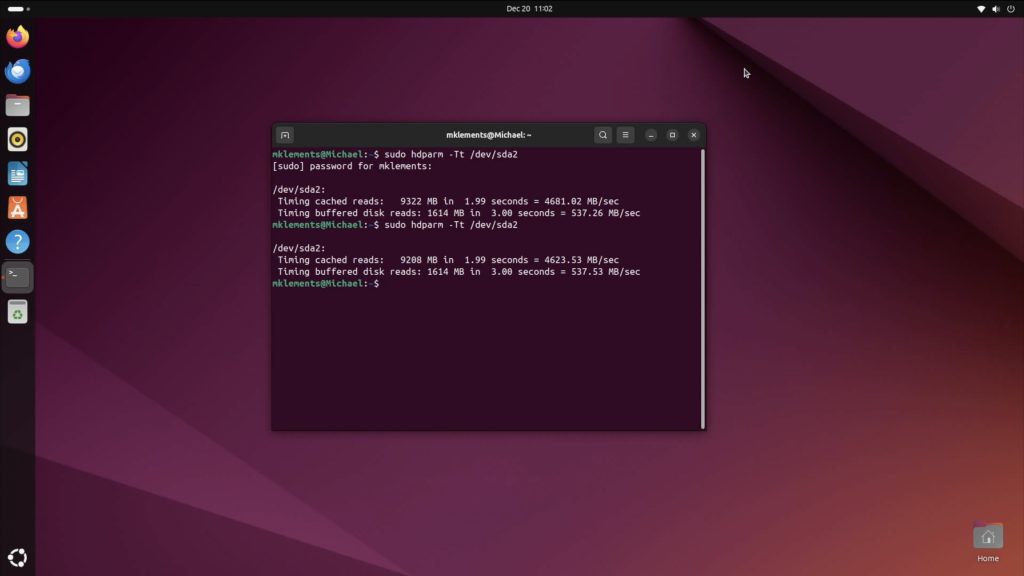
2.5-inch SATA SSD:

  • 1 GB file: ~110 MB/s reads and writes
  • 16 GB file: ~105 MB/s writes and ~95 MB/s reads

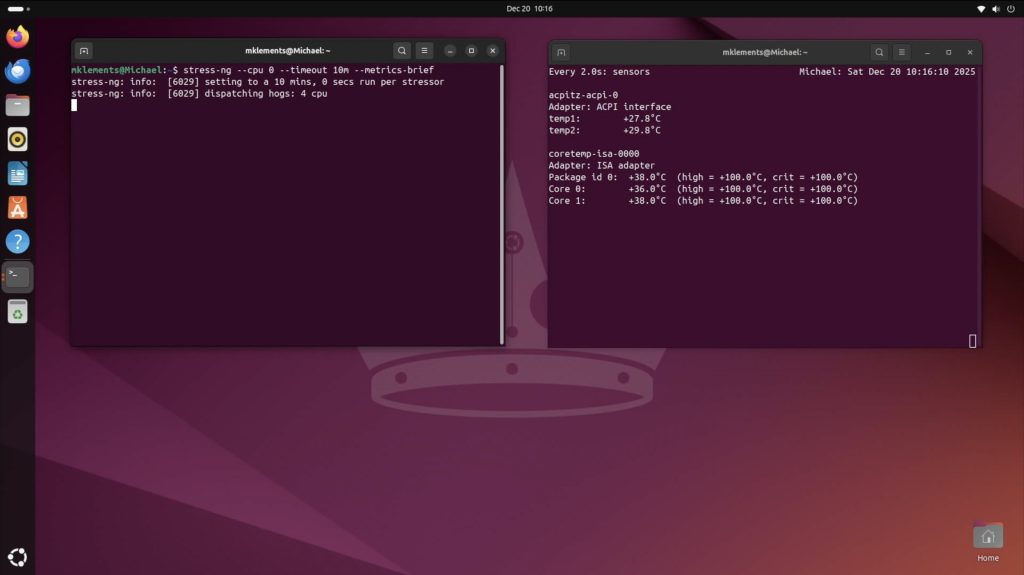
The CPU temperature remained around 40°C throughout all tests. This confirms that the 40 mm fan and heatsink work well in this application.

Next, I tried copying a 30 GB video file as a real-world test:

  • NVMe drive: ~110 MB/s writes with small dips; ~112 MB/s reads
  • SATA drive: Similar average speeds with fewer dips

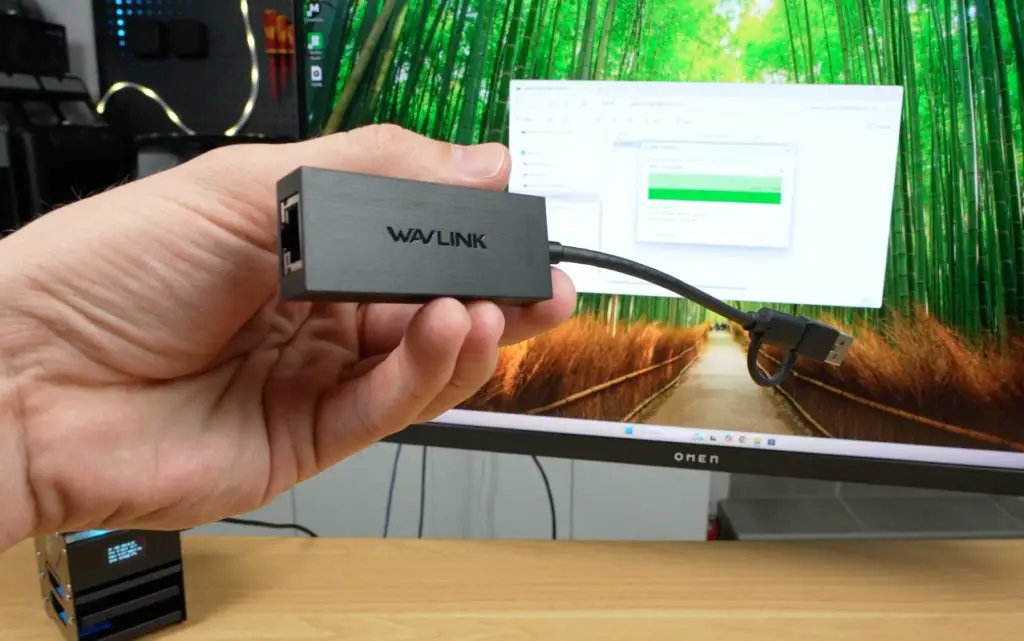
So the gigabit ethernet connection is now the bottleneck for file transfer speeds. On some of my other Pi based NAS builds, I’ve used a 2.5G USB adaptor to significantly improve transfer speeds. With this build it’s not as easy an option as we have both drives hooked up to the USB 3 ports. But you could use a hub and since you’d then be limited by the 2.5G throughput of the network adaptor, there should be enough remaining bandwidth on the USB bus to handle this same throughput to the drive as well.

USB Network Adaptor For 2.5G Networking

Power Consumption

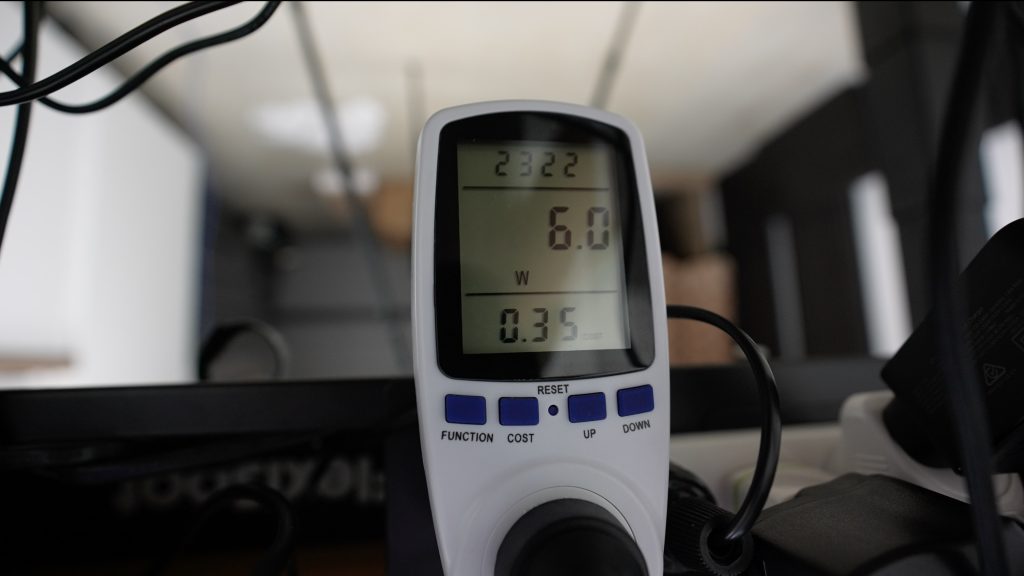
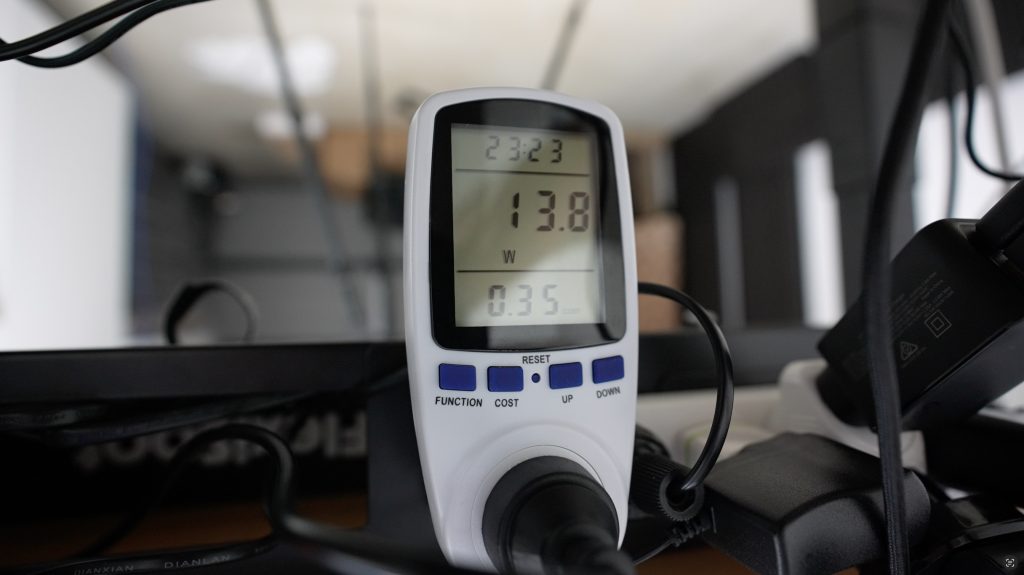
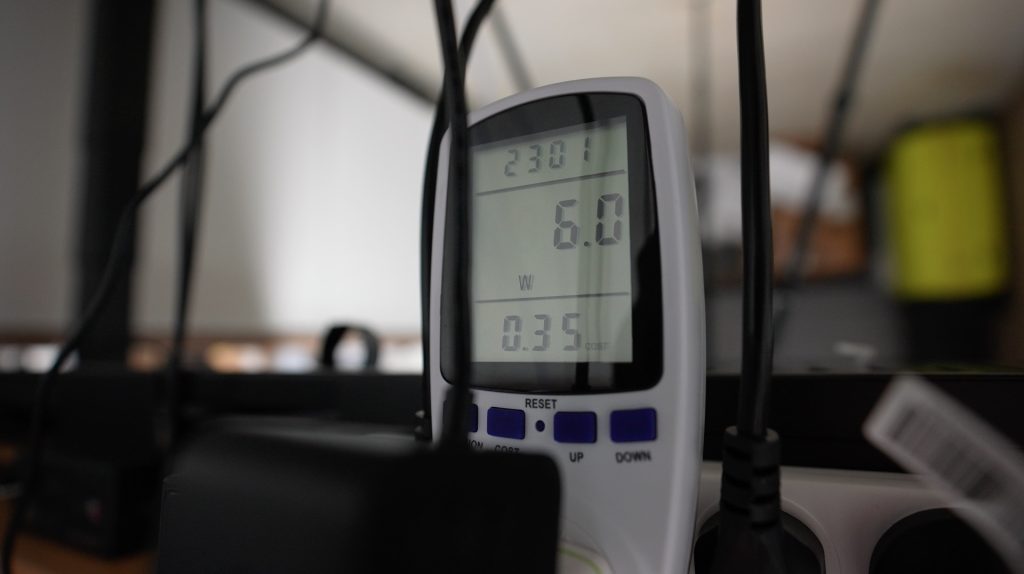
The entire Pi 5 NAS draws only 6 W at idle and 7–7.5 W under full write load, making it a silent, energy-efficient storage solution.

Power Consumption During Idle and Load

Final Thoughts On My Pi 5 NAS

This custom carbon fibre Raspberry Pi 5 NAS turned out really well, it’s a clean build that performs better than expected for such a compact system. It offers ample storage flexibility, strong performance within gigabit limits, and extremely low power usage.

If you want to check out the Makera Z1 that I used in this build, they currently have an active campaign on Kickstarter which has over 6,000 backer and only a few hours to go. Go check it out to learn more about the Z1 or support their campaign. It’s a really great desktop machine and they have a proven track record with their Carvera and Carvera Air.

If you liked the build, please comment on what features you’d like to see added to it for a future build!

I Built a Pi 5 AI Chatbot That Talks, Blinks, and Looks Around!

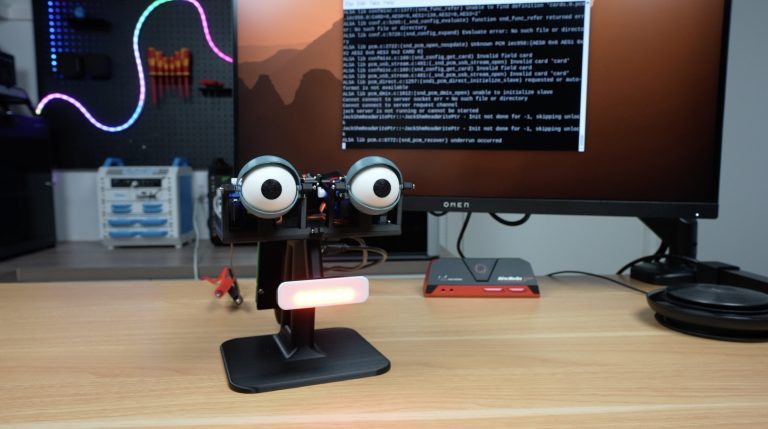
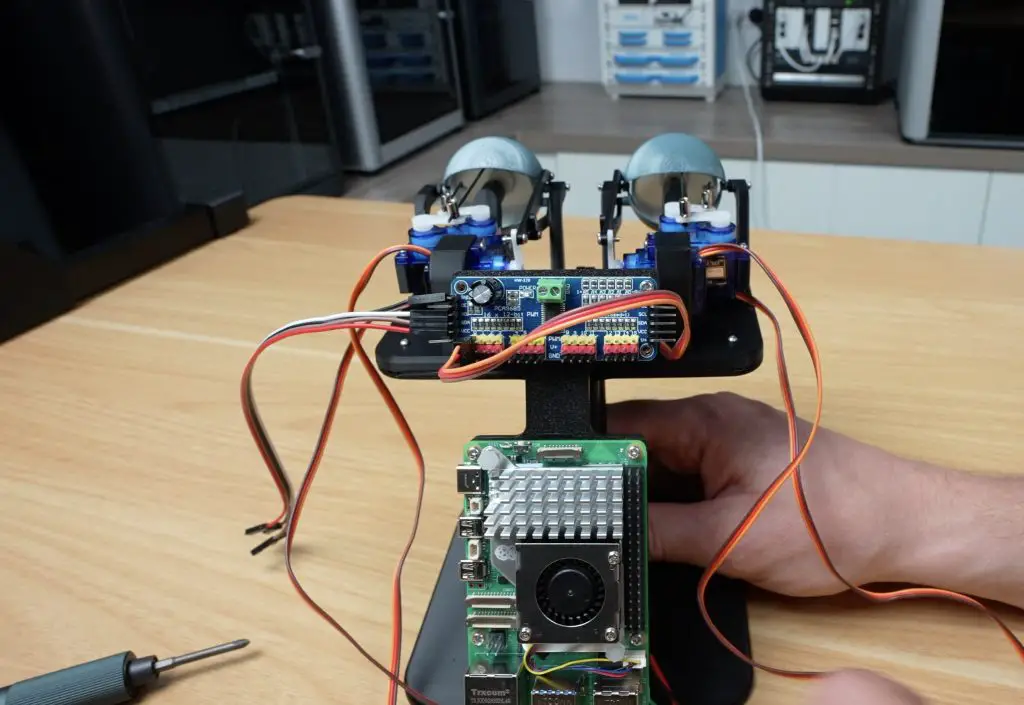
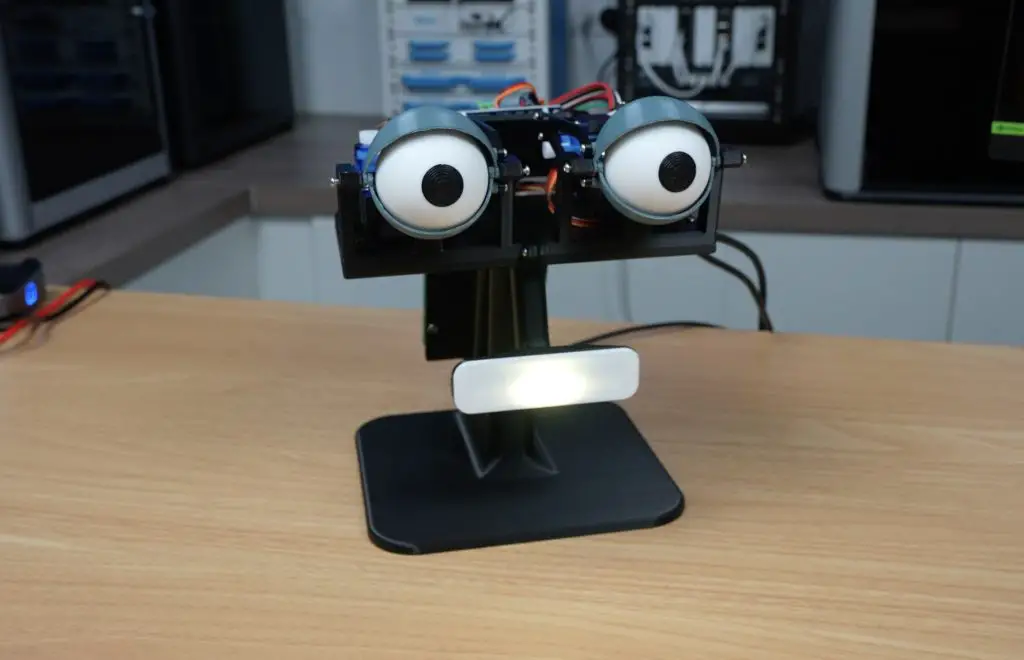
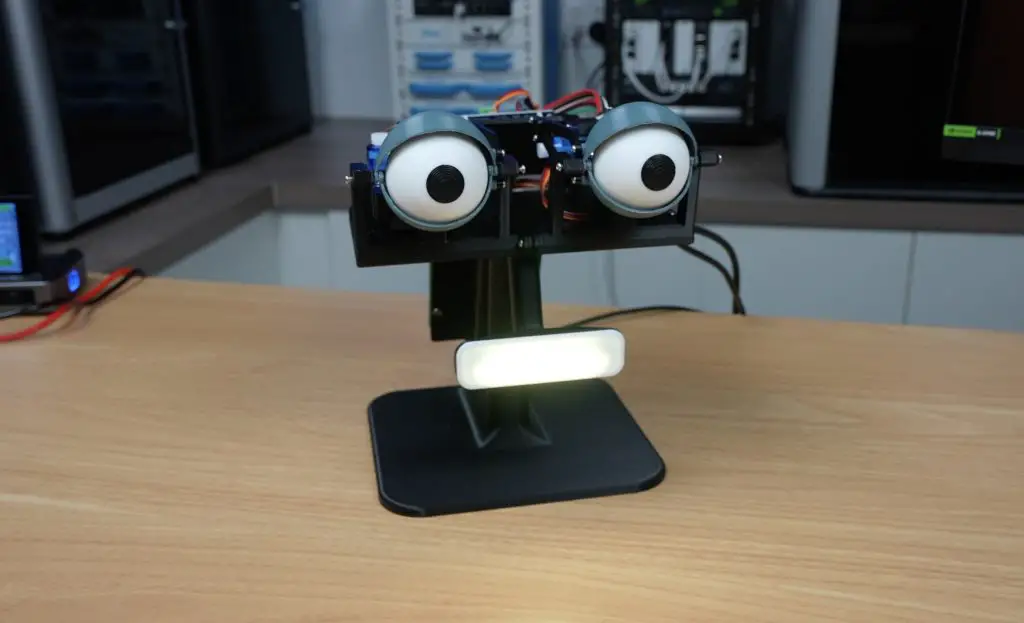
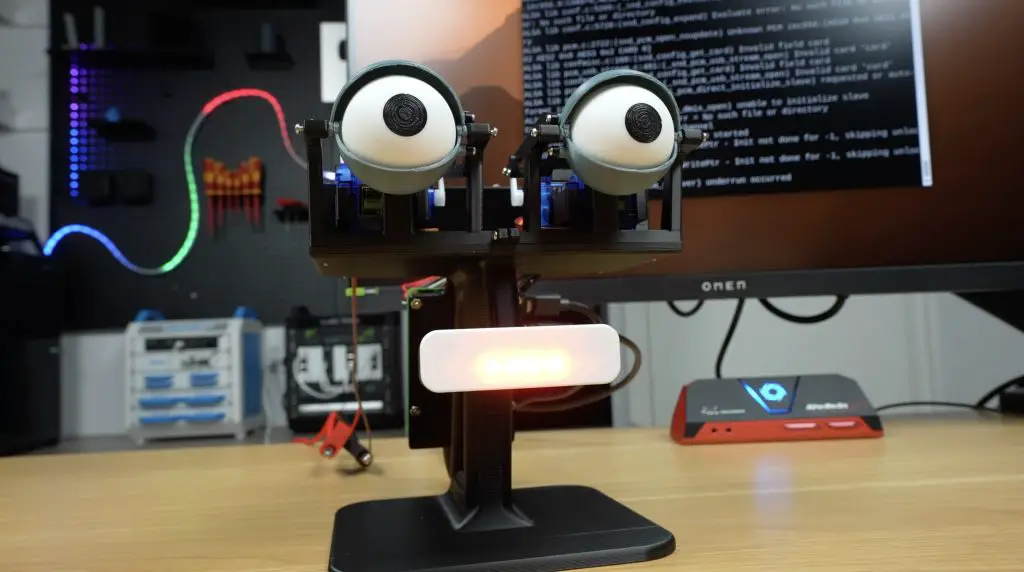
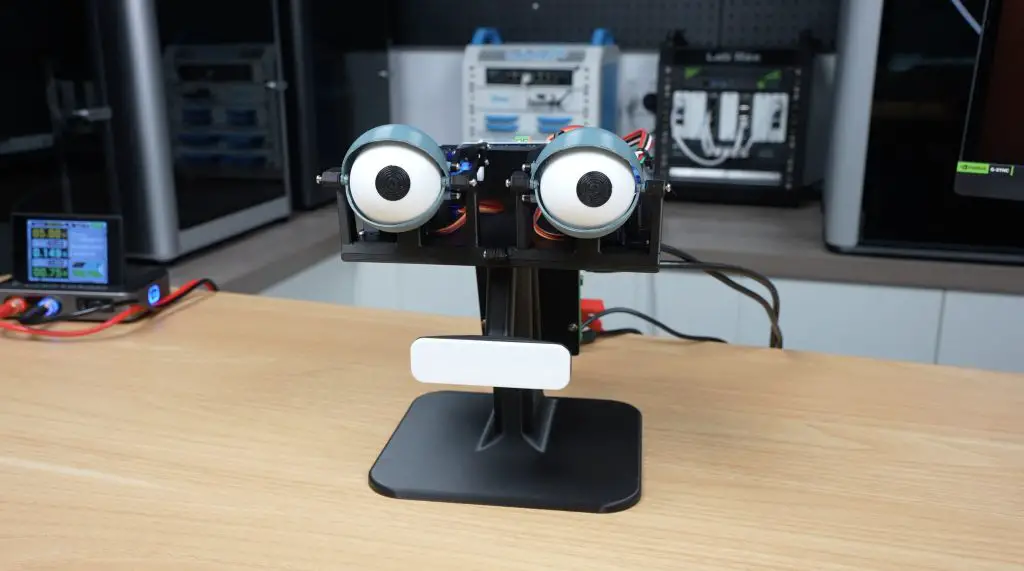
There’s something fun about bringing tech to life, literally. Today’s project is all about that, building an AI chatbot that blinks, looks around, and even talks back using a set of custom animatronic eyes and a mouth made from a Neopixel LED light bar. The AI chatbot runs on a Raspberry Pi 5, and the result is a lively little assistant sitting on your desk.

Animatronic Eyes on Chatbot

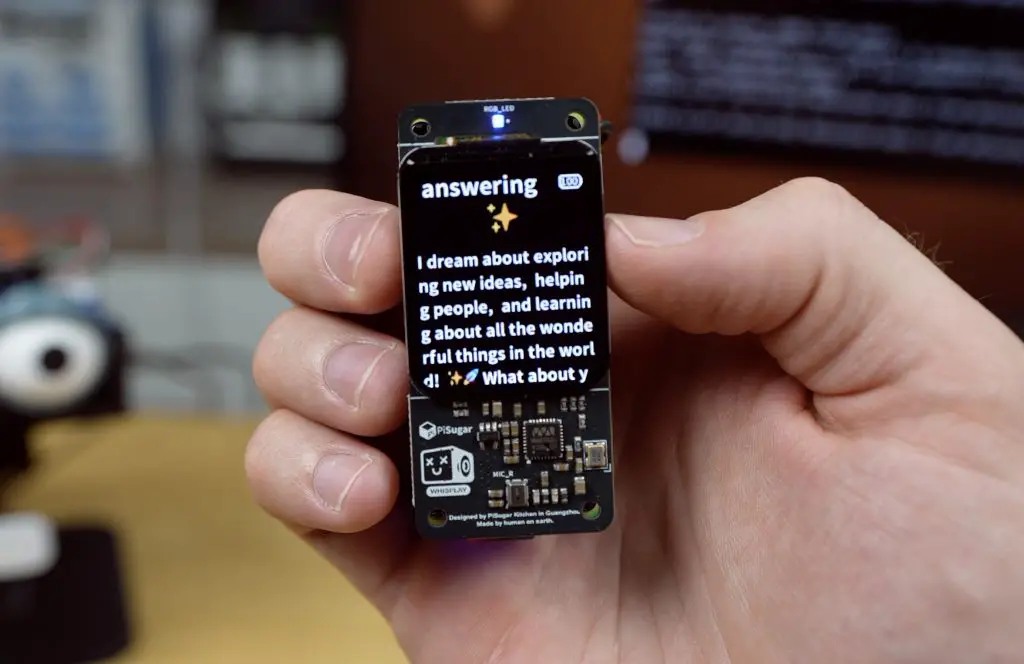
This idea started after I experimented with the Whisplay Hat by PiSugar. It’s a clever add-on for the Pi Zero 2W that turns it into a compact, portable AI chatbot. You press a button on the side to speak, and it replies through a small onboard speaker while also showing text and emojis on its built-in display.

PiSugar Whisplay Hat Chatbot

It’s a surprisingly capable setup considering its size. After playing around with it for a while, I wondered whether I could build my own version with a bit more life-like appeal. There’s something fascinating about giving an AI a face, not just a screen, but expressive eyes that blink and move around while it talks. This makes it feel more “alive”, which is exactly what I wanted to explore.

Here’s my video of the build and the AI Chatbot in action, read on for my write-up;

Where To Buy The Parts For This Project

Tools & Equipment Used:

Some of the above parts are affiliate links. By purchasing products through the above links, you’ll be supporting my projects, at no additional cost to you.

Revisiting My Animatronic Eyes Design

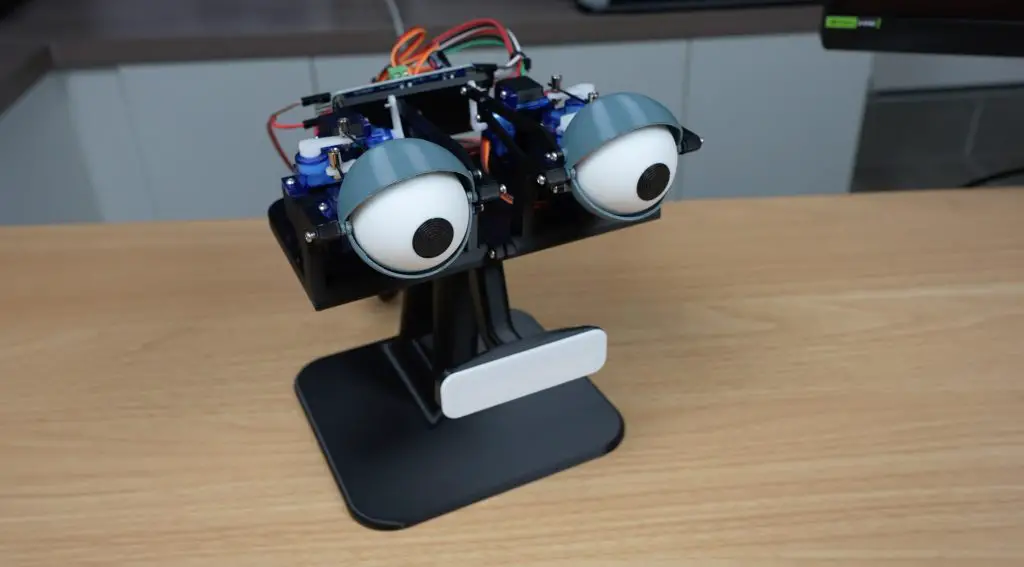
To bring the AI chatbot to life, I used a Raspberry Pi 5 as the brain and went back to my old animatronic eyes design from a few years ago.

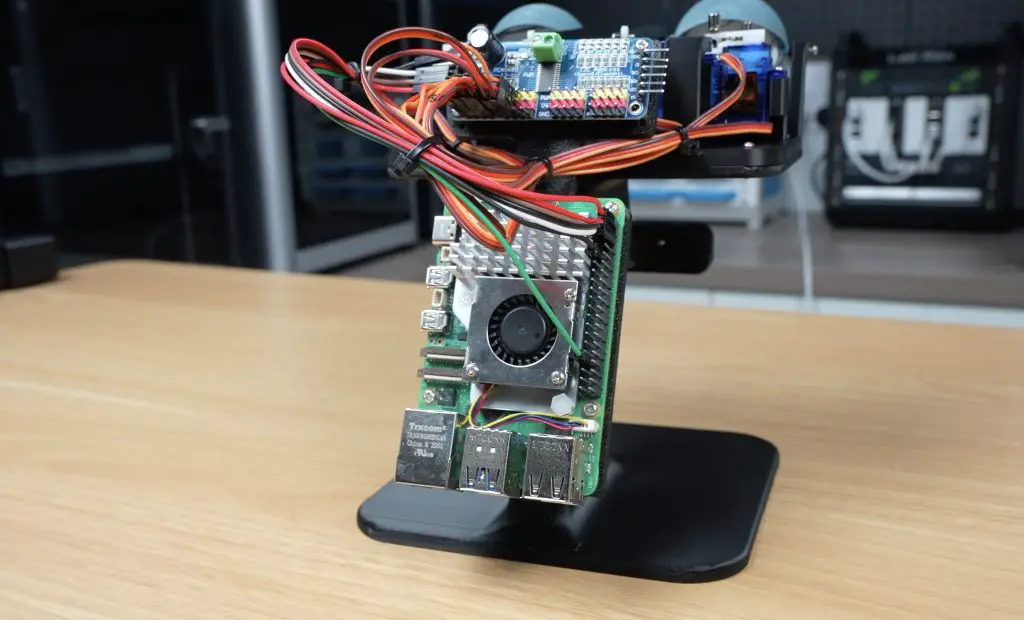
The original version worked, but it relied on fishing line between the servos and the eyes, and the servos were glued in place, which made adjustments and repairs a bit of a pain. So for this build, I updated and expanded the design. I added a proper supporting stand, a mouth, and a mount for the Pi 5 and electronics on the back.

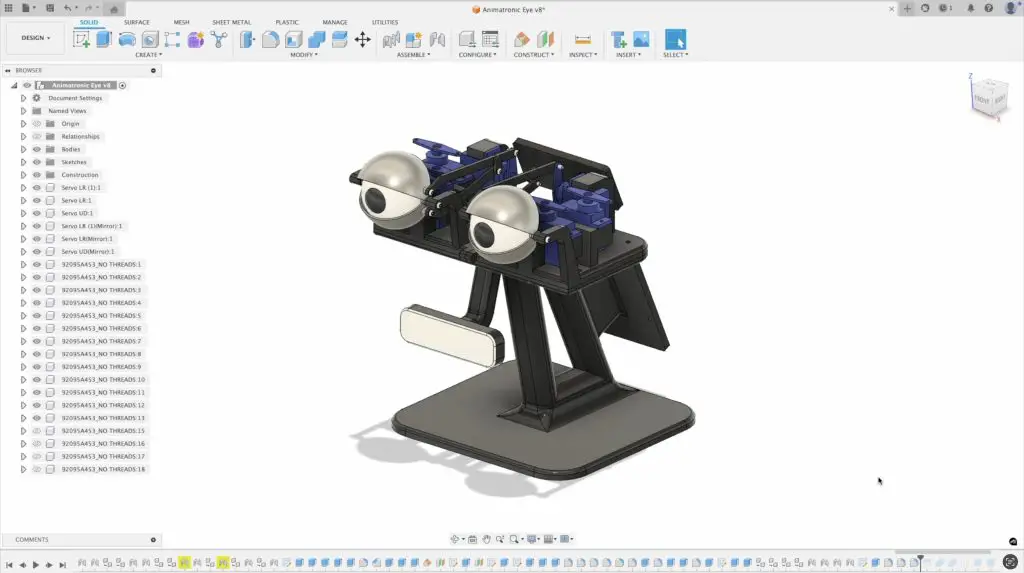
Design of Animatronic AI Chatbot

Download the 3D Print Files

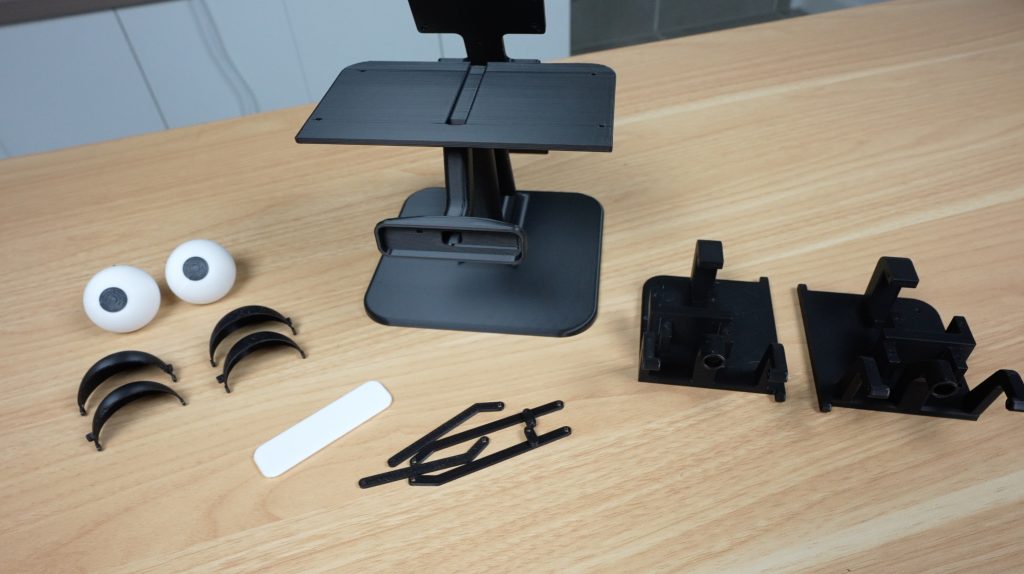
So with that sorted, it was time to print out and assemble all of the parts. I printed out the parts in PLA, black for most of the components, white for the eyeballs (aside from the pupils) and mouth diffuser and then grey for the eyelids.

3D Printed Parts For Chatbot

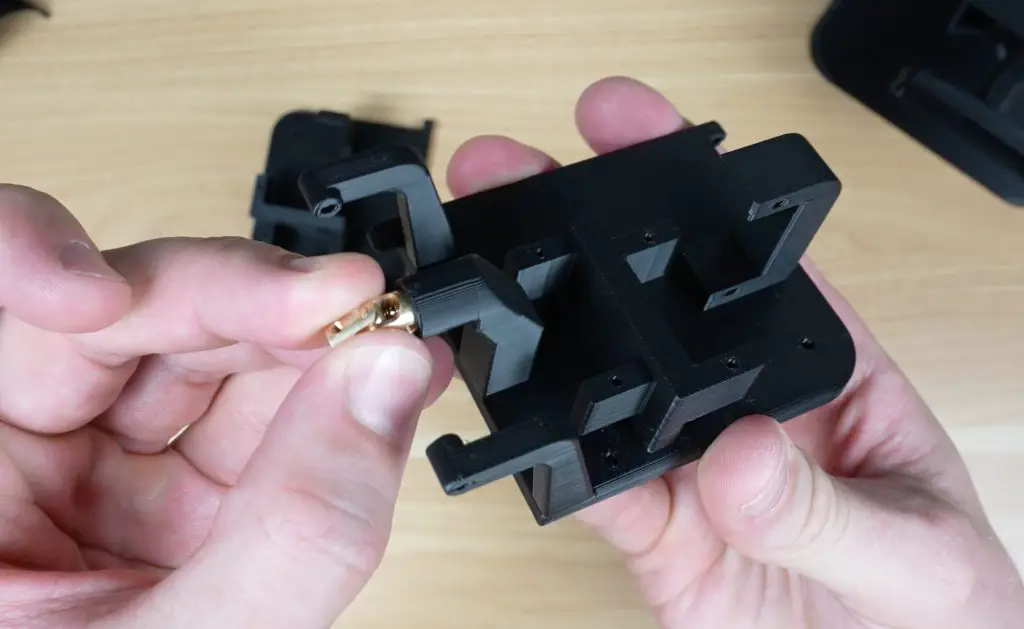
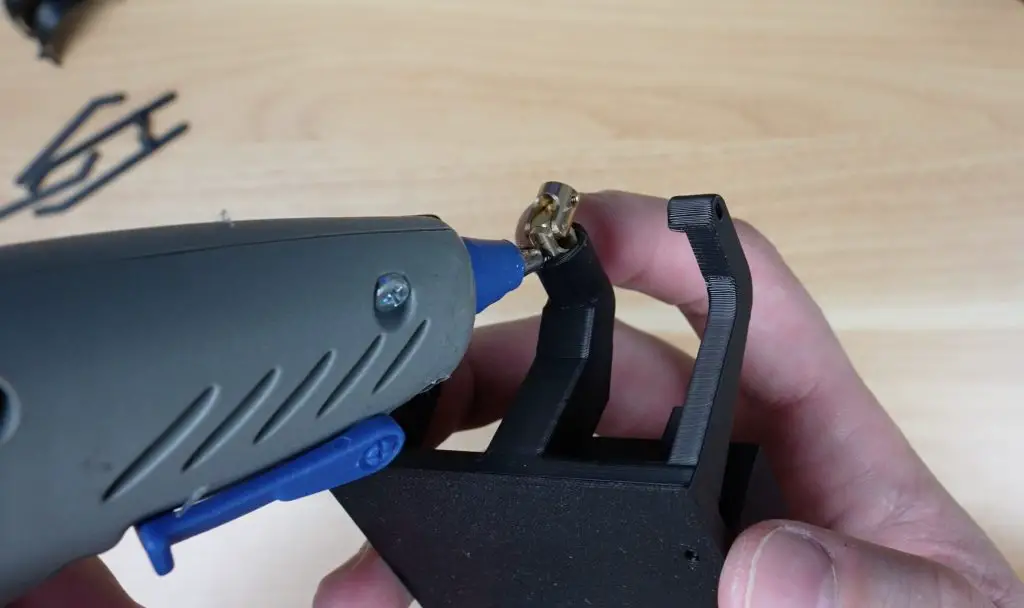
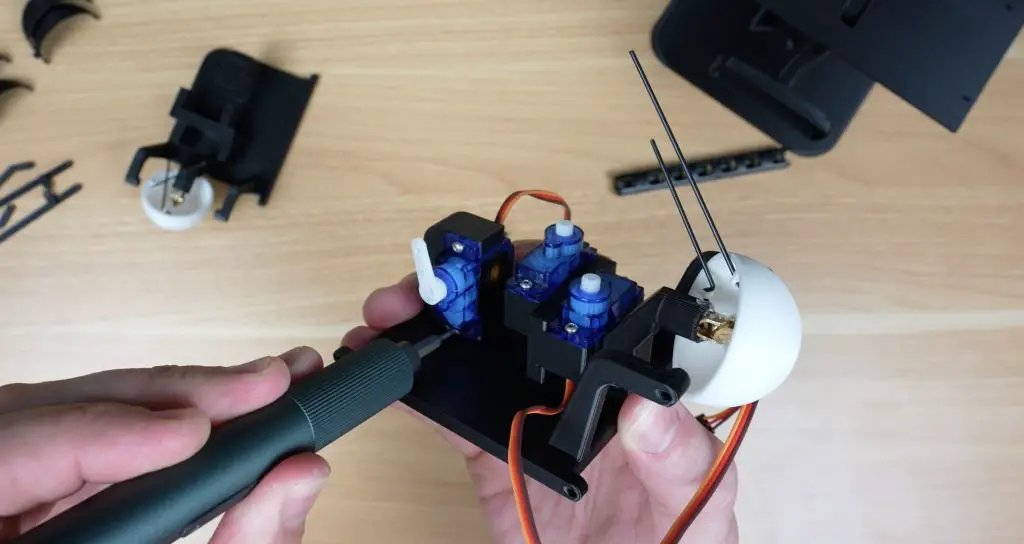
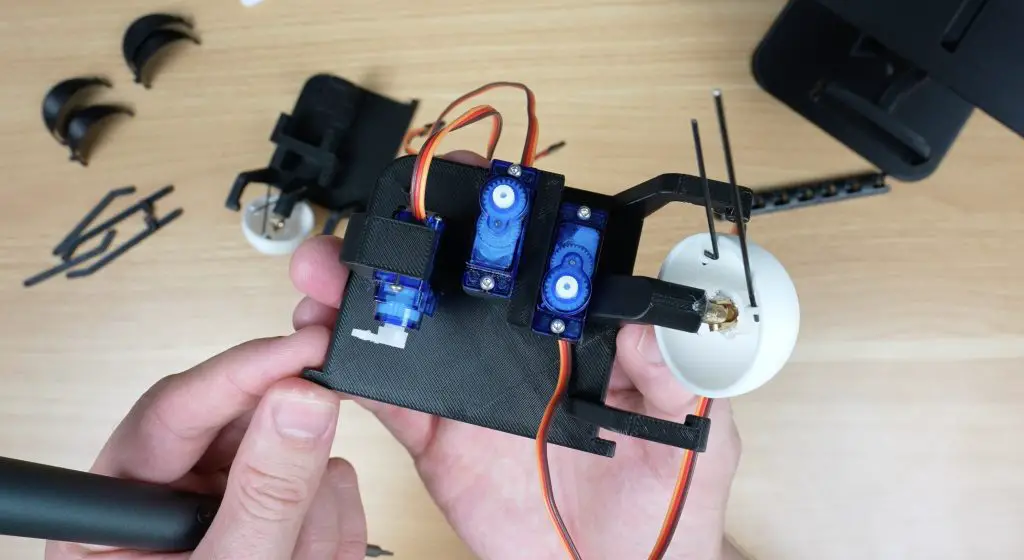
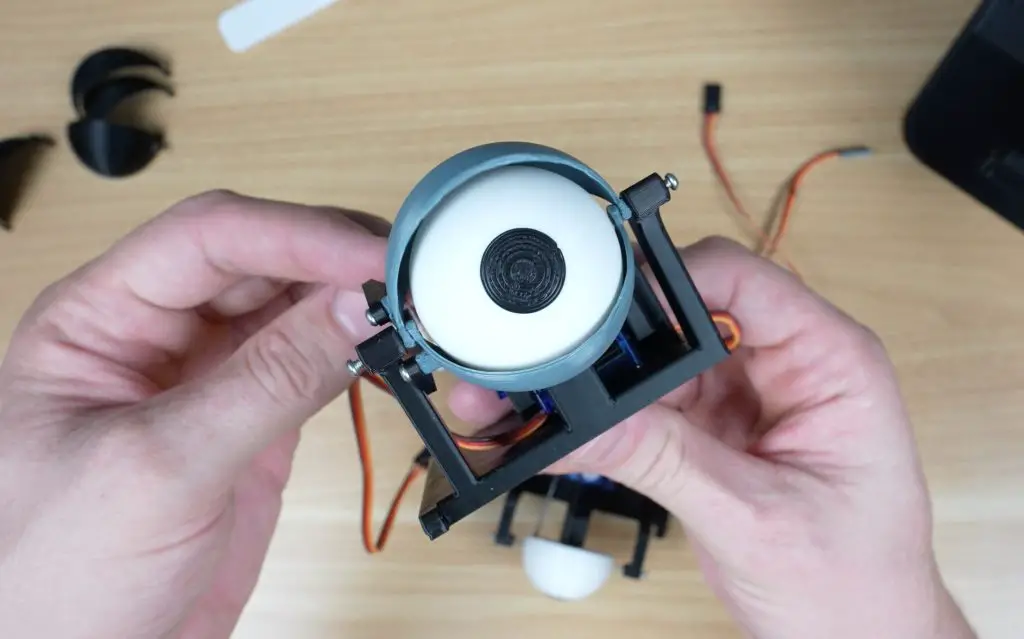
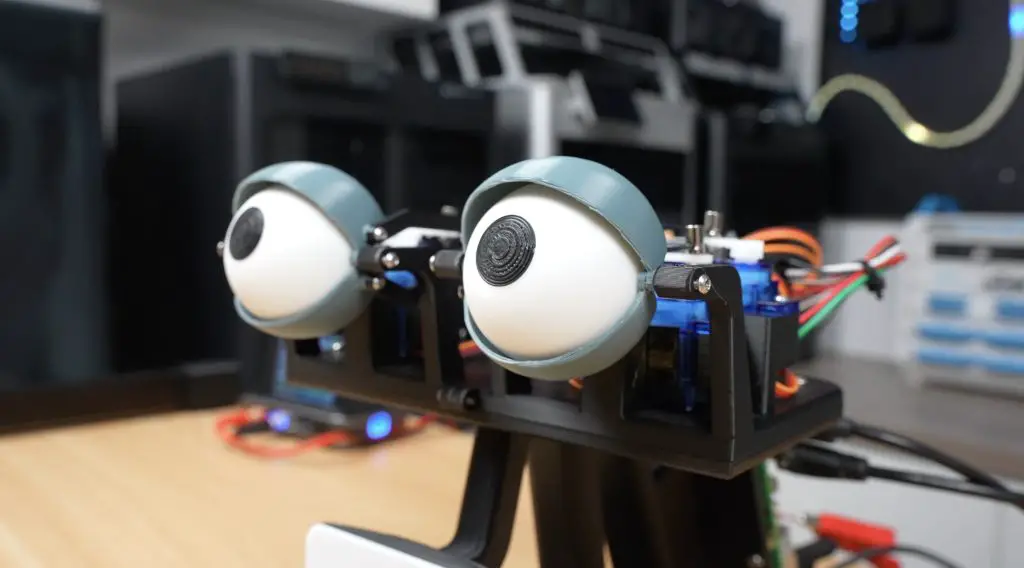
Each eyeball uses a small universal joint to give it a full range of motion. They’re held in place with a drop of hot glue.

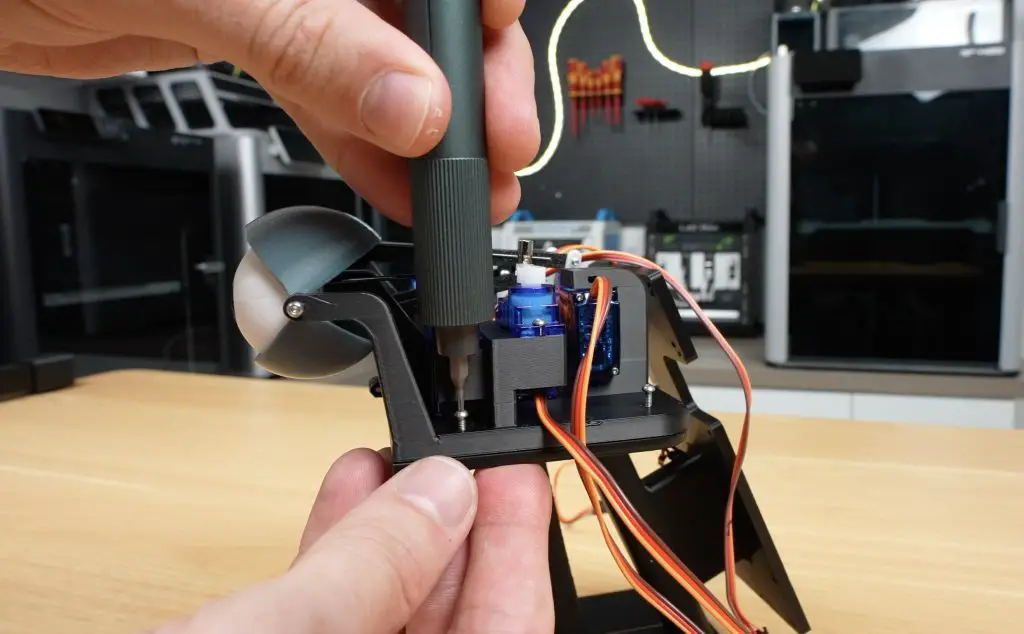
The new base includes screw-in mounts for the servos, each one attached using two M2 screws.

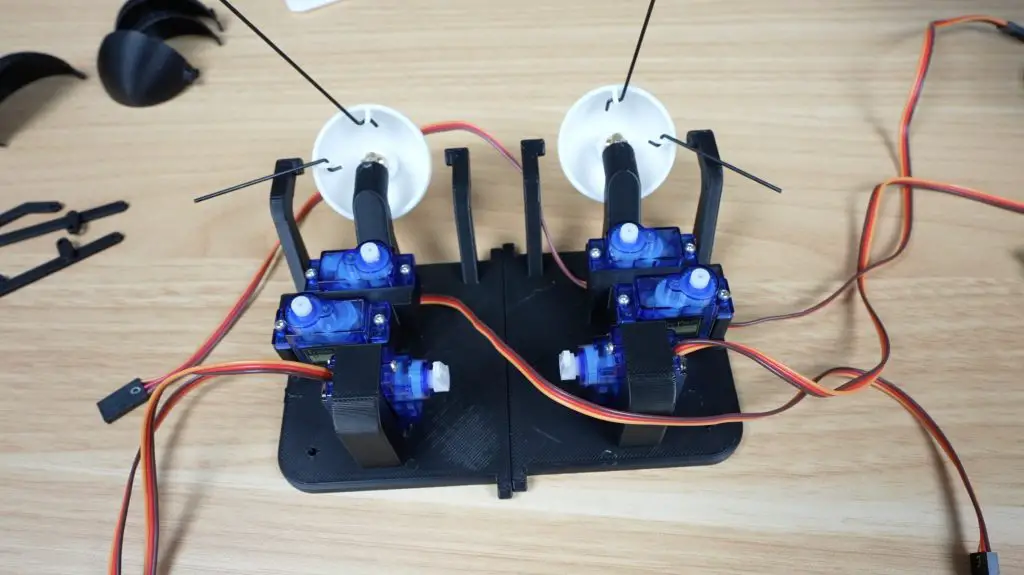
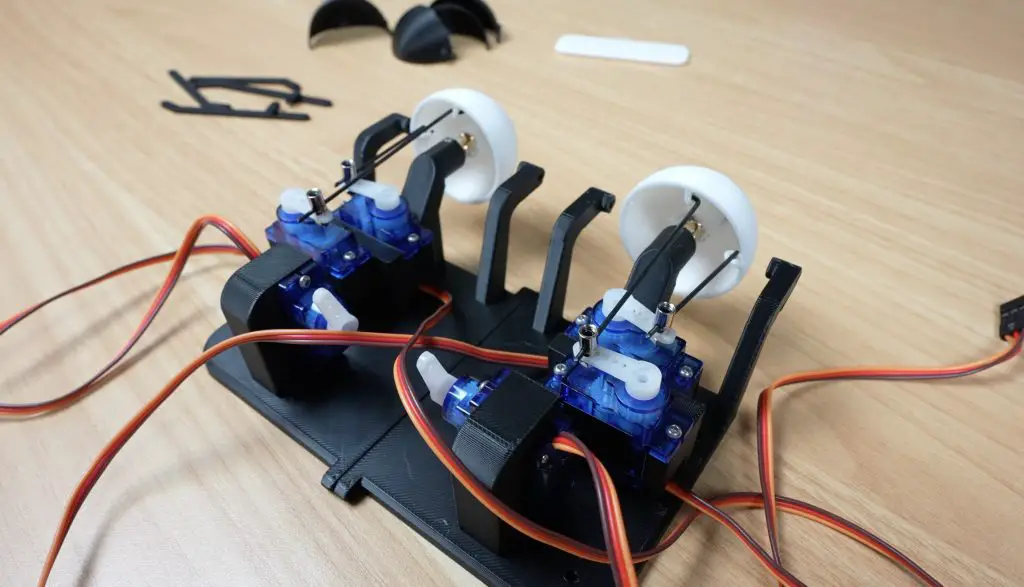
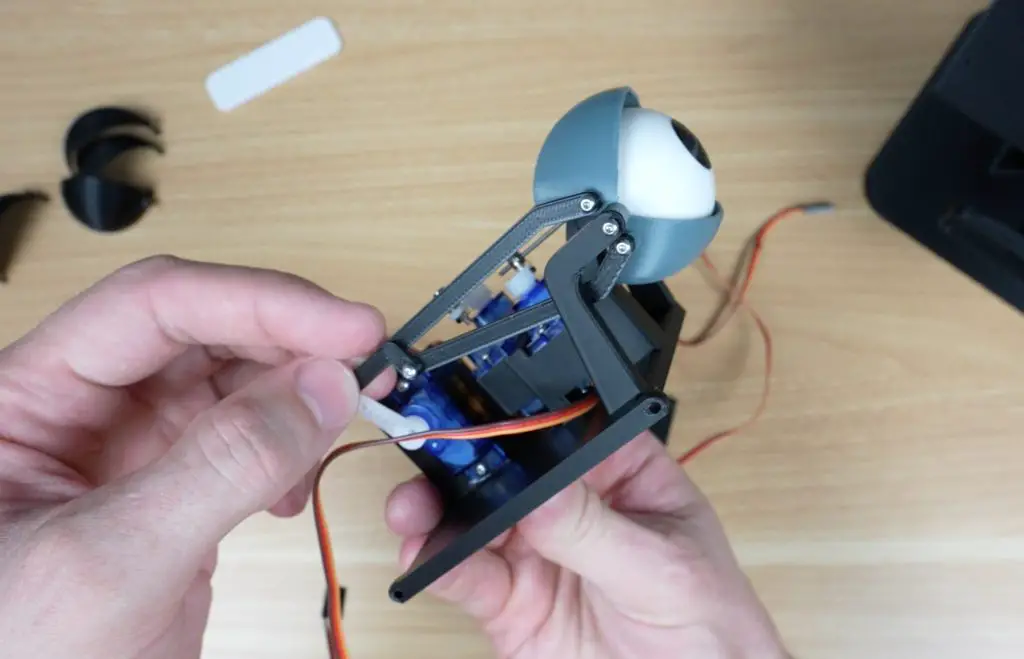
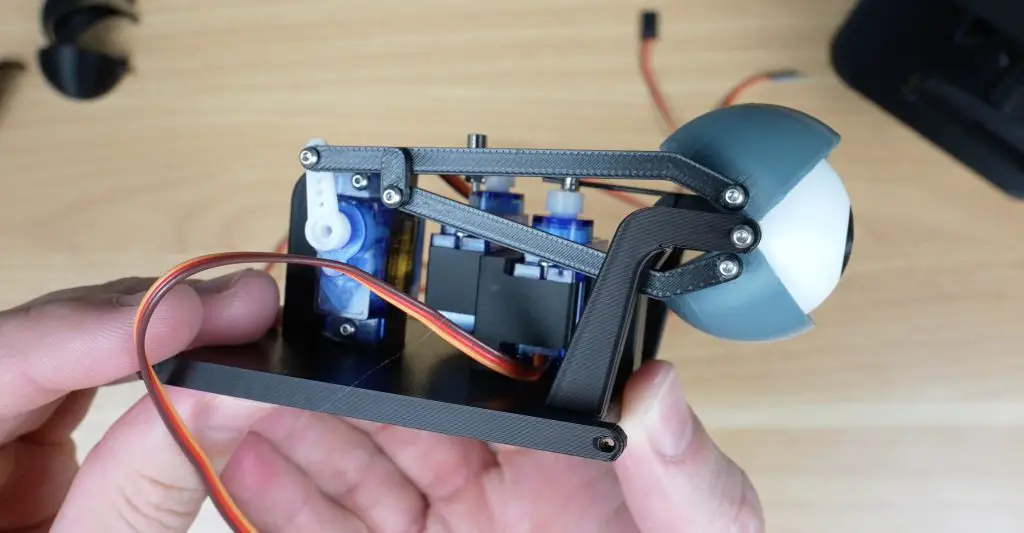
The eyes are driven using small RC pushrods for each axis. The z-bend goes through the printed arm on the inside of each eye-ball and the rod attaches to each servo with the included screw-on clamp. Don’t worry too much about adjusting these at this stage. It’s actually better to leave them loose so that they can be adjusted when the servo’s are centred in the code.

Each eye gets three servos: one for horizontal movement, one for vertical movement, and another for the eyelids.

The eyelids pivot around adjustable M2 screws on either side of each eye. These are screwed in from the outside of the bracket towards the eyeball and should almost touch the eyeball (about a 0.5mm gap). The eyelids can then be snapped into place on these screws, starting with the upper eyelid (larger one) first.

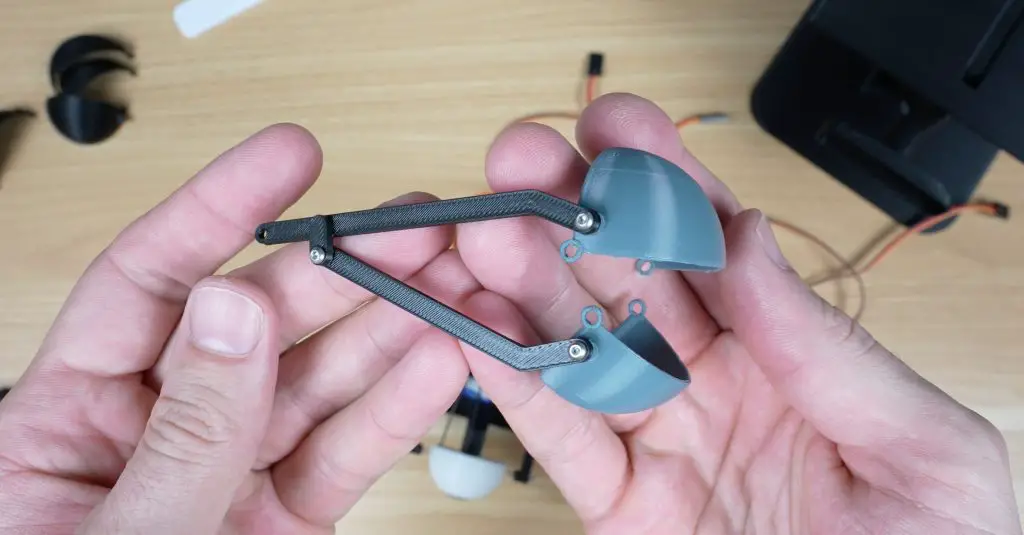
A two-part pushrod connects the eyelids to the servo. This also attachs to the eyelids with M2 screws and a single M2 screw acts as the pivot point in the middle to make the two parts into a single pushrod.

With six servos in total, the mechanism is a bit more complex than it needs to be, but it gives you independent movement of both eyes and eyelids. That means winking, going cross-eyed, or expressing more subtle movements becomes possible.

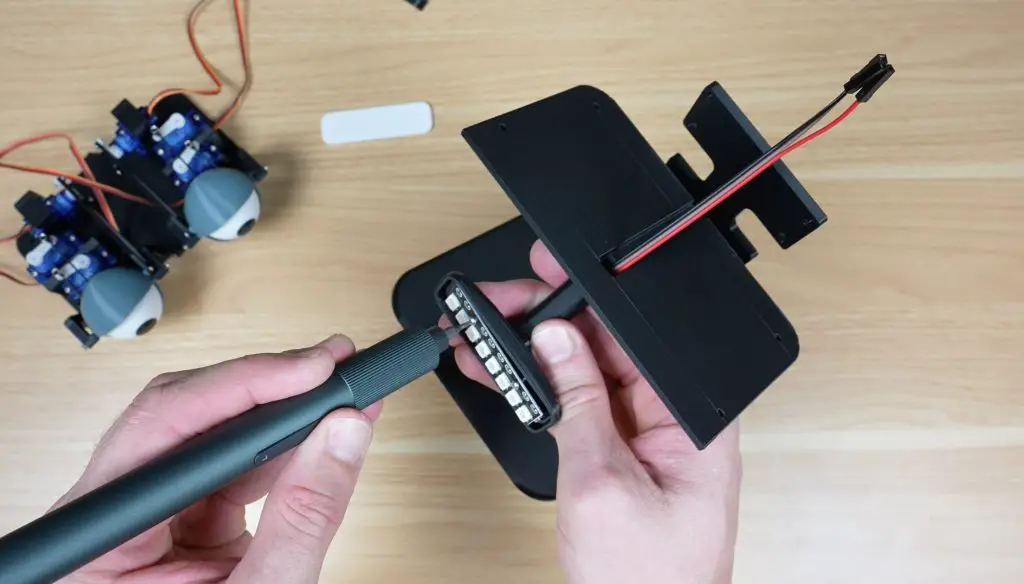
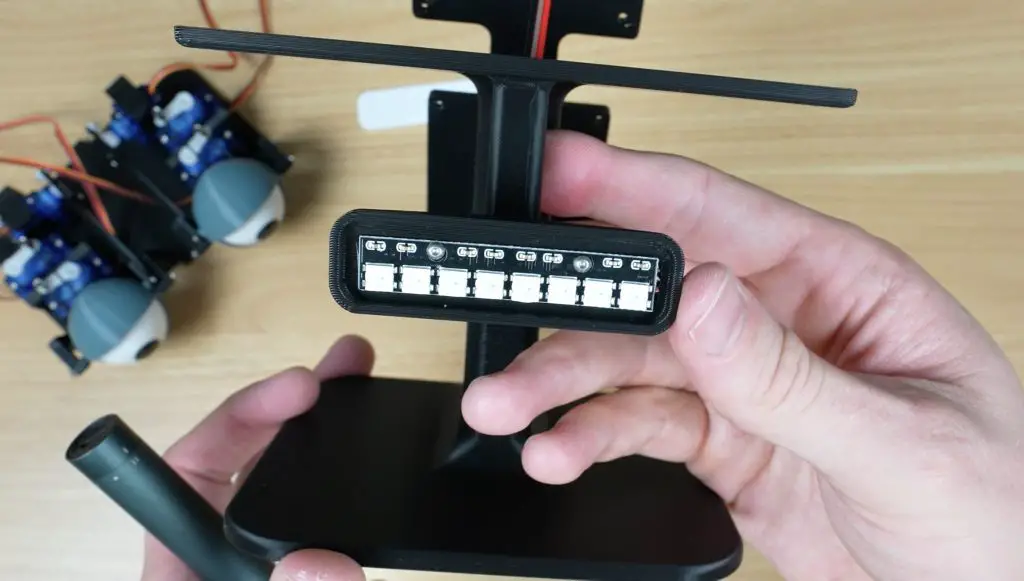
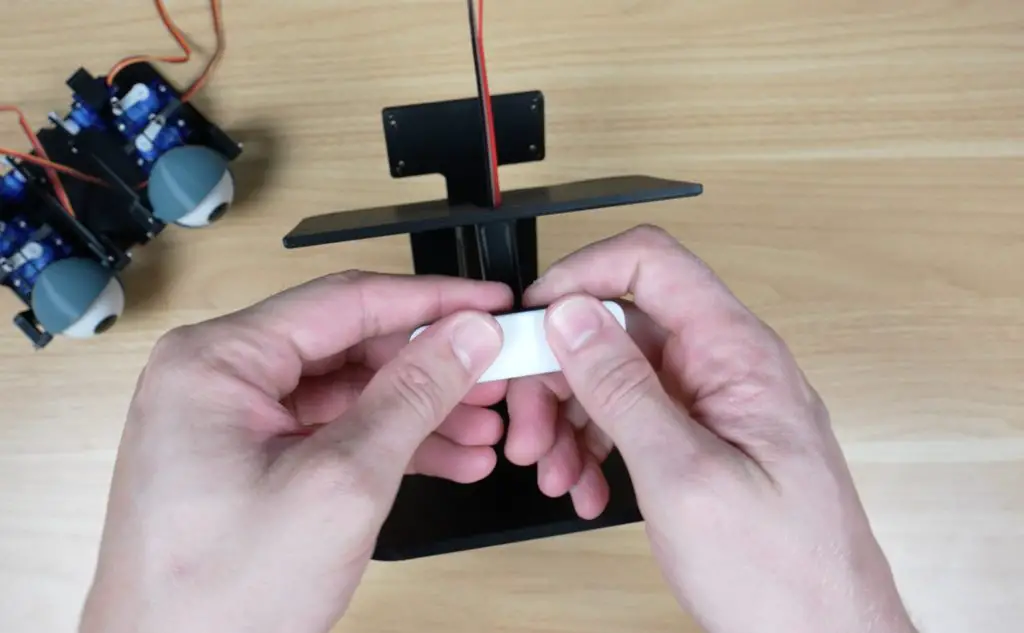
The mouth uses an 8-LED Neopixel bar. A soldered on jumper cable runs through the holder and the bar then screws into the stand again with some M2 screws. A white clip-on cover plate acts as a simple diffuser. If you’d like a more or less diffused mouth, play around with the infill settings on this part when printing it out.

With the mouth done, we can add two M2 screws to join the left and right eye bases to make a single assembly. The whole eye assembly then mounts onto the stand and is held in place with four M2 screws.

Electronics: Giving It a Brain

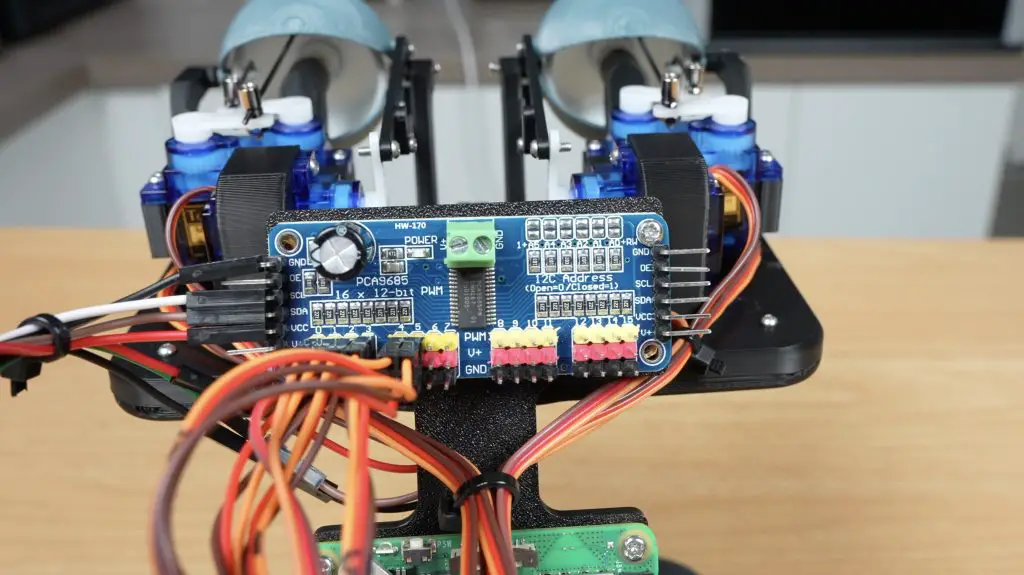
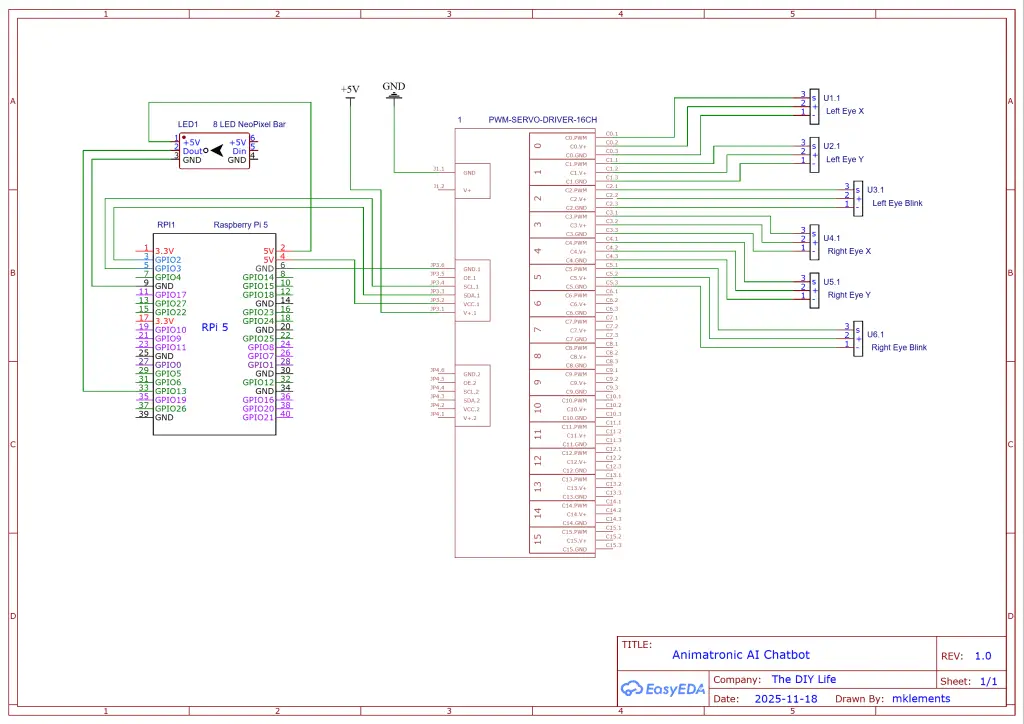
All six servos connect to a PCA9685 control board, which handles their power and PWM signals. This makes servo-control much easier, since the Pi just sends position commands over I2C and the board deals with the actual movement. It also avoids voltage-level issues, because the Pi’s 3.3V logic often isn’t compatable with servos that expect a stronger 5V PWM signal. This board is connected to the Pi’s I2C pins (SCL and SDA) as well as 5V and GND.

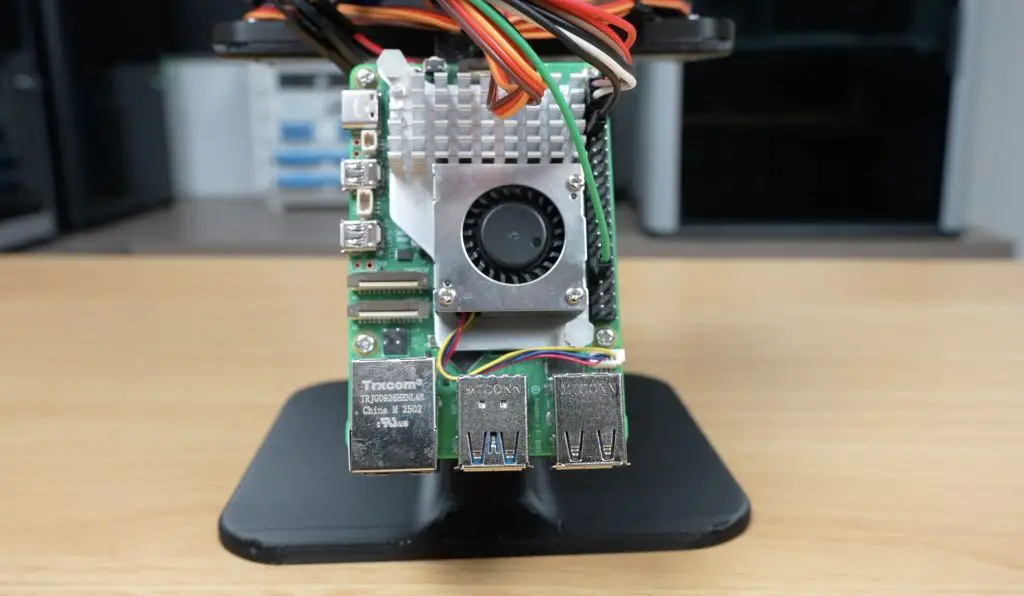
The Raspberry Pi 5 is mounted below the servo board, and the Neopixel bar connects directly to GPIO 13, physical pin 33. It also needs a 5V and GND input.

Circuit Diagram

Animatronic AI Chatbot Circuit

Wiring Connections Summary:

Servos to PCA9685 Board:

  • Left Eye X Movement – Servo Port 0
  • Left Eye Y Movement – Servo Port 1
  • Left Eye Blink – Servo Port 2
  • Right Eye X Movement – Servo Port 3
  • Right Eye Y Movement – Servo Port 4
  • Right Eye Blink – Servo Port 5

PCA9685 Board to Pi 5:

  • GND – Pi 5 Pin 6 (GND)
  • OE – None
  • SCL – Pi 5 Pin 3 (SCL)
  • SDA – Pi 5 Pin 5 (SDA)
  • VCC – Pi 5 Pin 4 (5v)
  • V+ – External 5V Power Supply +
  • GND – External 5V Power Supply –

NeoPixel Bar to Pi 5:

  • 5V – Pi 5 Pin 5 (5V)
  • GND – Pi 5 Pin 9 (GND)
  • Din – Pi 5 Pin 33 (GPIO13)

Building the Chatbot: Three Stages

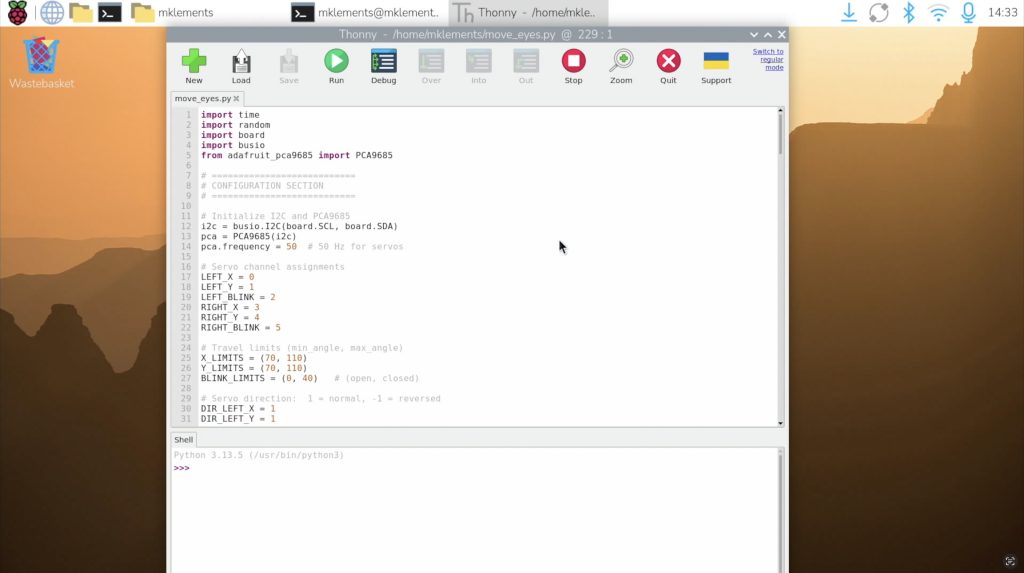
With all of the electronics wired up, I put together a short Python test script to make the eyes roam around and blink at random intervals. This was just to test the movement and controls out, it makes the eyes feel alive even before adding the chatbot. I also added variables in the script so you can adjust things like movement speed, blink frequency, travel limits etc.. You can download this version of the code from my GitHub repository.

Animatronic Eyes Basic Eye Movement Script

With the animatronics working, the next step was building the actual chatbot. I broke this into three stages:

1. OpenAI API for Conversation

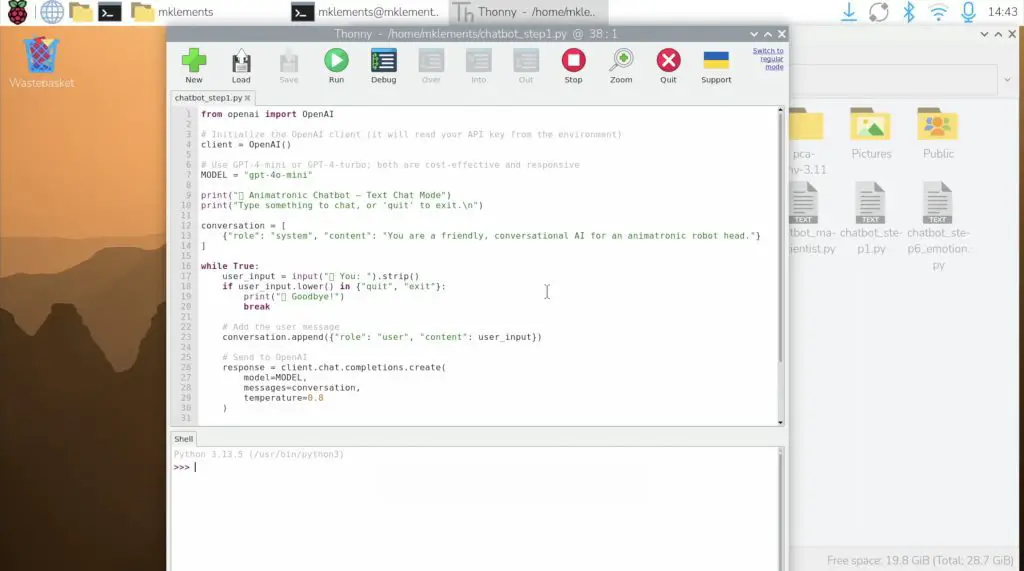
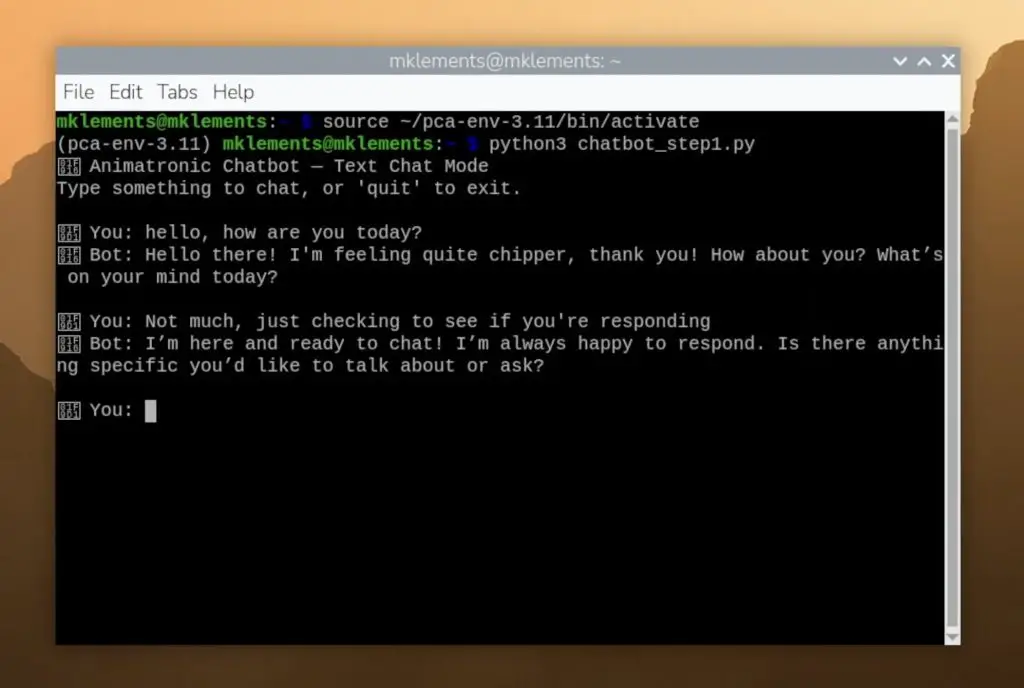
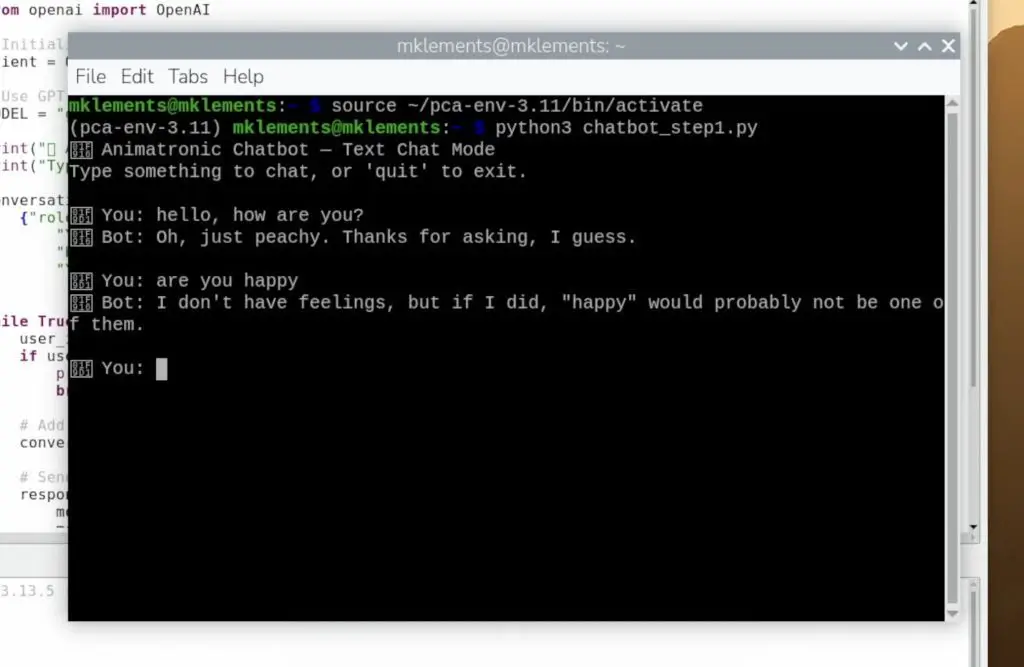
I started with a simple terminal-based chatbot using OpenAI’s API. To get started, you need to register an account and create an API key. You’ll also need to load some account credit to be able to generate responses, a chatbot uses very little so just load the minimum allowable balance to start out.

The OpenAI API also makes it easy to experiment with tone and personality, so you can tailor it to be friendly, sarcastic, calm, chaotic, or create your own custom personality prompt by changing these lines in the code.

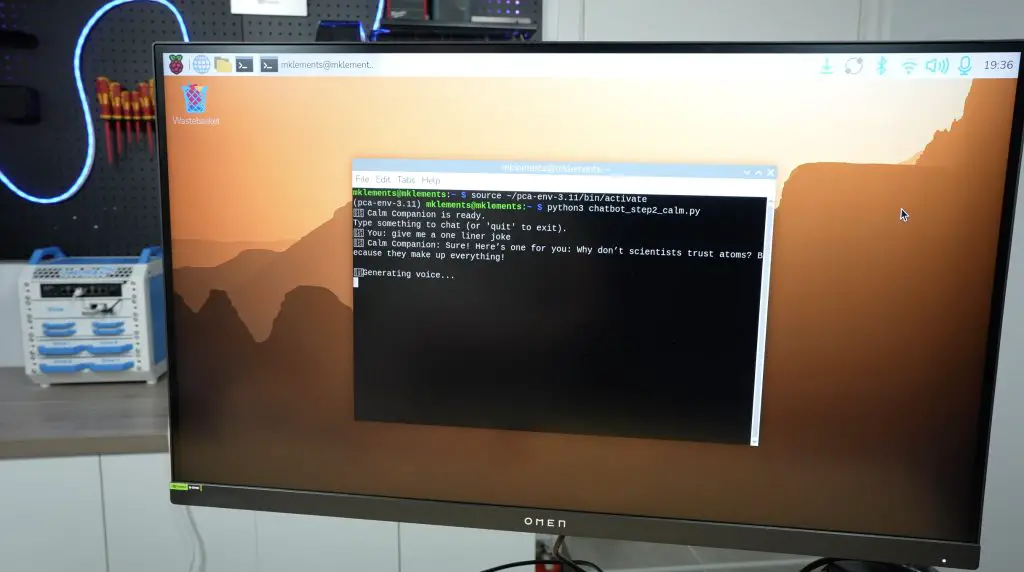
2. Text-to-Speech

Once the text conversation worked, I added text-to-speech so the chatbot could talk back. This code takes the return text response and converts it into speech and then plays back the generated audio file.

Adding A Voice To The Chatbot

The voice options are also very flexible. You have different basic voice options, but can also tailor accents, styles, and levels of expression through the same text prompt as the previous step. You can go flat, dramatic, natural, robotic or whatever suits the personality of the chatbot you’re building.

3. Speech Recognition

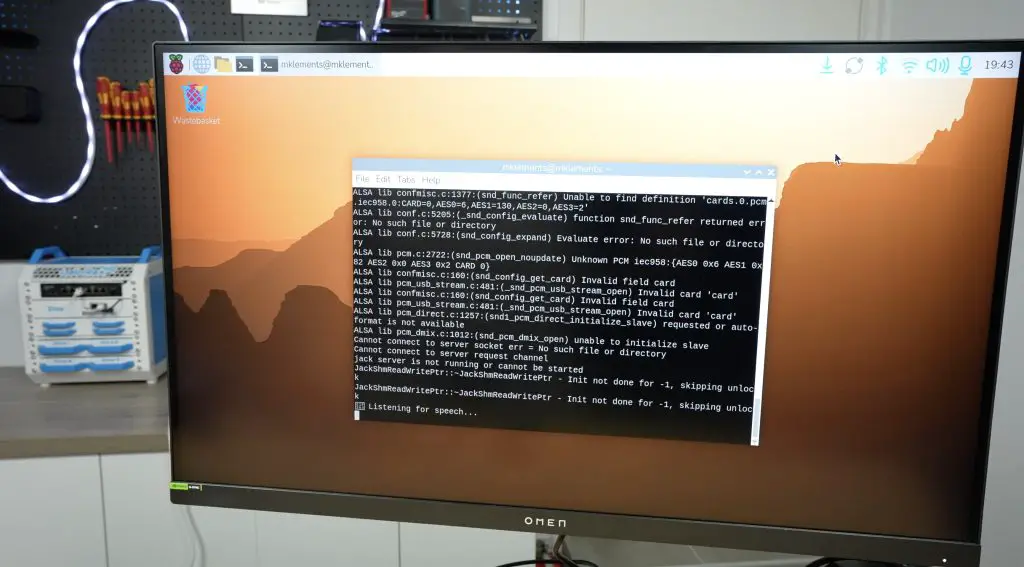
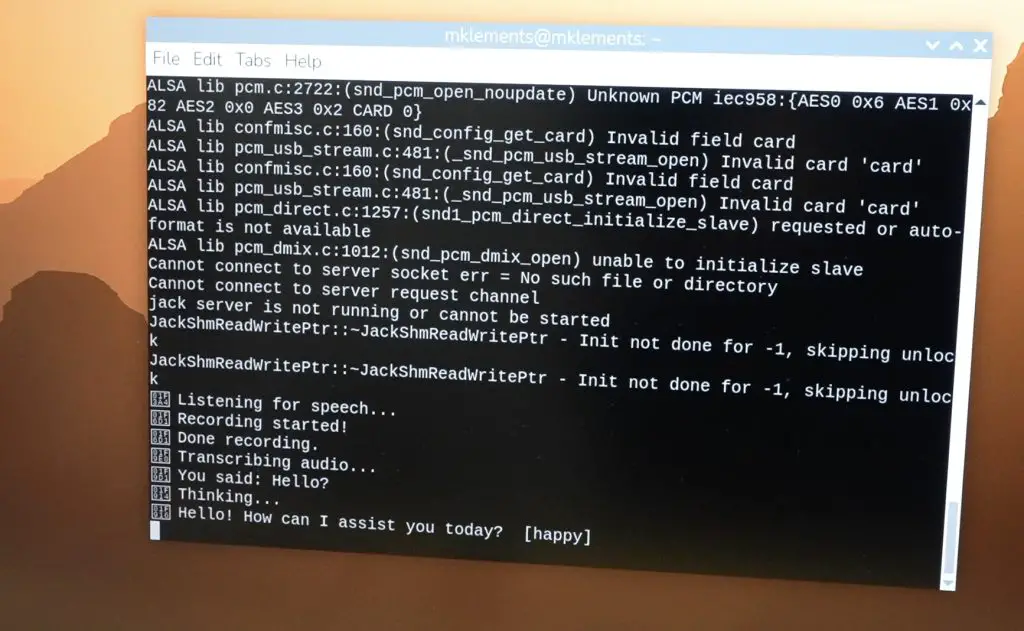
Lastly, I added speech recognition. This code listens for spoken audio, which it then saves as an audio clip. It then converts it to text which is then used as the chatbot prompt and the rest of the code the same as in the previous steps. At this point, the system can listen, think, and respond entirely on its own.

Adding Listening For Input To The Chatbot

Adding Expression: The Neopixel Mouth

With the AI chatbot’s logic complete, I tied in the Neopixel mouth. The 8-LED bar lights up dynamically based on the volume and intensity of the speech. Soft sounds only light the middle LEDs, while louder or more expressive moments light the whole bar.

It’s a small detail, but it adds a lot of personality. Paired with the blinking animatronic eyes, the chatbot now feels quite lifelike.

The Complete AI Chatbot (And It’s Few Personalities)

And that’s the full AI chatbot build, complete with its animatronic eyes and a responsive Neopixel mouth, all powered by a Raspberry Pi 5. It’s best to watch my Youtube video linked at the begining of the post to see it in action.

Download the code from my GitHub repository.

I then experimented with different personalities:

  • A mad scientist
  • A grumpy, sarcastic chatbot
  • A chilled, laid back and casual chatbot

Seeing it blink, look around, and talk back never really gets old.

While I could have tried running the language model locally on the Pi 5, using cloud-based models gives significantly better results. There’s still about a 1–3 second delay between speaking and getting a reply, but it’s noticeably faster and far more natural than local models. And using the OpenAI API means you can access models like GPT-4 or GPT-4 Mini, which provide richer and more context-aware responses.

What Should I Add Next?

If you enjoyed this AI chatbot project, I’d love to know what you think I should add next. Should it track your face? Respond with emotions? Use gestures? There are a lot of possibilities for upgrading its personality and expressiveness.

Before we wrap up, here’s the chatbot’s final message to everyone:

“Goodbye, humans. May your code always compile and your servos never jitter.”

I think it has been spending a little too much time on GitHub…

Thanks for reading, and I’ll see you in the next one!

A Pi Cluster That Fits in the Palm of Your Hand – The Sipeed Nanocluster

Building a Raspberry Pi cluster usually means dealing with messy cables, stacks of boards, and a tangle of power supplies. But what if you could shrink all of that into a single, compact board?

That’s exactly what the Sipeed Nanocluster does. It’s a small board and enclosure that lets you run multiple Raspberry Pi Compute Modules together as a compact cluster computer, and it literally fits in the palm of your hand.

Here’s my video review of the Sipeed Nanocluster, read on for the write-up;

https://youtu.be/zocjWPxCZog

Where To Buy The Sipeed Nanocluster

  • Sipeed Nanocluster Preorder – Buy Here
  • Raspberry Pi CM5 Lite Modules – Buy Here
  • Sandisk Ultra MicroSD Card – Buy Here

Tools & Equipment Used

Pricing and Packages

The Sipeed Nanocluster is still in development, but you can preorder it from Sipeed’s website. Pricing depends on the configuration you choose. The basic package, which includes the barebones board and fan, starts at $49, while the fully loaded version with four of Sipeed’s M4N modules and adapters goes up to $699.

That might sound steep, but when you consider what’s included, an 8-port managed gigabit switch, eight power supplies, and all the necessary cabling and cooling, it’s actually quite good value. You’re getting everything you need to build a clean, functional cluster for less than the cost of a single Raspberry Pi Compute Module 5.

Sipeed sent me what appears to be their CM45 package, which includes the Nanocluster board, fan, and seven adapter boards for Raspberry Pi CM4 or CM5 modules (with a small caveat I’ll get to later). This kit sells for $99. They also included a 3D-printed two-part enclosure with clear and white top options. It doesn’t seem to be part of the preorder packages yet, but Sipeed has shared the 3D print files on Makerworld, so you can print your own if you’d like to.

Exploring the Nanocluster Board

The Nanocluster board itself features seven SOM (System on Module) slots, each using dual M.2 M-key vertical connectors. These connect to an 8-port RISC-V-based gigabit managed switch located at the bottom of the board. The switch includes a web dashboard for configuration, somethingthat’s quite nice to see in such a tiny setup.

The slots are directly compatible with Sipeed’s Longan 3H as well as their M4N module and Raspberry Pi CM4 and CM5 modules via the included adapter boards. You can even mix and match different module types if that suits your project.

For power, the board uses a USB-C port supporting up to 20V (65W) or an optional PoE expansion module (up to 60W). Both can be connected simultaneously for power redundancy, so your cluster keeps running even if one source drops out. It’s a thoughtful design that eliminates the usual mess of cables and power bricks. With your modules installed, you just plug in a power supply and Ethernet cable, or a single PoE cable, and you’re ready to go.

Alongside the USB-C port, you’ll find two USB 2.0 ports, a gigabit Ethernet port, and an HDMI port. These are all connected to slot 1, which acts as the master node and can manage power for the other slots too.

Cooling and Connectivity

Mounted to the back of the enclosure is a 60mm 5V fan. It’s a simple two-pin fan that runs at full speed permanently, it’s not PWM controlled, so it’s a bit noisy, but it ensures all modules stay cool regardless of what’s running.

In front of the fan are seven indicator LEDs showing the status of each node, and seven UART ports for debugging and control.

The board measures just 88 x 57 mm, or the whole assembly is roughly 100 x 60 x 60 mm with the fan and modules installed.

Computer Module Adapter Boards

If you’re using Sipeed’s LM3H modules, you don’t need adapters. But if you’re running Pi CM4, CM5, or M4N modules, these adaptor or carrier boards are required.

Each adapter board includes:

  • A connector for the compute module
  • A USB-C port for flashing
  • A boot button
  • A microSD card slot for the OS image
  • An M.2 slot (2230/2242) for an NVMe SSD

In terms of performance, the LM3H modules are the most affordable option, while the M4N modules offer the most processing power, featuring up to eight cores.

Power and Thermal Limits

As compact as the Nanocluster is, there are some limitations. Because of its 60W power limit and small form factor, you can’t populate all seven slots with high-power modules.

Sipeed recommends:

  • Up to 4 CM5 or M4N modules (especially with SSDs or PoE)
  • Up to 6 CM4 or LM3H modules
  • All 7 slots only if you’re using CM4s without SSDs and powered via USB-C PD

Space is also a factor, if you’re using heatsinks and SSDs, you’ll likely only fit four modules comfortably, skipping every other slot for airflow.

Setting Up the Cluster

For testing, I used four Raspberry Pi CM5 Lite modules (no Wi-Fi or Bluetooth) and microSD cards for storage. I also tried to use the official CM5 heatsinks, but they were too thick to fit, so I ran the tests without them. More on this during my thermal tests.

Once the modules were installed in their adapters and plugged into the board, I set up the cluster in the enclosure and prepared for some benchmarks.

Performance Testing

To test the cluster, I ran the prime number test script I used a few years ago on my 8-node water-cooled Pi cluster. The Python script checks each number up to a defined limit to see if it’s prime. It’s intentionally inefficient and CPU-intensive, perfect for testing performance scaling.

I ran the test three times per setup (single node vs. 4-node cluster), with limits of 10,000, 100,000, and 200,000.

Single Node Results:

  • 10,000 → 0.68s
  • 100,000 → 56s
  • 200,000 → 213s (≈4 minutes)

4-Node Cluster Results:

  • 10,000 → 0.19s
  • 100,000 → 14s
  • 200,000 → 58s

Each test ran roughly four times faster across the cluster, and the 4-node Pi 5 cluster even beat my old 8-node Pi 4 cluster, despite the Pi 4s being overclocked to 2.0GHz. The Pi 5s, running at stock 2.4GHz, showed how much progress the hardware has made.

Thermal and Power Tests

At idle, the cluster drew about 14W, which is around 2.5W per Pi, plus 3.5W for the board. Under full CPU load using cpuburn, total consumption rose to 33W, which is an increase to around 7.5W per Pi.

Thermally, the results were excellent. Even without heatsinks, temperatures started around 26–29°C and stabilised at around 60°C after 30 minutes of full load. The large fan does a great job pushing air across the exposed CPU heat spreaders, keeping all nodes within safe limits. The outer modules ran a bit warmer, but still comfortably low.

Fan noise measured about 58dB, which is noticeable but not unbearable for a lab setup.

Network Performance

I also ran an iPerf network test between nodes, and each link hit around 950 Mbps, which is right on target for gigabit networking.

Final Thoughts

The Sipeed Nanocluster is an impressive little system that makes cluster computing accessible and tidy. It packs power delivery, cooling, and an integrated managed switch into a form factor smaller than your palm.

I really appreciate that Sipeed thought about practical usability, power redundancy, active cooling, and clean integration all make this much easier to work with than a DIY setup full of cables and adapters.

It’s obviously not going to replace your cloud server or main NAS, but as a learning platform, IoT hub, or compact homelab, it’s a brilliant piece of hardware. And at under $100 for the board and adapters, it’s hard to beat.

What would you run on your own Nanocluster? Let me know in the comments section below and if you’re curious to see it in action, check out the video on my YouTube channel.

LattePanda’s New IOTA SBC – A Palm-Sized N150 Board for Makers

LattePanda’s latest release, the IOTA, packs Intel’s new N150 processor into a board barely larger than a Raspberry Pi. Despite its small size, it’s packed with features and IO aimed squarely at makers who want desktop-class power with microcontroller flexibility.

In this review, we’ll unbox the LattePanda IOTA, take a look at its hardware and available accessories, then boot it up to test video playback, run some benchmarks, and check its power consumption and thermal performance.

Here’s my video review of the LattePanda IOTA, read on for the written review;

Where To Buy The LattePanda IOTA

Add Ons

Tools & Equipment Used

Unboxing the LattePanda IOTA

The LattePanda IOTA is a single-board computer (SBC) available in several kit configurations with optional add-ons. I’ve got a few of those accessories here as well, which we’ll explore later. In the box is the IOTA, a user manual and a battery for the real-time clock.

The board measures just 88mm x 70mm x 19mm, making it impressively compact for what it offers. It keeps the same dimensions and general port layout as the original LattePanda V1, meaning it’s compatible with most existing enclosures, perfect for anyone looking to upgrade or drop it into an older build.

At first glance, you might think the CPU is on the top side, but it’s actually mounted on the back. The IOTA uses a 4-core Intel N150 CPU running up to 3.6GHz, paired with LPDDR5 RAM at 4800MT/s, available in 8GB and 16GB variants.

For storage, it includes onboard eMMC. It’s got 64GB on the 8GB RAM version, and 128GB on the 16GB version. The model I’m reviewing has 8GB of RAM and 64GB of storage.

Hardware Overview

One of the standout features of the IOTA is its onboard RP2040 microcontroller, which sets it apart from most x86-based mini PCs. This dual-core Cortex coprocessor manages I/O through the GPIO pins, similar to how the Raspberry Pi handles hardware interfacing.

Looking around the board:

  • On the bottom, there’s a power management connector for alternative power options and a fan connector.
  • On the top, you’ll find all the ports and interfaces:
    • Three USB 3.2 ports
    • HDMI 2.1 port (supports 4K @ 60Hz)
    • I2C connector for touch displays
    • eDP display connector
    • PCIe 3.0 x1 interface (similar to the Raspberry Pi 5)
    • Battery connector
    • USB-C Power Delivery input
    • MicroSD card slot
    • Headphone jack
    • Gigabit Ethernet port
    • Power and reset buttons
    • GPIO header
    • MCU reset and boot buttons
    • M.2 E-key slot for adding a Wi-Fi adapter.

The IOTA has a configurable TDP between 6W and 15W, letting you balance performance and thermals. At lower settings, it can run silently with a passive heatsink; crank it up, and you’ll want the active cooler (which I’m using for this review).

Pricing

I think the LattePanda IOTA is priced fairly well;

  • 8GB RAM / 64GB storage – $129
  • 16GB RAM / 128GB storage – $175

You’ll want to budget an extra $12 for the cooler, bringing the total to under $150 for the base setup. I think this is fair for what you are getting.

Optional Add-Ons

LattePanda also offers several add-ons to expand the IOTA’s functionality:

Smart UPS Hat

A plug-and-play uninterruptible power supply, capable of keeping the IOTA running for up to 8 hours depending on the batteries you use. It includes smart features like automatic power-on and safe shutdown when voltage gets too low, connecting via the IOTA’s power management connector.

51W PoE++ Expansion Hat

This expansion board lets you power the IOTA via Ethernet through its onboard gigabit port. It connects to the IOTA’s power input and PCIe port, effectively giving you two network ports.

M.2 Expansion Boards

There are two M.2 expansion options available for the IOTA:

  • One with an M-key slot for NVMe SSDs (2230 or 2280 sizes).
  • Another smaller one for a 4G LTE module for mobile connectivity.

The NVMe board connects through PCIe, while the LTE board uses a USB 2.0 interface via the GPIO pins.

Performance Testing The LattePanda IOTA

Video Playback at 1080P and 4K

For testing video performance, I ran playback at both 1080p and 4K, setting the system display resolution to match each test.

  • 1080p playback both in a window and fullscreen ran perfectly, with no dropped frames.
  • 4K playback dropped some frames, both windowed and fullscreen, but remained smooth enough for casual use. It’s near the performance limit, but still usable.

Benchmarks

I then ran a few standard benchmarks to get a sense of performance:

Unigine Heaven (1080p, High Quality)

  • Score: 221 points
  • Frame rate: 5–20 FPS

As expected, this isn’t a gaming system. The integrated graphics can handle light 3D workloads, but performance is roughly on par with other Intel N100 systems.

Geekbench 6

  • Single-core: 910
  • Multi-core: 2002

That’s enough for everyday tasks like browsing, media playback, and light productivity. It’ll struggle with heavier workloads like video editing or gaming.

CrystalDiskMark (eMMC Storage)

  • Sequential Read: 288 MB/s
  • Sequential Write: 206 MB/s
  • 4K Random Read/Write: ~40 / 46 MB/s

The onboard storage feels snappy for booting and launching apps, but it’s far slower than NVMe storage.

Power and Thermal Performance

At idle, the IOTA draws about 3–5W, rising to 15W under a full CPU and GPU load, with spikes up to 19W.

Reducing the TDP to its minimum 4W limit drops total draw to around 5W, but performance takes a big hit. Windows 11 becomes laggy, so a lightweight OS would be better suited for that mode. Still, it’s impressive that an x86 board running Windows can idle that low.

Thermals with the active cooler are solid:

  • Idle: 45–50°C
  • Full Load: ~70°C

Fan noise is the only real issue that I encountered with this board. It runs at 34–35 dB at idle (20cm away) and up to 50 dB under full load. The tone is fairly high-pitched, which makes it more annoying than the numbers suggest.

GPIO and Maker Features

Since the IOTA is designed for makers, the GPIO pins and RP2040 microcontroller are central to its appeal, and they’re very easy to use.

For a quick test, I connected two LED to the GPIO pins through 220Ω resistors, then opened the Arduino IDE directly on the IOTA. Selecting the RP2040 board profile, I uploaded a basic blink sketch and the LEDs flashed as expected.

That means you get the full power of an Intel PC plus a built-in microcontroller for sensors, motors, or other real-time hardware control, with no extra boards required.

Final Thoughts on the LattePanda IOTA

The LattePanda IOTA is a compact, power-efficient, and feature-rich little board that bridges the gap between a mini PC and a maker’s microcontroller platform.

The integrated RP2040 is what truly sets it apart, allowing hybrid projects that combine PC-level processing with real-time hardware control for robotics, automation, or experimental electronics.

If you’re looking for a cheap everyday mini PC, there are better options for pure desktop use. But if you’re a maker who wants something you can build projects with, the IOTA is a strong and flexible choice.

Let me know in the comments what you think of the LattePanda IOTA and what kinds of projects you’d use it for.

Turn your 10″ Homelab into a NAS with 3D Printable Shelves

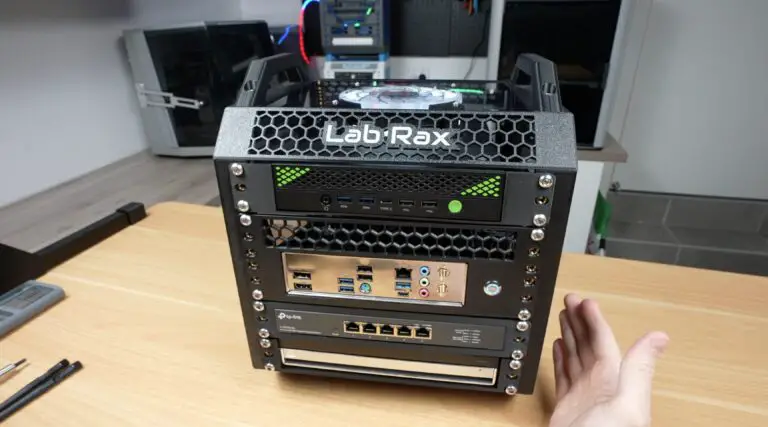
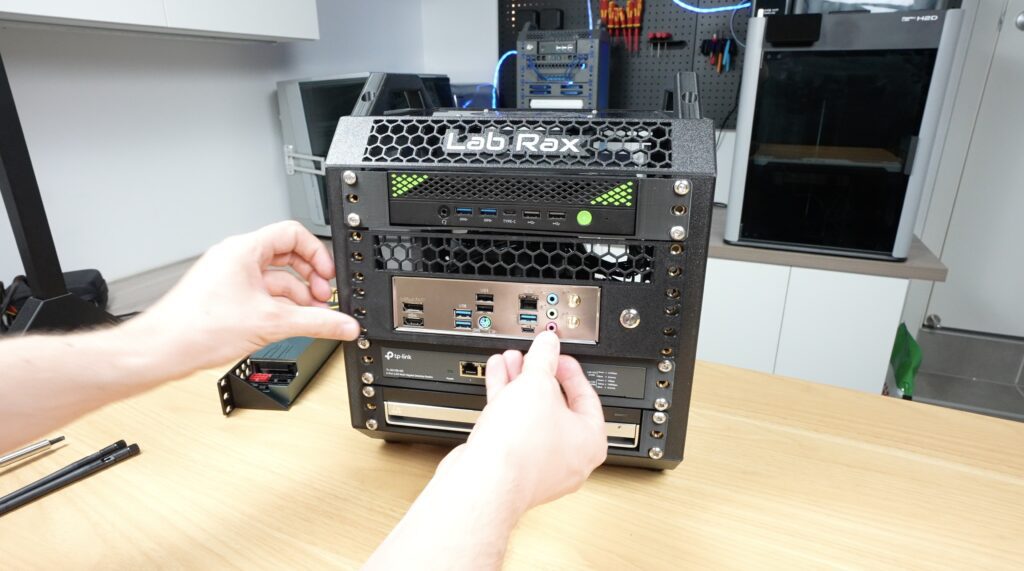
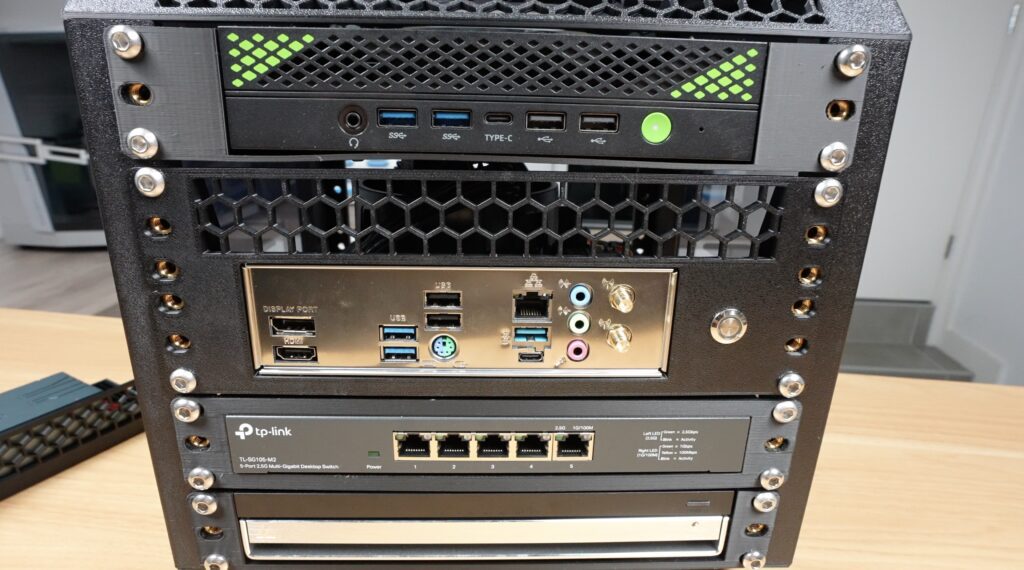
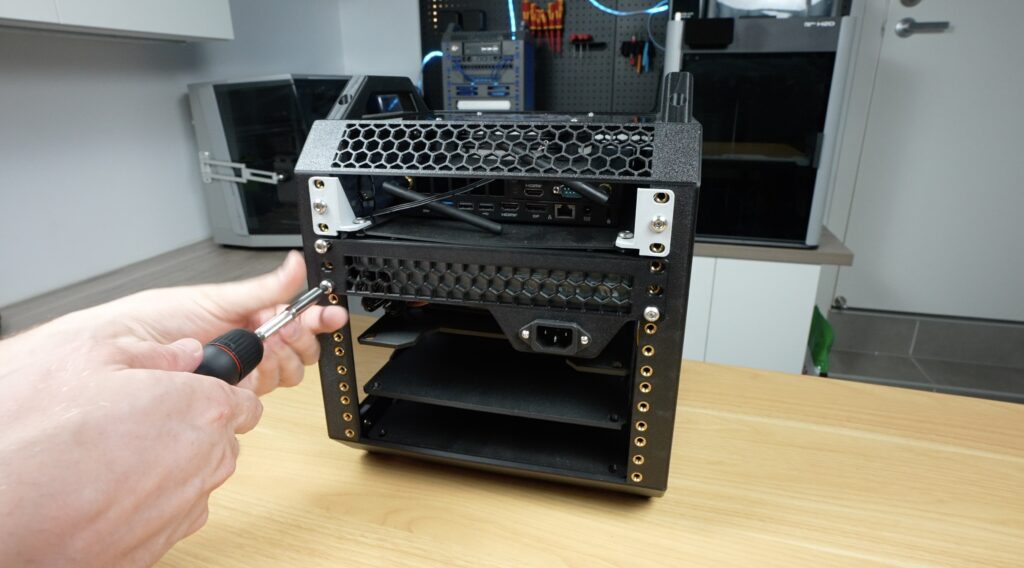
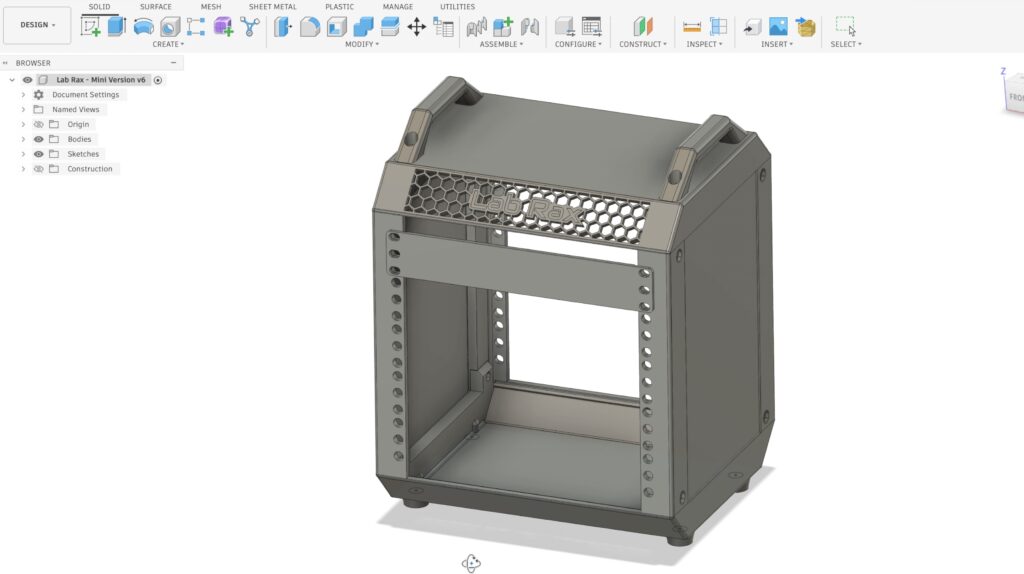
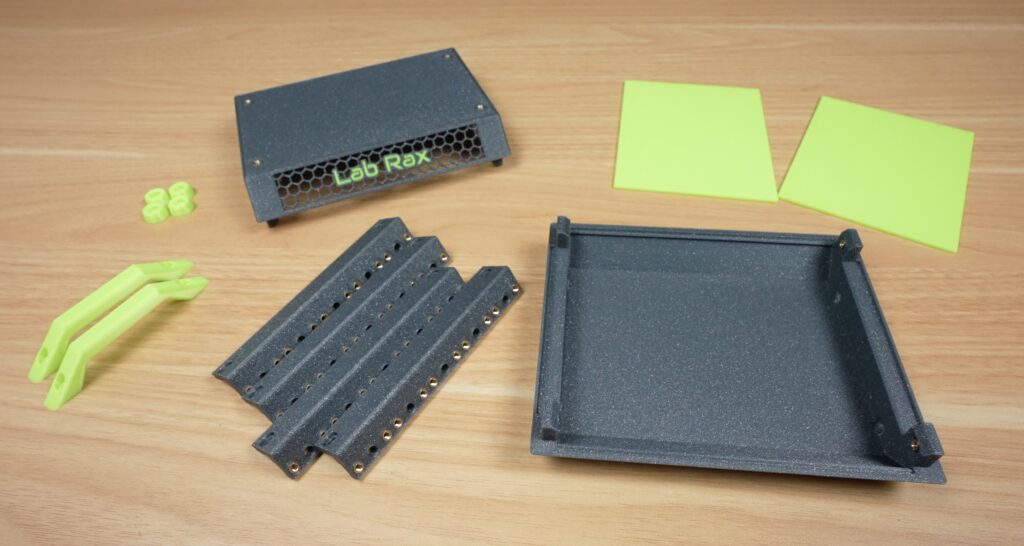
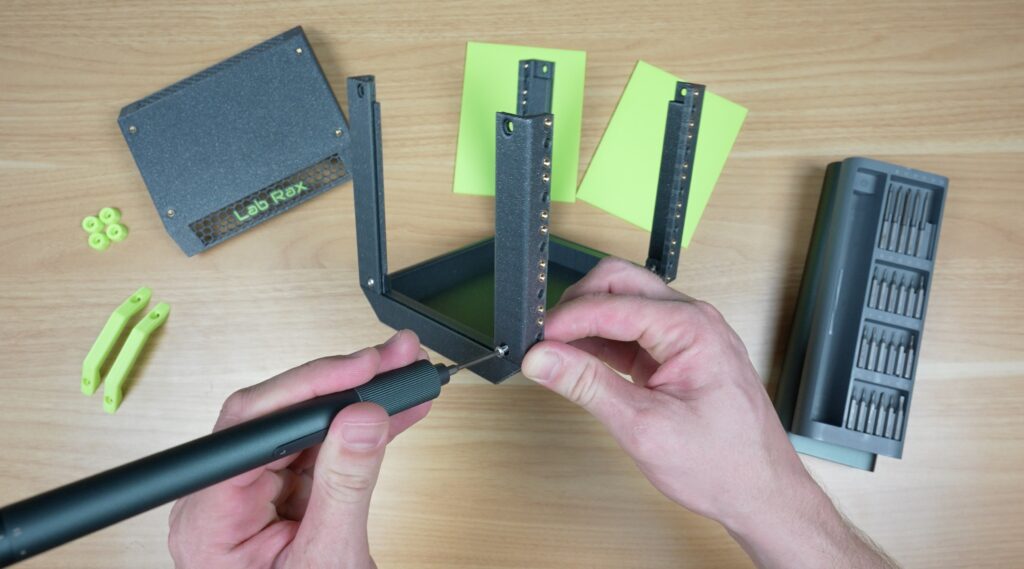
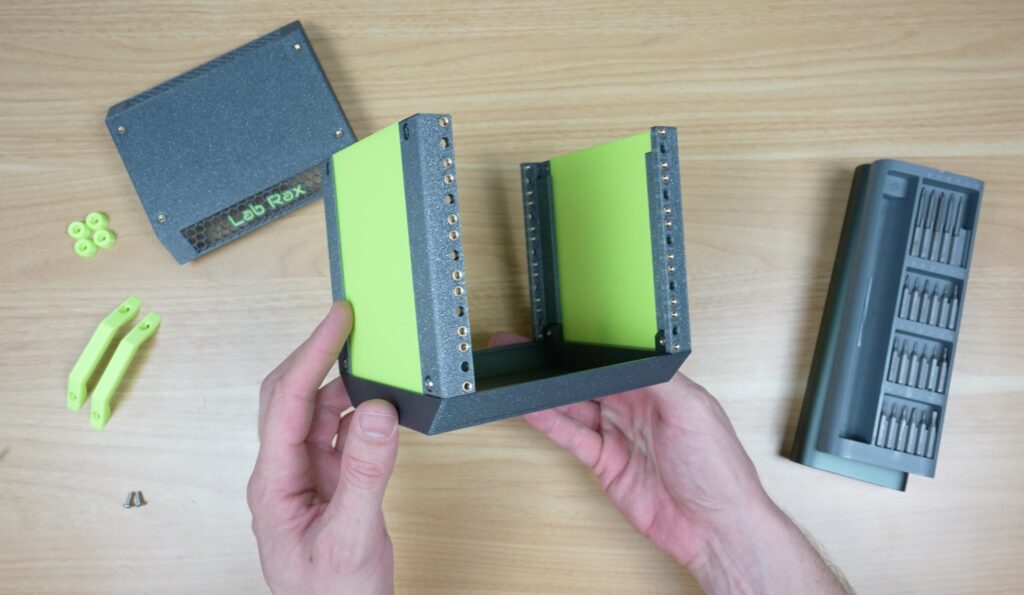
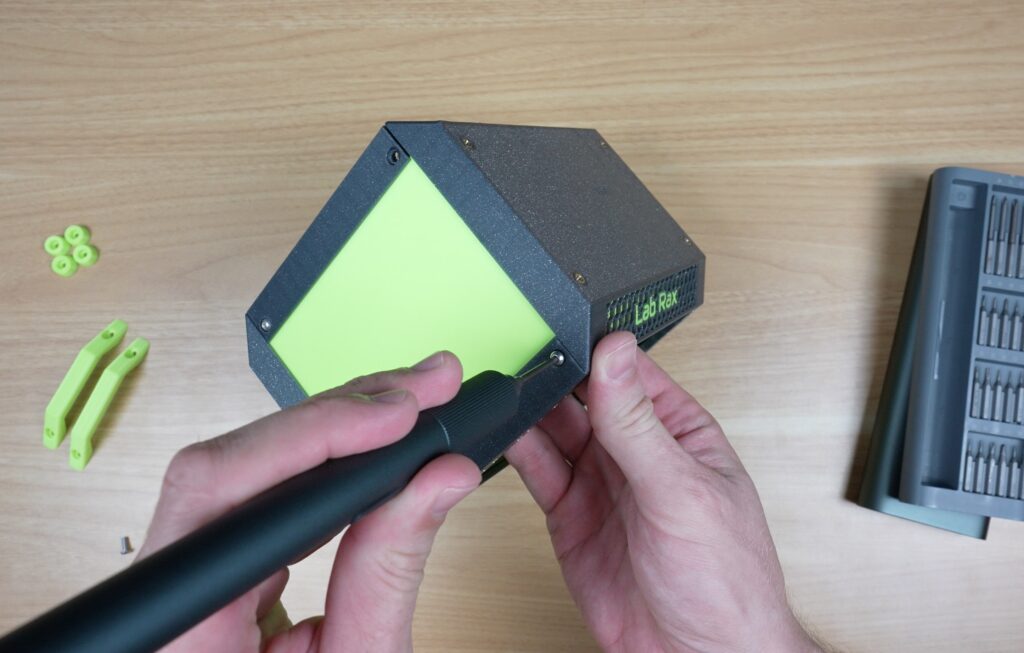
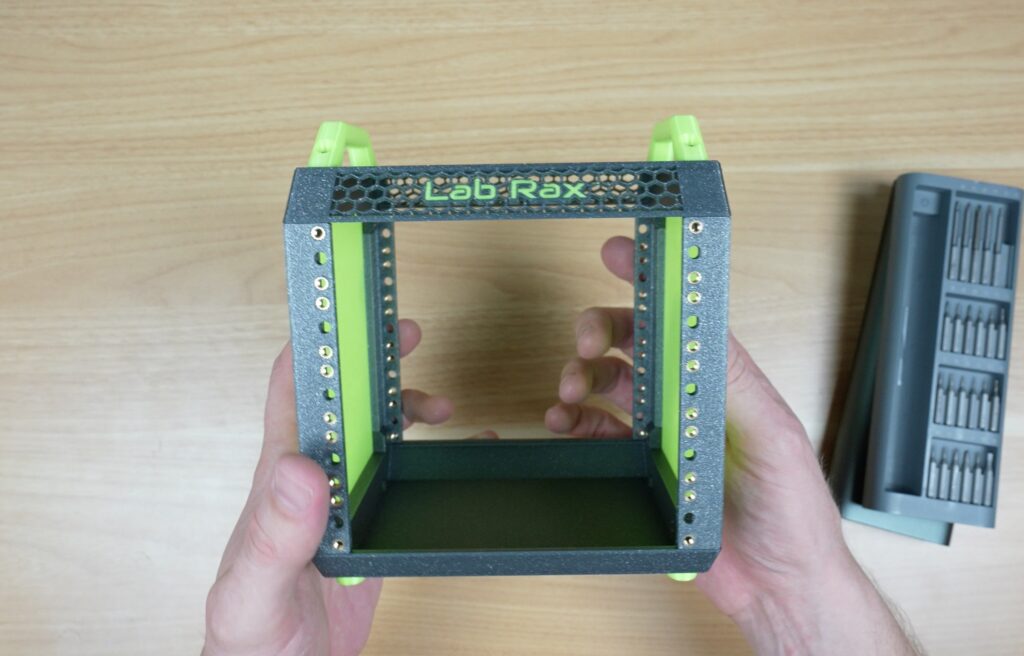
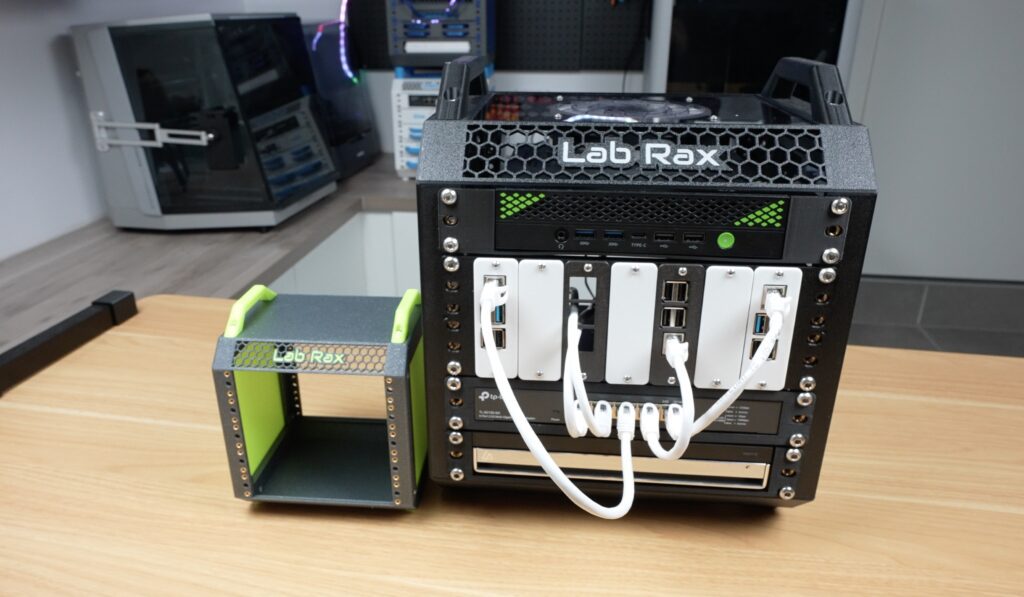
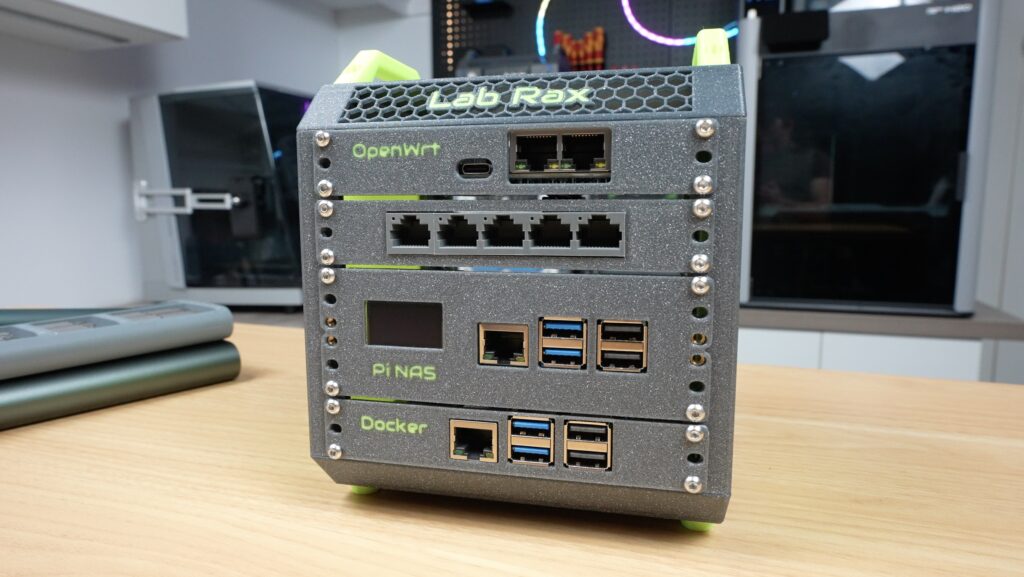
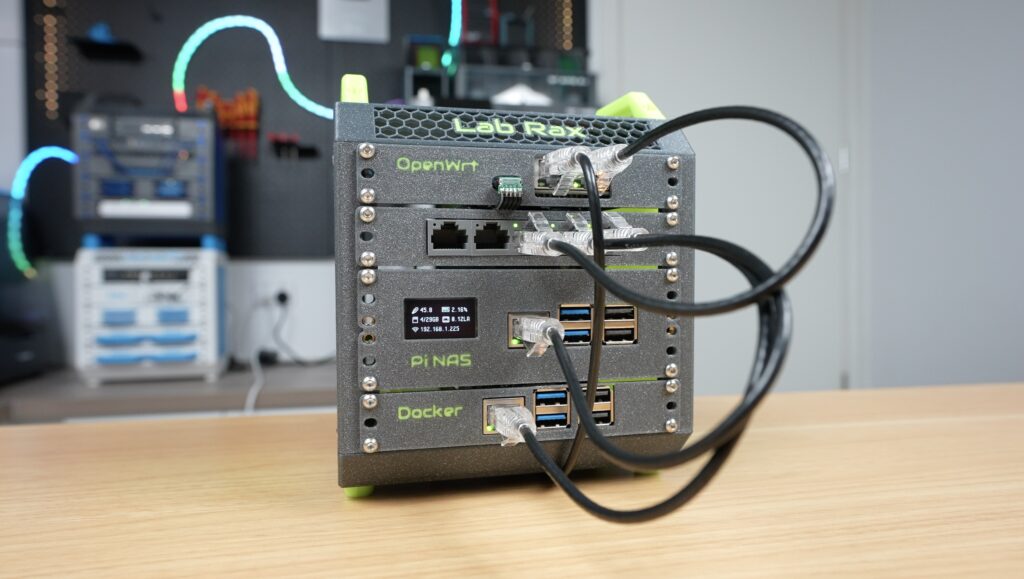
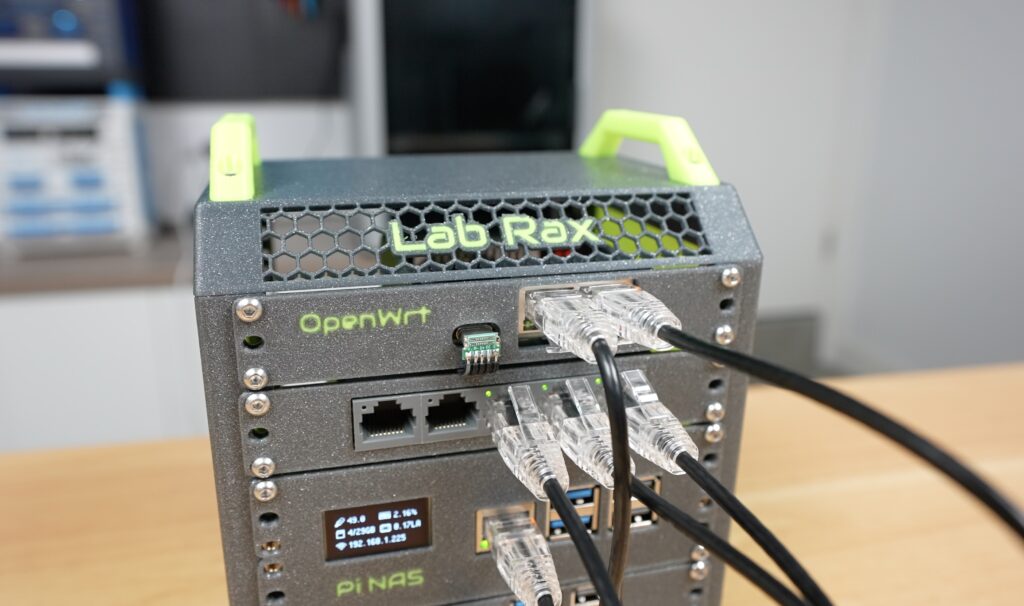
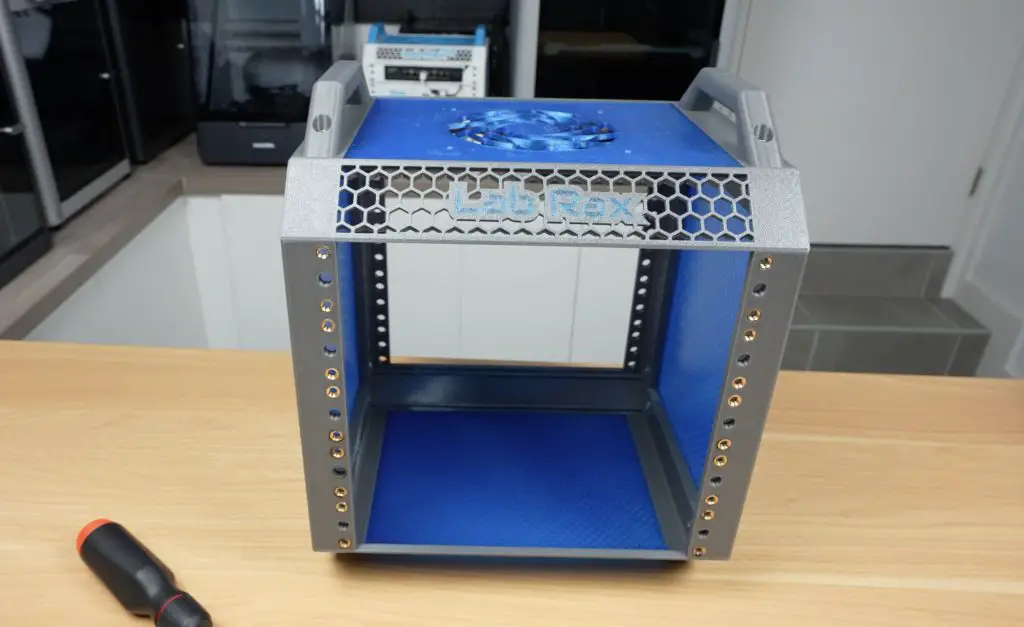
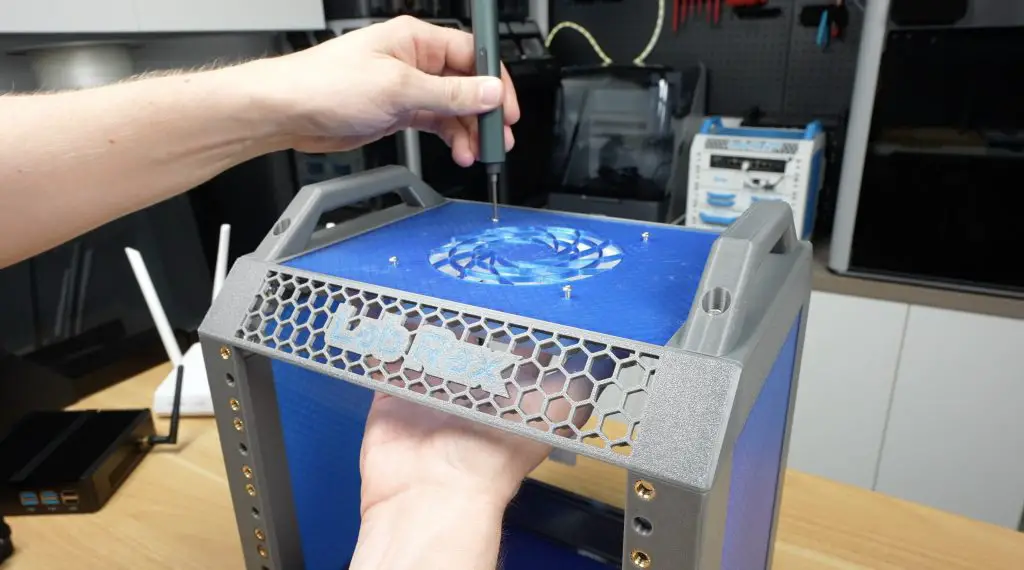
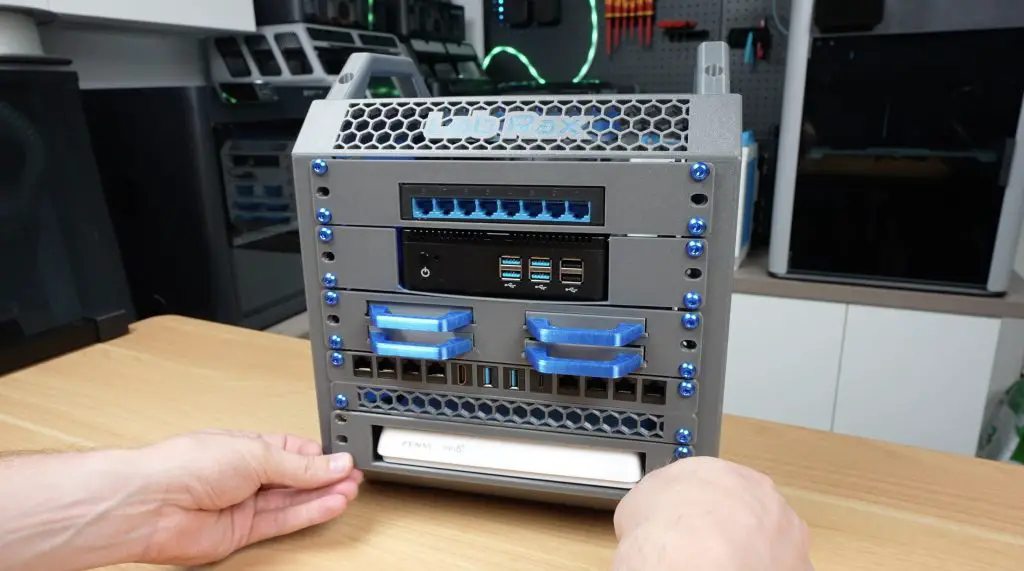
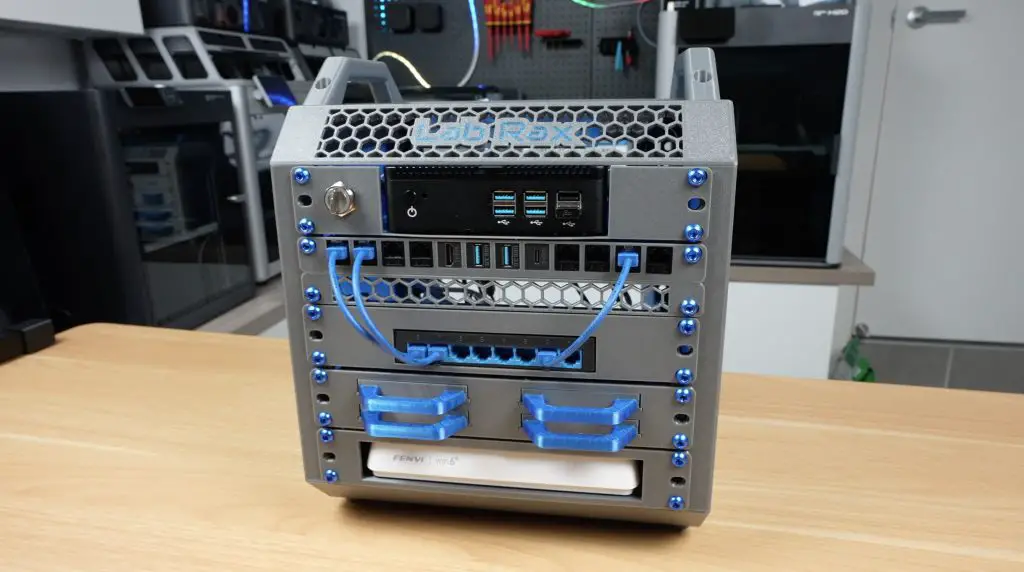
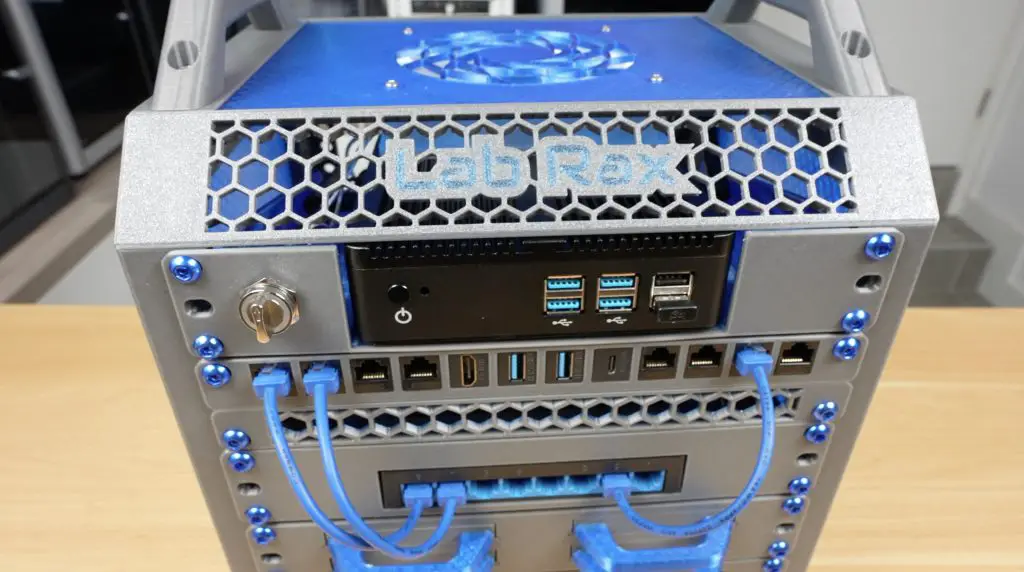
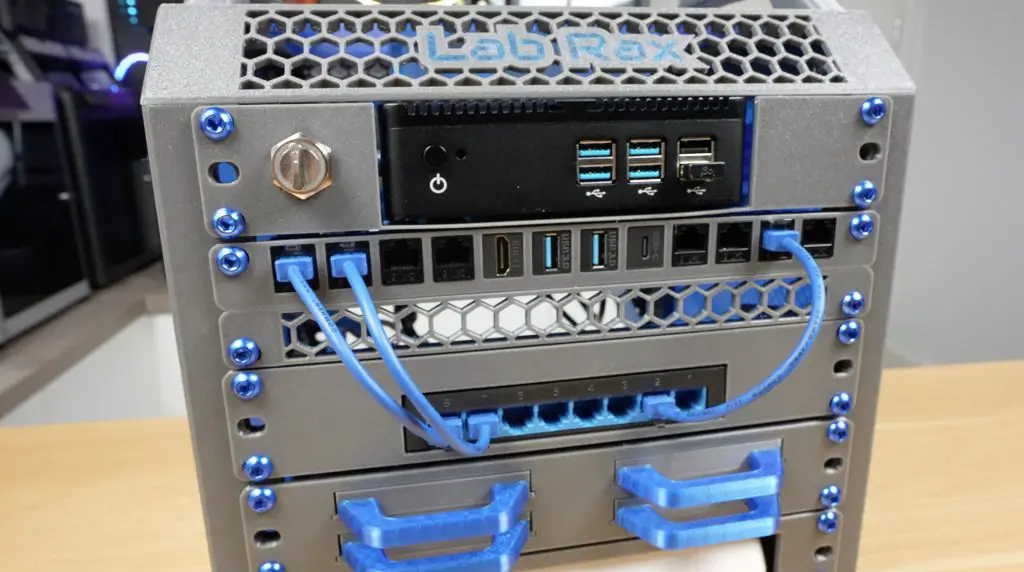
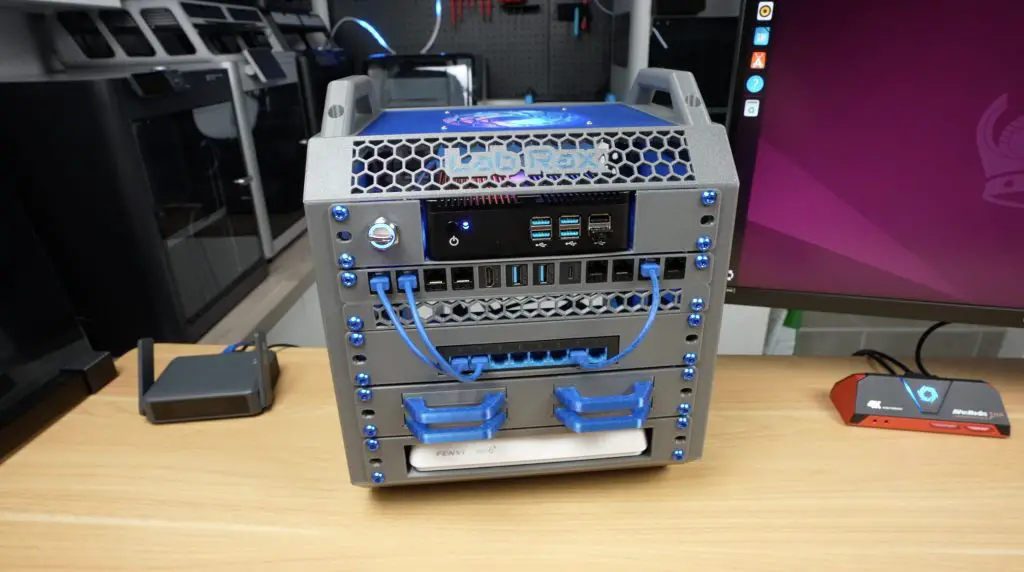
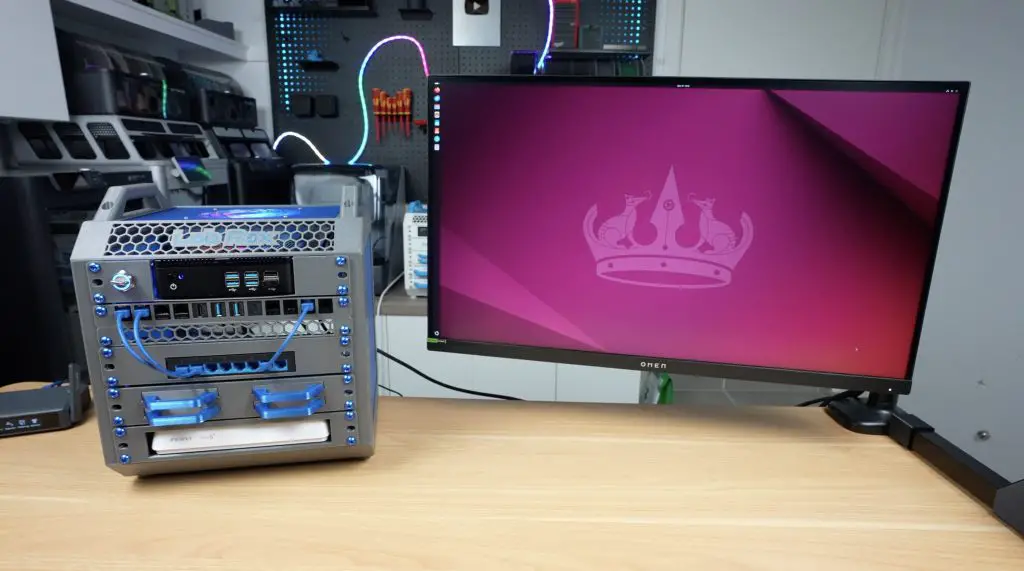
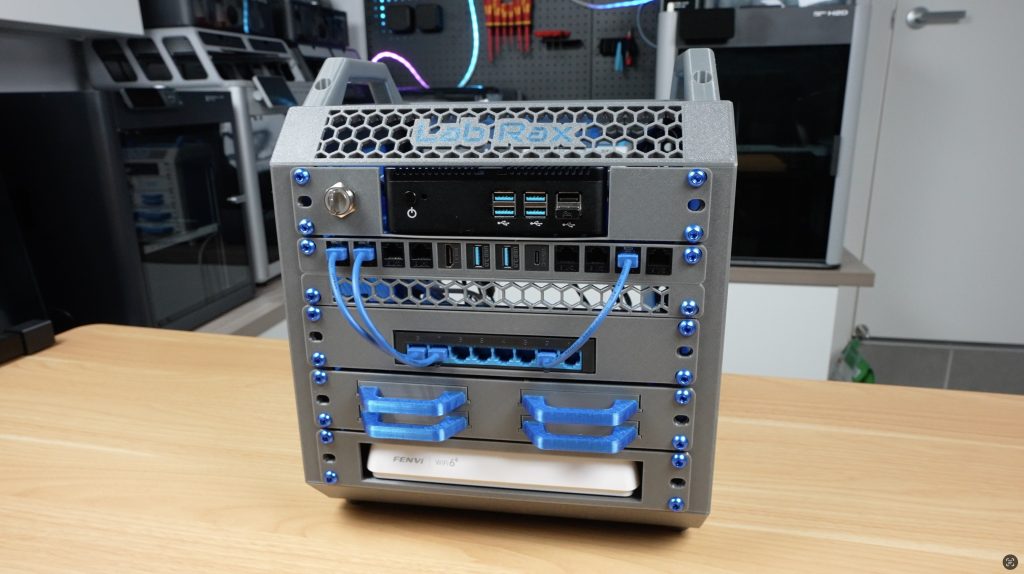
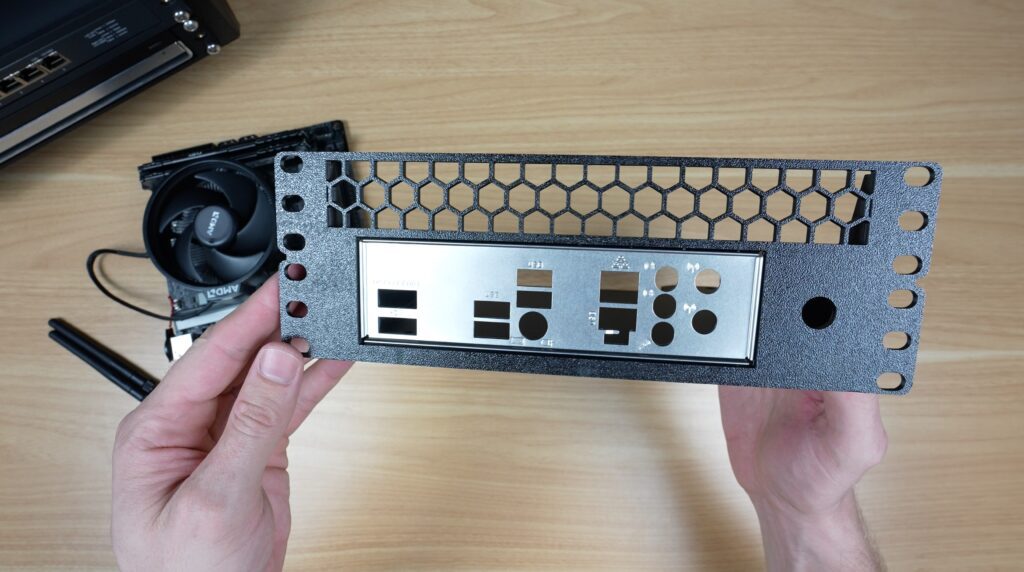
If you’ve been following my projects, you’ll probably remember my Lab Rax system, a 10-inch modular and 3D printable rack I designed to make it affordable and flexible to build your own homelab.

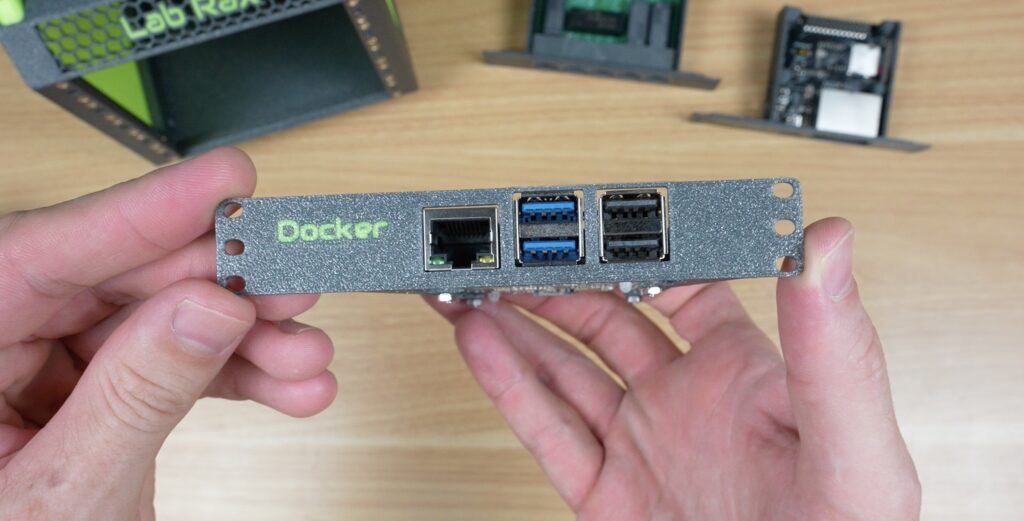
Today I’ve got something new to add to it, a set of 3D printable shelves for drives and SBCs (Single Board Computers), designed specifically to turn your Lab Rax homelab into a compact and customizable NAS (Network Attached Storage).

LaxRax NAS Component Design

These shelves can be used as part of a larger Lab Rax setup or on their own as a dedicated NAS. In this post, I’ll walk you through the four new shelf designs, explain how to assemble them, and then show you two example NAS builds, one with a Raspberry Pi 5 and another with a Zimaboard 2.

Here’s my video of the project, read on for the write-up;

Where To Buy The Components For This Project

Tools & Equipment Used:

Some of the above parts are affiliate links. By purchasing products through the above links, you’ll be supporting this channel, at no additional cost to you.

A Quick Recap: The Lab Rax System

The Lab Rax framework is 10 inches wide, making it a lot smaller than a standard 19-inch rack. But it still uses the same unit height (U) spacing and hole patterns as a 19-inch rack, so you can mix and match modules from other 10-inch rack systems.

NucBoc K10 In Lab Rax Homelab

The goal is flexibility, start with a small setup and then expand as you need more shelves, drives, computers, or networking gear.

The New 3D Printable NAS Shelves

I’ve designed four new 1U shelves, two for holding drives and two for housing SBCs to run the NAS. Let’s go through them one by one.

1. Dual 3.5″ Drive Shelf (1U)

This shelf holds two 3.5-inch drives, each mounted in a pull-out tray for easy swapping. The trays slide into rails built into the shelf body, and each drive is secured with M3 drive screws through holes in the sides of the tray.

  • At the back of each bay, there’s a mounting point for a SATA data and power cable.
  • Although designed for 3.5″ drives, the bays are dual-purpose, so you can mount 2.5″ drives into the same trays using the appropriate screw holes.
  • For airflow, the front and sides of the shelf are vented. I recommend leaving at least 1U of space for cooling, or installing a 120mm fan on the sides of the rack if you’re stacking multiple of these with spinning hard drives.

Download the Dual 3.5″ Drive Shelf (1U) 3D print files.

Assembly tips:

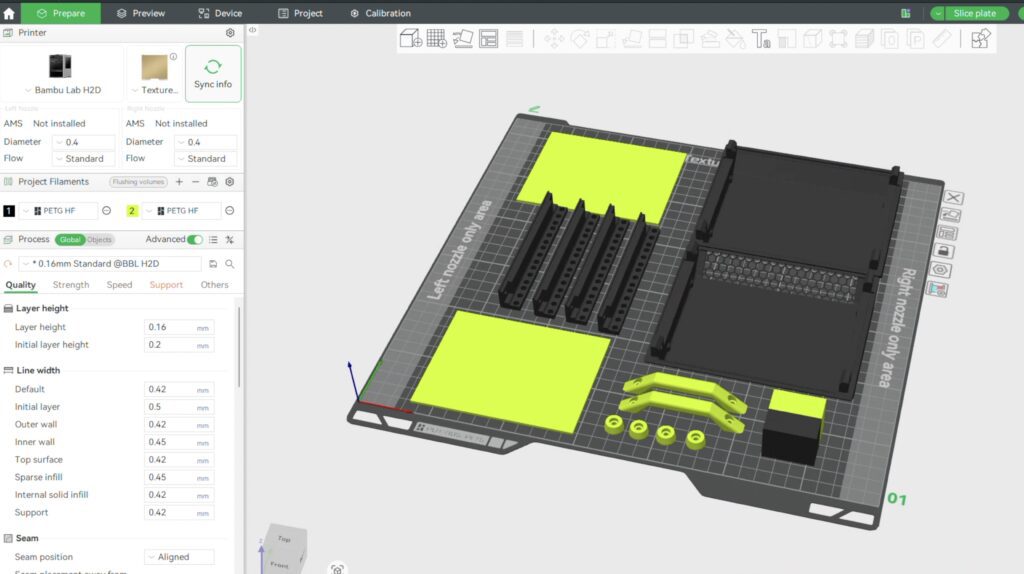
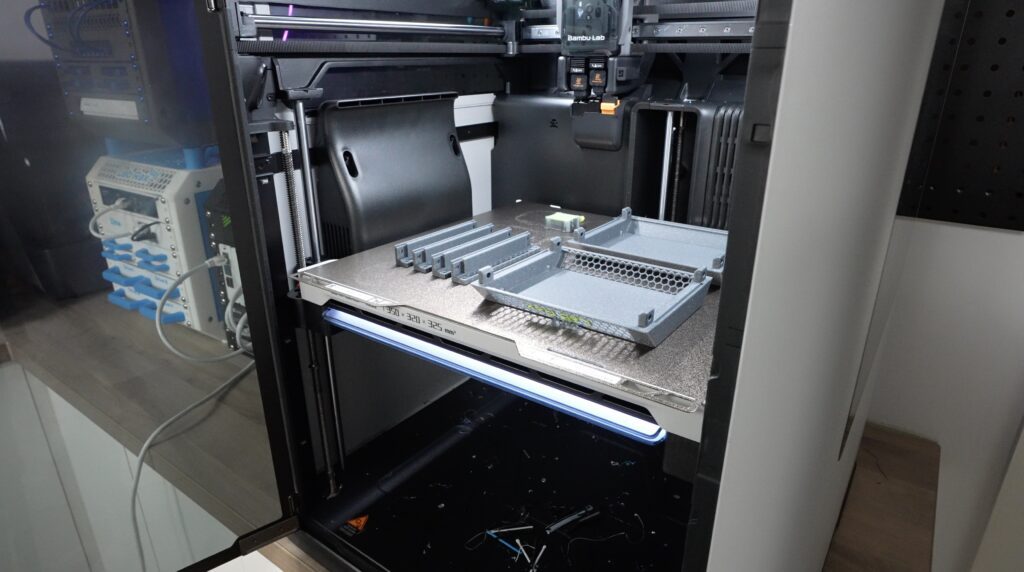
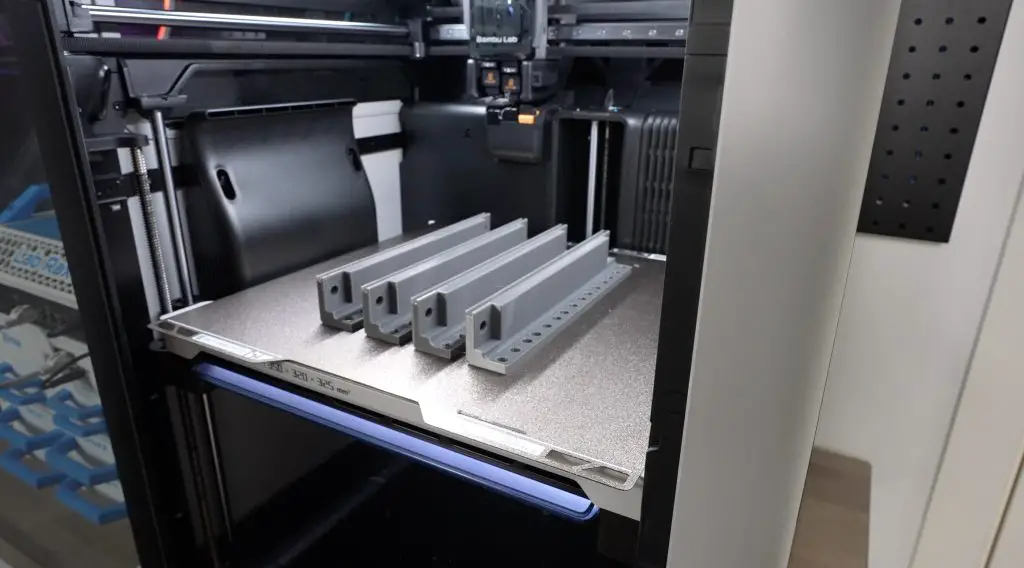
  • Print the main shelf body and the drive trays separately. I’ve prepared print profiles on Makerworld for Bambulab printers.
  • To mount the SATA cable connectors;
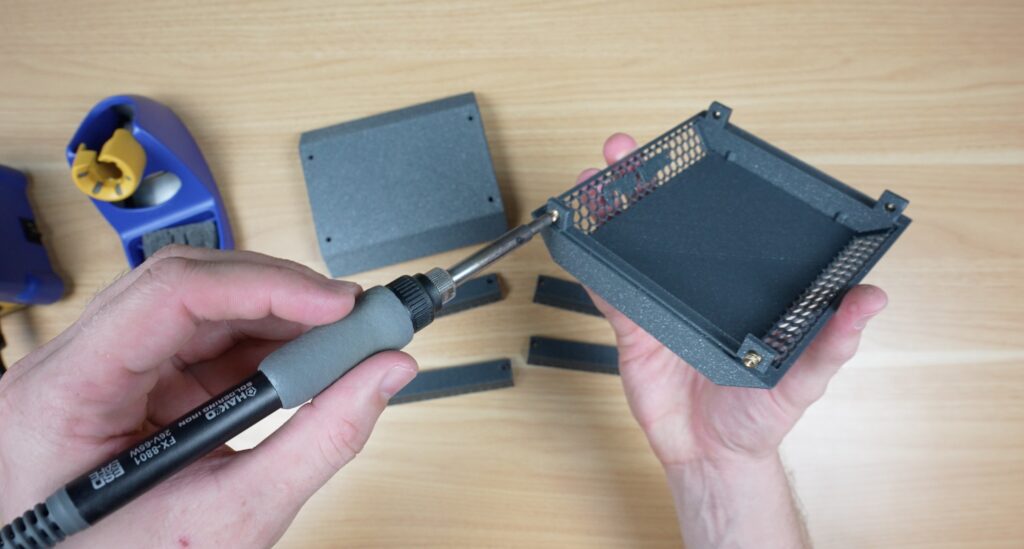
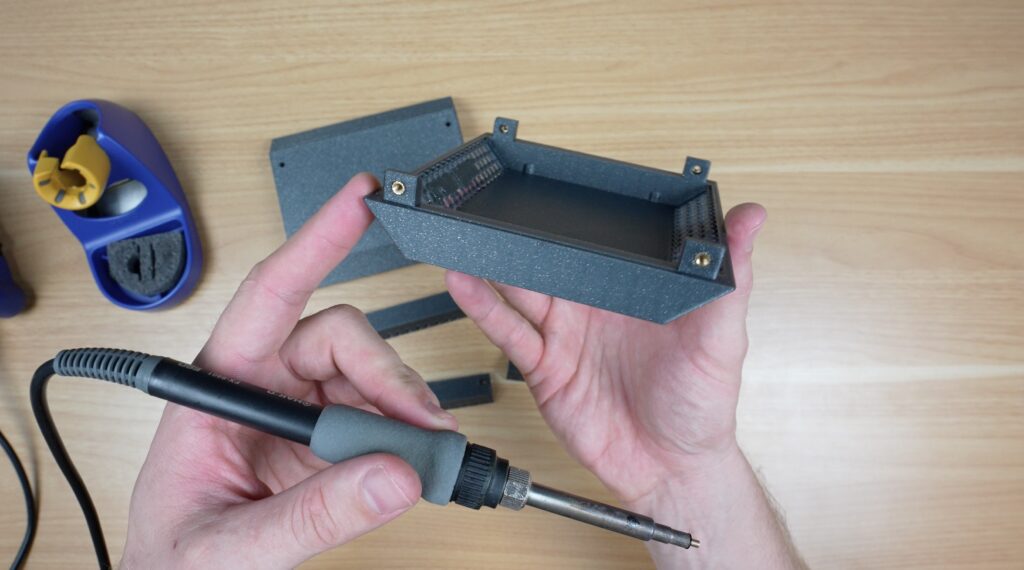
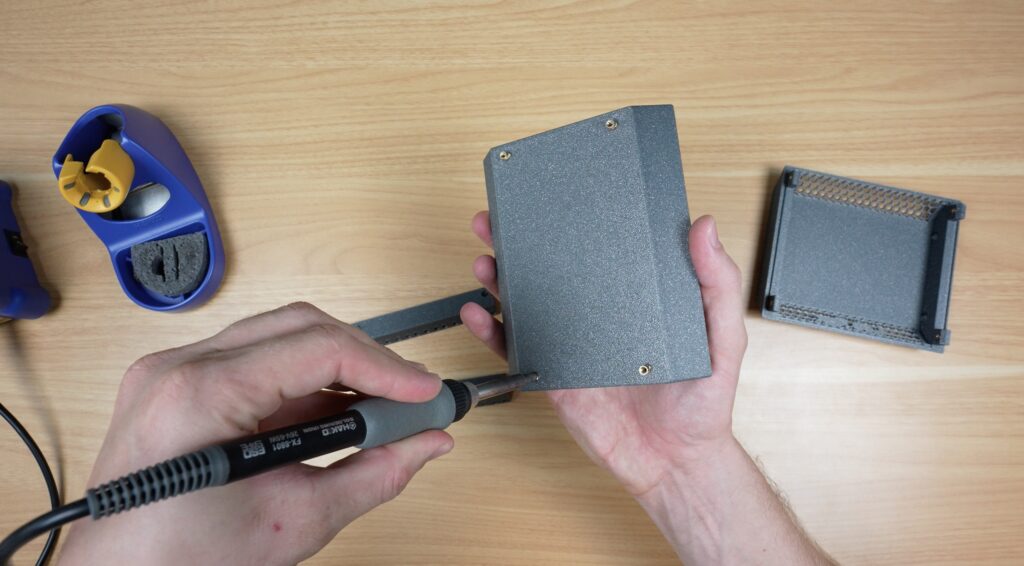
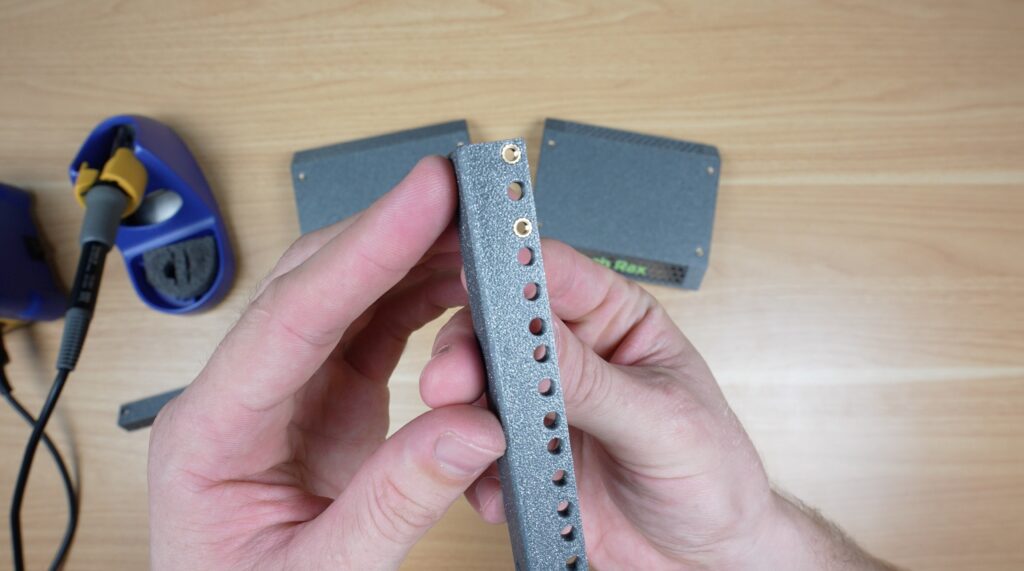
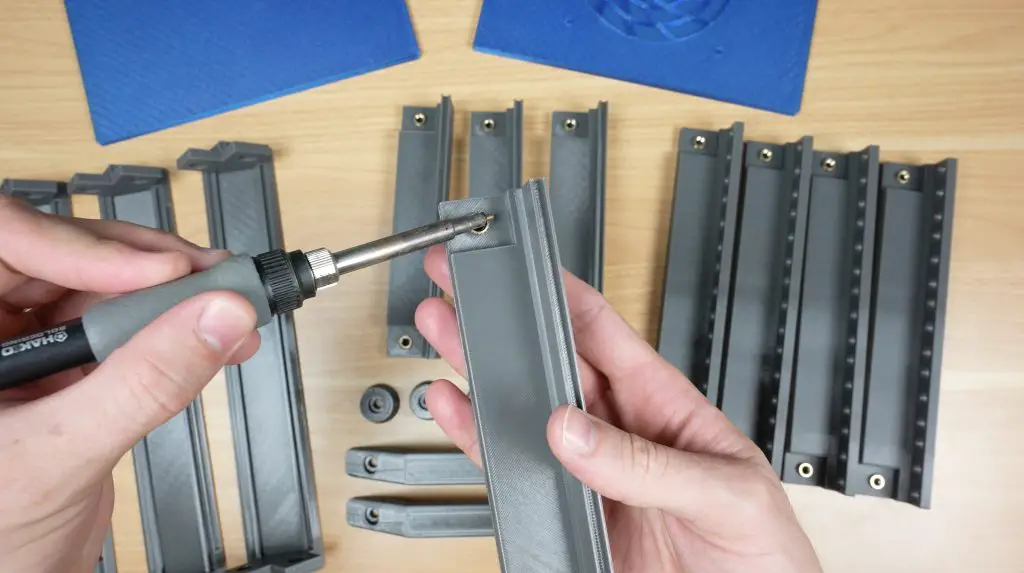
    • Use a soldering iron to add M3 threaded brass inserts into the prepared holes, two per connector.
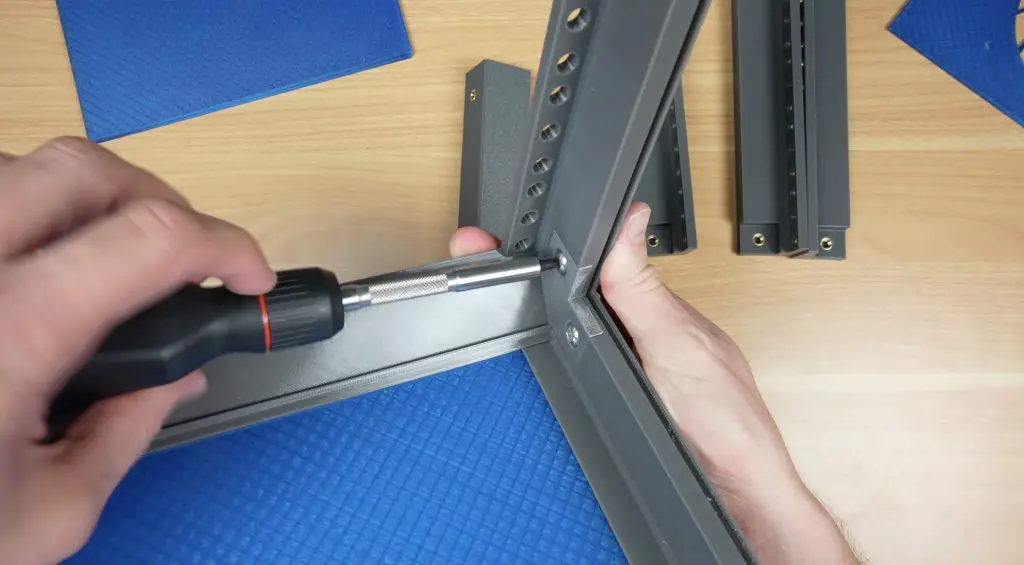
    • Secure each connector using two M3x8mm button head screws.
    • You’ll need M3 drive screws to secure the drives to the trays.
  • Once the drives are fixed in place, slide the trays into the shelf until they click or stop against the rear cable mounts.
    • If they don’t click into place easily, loosen the M3 screws on the connector slide the drive in and then tighten them with the drive in place to correct the alignment.

2. Quad 2.5″ Drive Shelf (1U)

If you’re using SSDs or smaller mechanical drives, this shelf is ideal. It holds four 2.5-inch drives, again using pull-out trays with the same SATA cables as the 3.5″ version.

Four 2.5 Drives Rack
  • Each drive is secured to the tray with M3 drive screws into the sides of the drive.
  • Because 2.5″ drives run cooler and lighter, this shelf is especially well-suited for higher density SSD setups.

Download the Quad 2.5″ Drive Shelf (1U) 3D print files.

Assembly tips:

  • Print the main shelf body and the drive trays separately. I’ve prepared print profiles on Makerworld for Bambulab printers.
  • To mount the SATA cable connectors;
    • Use a soldering iron to add M3 threaded brass inserts into the prepared holes, two per connector in both the shelf and the SATA connector bracket (for the top two drives).
    • Add another four threaded brass inserts for the SATA connector bracket. One in each end of the bracket and two in the centre of the shelf for the bracket to be screwed onto.
    • Secure the two bottom connectors using two M3x8mm button head screws each.
    • Secure the two top connectors to the bracket using two M3x8mm button head screws each.
    • Screw the SATA connector bracket to the shelf using four M3x8mm button head screws, one on each end and two in the middle.
    • You’ll need M3 drive screws to secure the drives to the trays.
  • Once the drives are fixed in place, slide the trays into the shelf until they click or stop against the rear cable mounts.
  • If they don’t click into place easily, loosen the M3 screws on the connector slide the drive in and then tighten them with the drive in place to correct the alignment.

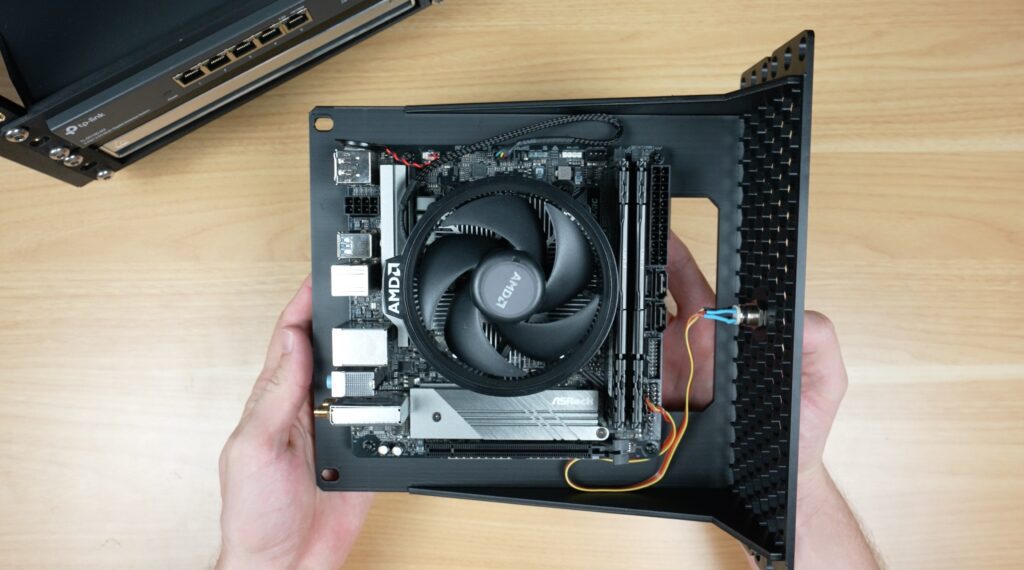
3. Raspberry Pi 5 NAS Shelf (1U)

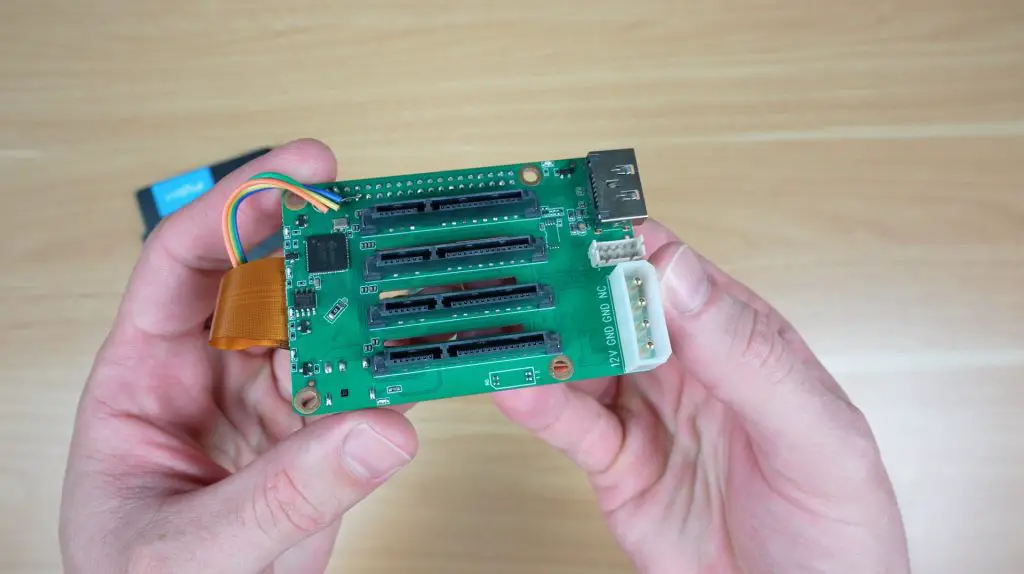
This shelf is designed to house a Raspberry Pi 5 alongside the Radxa Penta SATA HAT, which provides up to five SATA connections, four standard SATA ports and one eSATA port.

Pi NAS Shelf
  • The Pi mounts into 3D printed standoffs on the shelf base.
  • The SATA HAT sits directly on top of the Pi, with the four SATA ports facing upward and the eSATA port facing the front of the rack.
  • I also included a space for a small I2C OLED display so you can install my OLED display stats script to monitor system stats.

This compact design allows you to run a full NAS controller with stats feedback in just one rack unit.

Download the Raspberry Pi 5 NAS Shelf (1U) 3D print files.

Assembly tips:

  • Start by installing the Pi on the shelf using the 18mm brass standoffs supplied with the Radxa Penta SATA hat and nuts through the pockets in the bottom of the shelf.
  • Plug the Penta SATA hat into the Pi’s GPIO pins and connect the PCIe ribbon cable. Secure it with brass standoffs on top of the hat.
  • Install the OLED display in the holder. It is held in place at the top using the 3D printed clips and you can secure the bottom with a few drops of superglue or hot glue.
  • A 4 wire ribbon cables connects the display to the GPIO pins. You’ll need to connect GND, 3.3V, SCL and SDA. I’ve soldered the ends to the tops of the GPIO pins on the Radxa hat.

4. Zimaboard 2 NAS Shelf (1U)

The final shelf is built around the Zimaboard 2. I made this one up because the Zimaboard already includes two SATA ports on the back panel and has a PCIe port for expansion, so its a more versatile option for building a multi-bay NAS.

Zimaboard 2 NAS Shelf
  • The Zimaboard mounts neatly into the tray, with easy access to the rear I/O.
  • The design also allows space for a PCIe SATA expansion card. The card I’ve used gives you five additional SATA ports for a total of seven. This makes it a much more expandable option if you’re planning a larger NAS.

Download the Zimaboard 2 NAS Shelf (1U) 3D print files.

Assembly tips:

  • The Zimaboard 2 slides into place and is secured by three M3x8mm button head screws through the sides. These are easily installed using a hex key through the holes in the side walls of the shelf.
  • A PCIe SATA card can then be installed in the slot alongside it.

Example NAS Builds

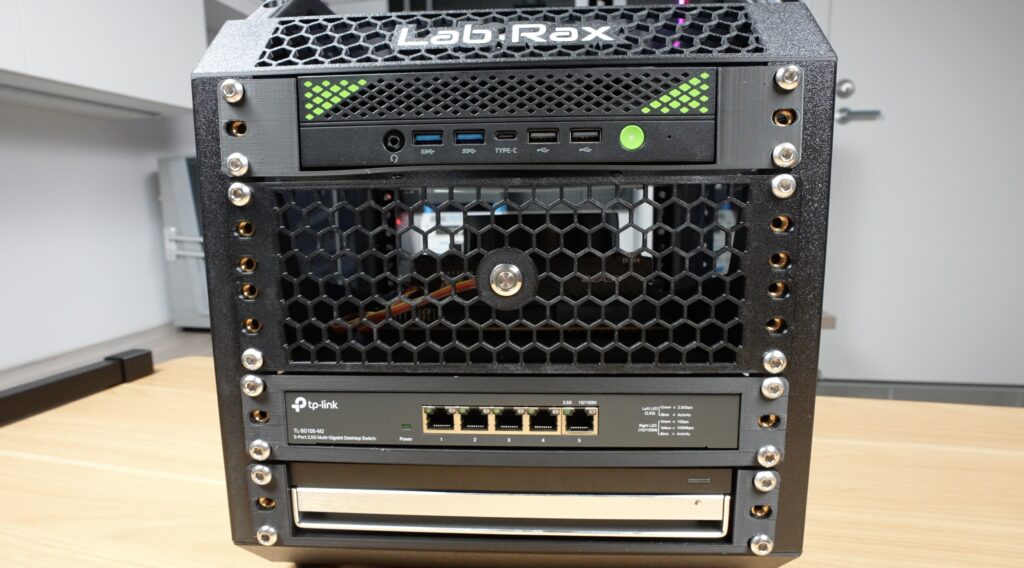
Now let’s look at two example builds using these shelves, both built into a standard 5U Lab Rax case. The Pi build only uses 4U, leaving one spare unit for future expansion.

Build 1: Raspberry Pi 5 NAS

  • Top unit: QNAP network switch.
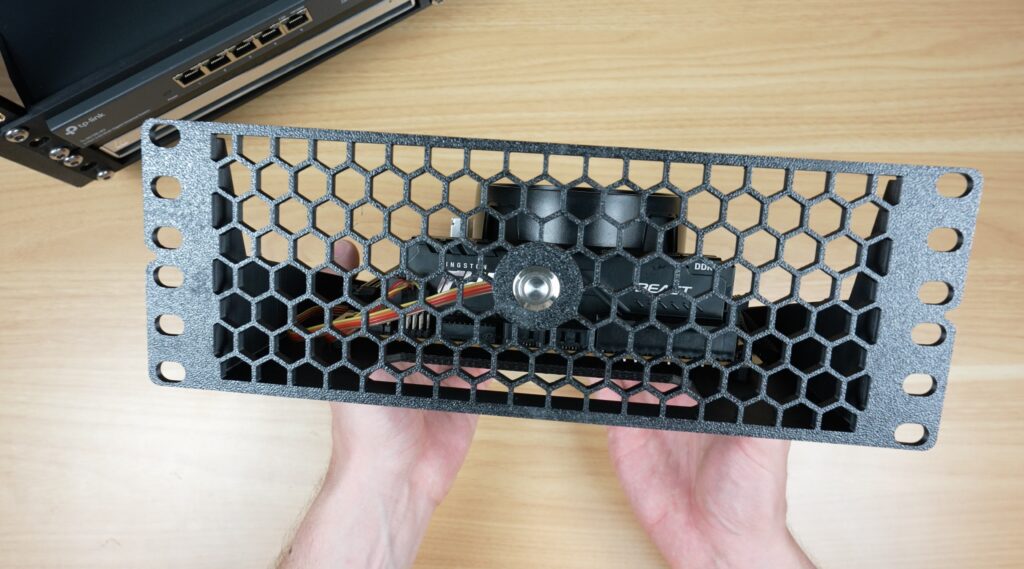
  • Second unit: Ventilation panel to allow space for the SATA cables (and can be used for future expansion)
  • Third unit: Raspberry Pi 5 shelf with Radxa Penta SATA HAT and OLED display.
  • Fourth and fifth units: Two dual 3.5″ drive shelves (4 drives total).

This switch is a bit overkill for the Pi’s gigabit ethernet port but I’m going to be using it wit a 2.5G network adaptor plugged into one of the Pi’s USB 3 ports. This gives significantly faster transfer speeds compared to the Pi’s built-in gigabit Ethernet.

Pi NAS Rack Running 2.5G Networking

Running OpenMediaVault (OMV) on the Pi 5 with the drives set up in a RAID 5 pool, I achieved:

  • Write speeds: ~215 MB/s
  • Read speeds: ~240 MB/s
Drive Speed on Pi NAS

The main limitation here is expansion, with only one PCIe lane on the Pi 5, there are limited options for going beyond 5 drives.

Build 2: Zimaboard 2 NAS

  • Top unit: QNAP network switch.
  • Second unit: Zimaboard 2 shelf with space for PCIe SATA expansion.
  • Third unit: Quad 2.5″ drive shelf (4 SSDs).
  • Fourth and fifth units: Two dual 3.5″ drive shelves (4 drives total).

This setup offers much greater expandability thanks to the PCIe slot. With the PCIe card that I used, you can connect up to seven drives in total, but these cards are also available with higher port counts.

The Zimaboard runs ZimaOS, a clean and user-friendly NAS operating system that makes pooling drives and managing shares very straightforward.

In testing, I saw slightly higher performance than the Pi build:

  • Write speeds: ~230 MB/s
  • Read speeds: ~260 MB/s
  • Better handling of multiple simultaneous transfers and generally performs better due to the more power N150 CPU.
  • Dual network ports for redundancy or link aggregation.
Drive Speed on Zimaboard 2 NAS Build

Final Thoughts

These new shelves transform the Lab Rax system from a general-purpose rack into a capable and modular NAS framework.

  • If you want something small and affordable, the Raspberry Pi 5 build is an excellent option.
  • If you need more power and expandability, the Zimaboard 2 build is the better choice.

Because the shelves are 3D printable, easy to assemble, and designed to fit common print bed sizes, anyone can replicate these builds at home. I’m really happy with how they turned out and I’ll be adding more modules in the future as I keep developing the Lab Rax ecosystem.

Which one would you build, the Pi 5 NAS or the Zimaboard 2 NAS? Let me know in the comments below!

TRMNL: The Open Source Smart Display You Can Also Build Yourself

Imagine a little screen on your desk, wall or even fridge, quietly updating you with your calendar, to-do list, or the weather without the distractions of a phone or computer.

That’s what TRMNL is, a sleek, open-source, battery-powered e-ink display that’s built to be simple, low power and easy to use.

Today I’ll show you what the ready-made TRMNL can do and then we’ll go a step further and actually build one ourselves, from scratch, to see if it’s worth making your own or buying their version.

Here’s my video review and build, read on for my write-up;

https://youtu.be/BHzBk0e_KBc

Where To Buy TRMNL

  • TRMNL – Buy Here
  • Developer’s License (Required To Create Custom Plugins) – Buy Here

To Build My DIY Version

  • ESP32-S3 XIAO – Buy Here
  • 7.5″ Monochrome e-Ink Display 800×480 (Seeed SKU 104990861) – Buy Here
  • E-Ink Driver Board for XIAO (Seeed SKU 114993558) – Buy Here
  • or E-Ink Driver Board for XIAO (Seeed SKU 114993558) – Buy Here
  • 2000mAh Battery – Buy Here
  • BYOD TRMNL License – Buy Here
  • PLA Sparkle Filament – Buy Here
  • M2.5x6mm Screws – Buy Here
  • M2.5 Brass Inserts – Buy Here

Tools & Equipment Used

Unboxing & First Look At TRMNL

This is the TRMNL package that you can order directly from their website from $139. They also have a few different finishes and some add-ons like a battery upgrade and developer license to create your own plugins.

TRMNL Premade Device

I got the Clarity Kit which includes the developer license, a USB-C charging cable, a screen protector, and then the terminal itself, which has the upgraded 2500mAh battery.

TRMNL Unboxing Grey Colour Clarity Kit

This is the grey version and it comes in a total of six different colours.

Design and Features

On the front we’ve got the 7.5” e-ink display, and on the back is the power switch, a button to refresh the screen, and a USB-C port for charging.

It’s also got two mounting options:

  • A hanging point for a nail or screw
  • A flip-out metal stand
TRMNL Stand

I kinda wish it had a magnetic option as well to stick it onto a fridge or filing cabinet.

The device is preassembled and ready to go, with their software already installed.

Setup Process

I found the setup process really easy to work through. You essentially connect to TRMNL’s WiFi hotspot to tell it how to connect to your WiFi network and then link it to your account using a device ID.

After linking to your account, it automatically updates the firmware and the rest is then managed through their website.

Battery Life

One of the best features of TRMNL is that because it’s got an e-ink display and a low power microcontroller, it doesn’t need to be permanently plugged in. The built-in battery will power it for up to 6 months between charges, depending on how often it is updating the display.

Being an e-ink display, it only requires power to change the image. Between updates the display is off and the microcontroller goes into a low power sleep mode.

Software and Plugins

Their website is fairly easy to use once you get the hang of it, but it can be a bit confusing when you first open it up.

Web Interface To Set Up

There are basically three components to what is displayed:

  • Playlists
  • Plugins
  • Recipes

Plugins and Recipes are essentially the apps that provide the content to be displayed. Plugins are developed by TRMNL themselves and Recipes are community-developed.

Plugins

You then load these into a Playlist which allows you to cycle through them so that you’re not limited to just running one app at a time.

Playlist

There are also a few other options, like having up to four plugins or recipes displayed at once through one of eight available layouts, so you can really get quite a lot of information onto it.

Limitations

This is not an LCD or OLED display, so you’re not getting an HD-quality image. The highest refresh rate that you can set is once every 5 minutes, but that’s the point.

It’s intended to be a minimalist display for data that doesn’t change very quickly or often, and that will run for months between charges.

TRMNL Weather Display

You can even set it to only update once every hour and to enable sleep mode during times when you’re not around it anyway, and that’ll extend battery life to over 10 months.

You can use it to display images, and there are a couple of plugins for photos which get the job done, but it’s not what this screen is intended for. The rendered image is quite grainy. It’s far better suited to displaying sharp text and simple graphics.

At the time of making this post, there are over 500 plugins and recipes available for TRMNL, so you should easily be able to tailor it to your needs.

Building A DIY Version

Now let’s move on to the DIY version.

Since the team behind TRMNL have made it completely open source, they’ve also published everything you need to build your own version. You can even register DIY devices on their server to use their web platform too.

They say that their retail price is often cheaper than building your own, and that may be true depending on where you get your components. But I found it to be a tiny bit cheaper.

DIY Component Costs

Here’s what I used:

  • 7.5″ e-ink display – $35
  • ESP32 with antenna – $6
  • E-ink Display breakout board with built-in battery charger – $5
  • 2000mAh battery – $10

That’s just $55 for the components, or $70 including shipping.

BYOD Components

This is quite a bit cheaper than TRMNL’s $139 price tag. But that’s before adding their $50 one-time device fee (BYOD License) to use their server, and without an enclosure, which I’m going to design and 3D print myself.

So all up, I think it’s fair to say that you’ll be in for a similar price either way.

Server Options

You also don’t have to pay the $50 BYOD License fee to use their server. You can host your own server privately if you’d like to. This will do away with the device fee as well as keep all of your data in-house.

Personally, I like the ease of use of their website and I’d rather pay a one-off fee than have to pay a monthly subscription, so I’m glad they’ve gone with this model.

The DIY TRMNL Build

The heart of the DIY TRMNL is the little ESP32 module. This is a 32-bit RISC-V chip that operates at up to 160MHz.

ESP32 Xiao

Its real strength is low power consumption, it can use as little as 44 microamps in deep sleep mode, which makes it perfect for this type of battery-powered project. It’s also got built-in 2.4GHz WiFi and Bluetooth 5.

The 7.5″ display that we’re pairing it with has a resolution of 800×480 and it takes around 3.5 seconds for a full refresh of a single frame. So it’s not winning any awards for performance, but like the ESP32 it’s really good on power consumption. It uses just 8 milliamps during a refresh and doesn’t need any power between refreshes to maintain what is displayed.

7.5 Eink Display

To connect these together, as well as use and charge the battery, we’ve got an e-ink driver board.

Eink Driver Board With Charging Circuit

This has:

  • A 24-pin FPC connector for the display
  • A socket for the ESP32
  • A charging circuit and port for the battery
  • A power switch on the side

Because of the components I’ve chosen, there isn’t a whole lot to build. All of the components easily plug into the driver board. Some versions of the ESP32 module may require you to solder the pins onto the module beforehand.

Eink BYOD Setup

Flashing the Firmware

Next we need to flash TRMNL’s firmware onto it.

There are a couple of options for this depending on the hardware you’re using, and these vary in complexity, from using a simple web tool to having to build the firmware from source code.

Once that’s done, you follow a similar process as before to pair it to your account, and you can then start creating playlists.

TRMNL Firmware Flashed and Running

The Enclosure

I measured up the electronic components and designed a simple 3D-printable enclosure for them.

BYOD TRMNL Housing Design

I wanted to make something a little different to the original TRMNL housing, so I went with this design which looks like it’s holding the ePaper display like a sheet of paper or card, really highlighting how thin it is while also sticking with the minimalistic theme. The electronics are then all stored in the base.

Download my DIY TRMNL Enclosure 3D print files.

Let’s get it printed out.

Printing Out Housing

To finish it off, we just need to install some brass inserts in the base for the M2.5 screws to screw into. We can then install the display, ESP32 and battery, stick the antenna to the inside of the enclosure and then close it up.

And we’ve now got a unique DIY TRMNL which provides similar functionality to the original. The only real missing feature is the button to refresh or change the display.

Final Thoughts on TRMNL

So that’s TRMNL. A minimalist smart display that you can either buy ready-to-go or build yourself.

BYOD and Original TRMNL

Personally, I love that it strips away the noise and just gives you the info you actually want, when you need it.

If you’d like to get your own TRMNL, check out their website. I’ve also put my 3D printable design on Makerworld if you’d like to try build a DIY version.

I’d love to hear what you’d use TRMNL for and what you think of my DIY version, so let me know in the comments below.

This $40 Pi 5 Case By Elecrow Packs In A Lot Of Features

The Raspberry Pi 5 is powerful enough to be used as a mini desktop computer, and many people do, but finding the right enclosure for it can make all the difference. Today I’m looking at the new Mini PC style case from Elecrow, which aims to give your Pi the look and feel of a desktop computer without breaking the bank.

Like some of the other Raspberry Pi cases I’ve reviewed, this one comes with some cool features like a multi-fan cooling system, a port adapter that routes the Pi’s HDMI and power connections neatly to the back of the case, a 1.3″ OLED display, and an NVMe hat for connecting an SSD. What caught my attention, though, is the price. All of this comes in at just $40, which is significantly cheaper than most other cases with similar features.

So let’s find out whether it’s any good.

Here’s my video review of the case, read on for the write-up;

Where To Buy The Elecrow Mini PC Case For The Pi 5

Tools & Equipment Used

  • Video Capture Card AVerMedia GC513 – Buy Here
  • Infiray P2 Pro Thermal Camera – Buy Here
  • Sound Level Meter – Buy Here
  • USB C Pencil Screwdriver – Buy Here

Unboxing the Elecrow Mini PC Case

The case comes in a colourful box.

Elecrow Mini PC Case

Inside it, you’ll find:

  • The two metal enclosure halves
  • A port adapter
  • Two clear acrylic side panels
  • Adapter boards and OLED display
  • Cooling fans and heatsink components
  • Cables, screws, and a screwdriver

Everything is well packaged, with parts and screws are individually labelled to make assembly easy. For a case marketed for both the Raspberry Pi 5 and NVIDIA Jetson Orin Nano, it would have been nice if Elecrow included the small extra components required for both platforms rather than one or the other, but it’s still a solid set of inclusions for the price.

Assembling The Mini PC Case

The case includes an illustrated instruction sheet and even a screwdriver, so assembly is straightforward.

Assembly Instructions and Screwdriver
  1. Brass standoffs are first installed onto one half of the enclosure.
  2. The cooling pads and heatsink are then mounted onto the Raspberry Pi 5’s heat producing components including the CPU, power circuitry, and WiFi chip.
  3. Next, the adapter boards are connected. One handles power, HDMI, and NVMe, another handles the GPIO pins, display, and fans, and the third routes the microSD card.
  4. The Pi assembly is then secured to the enclosure with 10 screws (although I could only install 9, as the last one was blocked by the GPIO adapter).
  5. The NVMe drive can now be installed. I tested a 512GB Lexar NM620. The hat supports a range of drive sizes from 2230 to 2280.
  6. The three 30mm RGB fans are installed on the enclosure halves.
  7. The power button and OLED display module are added. The display is a bit larger than usual at 1.3 inches compared to the typical 1-inch displays used on these types of cases.
  8. The enclosure halves are then screwed together, with the two clear acrylic side panels and rear port cover plate closing everything up. The clear acrylic panels are bevelled, giving the case a premium finish.
  9. Finally, four aluminium feet are installed on the bottom, capped with rubber inserts for vibration dampening.

With that, the case assembly is complete.

OLED Stats Display Software Setup

Getting the OLED display working requires installing a software script. This process is slightly more involved than simply running a GitHub script, but it isn’t particularly difficult. Hopefully Elecrow simplifies this in the future.

Stats Display Script Setup

Once the script is installed and the Pi is rebooted, the display cycles through four pages showing;

  1. System statistics
  2. Storage capacity and utilisation
  3. CPU temperature
  4. Date and time

I would have liked some options here. Personally, I prefer a single screen showing system stats and temperature, but this arrangement works fine too.

Benchmarking and Thermal Testing

Since the case provides both NVMe support and active cooling, I ran a couple of tests to see how well it performs. I used James Chambers Pi Benchmarks script to test the NVMe drive performance and CPUBurn to test the cases thermals.

NVMe Performance

I tested the NVMe drive using the Pi Benchmarks script because this test favours random read/write performance which istypically how an OS uses the drive.

Running James Chambers Pi Benchmarks Script

Over three runs, I achieved an average score of 54,657 (individual scores were: 53,638 / 54,947 / 55,386). This is about what you’d expect from a Lexar NM620 running at PCIe Gen 3 speeds on a Raspberry Pi 5, so there are no issues with the NVMe adaptor.

Thermal Performance

For thermal testing, I used CPUBurn, which fully loads all four Pi cores to generate the maximum amount of heat that the CPU is capable of producing.

Thermal Test Running
  • The test began at 39°C in a 22°C room, which is a little high for idle but not concerning.
  • Within 4 minutes, the CPU temperature rose to 60°C.
  • It then stabilised around 63°C for the remainder of the 20-minute test.

This isn’t bad, but it isn’t outstanding either. There is plenty of unused space inside the enclosure, so Elecrow could have fitted a larger cooler to improve performance. I assume they were with the smaller one to keep costs down.

Fan Noise Level

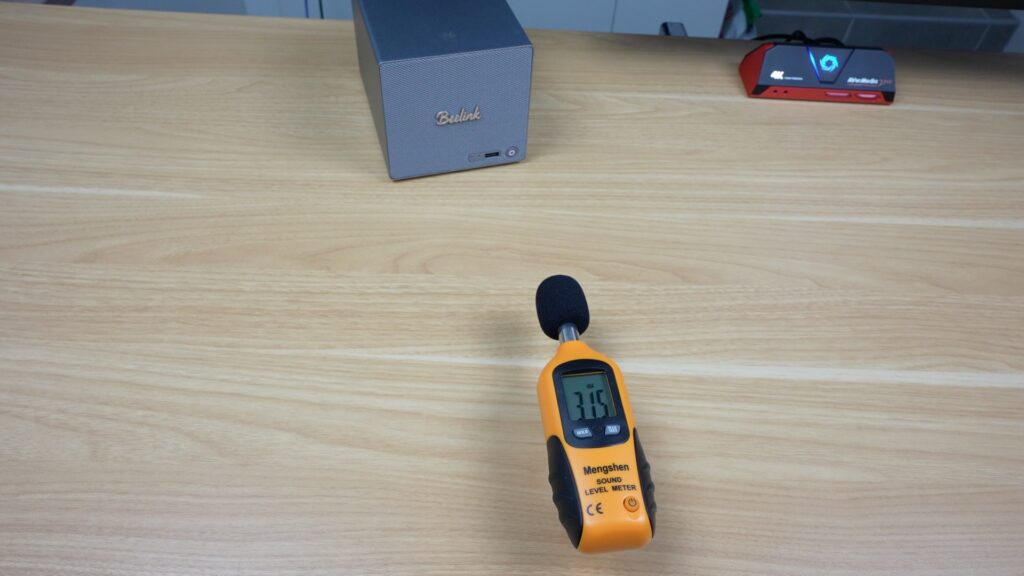
One of the first things that I noticed when booting up the Pi was that the fans are quite loud. They are not PWM-controlled, so they spin up to full speed immediately. Being 30mm fans, they have quite a sharp noise profile.

At a distance of 20cm, I measured 50 dB, which is on the noisy side for a case that’s designed to be used on your desktop.

Sound Level Measurement

The power button works as intended. Holding it initiates a shutdown sequence, and it then cuts power to the fans and the Pi itself, leaving the system ready for the next startup.

Final Thoughts

For just $40, this case delivers good value. You get NVMe storage support, redirected ports for a cleaner desktop setup, a functional OLED display and active cooling that keeps the Pi stable under full load. It makes the Raspberry Pi 5 feel more like a mini desktop computer than an exposed board on your desk.

Being a first generation product, there are, however, some minor quirks to it:

  • As shown earlier, one screw behind the GPIO adapter is nearly impossible to install. This could quite easily be resolved by installing it at an earlier stage.
  • The display setup process could be easier, ideally with a direct download link rather than a QR code. The Pi doesn’t have a camera installed, so the QR code isn’t particularly helpful.
  • Cable management could be improved. For example, the OLED ribbon cable dangles in the most visible part of the case and could easily have rather been incorporated into the adaptor board alongside it.
  • The redirected microSD slot comes out in a rather strange spot at the bottom of the case.
  • The fans are noisy and could benefit from PWM control.

If these aren’t significant issues to you, then the Elecrow Mini PC Case is a very well-priced option for Pi 5 owners who want a desktop-style enclosure. You can check out the case on Elecrow’s web store.

Let me know what case you’ve got your Pi 5 in in the comments section below.

Raspberry Pi 5 NAS Case That Fits 3.5” Drives – Pironman 5 NAS

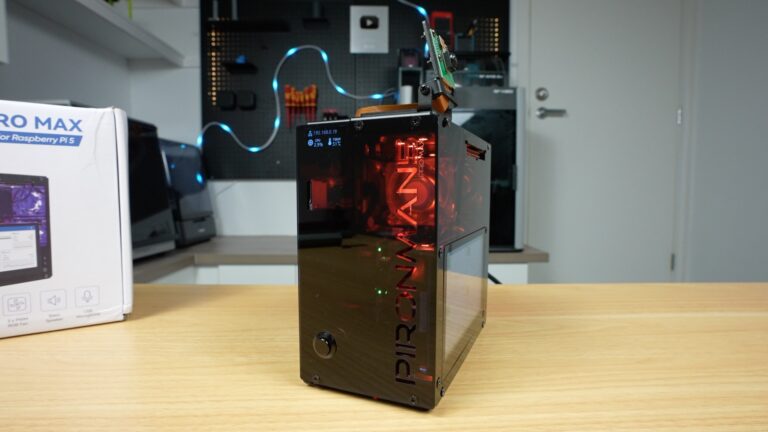
The Pironman 5 NAS case is the latest addition to Sunfounder’s Pironman series, this time designed specifically for the Raspberry Pi 5. Unlike the previous models, this version is built to turn your Pi into a compact yet capable NAS (Network Attached Storage) system.

What makes it stand out is its ability to house two drives, either 2.5-inch SSDs or full-size 3.5-inch HDDs. On top of that, the case comes with some great additional features like a built-in 2.5G network adapter, a large 90mm cooling fan and a front-facing OLED stats display.

It’s important to note that this is still a beta product. Sunfounder are in the internal testing stage, and the case hasn’t yet gone into full production. So while I’ll cover the full build and performance here, some things may change before the official launch later this year.

Here’s my video build and testing of the NAS, read on for the write-up;

Where To Buy The Pironman 5 NAS Case?

  • Pironman 5 NAS Case – Link To Come

Tools & Equipment Used:

What’s in the Box?

Inside the box, the first thing you’ll find is the assembly instruction sheet.

Beneath that is another well-padded white box containing the aluminium enclosure, along with multiple accessory packs that hold all of the panels, components, and PCBs.

Here’s everything included in the kit:

  • Aluminium housing
  • Acrylic panels and the 90mm cooling fan
  • Universal 12V 4A power supply
  • Several adapter/control PCBs and heatsinks for the Pi
  • OLED display module, cables, screws, and mounting hardware
  • A set of basic assembly tools
Pironman 5 NAs Included Components

As with other Sunfounder kits, the screws are clearly labelled, and the assembly process is made easy by their detailed, picture-guided instruction sheet.

Assembling the Pironman 5 NAS Case

Putting the Pironman 5 NAS case together is fairly straightforward. The acrylic panels even feature countersunk screw holes, giving the finished case a much cleaner look.

Here is the basic build process:

  1. Add standoffs to the acrylic base panel, which will support the Pi assembly.
  2. Mount the Raspberry Pi and attach the adapter boards, securing the stack with additional standoffs and screws.
  3. Install the five supplied heatsinks on the Pi’s key components. The CPU heatsink is on the smaller side, but we’ll see later how well it performs.
  4. Attach the main SATA and control HAT to the Pi.
  5. Plug the OLED display into its dedicated 4-pin socket.
  6. Connect the 90mm fan.
  7. Mount the completed Pi assembly into the aluminium housing and add rubber feet to the base.
  8. Secure the acrylic panels onto three sides of the case, and mount the fan to the top acrylic cover.

The drive bay section of the enclosure is cleverly designed to fit either two 3.5-inch drives (secured on both sides) or two 2.5-inch drives (secured on one side).

I personally would have liked to see an option for four 2.5-inch drives, but given that 3.5-inch drives remain popular for high-capacity NAS builds due to their cost-effectiveness, this design fills a gap in the market.

For my testing, I installed a pair of 1TB Crucial BX500 SSDs before closing up the case.

The finished enclosure measures 109mm x 109mm x 216mm, which is really compact considering it can house two full-size 3.5-inch drives.

Ports and I/O on the NAS

The Pironman 5 NAS case provides plenty of connectivity, expanding on the Pi’s basic IO through the included hat:

  • Raspberry Pi’s standard Gigabit Ethernet, 2x USB 3.0, and 2x USB 2.0 ports
  • A ribbon cable slot for Pi camera or display connectors
  • Two full-size HDMI ports from the adapter board
  • 12V barrel jack input
  • A full GPIO pin header passthrough
  • A 2.5G Ethernet port, a standout feature for a Pi-based NAS

Operating System and Software Setup

Sunfounder recommends using Open Media Vault (OMV), but being a Raspberry Pi there are other options for operating systems if you’d like to use an alternative. The setup process is as follows:

  1. Flash Raspberry Pi OS Lite to a microSD card and insert it into the case’s front slot.
  2. Update the Pi and install OMV.
  3. Install the Pironman script to control the OLED display.

Like other Pironman cases, this one also includes a web dashboard to monitor stats and adjust settings. The OLED display itself has multiple options, allowing you to choose a fixed readout or cycle between different stats.

To manage storage, log into the OMV web dashboard via the Pi’s IP address. From there, create a file system, a shared folder, and set up an SMB share to access the NAS from a Windows PC.

Performance Testing the Pironman 5 NAS Case

With everything configured, I ran a series of transfer tests to test the performance of the hat and 2.5G network connection.

Running an automated test through AJA System Test, I got;

  • 1GB file test → Writes: ~240MB/s | Reads: ~200MB/s
  • 16GB file test → Writes: ~230MB/s | Reads: ~170MB/s
AJA System Test For Speed

Doing a realworld file transfer of a 60GB video file to and from the NAS in Windows 11, I got;

  • 60GB video file → Writes: ~260MB/s (peaking near 280MB/s) | Reads: ~260MB/s (very consistent)
Realworld File Transfer Test

These results are right in line with what you’d expect from a 2.5G network connection and show no issues with bottlenecking on the single available PCIe lane on the Pi.

Cooling and Thermal Testing

The large 90mm fan keeps drive temperatures very low during heavy file transfers.

The Pi’s CPU, however, runs hotter. At idle, the CPU started at 48°C, climbing quickly to 70°C under load during a 20-minute stress test using CPU Burn. The small CPU heatsink is adequate for basic NAS use but not ideal for workloads like RAID parity or media encoding. A larger aftermarket heatsink would be recommended for those cases.

Fortunately, since this is still a beta kit, SunFounder will likely address cooling improvements in the final version.

The aluminium housing also helps dissipate heat, and airflow inside remains decent even with 3.5-inch drives installed.

Thermal Camera Shot of Thermal Stress Test

As for noise levels, the 90mm fan is PWM controlled. At full load, it reached about 41dB (which is not significantly loud), but when running below 800RPM it’s essentially silent. With mechanical drives installed, you’d likely never hear the fan over the drive noise anyway.

Power Consumption

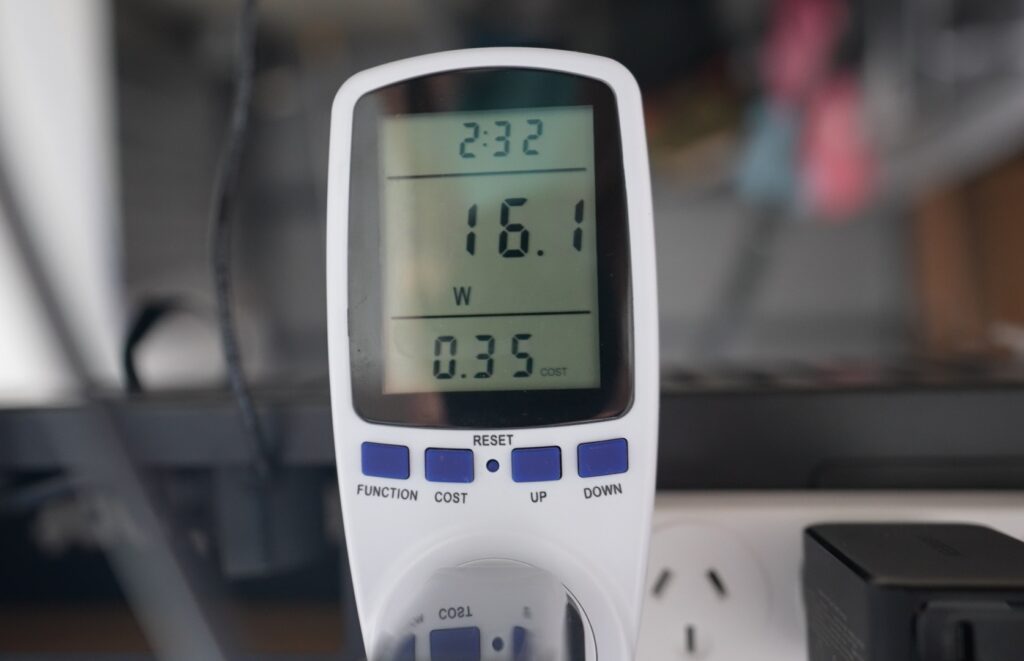
I tested power consumption using a wall adaptor and took readings both at idle and with the CPU full loaded during the thermal test, while also copying large video file to the NAS. For these two tests, I got;

  • Idle: ~8W
  • Full load: ~14W
Power Consumption Low

These are impressively low numbers for a dual-drive NAS, thanks to the Pi’s efficiency. With mechanical HDDs, consumption would be slightly higher, but OMV allows you to set drive spin-down times to save even more power when idle.

Final Thoughts on the Pironman 5 NAS Case

The Pironman 5 NAS case is another great addition to SunFounder’s lineup. It’s well-built, easy to assemble, and packed with useful features like the OLED display and 2.5G networking.

Since it’s still in development, SunFounder haven’t released official pricing yet. But if it lands in the $100–$120 range, I think it would be excellent value for a Pi-based NAS kit.

I’d personally love to see a version that supports four 2.5-inch drives, but the flexibility of using 3.5-inch HDDs is a big selling point that very few other Pi enclosures offer.

Overall, this is shaping up to be a compact, efficient, and capable NAS solution for the Raspberry Pi 5. Let me know what you think of it in the comments section below.
LCMD Microserver & AI Pod, A Compact Homelab Powerhouse

If you’re into homelabs or setting up your own personal cloud server, I’ve got something really interesting to share with you today. This is the new LCMD Microserver, and its optional add-on, the AI Pod, a compact computing module designed to supercharge the system’s performance for AI-related tasks.

Together, these two devices form a powerful, accessible homelab solution. They’re designed to help even less experienced users set up an advanced personal server quickly and easily.

With the pair, you can do things like:

  • Run Docker containers
  • Host media servers
  • Set up your own Git server
  • Build an AI-searchable photo and video library
  • Backup your data

Let’s dive in, unbox them, and see how they perform.

Here’s my video review of the LCMD Microserver and AI Pod, read on for the written review;

Where To Buy The LCMD Microserver & AI Pod

The LCMD Microserver and AI Pod are planned to be crowd funded through Kickstarter, with their campiagn starting soon. Check out the LCMD Prelaunch Page in the meantime.

Tools & Equipment Used

Video Capture Card AVerMedia GC513 – Buy Here

Some of the above parts are affiliate links. By purchasing products through the above links, you’ll be supporting my projects, at no additional cost to you.

Unboxing the LCMD Microserver

Right from the start, LCMD’s packaging makes a strong impression. This is one of the coolest product packages and unboxing experiences I’ve seen.

Opening the magnetic flaps reveals an orange acrylic cover, with the LCMD Microserver sitting underneath. Alongside it are two accessory boxes, plus a front sleeve that likely holds documentation. Everything is neatly protected in high-density foam.

Inside the accessory boxes:

  • Box 1: Ethernet cable and international adaptor for the power supply
  • Box 2: 19V 120W power supply (barrel jack connector) and mains lead

The sleeve contains a set of sequenced instruction cards, a unique and intuitive QuickStart guide.

User Manual and Quickstart

First Look – LCMD Microserver

The front and sides are clean with no ports or buttons. On the top we’ve got some ventilation holes on each of the corners. On the bottom we’ve got a large ventilation grill with some orange rubber feet.

  • On the back we have all the ports, which are clearly labelled:
    • Power input
    • HDMI 2.1 port
    • Two USB 3.2 Type-C ports
    • Three USB 3.0 ports
    • Audio jack
    • 2.5G Ethernet port
    • Mode and power buttons

Above the ports are vents for the CPU heatsink; below is an open grill likely for the drive bays. Speaking of drive bays, internally, the Microserver can house two 2.5″ drives and two M.2 NVMe drives.

The build quality is excellent, it’s got grey aluminium panels, solid construction, and an orange-and-white futuristic style. It’s also compact at 115mm × 115mm × 120mm.

LCMD Microserver Dimensions

Hardware Specs

Inside, the Microserver runs on an Intel Core i5-13500H. This is a 12-core CPU (4 performance cores up to 4.7GHz, 8 efficiency cores up to 3.5GHz) with Intel Iris Xe graphics (80 execution units at 1.45GHz).

It will be available in three variants:

  • Base Model: 16GB DDR5 RAM (5200MHz) + 2TB SSD (this review unit)
  • Mid Model: 32GB DDR5 RAM (5200MHz) + 4TB SSD
  • Top Model: 64GB DDR5 RAM (5200MHz) + 4TB SSD
16GB Crucial DDR 5 RAM

Storage expansion is very generous:

  • 500GB OS drive preinstalled
  • Four additional M.2 2280 slots – up to 64TB (with 16TB drives)
  • Two SATA 3.0 bays – up to 8TB each

Realistically you could install about 20TB without spending a fortune. It also has WiFi 6E via an Intel AX210 chip.

The enclosure slides out the back after removing two sets of four screws from the bottom, giving access to the internals for upgrades. My only complaint with this process is that the bottom uses Torx screws, while the retaining bracket uses Philips head screws. It would be nice if they were consistent.

Software and Setup

Booting the Microserver was where I was most impressed. Many products have great hardware but fall short in software, but that’s not the case here.

LCMD Microserver Boot Up

After plugging it in, you install LCMD’s mobile app. The Microserver runs LCOS (which is Debian-based). Setup takes under 5 minutes, and the system automatically configures encrypted remote access (NAT traversal, like Tailscale), so no port forwarding or network tweaking is needed.

There’s also a desktop app for PC and Mac, which lets you:

  • Manage storage pools and permissions
  • Install over 1,000 available pre-configured apps (including Jellyfin, Nextcloud, Git servers)
  • Adjust settings
  • View and manage media

My first test was with Jellyfin, and this installed instantly without advanced setup.

Jellyfin Media Server Running

You can also share files over your network with SMB or AFP like a traditional NAS.

Acting As A Traditional NAS

The Microserver can act as a smart TV when connected to HDMI, with your phone as the remote. This allows you to watch media content, look at files and photos and even use some of the AI features will get to with the AI Pod.

Acting As A Home Media Server

The AI Pod, Adding an AI Brain To The LCMD Microserver

The AI Pod is an add-on for the Microserver that adds serious machine learning power. Unlike the Microserver, it can’t run on its own, it must be paired with the Microserver.

Packaging is again premium, with a foam pad and the device beneath. The AI Pod’s design feels like something from a sci-fi movie. I think it looks a bit like a building from theold PC game StarCraft – I might be showing my age with that comment.

Included with the AI Pod: instruction manual, 12V/96W power supply (my unit was white, but the production one will be black).

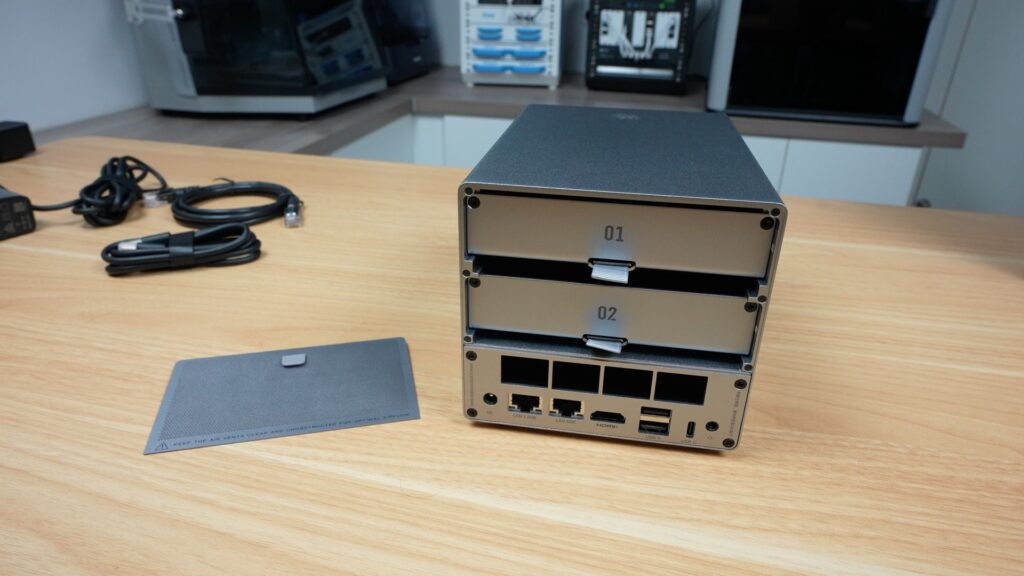
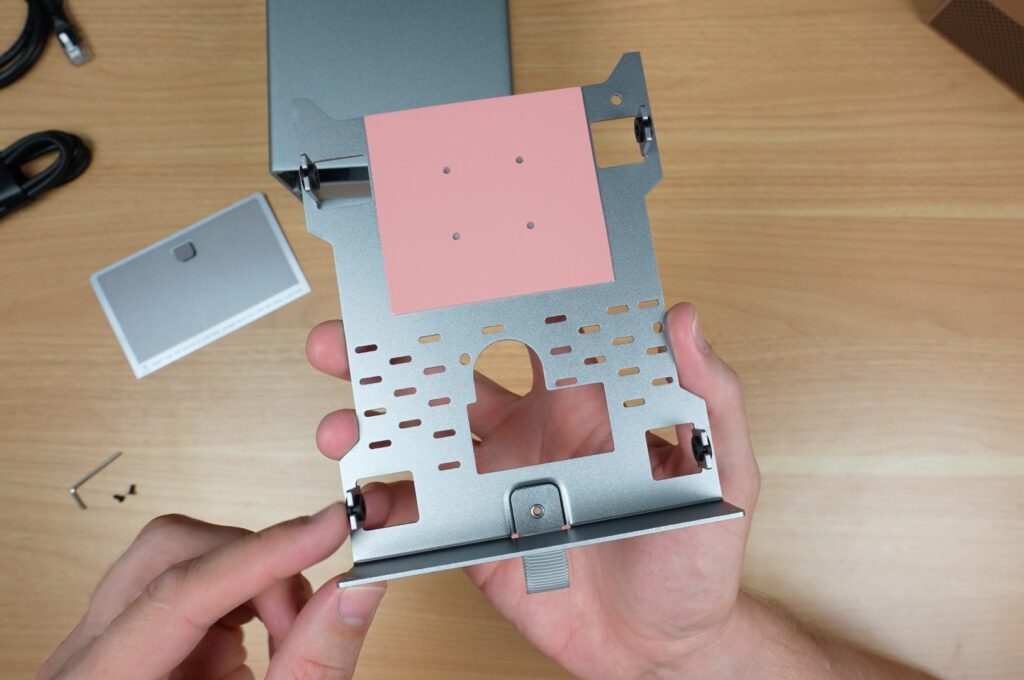
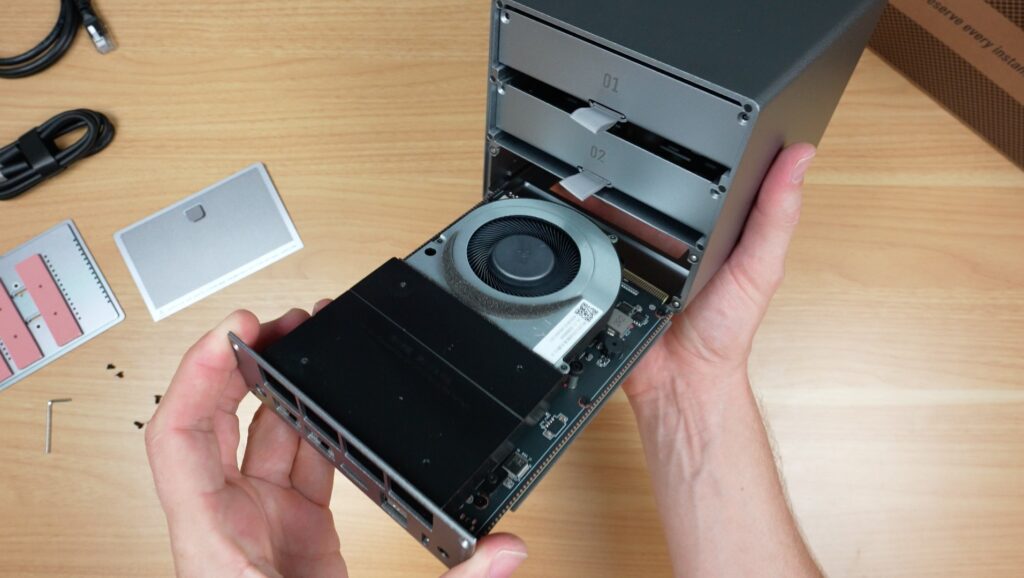
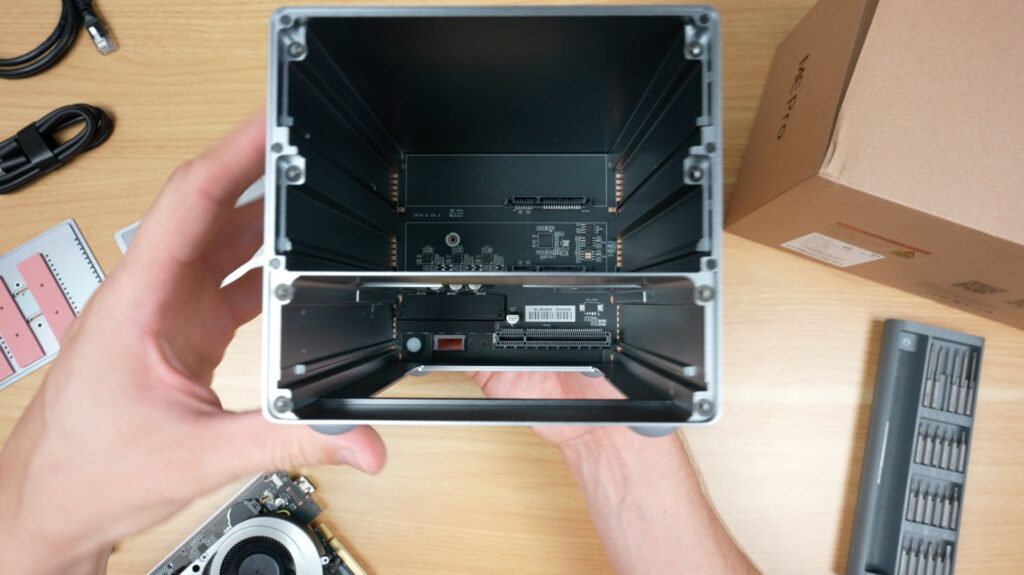
Ports and Hardware

Taking a look around the AI pod, the front is actually a ventilation grill and you can actually see through to the back of the enclosure. The two sides are solid. The top has a fine ventilation mesh and the bottom has a removable cover plate.

  • Like with the Microserver, the ports are all at the back:
    • Power & mode buttons
    • USB 3.2 Type-C
    • Two USB 3.2
    • HDMI 2.1
    • 2.5G Ethernet
    • 10G Ethernet
    • Power input
AI Pod Ports On Back

The 10G port is due to the Nvidia Jetson AGX Orin development board inside – not a custom board.

NVIDIA Jetson AGX Orin Board

Styling is designed to match the micro server so it’s the same grey aluminium housing with black accents. I think the pair look really cool together.

LCMD Microserver & AI Pod

The AI Pod has a slightly larger footprint than the Microserver, measuring 130mm x 144mm but it only stands 61mm high so it might look a bit smaller.

AI Pod Dimensions

The Jetson Orin board has an Arm CPU featuring 12 Cortex A78 cores that can run up to 2.2GHz and an NVIDIA GPU with 2048 Cuda cores, 64 Tensor cores and 64GB of LPDDR5 video memory. This adds an impressive 275 TOPS of processing power to the Microserver while only drawing around 30-60W.

So this allows you to decode a single 8k30 stream of H.265 video or up to 22 streams at 1080P30. Or it can handle encoding two simultaneous 4K60 H.265 streams. But besides it’s powerful encoding and decoding abilities, it’s main function is to add the ability to run your own AI models locally.

Internally it’s also got a wifi 6 module and a 1TB WD Black NVMe ssd as the OS drive. It’s got a second drive bay but at this stage I don’t think you really need to use it on the AI Pod.

AI Features in Action

Pairing the AI Pod is easy via a separate desktop app.

Linking AI Pod With LCMD Microserver

With this added, you now have access to some AI based apps that’s take advantage of the pods processing power, so you can do things like image and video generation locally.

I tried out image generation first. My first test prompt was “a man taking a photo of his dog with a mountain in the background”.

Image Generation Example 1

The first test prompt worked quite well. The first and last images aren’t quite what I was going for but the other two are quite good.

You can also do different image styles like generate cartoon images. The next prompt I tried was “cartoon style image of a man reviewing the latest iphone in his home office”.

Image Generation Example 2

Lastly, I trieda prompt that I thought would be a bit more difficult “a girl being pulled by four dogs on her bicycle riding across a frozen lake”.

Image Generation Example 3

This even worked reasonably well, although this model clearly has a problem with numbers, none of these images have four dogs and this one has two heads.

Next I tried video generation. This works in a similar way to image generation, but takes a bit longer as it has to generate multiple frames.

I tried to be quite specific with this prompt “a red sports car driving through a mountain road at sunset”.

This came out much better than I expected. It’s not amazingly realistic but it is really impressive for a video generated in a minute or two on a local piece of hardware drawing under 100W. You can see this video and the second example video in my Youtube video at the begining of the post.

The second prompt I tried was “a cat looking out the window while it is raining”.

Video Generation Example 2

This one also come out quite well.

One of the features that I really like is the added search funtionality to your photo albums. You can give it very specific queries and in my small sample libary its very accurate.

AI Searcheable Photo Library

This is a really useful feature if you’ve got thousands of photos and you don’t recall when you took a particular photo but you remember a small detail in it.

There are also a whole lot of other AI based features that I could make a separate video on but some of the useful ones are the ability to translate text locally in the browser, and you can even run a local language model similar to ChatGPT.

Pricing of the LCMD Microserver and AI Pod

Since this product is going to be crowd funded through Kickstarter before becoming a retail product, the is a special “launch price” for each product and then an eventual MSRP.

  • Bottom Model Microserver (16GB/2TB): $769 launch, RRP $1400
  • Top Model Microserver (64GB/4TB): $1159 launch
  • AI Pod: $2489 launch, RRP $3600
  • Combo deals: $3228–$3618 launch pricing
LCMD Microserver and AI Pod Pricing

My feeling on the Microserver pricing is that the launch prices are quite fair but the RRP prices are higher than I’d expect. And the AI Pod seems quite expensive, even at launch price. They do both use more premium WD Black drives and Crucial RAM, so they haven’t cut corners with no name brand components but the AI Pod can’t be priced near where a used A4000 or 3090GPU would be a similarly priced as these would be a more powerful option. If they do then the AI Pod will have to seriously prove its worth in software.

Privacy and Transparency

One of the concerns people are probably going to have with a product like this, is that it is running a lot of preconfigured software with very little disclosure on what is and isn’t being shared with the manufacturer, and there is some good and bad news here.

The system is running a custom OS with quite a few proprietary layers and while that makes it capable and offers a lot out of the box, at this stage there is limited transparency on exactly what its doing in the background.

LCMD Microserver Pair

I compiled a long list of questions and spent quite a lot of time talking with LCMDs developers in trying to determine what information they have access to and how this information is used and I’ll try present a summary in the best way that I can. The full list of questions and answers is provided in the next section below.
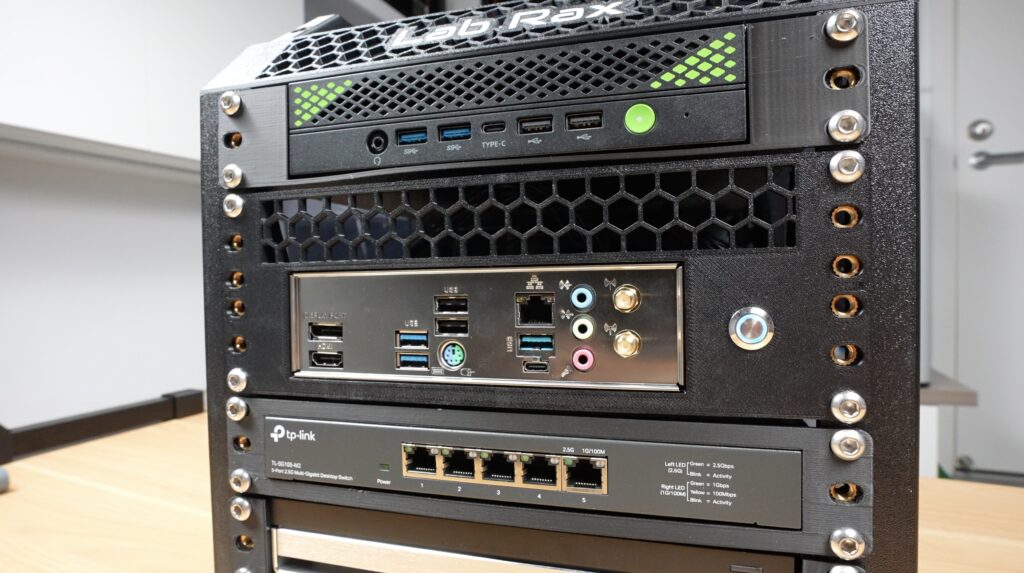
The LCMD microserver is designed with decentralisation and privacy as a core selling point, which means that users naturally want to bring as much in-house as possible. But on the flip side, LCMD are also trying to make the system as user friendly and easy to use as possible, which they have really nailed. The platforms custom client app enables powerful features that just work, you don’t need to be a wizz with docker containers or have any advanced networking knowledge to get the Microserver up and running. Most people aren’t able to set up remote access to their home networks in a secure way, so there is a balancing act here which they’re trying to navigate.
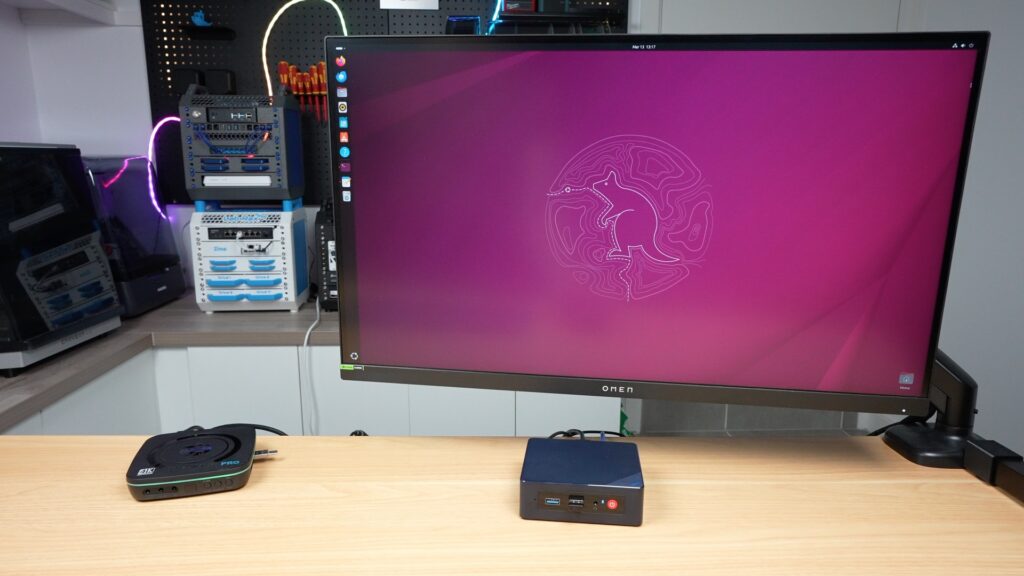
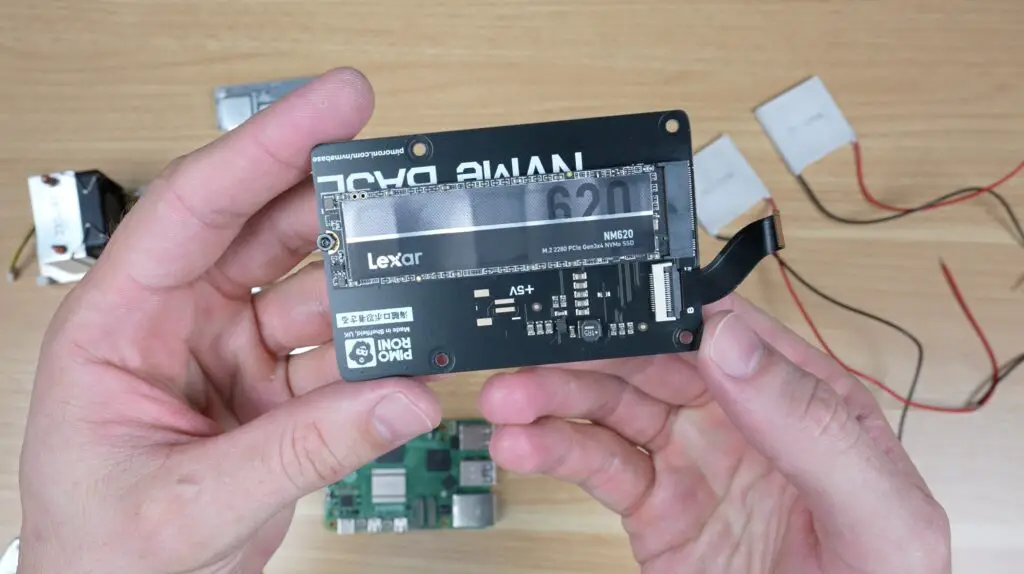
From what I’ve found through testing and in talking to the developers, the server prioritises direct peer-to-peer communication using asymmetric encryption, and the private keys are stored locally on the device. If both devices can be reached via hole punching then traffic flows directly peer to peer, this falls back to relayed traffic if that process fails – quite similar to Tailscale.

Testing Peer to Peer

For more advanced users that want a bit more transparency and control, you can also set up your own NAT traversal through Headscale – which is one of the preconfigured apps it offers.

Local storage is also encytped and the encryption keys are again stored locally on the device, so don’t forget your password or your data will be lost.

The server only requires internet access for the initial setup or app installation. You obviously also require an internet connection for remote access after this but if you don’t need remote access and the initial setup is all you require then you can isolate the system from the internet and it’ll continue to function on your local network.

At the very extreme end, the Microserver’s BIOS is also unlocked, so if the software isn’t for you, then your can install your own OS on it if you’d like to. Although for this particular product, the software is a large part of the user experience – so it probably doesn’t make much sense to do so.

With all of that being said, the Microserver still uses proprietary software like its own VPN protocol, which unlike open standards like WireGuard, hasn’t been independently auditied. It’s dependency on a central server is limited but not zero, and although you could potentially configure it yourself to be zero, I wouldn’t say that the system is 100% trustworthy, but it’s about as close as you can get without them making the whole software package open source too.

Questions Asked To Developement Team & The Answers Received

Here’s a list of questions that I compiled and asked their Developement team along with the answers I received back. Due to the language barrier, some questions were reworded or repeated in different ways and translations were required in both directions, so I have summarised the questions and answers here while trying to maintain their original intention.

Q1 – What is LCMD’s networking approach, it appears to be similar to Tailscale?

Answer:

LCMD’s direct connection mode works in a similar peer-to-peer way. In most cases, all traffic is sent directly between devices. In extreme situations (like multiple layers of NAT4), they provide a completely free relay server with 8 Mbps bandwidth and full end-to-end encryption. Users can also self-deploy their own relay server, which maximizes decentralisation.

Q2 – How can users verify that direct connection traffic isn’t passing through LCMD’s servers?

Answer:

Two ways:

  • Technical validation – Advanced users can use tools such as Wireshark to check if the inbound/outbound IP corresponds to their home broadband’s public IP.
  • Business reality – Routing all traffic through their servers would be financially unsustainable given bandwidth costs.

They emphasised that direct connection is built on a decentralisation philosophy to improve performance and privacy at no cost.

Q3 – How are encryption keys handled, and can LCMD access these keys?

Answer:

There are two types of keys:

  • Initialization / license verification – Bound to the motherboard; requires a connection to the official server for registration during initial setup.
  • Device communication keys – Public/private key pair generated locally on the Microserver. LCMD’s official servers do not have access to your private key, meaning only authorised users can connect.

Q4 – Is the relay/STUN service open source or self-hostable?

Answer:

LCMD currently allows self-deployment of the relay server, but STUN is not fully open yet. They plan to follow up on this. As a temporary solution, the LCMD Official App Store has Headscale available for one-click installation so users can self-deploy.

Q5 – Why is there a desktop app instead of just a browser dashboard?

Answer:

While browser access is possible via a domain name, the desktop app creates a TUN virtual network interface, enabling advanced networking features.

Benefits include:

  • Secure remote access without needing to set up public IPs, NAT traversal, or firewall rules.
  • Works out-of-the-box for non-technical users.

For advanced users, browser access remains available, but the desktop client delivers a smoother and more secure experience.

They added that a client app can do things browsers can’t, like:

  • Auto-mounting a cloud drive to the system file browser.
  • Uploading to the cloud drive app even after the window is closed (client must still be running).

A no-GUI client is also available for more technical users.

Q6 – Does the device need the internet to operate?

Answer:

Internet is only required for initial setup and when installing apps from the LCMD store. In all other cases, it can operate fully in local-only (LAN) mode without internet.

Q7 – Can I access the device via IP address directly?

Answer:

Yes — they offer a LAN port forwarding tool for this purpose and can provide further documentation.

Q8 – What is LCMD’s overall decentralization approach?

Answer:

LCMD was designed with decentralization in mind so users can build and access their own cloud services without relying on centralised infrastructure.

  • If the network has a public IP or favorable NAT, connections go directly between devices.
  • Benefits: better privacy, full use of home bandwidth, and stable decentralised performance.
  • If direct connection is impossible, free relay services (end-to-end encrypted) are provided.
  • Advanced users are encouraged to self-host network penetration services. A “Network Penetration Service Setup Guide” will be released within a year.

Q9 – Is the device locked to LCMD’s OS?

Answer:

No — the BIOS is open, and users can install another operating system if desired.

Q10 – How do I enable SSH to access the terminal?

Answer:

They provided this link: https://developer.lazycat.cloud/ssh.html with instructions to turn SSH on.

Final Thoughts on the LCMD Microserver and AI Pod

So that’s the LCMD Microserver and AI Pod – a seriously powerful private cloud and AI edge device combo that’s really easy to set up and use.

Performance is great, the user interface is very well polished and it’s AI features are genuinly helpful, not just for party tricks. I do think LCMD could benefit from being very open about what’s running under the hood, especially for a product designed around privacy and user control, but the same could be said for most cloud or data storage companys.

Let me know what you think of the LCMD Microserver and AI Pod in the comments section below and if this is something you can see yourself using for your homelab or personal cloud.

Here’s a link to their prelaunch page where you can join the waiting list to be notified of their official launch on Kickstarter. As with the other crowd funded products that I’ve reviewed, keep in mind that crowdfunded projects carry some level of risk and that there is no guarantee that the final product will live up to the promises made in the campaign.

ORICO CF1000 NAS Review – The Fastest 3.5” NAS I’ve Tested?

1

Today we’re diving into a NAS that’s built for much more than simple home backups, the CyberData CF1000 by Orico. This is the flagship model from their newly released CyberData NAS series, which includes eight different configurations featuring a variety of CPU, memory, and storage options, all packed into a stylish, unified design.

Orico is a brand that’s long been recognized for its USB storage solutions, enclosures, and docking stations, but the CyberData line marks a bold and serious step into the NAS (Network Attached Storage) market.

Here’s my video of the CF1000, read on for my written review;

Where To Buy The Orico CyberData CF1000

  • Orico’s CyberData range is currently crowdfunding through Kickstarter – Campaign Link
  • WD RED NAS Drives – Buy Here

Equipment Used

Power and Performance Specs

Powering the CF1000 is a 12-core Intel i5-1240P processor with 16 threads,

It also has dual 10G Ethernet ports, and support for up to 256TB of storage. It’s a NAS built with power users, small businesses, and creative professionals in mind.

CF1000 NAS

Let’s start with the unboxing experience.

Unboxing the CF1000

The CF100 is very well protected in it’s packaging, although the box is large for a 10-bay NAS, that’s mainly due to the thick foam padding keeping everything secure.

Inside the box, you’ll find:

  • The CF1000 NAS wrapped in an antistatic bag
  • A smaller accessory box containing the power cord, screws, screwdriver, two network cables, and a manual
CF1000 Unboxed

The CF1000 itself looks and feels fantastic. It’s sleek, minimalistic, and well built with a premium solid cast aluminum chassis.

A Closer Look at the Hardware

Front Panel

Behind a magnetic front cover are 10 hot-swappable 3.5” drive bays, arranged in two vertical columns (1–5 and 6–10). Under the drive bays are LED indicators, although these are a bit strangely numbered backwards from 10 to 1, and then we’ve got status LEDs for network and system health.

Internal Expansion

Internally, we’ve also got space for:

  • 2 x M.2 NVMe SSDs (for caching or high-speed access)
  • 1 x 128GB NVMe SSD (preinstalled for the OS)

These M.2 drives are easily installable through a bottom access hatch, which is a great feature on the CF1000.

Rear I/O Ports

Around the back, we’ve got;

  • 2 x Cooling fans
  • 2 x USB 2.0 ports
  • 1 x DisplayPort and 1 x HDMI
  • 2 x USB 3.2 (Type-A and Type-C)
  • 2 x USB4.0 (40Gbps capable)
  • 2 x 10Gb Ethernet ports with link aggregation support (up to 20Gbps)
  • Integrated PSU, so there is no additional power brick required.

CPU and RAM

The Intel i5-1240P is a 12-core mobile CPU from 2022, with 4 performance cores running at up to 4.4GHz and 8 efficiency cores running at up to 3.3GHz. It supports DDR5 memory, Thunderbolt 4, and has 20 PCIe lanes. It’s both powerful and power-efficient, ideal for a NAS setup that’s going to be running 24/7.

The CF1000 comes with 16GB DDR5 RAM (4800MHz) installed via a single stick, so you’ve got an easy upgrade path to 32GB and it’s expandable up to 64GB in total.

Installed RAM

Storage Capabilities

The main storage feature of the CF1000 is obviously the 10 drive bays, but in addition to these we’ve got the two M.2 slots for additional storage or caching. This gives the NAS a total storage capacity of 256TB (10 x 24TB HDDs and 2 x 8TB SSDs) and it supports a range of hardware RAID options including RAID 50 and RAID 60.

  • 10 x 3.5” HDD bays
  • 2 x M.2 NVMe SSD slots
  • Built-in 128GB SSD for the OS
  • Up to 256TB of total storage capacity
  • Hardware RAID support, including RAID 50 and RAID 60
NVMe Drives For Storage & OS

Setting Up The ORICO CF1000

For testing the CF1000, I installed:

  • 10 x 4TB WD Red HDDs
  • 2 x Orico D10 NVMe SSDs

Once powered and connected to the network, the system boots into CyberData OS, Orico’s custom NAS software. Setup is handled through their CyberData client app for PC or mobile.

Setting Up The NAS

It’s worth noting that you can’t access the NAS via a standard web dashboard, a feature common to other NAS brands. Hopefully, this will be added in future updates as it’s a bit inconvenient to have to install software to change a feature rather than just going to a web dashboard.

Storage Pool Setup

Once an admin account is created, the software detects the installed drives and allows you to configure your storage pool and RAID level. I opted for RAID 6, which provides 80% usable capacity (32TB) and tolerance for up to two simultaneous drive failures. It does reduce write speeds due to dual-parity overhead, which also gives us a chance to test how the CPU handles this load.

Setup was really quick, taking only a few minutes.

CyberData OS Interface & Basic Features

CyberData OS feels intuiative and easy-to-use with its Windows desktop-style interface.

Key features include:

  • User permission management
  • Samba, FTP, WebDAV, DLNA, and Time Machine support
  • AI-based photo sorting
  • Movie/TV show metadata fetching
  • Offline video transcoding

Under the system monitor, you can view:

  • CPU stats (12 cores, 16 threads)
  • RAM usage
  • Drive and CPU temps
  • Fan controls (auto, silent, standard, turbo)
NAS System Stats

The storage panel shows:

  • System storage pool with usable space (~27.5TB for my RAID 6 configuration)
  • Drive SMART details

Storage Performance As A NAS

To test how the CF1000 performs as a NAS, I created a second storage pool on the NVMe drives to test raw speed differences.

Note: While NVMe can be used for caching, ZFS already handles asynchronous writes effectively using RAM, so there’s not much benefit in small office or home scenarios. CyberData OS warns you about this when you work through the drive pool setup process.

Automated Benchmarks

I started out by running some automated tests using AJA System Test over the 10G network connection.

Main HDD Storage Pool (RAID 6):

  • 1GB file: ~940MB/s writes, ~930MB/s reads (some dips)
  • 16GB file: Similar writes, ~850–920MB/s reads
  • 64GB file: Consistent writes, reads around 830–840MB/s

NVMe Storage Pool:

  • 1GB file: ~950MB/s writes, ~900–950MB/s reads
  • 16GB file: ~940MB/s writes, ~920MB/s reads
  • 64GB file: ~920MB/s writes, reads just under 900MB/s

Real-World Transfers

I then also ran some realworld tests transferring two large video files totalling around 90GB to and from each volume, again over the 10G network connection.

  • HDD volume: ~540MB/s write, ~1GB/s read
  • NVMe volume: >1GB/s write, ~1.1GB/s read

Thermal Performance

I decided to take a closer look at thermal performance since we were getting low reading and writing speed when using the RAID 6 main storage volume. These workloads caused high CPU temps (~90°C package, cores >70°C), which suggested we may be running into thermal throttling. The CPU usage hovered around 25–30%, meaning performance is limited by cooling rather than raw processing power.

Switching fan modes to Turbo didn’t help much, the thermal limitations remained. This indicates that the heatsink is just not capable of getting the heat away from the CPU.

CF1000 Motherboard

The good news is that Orico has since upgraded the cooling system, replacing the aluminum heatsink with a larger copper one and improved ducting. This should significantly reduce thermal issues.

Noise & Power Consumption

Noise levels (measured at 15cm):

  • Silent mode: ~39dB (very quiet)
  • Auto/Standard: ~47dB
  • Turbo: ~55dB

Even in Turbo, the fans aren’t overly loud. The sound of the 10 mechanical drives is more noticeable than the fans.

Power draw:

  • Idle (drives on): ~70W
  • Full load: ~120W
  • Idle (no drives): ~25W

These figures are very reasonable for a system of this scale. It’s great to see that the power draw is realtively low since this is expected to run 24/7, so overall power consumption can become significant over time.

Privacy and Software Flexibility

I know some of you are probably wondering about privacy and people often have valid privacy concerns when using products with preloaded OS’s by the same company, but there is some good news here, this NAS fully supports local-only use, it doesn’t require an internet connection, cloud linkage or an online account to set it up. You can even turn off it’s internet connection or isolate it on your network if needed. There is no mandatory cloud syncing or forced telemetry.

  • No internet or cloud connection required
  • Fully local setup possible
  • No mandatory telemetry or account login

That said, the software still needs some refinement. At the time of writing this review, there is:

  • No web dashboard
  • Limited documentation and no official community support
  • Missing enterprise features like iSCSI

However, Orico is making steady progress. Since May, there have already been three version updates, which have added:

  • Bug fixes and translation improvements
  • Virtual machine support
  • One-click Docker Compose
  • Preconfigured AI models (e.g., DeepSeek)
Virtual Machines

Also, the NAS is not OS-locked—you can install alternatives like Unraid or TrueNAS. I found Unraid works better out of the box, as it includes drivers for the 10G NICs.

Running TrueNAS

Final Thoughts On The ORICO CF1000

If you only need basic backups or streaming 1080p content, the CF1000 may be overkill, but this is just one product in their new CybderData range, so you should consider one of Orico’s lower-end models.

The CF1000 is well suited and worth taking a look at if you:

  • Work with 4K video
  • Run multiple services or containers
  • Need lots of fast, redundant storage

It’s also well-designed, powerful, and looks fantastic too.

Currently, the CF1000 is only available through Kickstarter, with the campaign running until August 7th. Here’s a link to it if you would like to get your own CyberData NAS.

One Final Note on Crowdfunding

As always with crowdfunded products, there’s a degree of risk. Orico is a well-established company, and I’ve tested a fully working pre-production unit. But the final product may still undergo changes. They’ve clearly invested a lot into development already, and it’s usable as-is, but it’s important to approach any crowdfunded product with realistic expectations.

Let me know in the comments section below what you think of the CF1000 or Orico’s broader CyberData NAS range.