
Home Blog Page 41

21 Ingenious Clothing & Shoe Hacks To Save You Money

Is your leather jacket feeling too tight? Have you messed oil on your favorite shirt? We have a solution! Here are 21 ways you can repair, clean and alter your favorite clothing and shoe items so that you don’t have to throw them out.

Make sure you bookmark or pin this page for future reference.

Clothing Hacks

Spray your sweaty clothing with lemon juice and water before throwing them in the wash to reduce discolouration and sweat marks. If the stains have already set in, try out sweat stain removal trick using baking soda.

lemon and water
Tycoon751 / Getty Images

Is your leather jacket starting to feel a bit stiff and tight? Loosen it up by lightly wetting it and then stretching in it while it dries.

stiff leather jacket
Jenny Chang

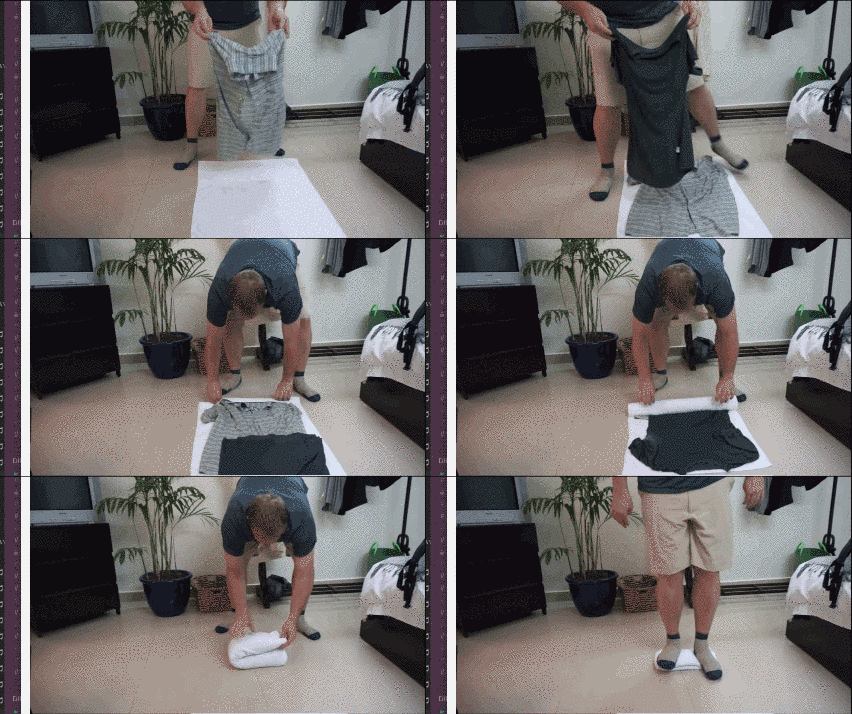
Reduce the drying time of your wet clothes by absorbing the excess water in a dry towel, simply roll your clothes up in the towel and stand on it to squeeze them out.

reduce drying clothes drying time
youtube.com

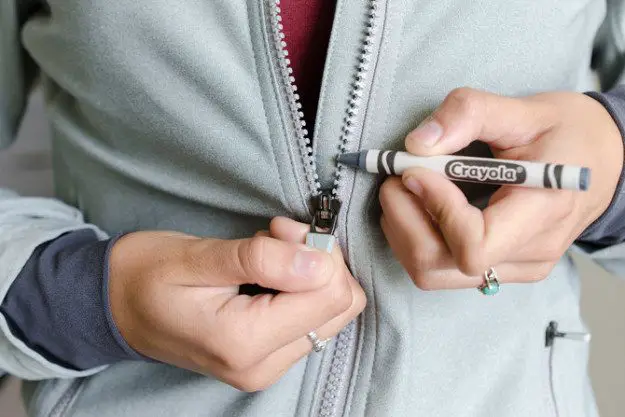
Get a stuck zipper loose by rubbing a crayon on both sides of the zipper.

loosen a stuck zipper with a crayon
thekrazycouponlady.com

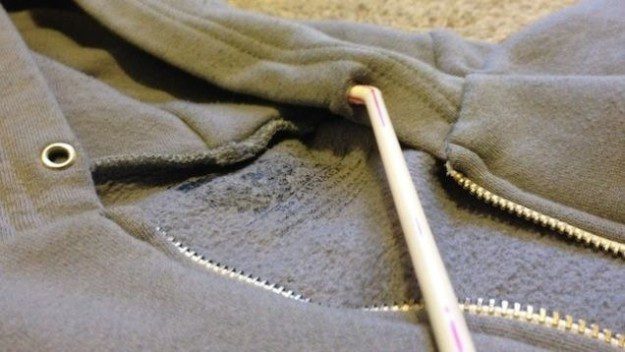
Re thread your hoodie or pants cord by stapling the end inside a straw and then pulling the straw through the holes.

staple the hoodie cord to a straw
lifehacker.com

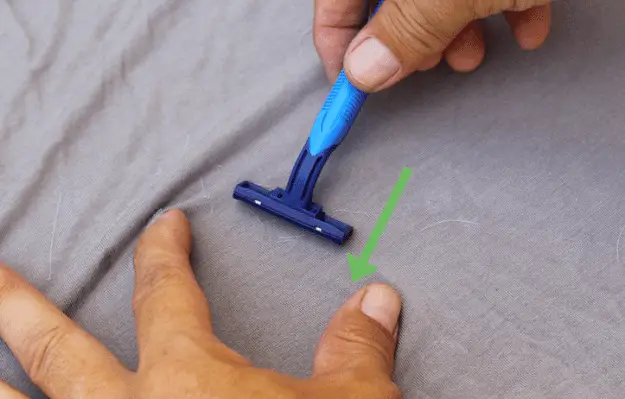
Use a disposable razor to pull pills from and old hoodie or sweatshirt.

use a razor to pull pills from and old shirt
wikihow.com

Un-shrink your favorite sweater by soaking it in warm water and hair conditioner for around ten minutes.

unshrink your favorite sweater
Jenny Chang / BuzzFeed

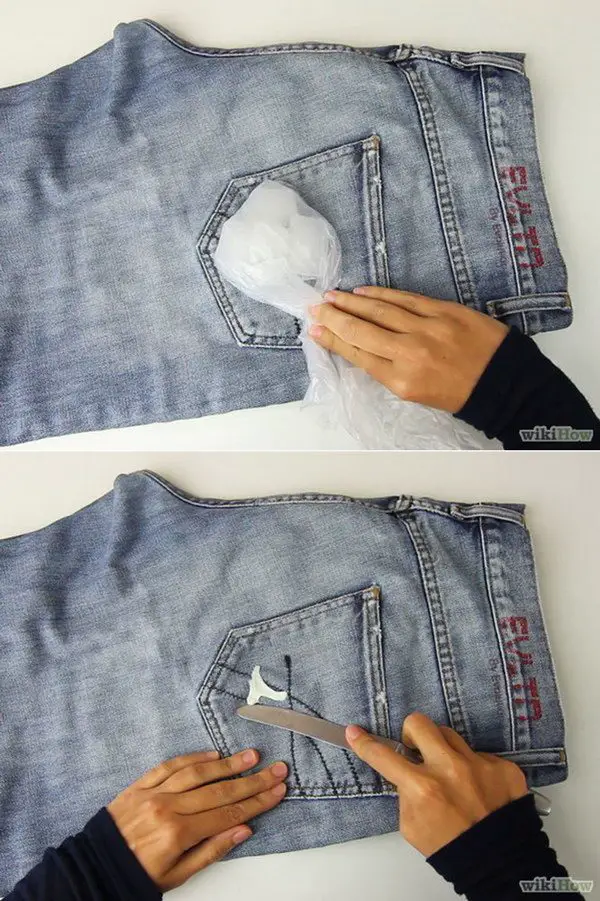
Get chewing gumout of your clothing by setting it in the freezer for a couple of hours or putting a bag of ice over it for a few minutes. It can then be easily scraped off with a butter knife.

get chewing gum out of your clothes by freezing it
wikihow.com

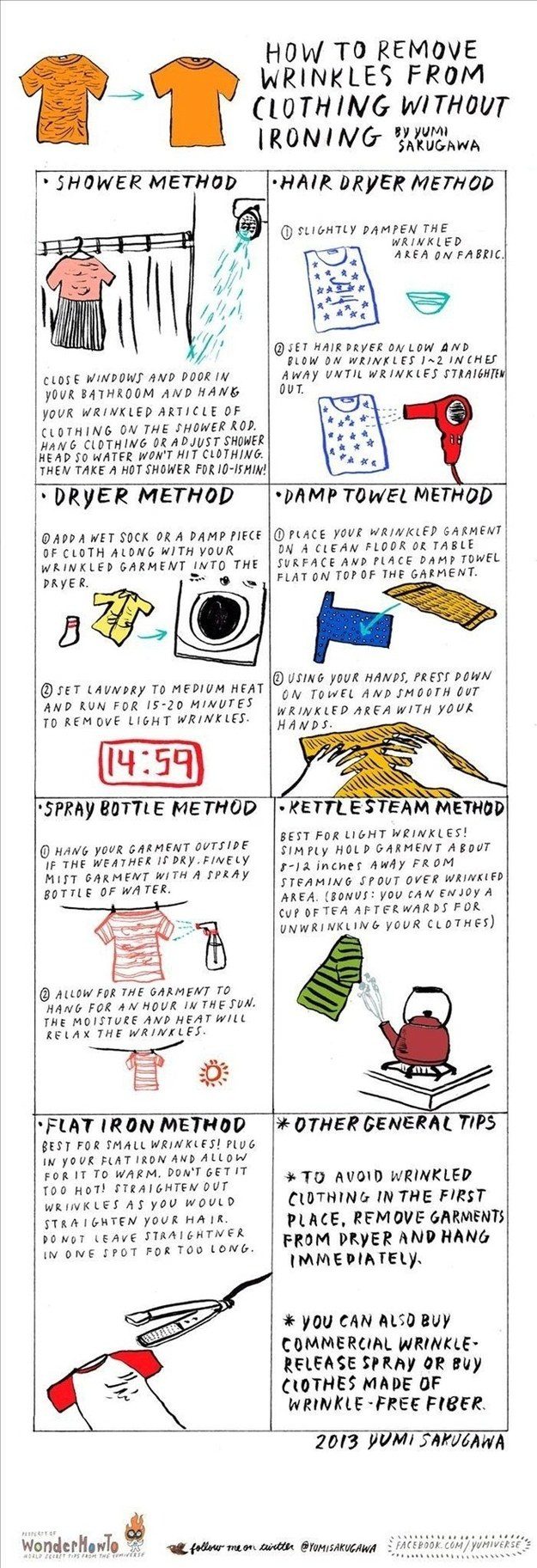
If you’re on vacation or simply don;t have an iron around, here are some clever ways to get the wrinkles out of your clothes.

get wrinkles out of your clothes without an iron
Yumi Sakugawa / Via yumisakugawa.com

Skip using fabric softener and add a couple of drops of lavender essential oil into your laundry for the best smelling clothes. You could also save a fortune by trying our homemade fabric softener recipe.

lavender essential oil for great smelling clothes
Nikilitov / Getty Images

Alter a pair of jeans which don’t fit you anymore with this clever hack.

alter jeans which dont fit you anymore
cottonandcurls.com

And if thats too much effort then simply use a rubber band!

use a rubber band to expand your jeans
inhabitots.com

Shaving cream works amazingly well to remove makeup from your shirt collars.

shaving cream to remove makeup
Bananastock / Getty Images

Use baby powder to get oil stains out of your clothing. Place some over the stain and allow it to sit for several minutes to absorb the oil.

use baby powder to get oil stains out of your clothing
feminya.com

Rub white bread on lipstick stains to remove them.

rub white bread onto lipstick stains
Andrewsafonov / Getty Images

Shoe Hacks

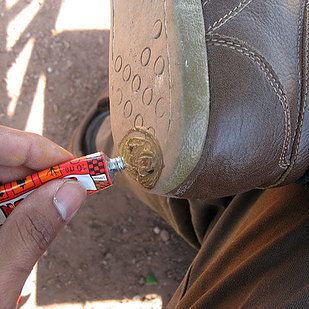
Repair holes in your shoes with a bicycle puncture repair kit.

repair holes in your shoes with a puncture repair kit
instructables.com

Use a slice of stale bread to rub stains out of suede shoes.

bread removes stains from suede shoes
video.about.com

Stretch out a pair of tight boots by putting on a couple of pairs of socks and then blasting them with the hair dryer.

stretch out a tight pair of boots
Julie Gerstein / BuzzFeed

Please unused tea bags into your shoes to stop them smelling.

stop shoes smelling with tea bags
Showcake / Getty Images

Or cut a dryer sheet in half and use one in each shoe to get rid of odors. Have a look at these other amazing uses for dryer sheets you may not know about.

dryer sheets also get rid of odors
naturalremedyideas.com

Get your sneakers looking new again with an amazing magic eraser.

get your sneakers clean with a magic eraser
jet.com

Do you have any clothing or shoe hacks which we haven’t put onto our list? Let us know in the comments section below.

Save These Hacks For Future Reference

21 Ingenious Clothing and Shoe Hacks To Save You Money

Arduino Based System For Automatically Limiting TV Time

Most of us spend far too much time in front of the TV. Here is a system for automatically limiting when and how long the TV can be on for. The system works by controlling the input signal going to the TV by adding a relay switch to the input cable. When certain conditions are met, the relay is turned on and the TV is able to receive the input signal. Using an Arduino microcontroller, you can program the system to only allow the TV to be on for a certain amount of time each day or between certain hours. You can setup a pin code so that only certain people can turn it on. You could even set it up so that the TV will not turn on unless you have done a certain amount of exercise that day. The system is very versatile and can be customized to fit your needs.

This project assumes you know the basics of Arduino programming, otherwise read our article on getting started with Arduino.

What You Need To Build The Arduino TV Limiting System

How To Build The Arduino TV Limiting System

The instructions are broken up into three sections, building the relay control circuit, uploading the time limiting sketch to the Arduino and finally adding additional sensors and controls.

Building The Relay Control Circuit

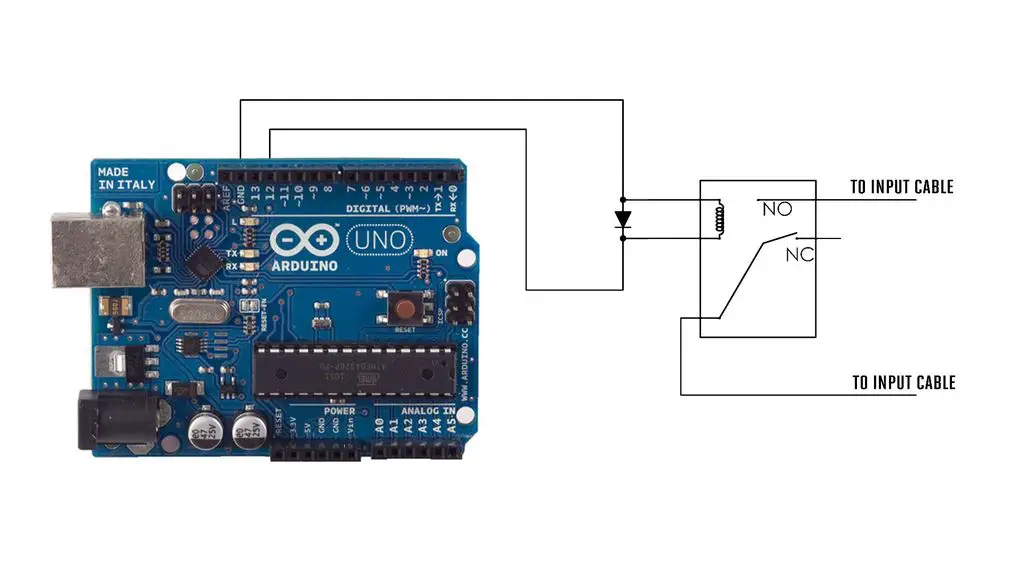
The control circuit for this project is very simple. It is basically just an Arduino microcontroller and a 5 volt relay. In order to power the relay directly from the Arduino, the coil of the relay needs to be rated for 30 mA or less.

relay control circuit

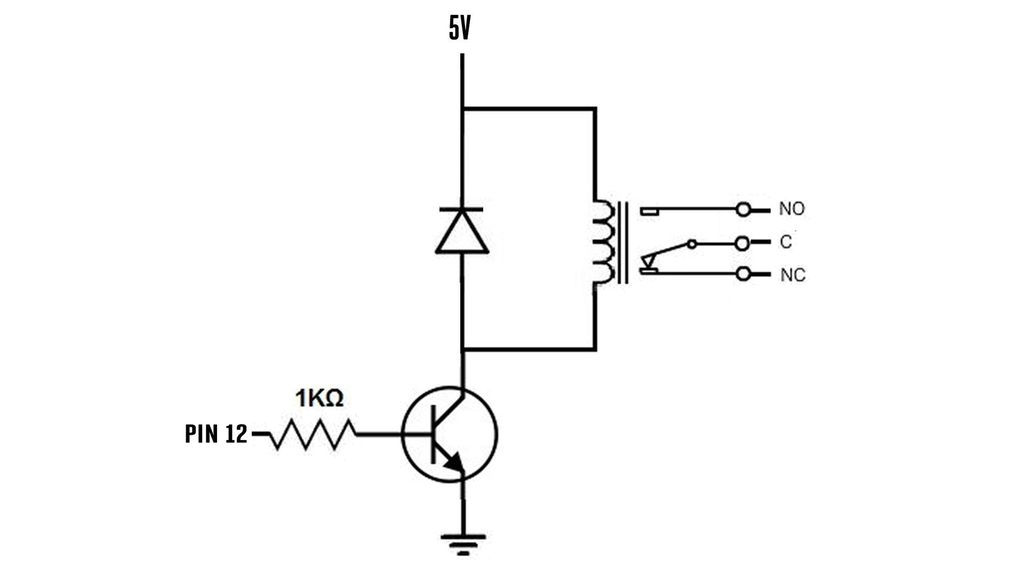
If your relay requires more than 30 mA, then you need to add a transistor to drive the relay.

larger relay coil circuit

The normally open terminal and common terminal of the relay are connected to the input cable. The coil of the relay is connected to one of the digital pins and one of the GND pins on the Arduino. A diode is connected in parallel with the coil of the relay to protect the Arduino from voltage spikes that can occur when the relay turns off.

Normally the digital pin is set LOW. This means that the relay is turned off and the two halves of the input wire are disconnected. In this state, the signal cannot reach the TV. But when the digital pin is set HIGH, the relay turns on and connects the two halves of the input cable. This is how the Arduino determines when the TV receives the signal from the input device.

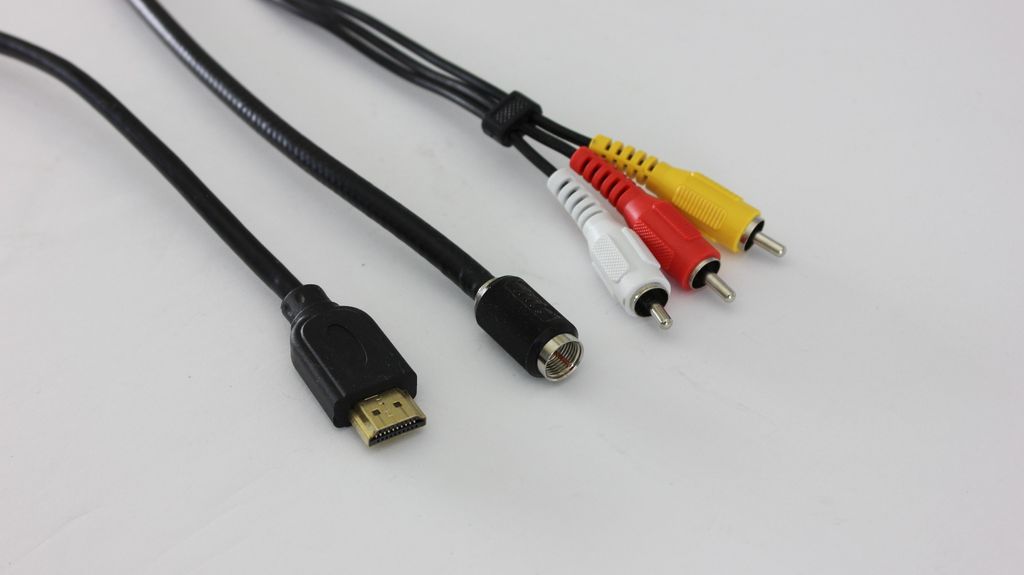
The first thing that you need to do is get a connector cable that matches the input terminals on your TV and the signal source. The most common types are Coaxial cable, RCA cable, and HDMI cable.

select a cable type

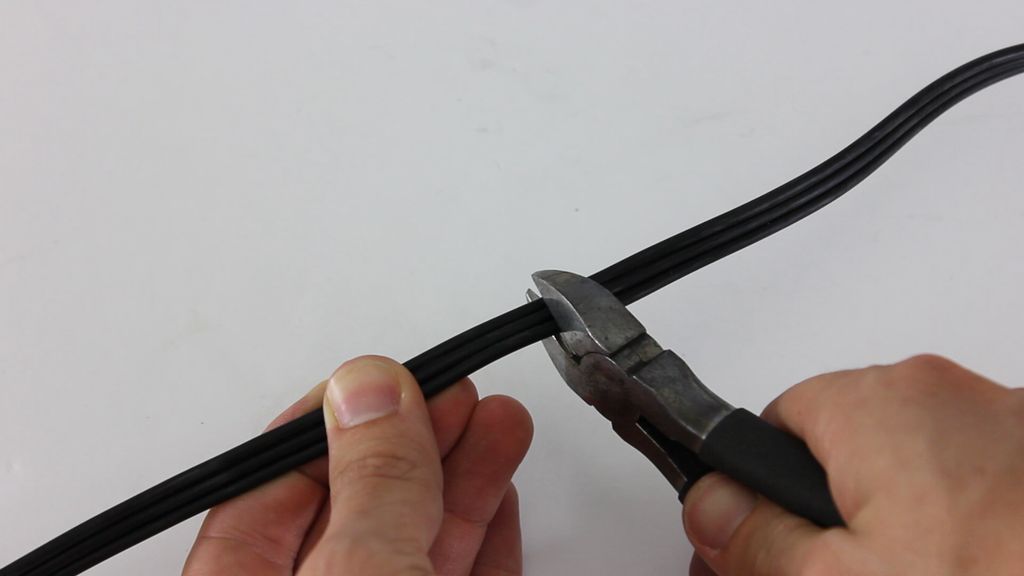
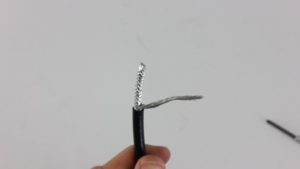
Next we need to cut the connector cable in the middle. Then strip off about 2 inches of the outer most layer of insulation to expose the first layer of internal wires.

cut the signal cable

Separate and peel back these wires to expose the next layer of insulation. Strip off about half of this exposed section of insulation. This will reveal the inner wires. Twist the first set of wires together. Then twist the second set of wires together. You should now have two separate strands of wires that you can connect these wires to a relay switching circuit.

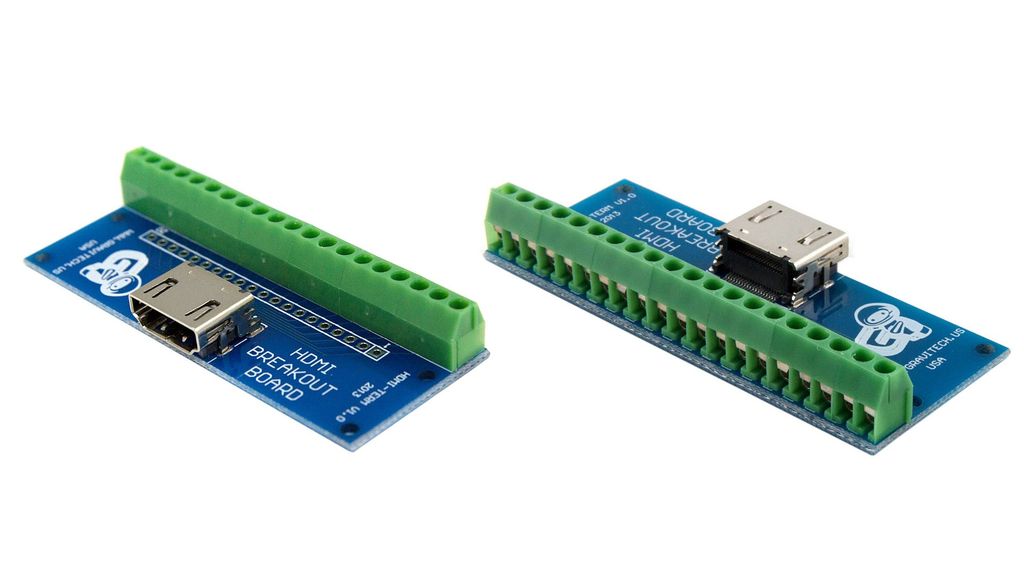
This simple procedure will work well for RCA cables and coxial cables. However, HDMI cables are a little more complicated. There are a lot of wires inside an HDMI cable. If you want to try to manually separate the wires of an HDMI cable you will need a lot of time and patience and you need to be very careful. An alternate method that might make things easier is to use an HDMI break-out board such as this one.

hdmi breakout board

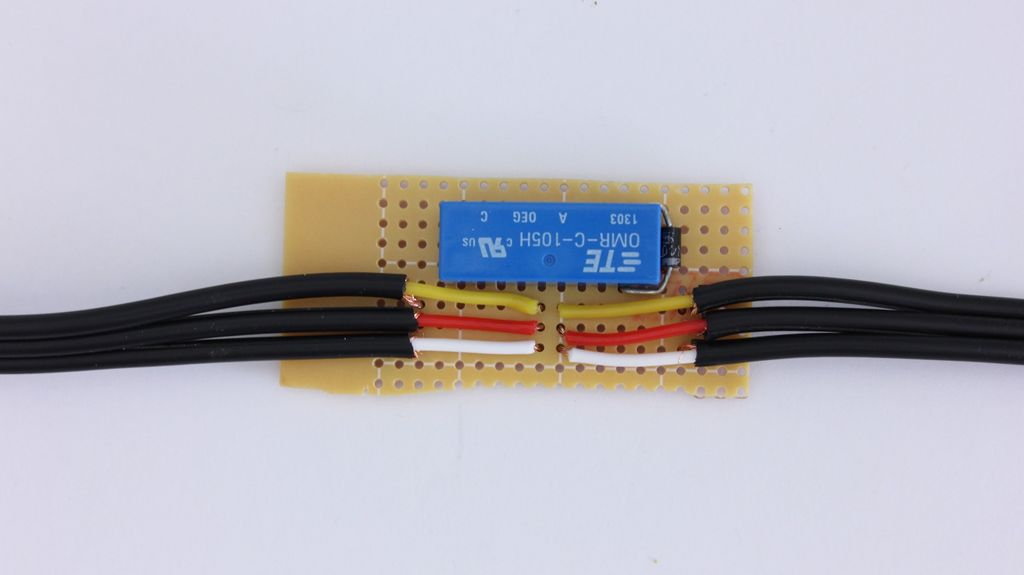
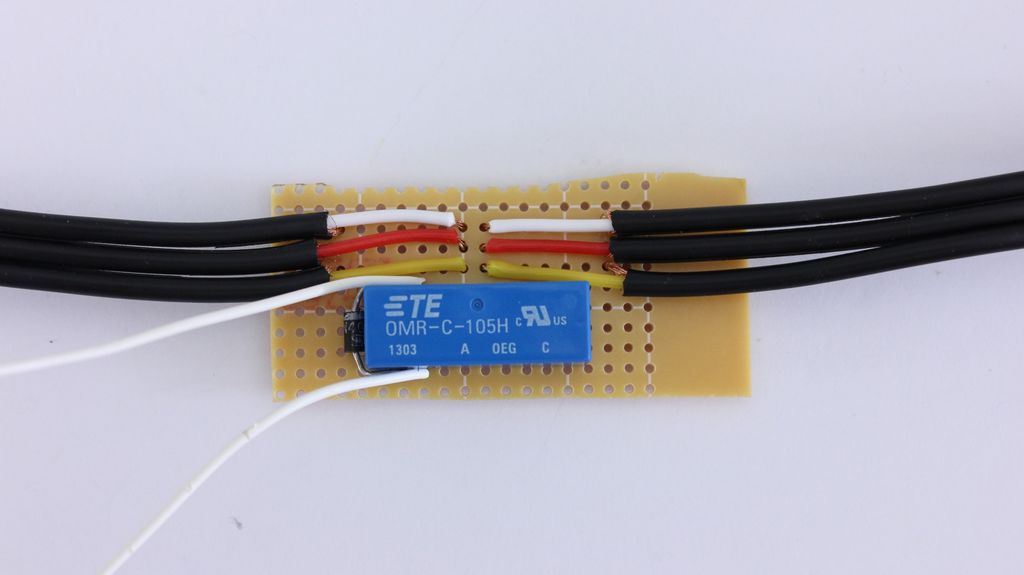
Start with a blank piece of perf board. Solder the relay onto one side of the board. Then solder the diode onto the board adjacent to the relay and connect the leads of the diode to the coil terminals of the relay. Next you need to connect the wires from the input cable.

relay control board

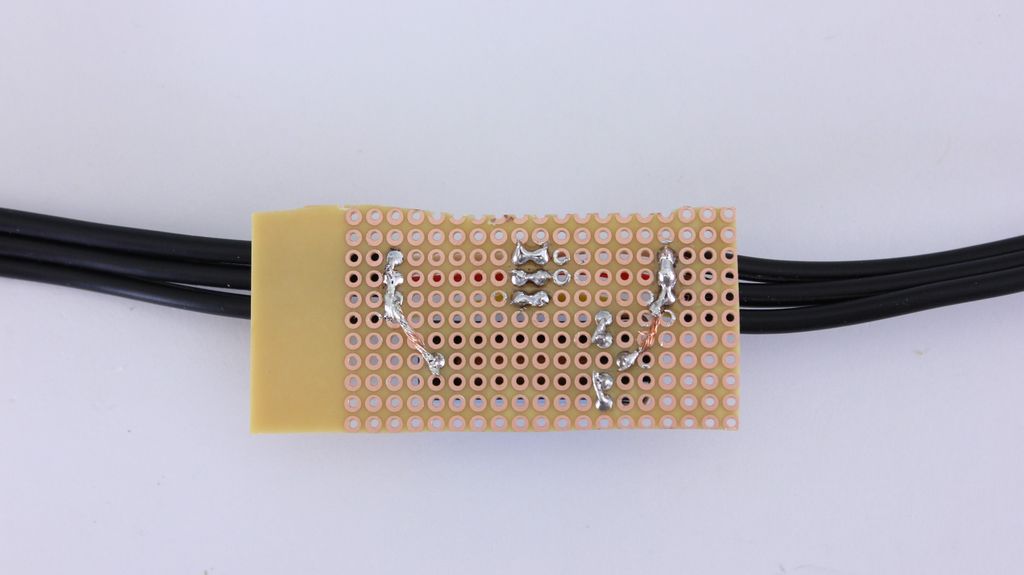
The inner most sets of wires can just be soldered back together by attaching them to adjacent holes and connecting them with a bead of solder. The outer set of wires in each cable will all be grouped together. With RCA cable these wires are all connected together as a ground. So it won’t affect the signal. These wires are soldered to the board. Then a jumper wire connects them to the switch terminals of the relay.

underside of relay control board

The last connections to make are the wires that will connect to the Arduino. Connect one wire to each terminal of the relay’s coil.

completed relay control board

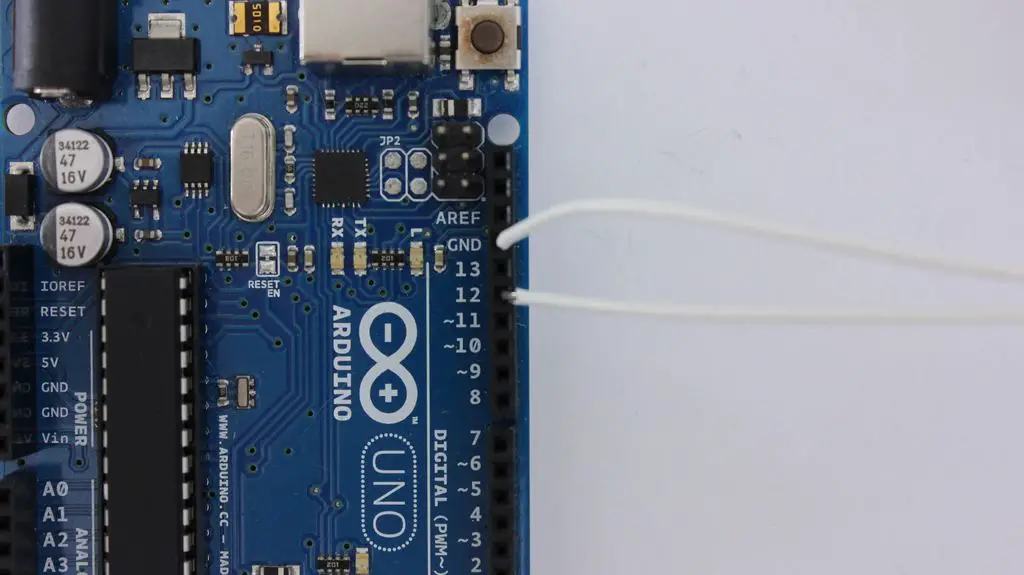
Now you need to connect the relay circuit to the Arduino. Connect the wires from the relay board to the Arduino so that the anode of the diode is connected to one of the GND pins on the board. Then take the wire that is connected to the cathode of the diode and plug that into one of the digital pins on the Arduino board.

connecting control board to arduino

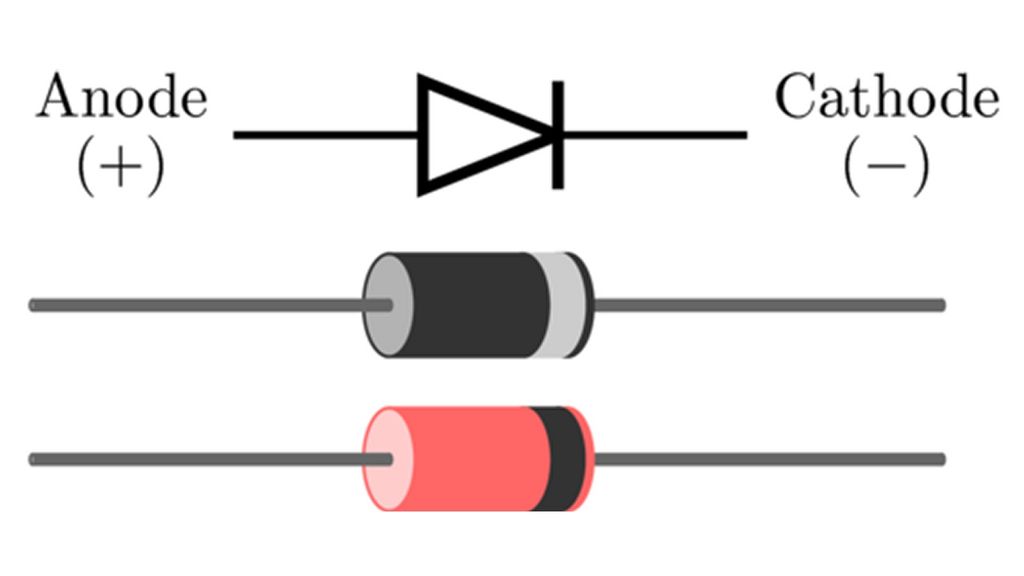
It is very important that you get these polarities correct. If you accidentally reverse them, you could destroy the Arduino.

polarity of a diode

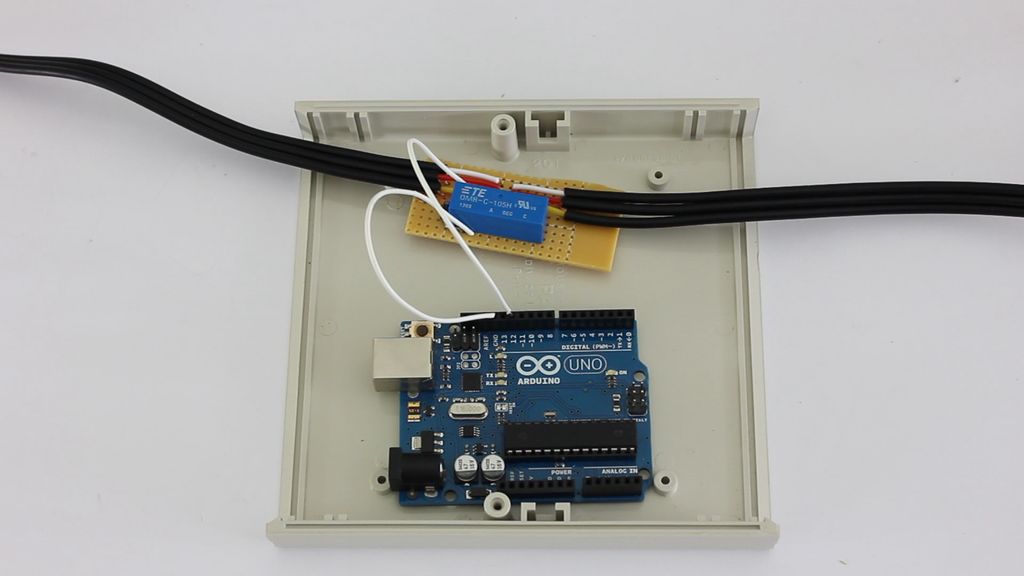
Find a large insulated project enclosure. Then attach the relay circuit and the Arduino to the inside of the housing with a small drop of hot glue. A small drop of hot glue will be just enough to hold the boards in place but still allow you to remove them later if you want.

mount the arduino in an enclosure

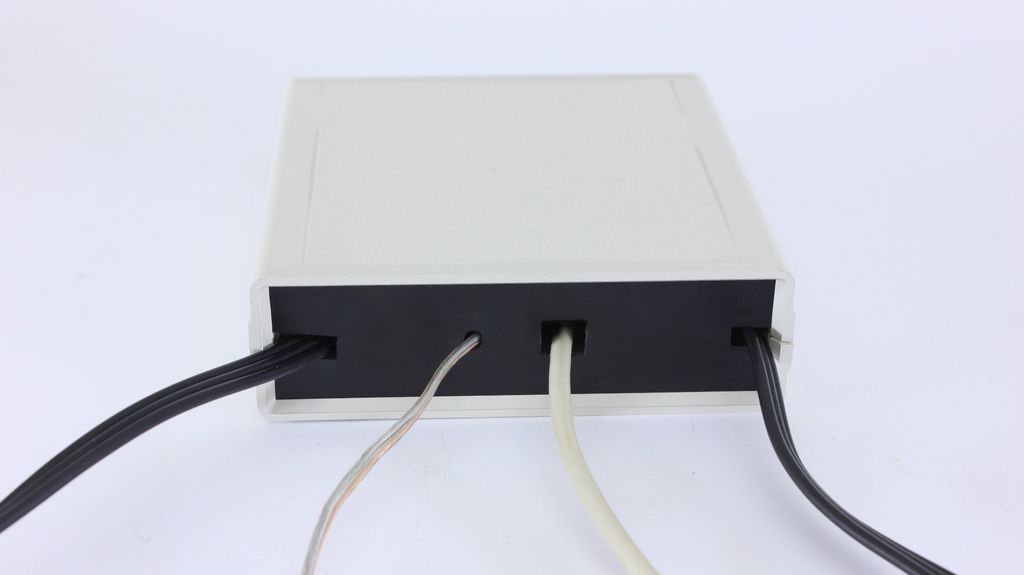
Cut holes and slots in the back of the housing for the cables and power cords and sensor wires.

the completed enclosure

Uploading The Time Limiting Sketch

Now you can upload your sketch onto your Arduino, if you haven’t uploaded a sketch before then follow this guide on getting started.

The simplest kind of control program is a window timer. Here is a very basic example of this. Once the system is activated, the TV will be connected for 1 hour (3600000 milliseconds). Then it will be off for 23 hours (82800000 milliseconds). This will create a one hour window each day where the TV can be watched. You can easily change the timing of this by changing the values in the code.

//The DIY Life
//12 April 2017
//Michael Klements

int relayPin = 12;    //Define pin used to control the input signal relay
 
void setup() 
{ 
  pinMode (relayPin, OUTPUT);
} 
 
 
void loop() 
{ 
  digitalWrite (relayPin, HIGH);   //Turn the input signal relay on
  delay(3600000);                  //Wait one hour
  digitalWrite (relayPin, LOW);    //Turn the input signal relay off
  delay(82800000);                 //Wait 24 hours
}

You can download the TVTimeLimiter sketch here.

Alternatively, you could set up a button to activate the TV watching time. This would let the user select when the TV may be on but still limit the total number of hours per day that it is on.

Adding Additional Sensors And Controls

Most ways that you might set up your TV limiting system will requires sensors of one kind or another and these need to be connected to your Arduino. Connecting sensors to an Arduino is easy. There are two main kinds of inputs with an Arduino. There are analog inputs and there are digital inputs.

Analog inputs detect the relative voltage of a signal. To measure an analog input, connect the ground wire of the sensor to one of the GND pin on the Arduino. Then connect the signal wire to one of the analog input pins on the Arduino. Then set this pin to input mode and use the analogRead function in the Arduino code. The Arduino will then measure the voltage of the input signal and turn it into an integer value between 0 and 1023. This corresponds to a voltage between 0 and 5 volts. Analog inputs are a good way to monitor signals that change over time.

Digital inputs just detect whether a signal is above a certain threshold voltage (3 volts for a 5 volt Arduino). These are useful for detecting simple on-off states. Is the signal there or not. To use this king of input, connect the ground wire from the sensor to one of the GND pins on the Arduino. Connect the signal wire to one of the digital pins on the Arduino. Then set this pin to input mode and use the digitalRead function in the Arduino code. The Arduino will then measure the voltage of the input signal and register it as either HIGH (above 3 volts) or LOW (below 3 volts).

You could also customise the TV time limiter to work with various sensors and controls to enable bypasses or restrict use until a certain activity has been carried out. Here are some examples.

Set Up a Pass Code for Authorized Users to Activate the TV

A variation on the design that you could implement involves setting a pass code so that only authorized users can turn the TV on. This can easily be done with the TV remote. All you need to do is add an infrared receiver to the Arduino. You can check out an example of how to do that here:

Create a Sensor to Only Turn on the TV If You Have Exercised

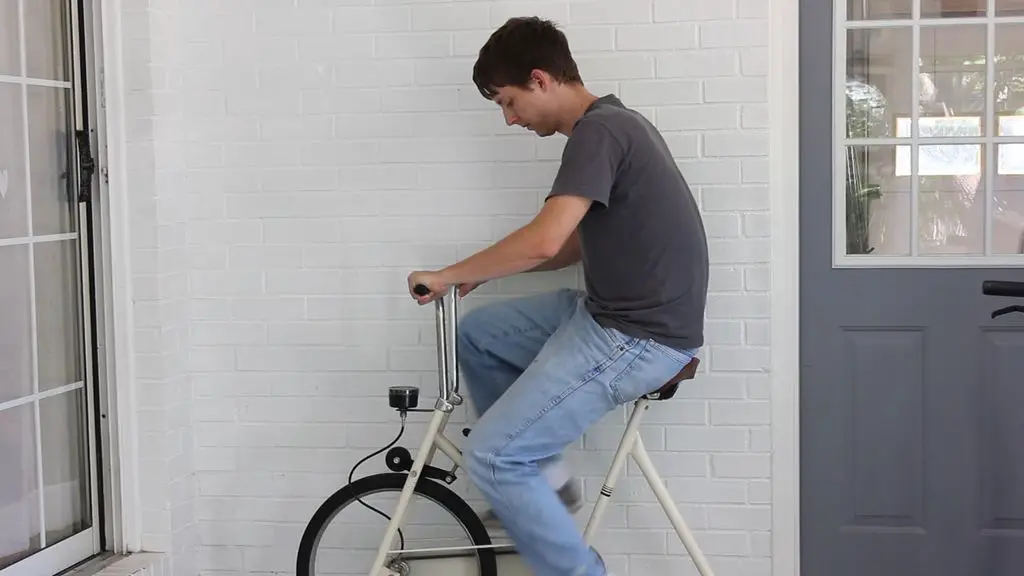
Our favorite way to control a TV limiting system is with exercise. The simplest way to do this is to set up a sensor on an exercise bike that will send a signal to the control circuit when someone is pedaling. This will let you program the system to only let the TV be on while someone is exercising on the exercise bike. The more you want to watch TV, the more you have to exercise. You can see a good example of this kind of system in the project “No TV unless you exercise!“.
no tv unless you exercise

Only Turn The TV On When Someone Is Active

You can use the heart rate sensor to measure how active the person is being. So you can program the system to only let the TV be only while the person’s heart rate is elevated. Or you could program it to only turn on if the person has had their heart rate above a set level for a certain number of minutes a day (indicating that the person has exercised).

Using Your TV Time Limiting System

Set up the box with the control circuit near your TV. Then plug one end of the cable into your TV and plug the other end into the signal source. An RCA cable is used here to connect an XBOX 360 to the TV. Lastly connect your chosen sensors that will control they system.

This system is an interesting way to cut back on the amount of TV that we consume. Use your imagination and have fun.

This post is based on a System for Automatically Limiting TV Time by DIY Hacks and How Tos and is modified and used under the Creative Commons license CC BY NC SA.

Cute Bunny Pudding Cups for Easter

Many of us are in the middle of Spring fever. We’re loving the warmer weather, the fun pastel colors and we’re preparing for Easter. One of my favorite snacks since childhood has been pudding cups. For a fun snack I thought I’d come up with something quick, festive and convenient for your Easter egg hunts or dessert tables, Bunny Pudding Cups. These were so much fun to make and the pudding and cake combo was too good.

If you’d like to put a few options out on the table then try our white chocolate mousse and jelly dessert cups. Simply replace the red jelly with green jelly and you’ve got another delicious dessert option.

What You’ll Need To Make The Bunny Pudding Cups

  • Chocolate Pudding Cups
  • Chocolate Cake
  • Frosting: White or Chocolate, Green
  • White Candy Melt
  • Shredded Coconut Flakes
  • Mini Marshmallows (One Per Pudding Cup)

How To Make The Bunny Pudding Cups

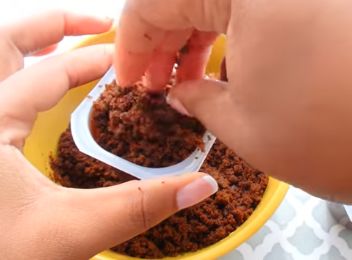
Crumble the chocolate cake into small pieces with your hands or with a food processor. Sprinkle the cake crumbles onto the pudding cups to create dirt.

crumbled chocolate cake onto the pudding cup

Add a dollop of frosting and combine to create a cake dough. Shape the dough into small tablespoon sized balls. Place on parchment or waxed paper and refrigerate for 15 minutes.

make small cake balls

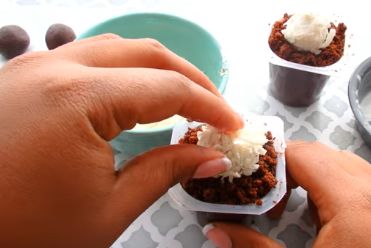
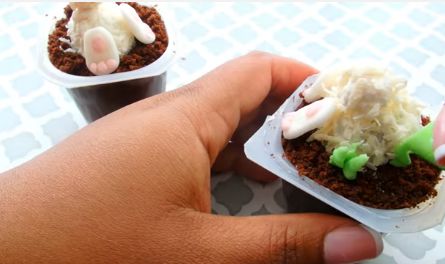
Melt the white candy melt or white chocolate. Use a fork or toothpick to roll the cake ball into the candy melt and cover completely. Allow to excess to drip away then roll in the coconut flakes. Set aside and allow the coating to harden. Then nestle into the cake dirt.

place your bunny onto the dirt

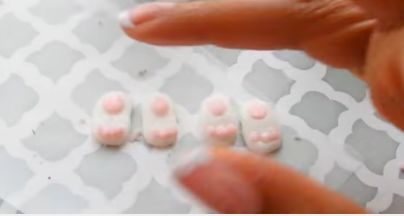
Shape a small bit of fondant into little bunny feet. Use pink fondant for the pads of the feet. Then attach to the bunny using white chocolate or candy coating. If you don’t have fondant you can also make the feet out of candy melt. Just melt a small amount an make an oval shape on waxed paper then allow to harden. You can use edible pink marker, pink fondant, or frosting for the pads.

small bunny feet

Lastly, put green frosting into a small sandwich bag and cut the corner to pipe grass around the bunny. And you’re done!

add the finishing touches

Enjoy your bunnies before they hop away! If you love chocolate desserts then you’ll think our chocolate lasagne is amazing, try it out!

If you enjoyed this article, please share it on Pinterest.

This post is based on Bunny Pudding Cups by Marishas Couture and was used and modified under the Creative Commons license CC BY NC SA.


10 Amazing DIY Floor Ideas That Don’t Cost A Fortune

Renewing or updating your floors can make a huge difference to your decor and home’s value. Flooring is typically quite expensive so it if often put off for major renovations but here are 10 amazing DIY floor ideas which can be done as a holiday or weekend project and it doesn’t cost a fortune to buy the materials. So try one of these projects in a room or throughout your house to refresh your personal space.

Stencil & Paint The Floor

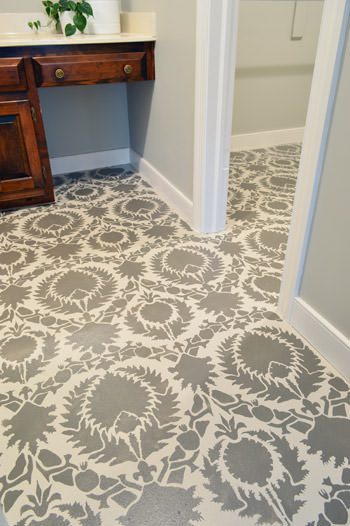
This amazingly detailed floor by Young House Love is just a ply wood floor which has been stenciled and painted. They simply pulled up the carpet and painted it.

stenciled floor completed
Young House Love

Simple Painted Flooring

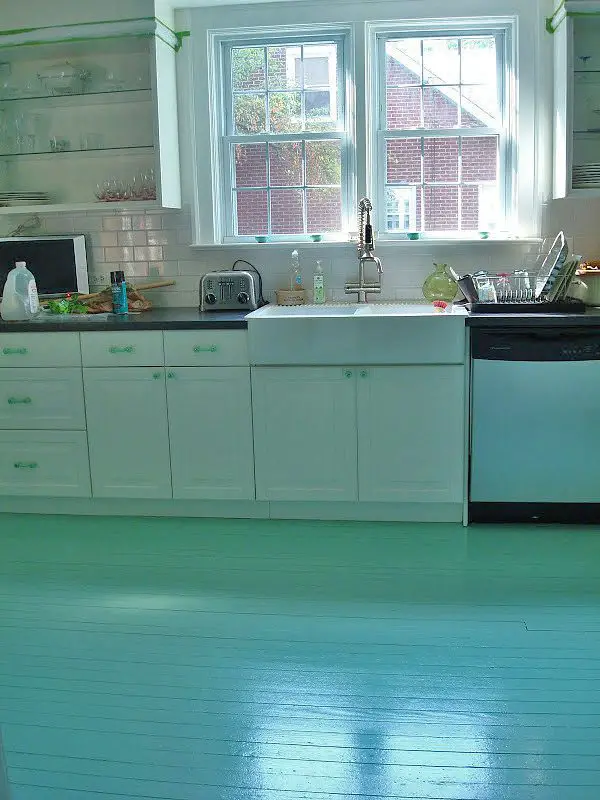
If you’ve got an existing wooden floor which just looks a little worn out, try painting it in a vibrant colour to bring it new life for less than $50. Have a look at the tutorial by Effortless Style.

simple painted floor
Effortless Style

Different Colour Plank Flooring

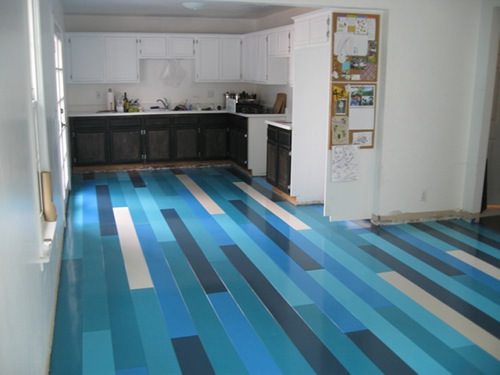
Instead of painting the whole floor in a single colour, Design Sponge decided to mix things up and paint them in different shades, making the end result more interesting.

different colour plank flooring
Design Sponge

Pine Plank Flooring

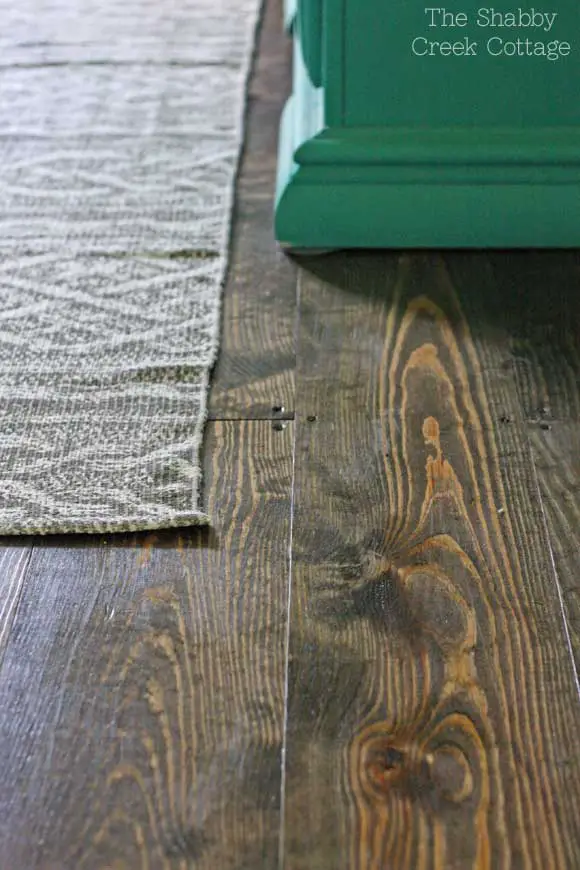
These DIY wood floors by Shabby Greek Cottage are made using 1×8 pine planks which were then stained to the right colour for an inexpensive finish which can be done room by room.

flooring using pine planks
Shabby Greek Cottage

Plywood Plank Flooring

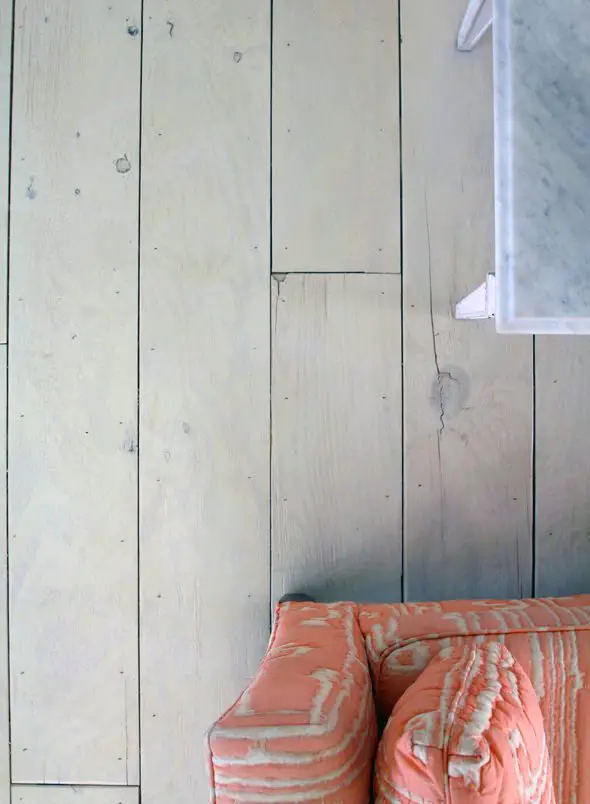
This wooden floor by Little Green Notebook was made using plywood which was then cut into planks for a more hardy surface.

plywood plank floor
Little Green Notebook

End Grain Block Flooring

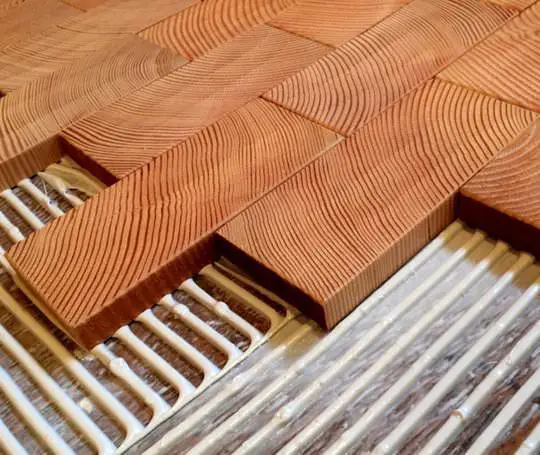
This type of flooring project by Design Sponge uses blocks of lumber which have been sliced through the grain which leaves an interesting texture.

end grain block flooring
Design Sponge

Geometric Wooden Flooring

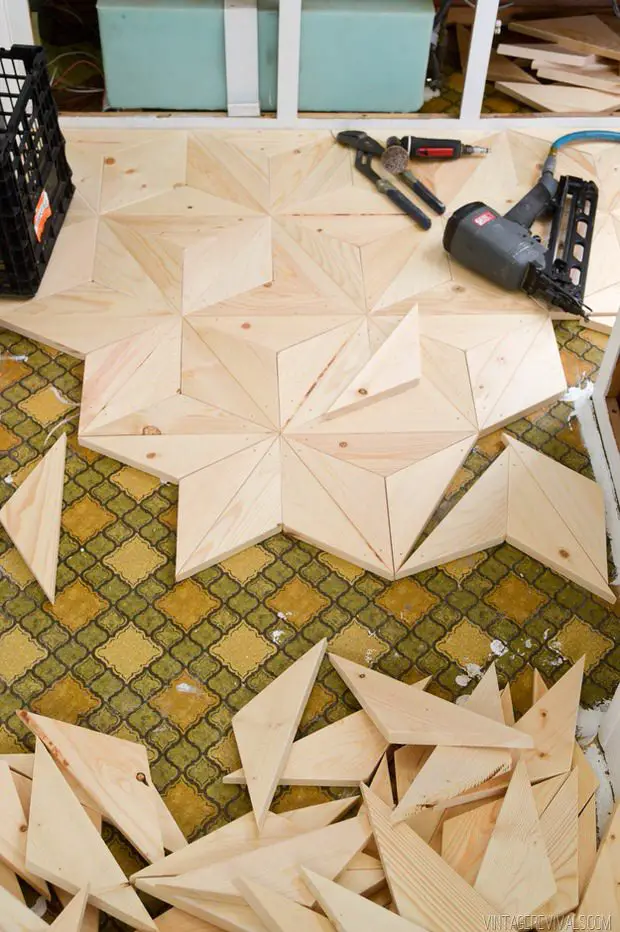
Vintage Revivals decided to take us back to a time when geometric wooden floors were the in thing and we love the results. While this is probably more suited for a smaller room or bathroom, there is a bit of charm to the work that goes into it.

geometric wooden floor
Vintage Revivals

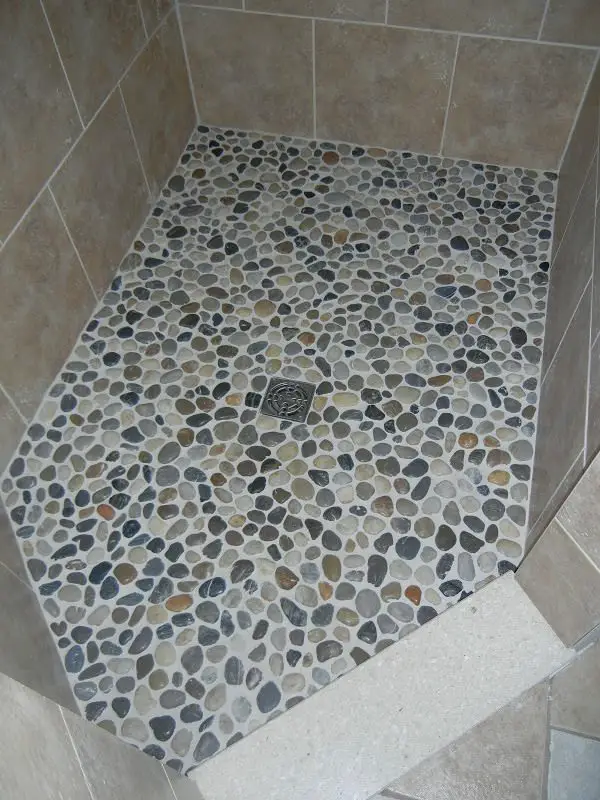
Pebble Bathroom Flooring

Pebble floors are typically used in a shower but there’s no reason they can’t be used for a whole bathroom. Something for Nothing made this pebble floor from scratch and it looks amazing.

pebble bathroom floor
Something For Nothing

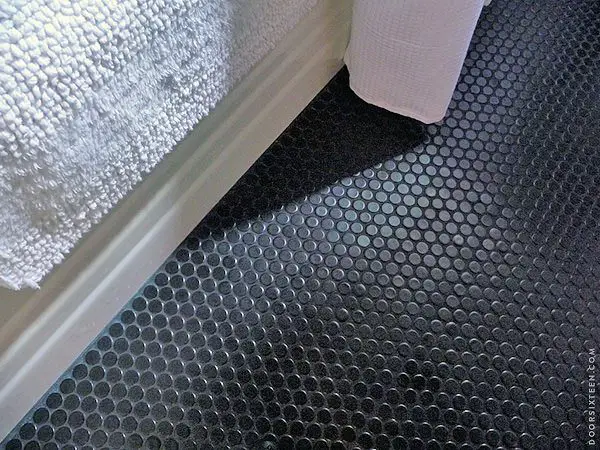
Black Rubber Matte Tiles

Black rubber tiles are usually used as a flooring choice for a workshop, garage or gym but Door Sixteen used them in a bathroom and the results are great. Using a dark colour on the floor makes the whole room feel a bit more grounded.

black matte floor tiles
Door Sixteen

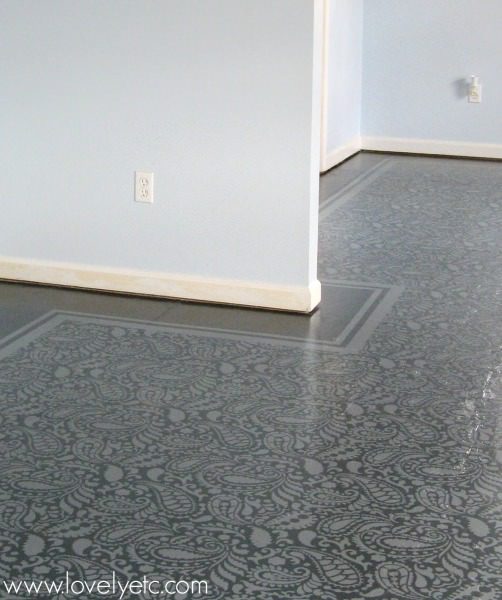
One More Stenciled Floor

This stenciled floor by Lovely Etc has a nice finish around the edges and really highlights the fact that you don’t need to spend much to get an amazing result. The plywood underneath your current floor is the perfect canvas for a stenciling.

stenciled floor second version
Lovely Etc

If making your own flooring sounds like too much work, you could also buy laminate flooring and install it yourself, the actual material is not that expensive and its really easy to do.

Have you done your own flooring in a room or throughout your home? What did you do and how did it turn out? Let us know in the comments section below.

If you enjoyed this post, have a look at these 8 DIY Projects To Increase Your Home’s Value.

Make A Stylish & Modern Hanging Garden Planter

This stylish and modern hanging garden planter is sure to attract attention and it allows you to get more out of the surface area of your garden, perfect for veggies and herbs. Hang them on a wall, under a window or even indoors as a feature, they’d fit right into a modern kitchen.

Once your planters are up and your plants are growing, try our natural pesticide recipes to keep bugs away without spraying harsh chemicals all over your herbs and veggies.

What You Need To Make The Hanging Garden Planter

  • 2 x 100mm (4″) PVC Pipes: Cut to About 170cm (66.5″) and 150cm (59″)
  • 4 x 100mm (4″) PVC End Caps
  • Silver Spray Paint
  • 5m (16′) Wire Rope
  • 4 x Small Wire Rope Clamps
  • 8 x Threaded Hooks
  • 4 x Carabiner Clips
  • Soil
  • 9 x Small Plants
  • Cordless Drill
  • 75mm (3″) Hole Saw
  • Small Drill Bits
  • 120 Grit Sandpaper
  • Hacksaw
  • Wire Cutters

How To Make The Hanging Garden Planter

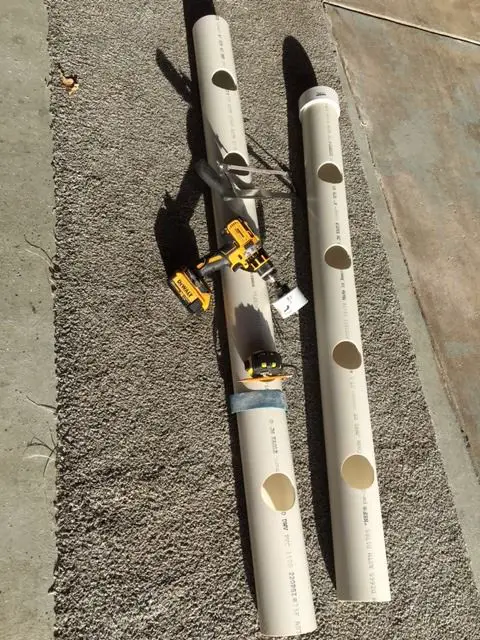
Start off by cutting the PVC pipe to length, this can be to suite your wall or window width or simply to suit the size of your plants.

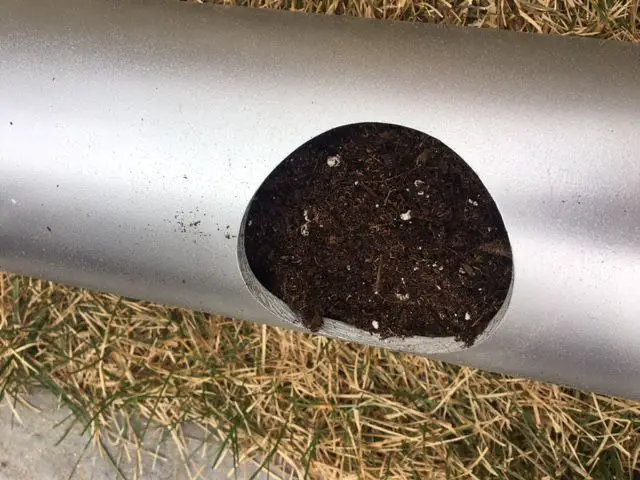
cut the pvc pipe to length and drill holes in them

Measure out how far apart the plants need to be and mark them pipe for the holes to be drilled. The spacing used in these planters is 30cm (11″). Once you have marked the holes and are happy with the spacing, use the hole saw to drill the holes through one side of the pipe wall.

Use a small piece of sandpaper to sand the edges of the holes to remove any rough or sharp edges. Sand the ends of the pipes as well so that the end caps fit on snugly.

spray painting the pipes

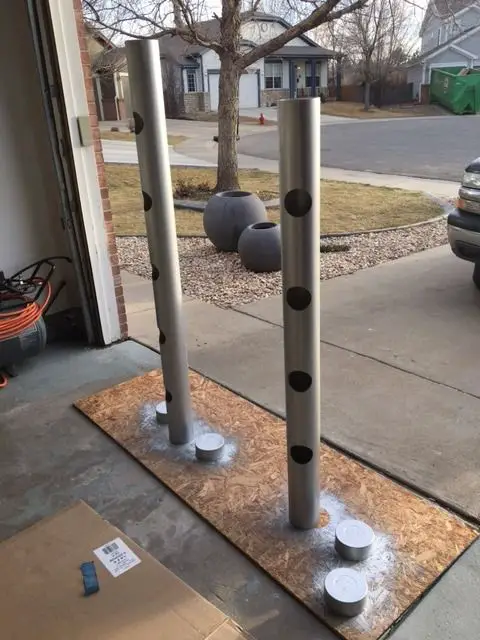
Stand the pipes up on their ends and spray them with the silver spray paint. Do two or three light coats of paint on each pipe. Spray the end caps as well.

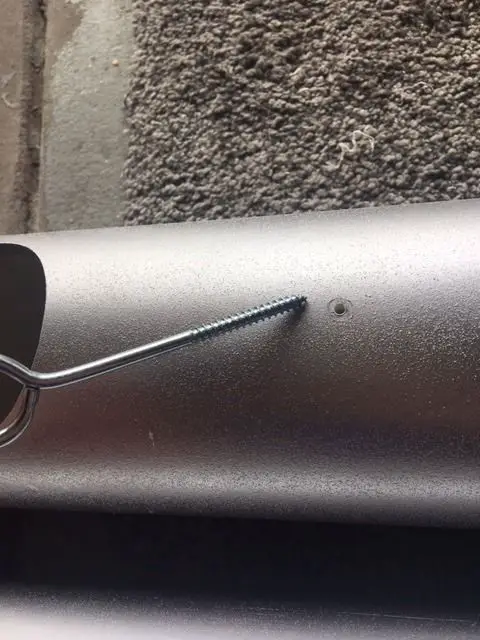
drill holes for the screw in hooks

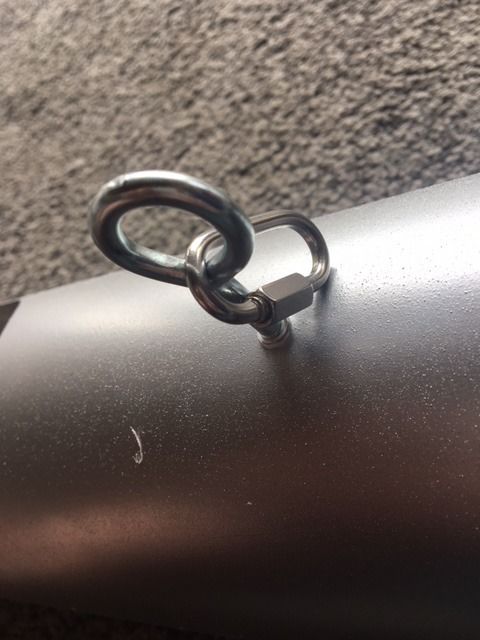
Now attach the hanging hooks onto the pipes, the hooks can be positioned either between the last holes and the ends of the pipes or in the centre of the outer two holes on each pipe as is done in this case. Drill a small pilot hole for each hook and then screw them into the pipe.
screw the hooks in and attach a caribener clip

Line up the holes on the bottom of the top pipe with the top of the bottom pipe so that the wire rope hangs straight down from the top pipe to the bottom pipe. Also ensure that the holes are all drilled in line on with the planter holes so that they hang with the plants facing directly upwards.

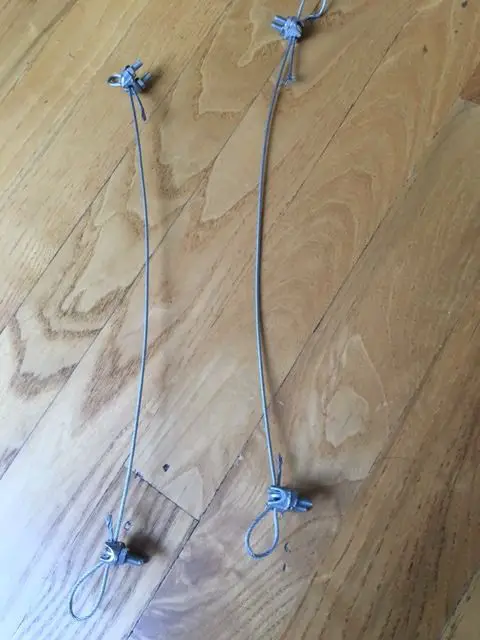
make the wire rope pairs

Next you can cut the wire ropes, this can be done to suit the area you are hanging your planters. Measure the required distance and allow about 100mm (4″) extra so that there is additional wire rope to make the end loops. Make them in pairs and check them against each other to make sure that the pairs are exactly the same length or your planters wont hang level.

fill the PVC pipes with soil

Finally, fill the pipes with soil and install the end caps. If your end caps fit snugly then you can just push them on. If you are going to be using the planters indoors or your end caps are loose then you’ll need to glue them on. PVC cement is best to glue them on, make sure that the PVC cement goes directly onto the plastic and not over the silver paint.

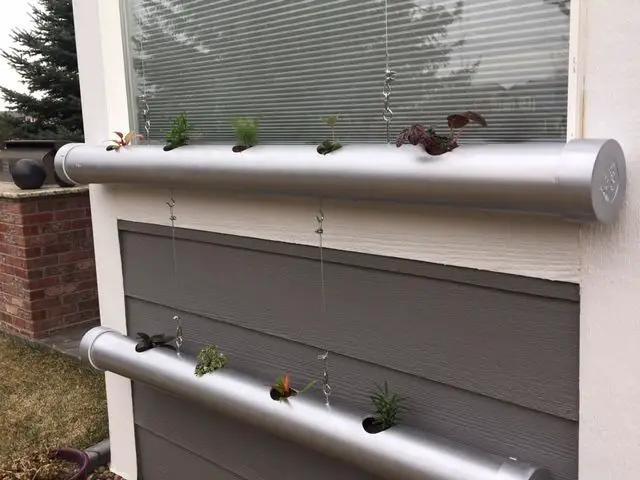
hanging planters different angle

Open all of the carabiner clips and slip the wire ropes into them. Your planters are now ready to be hung up on the wall or window frame. If you’re installing them outdoors then you may want to drill a small hole into the bottom on each end to allow the excess water to drain. If you need to drill into tiles to mount hooks to hang the planters in your kitchen, read our guide on drilling holes into tiles first.

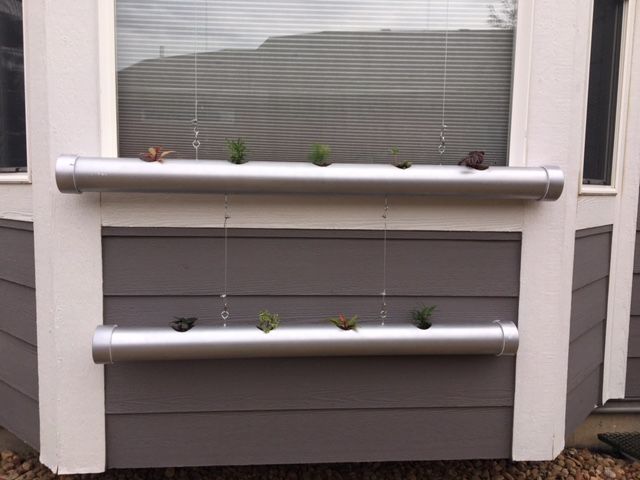
hanging platers by window frame

Plant your plants into the hanging planters and you’re done.

Have you tried making these or similar planters? Let us know in the comments section below.

This post is adapted from Hanging Garden by begallogly01 and is used under the Creative Commons license CC-BY-NC-SA.


10+ Summer Travel Life Hacks To Make Your Life Easier

We all get excited for summer, we can start planning road trips and family vacations.  Along with it, however, comes the dreaded chores of organising and packing.  Here are a few life hacks that will help you with the not so fun travel times.


muffin tray for drinks
Seriously For Real

Use a laundry basket and muffin tray as a large drinks holder.

road trip travel bag
While He Was Napping

Make your own nifty travel bag to keep all of your road trip essentials.

keep cotton pads and balls

Keep cotton pads or balls in your makeup cases to keep them from breaking apart when travelling.

mount your phone on the seat
Twisted Sifter

Stick your phone in a zip lock bag to make the perfect holder for your movies and series during a road trip.

disposable gloves for toothbrush

Use a disposable glove to keep your toothbrushes clean. Put toothbrushes in the middle 3 fingers. Use the pinkie and thumb to tie the 3 together.

car trash can


A cereal container with a plastic bag makes a great trash can for your car.

toothbrush clothes peg
Seriously For Real

Take some clothes pegs with you to prevent your toothbrush from touching any potentially dirty surfaces.

money in a sanitary bag
Just Imagine

No-one opens sanitary bags to look for money, its the perfect hiding place.

how to pack a razor
Seriously For Real

If you’ve lost the plastic guard for your razor, an office clip makes a great replacement to help with your razor travels.

cellphone for emergencies
Seriously For Real

Keep and old cell phone in your cars glove box in case of emergencies, you’ll be grateful one day when you need it. Even better would be to keep it with a charger or power bank.

hotel charger hack
Daily Dawdle

Most modern TVs have USB ports on the back of them, use them to charge your phones or gadgets when you don’t have the right adapters.

If you don’t plan on making travel plans any time soon then read our list of 15 Brilliant Tricks To Make Your Life Easier instead.

Do you have any travel hacks, tips or tricks? Let us know in the comments section below. We are always looking for new ways to make life easier.


DIY Moisturising Bath Bombs, Perfect For Dry Skin

If you’ve discovered the magic of baths and bath bombs then you’ve probably discovered they can also be quite expensive! It may be time to start making your own. They also make a lovely gift, place a couple on a homemade mini pallet coaster and wrap it up in cellophane for a thoughtful and inexpensive homemade gift. You could also pair them up with our homemade exfoliating coffee and brown sugar body scrub.

Making bath bombs is actually a super easy process! There are definitely some possible pit falls along the way, but we’ll guide you through the process and let you know when you need to do things a certain way. This moisturizing recipe is extra easy to make because we’re using more oil than water.

This bath bomb recipe produces a slightly fizzy and super moisturizing soak for your bath water!

What You Need To Make 8 Moisturising Bath Bombs

  • Slightly Less than 1 cup Baking Soda – Buy Now
  • 1/2 cup Citric Acid – Buy Now
  • 3/4 cup Corn Starch – Buy Now
  • Heaping 1/2 cup Epsom Salts – Buy Now
  • 1 Tablespoon Water
  • 3 Tablespoons Oil of Choice (I used avocado) – Buy Now
  • 25-50 Drops of Essential Oil* – Buy Now
  • Food Coloring (2-5 drops, depending on how intense you want the color!) – Buy Now

Important note regarding essential oils: oils like clove, cinnamon, tea tree, eucalyptus, lemongrass, and peppermint can cause a burning sensation and a red rash if you use too much. (Especially if you have sensitive skin) On the upside, these oils also smell VERY strongly, so you don’t have to use as much.

This recipe will make roughly 20 oz worth of bath bombs – around 8 bath bombs that weigh between 2 and 3 oz.

How To Make The Bath Bombs

The first thing you want to do it measure out all your dry ingredients into a large bowl. (Baking soda, cornstarch, epsom salts, citric acid. Once you’ve measured them out, mix them together with your whisk for a minute or so. You want all the ingredients to be well incorporated.

Now you’ll want to mix the wet ingredients together in a small bowl. Add in the water, oil, essential oils and food coloring. Mix this together and check the color of the mix – if it looks too light add a little more food coloring if you want!

adding the wet and dry ingredients

This is the step where you have to be careful! Pour the wet into the dry, just a little bit at a time. Mix with the whisk immediately to stop any bubbling that may occur. If you let the mix bubble now, you won’t get lots of fizziness when you put the bath bombs in your bath. Keep pouring and mixing until all the wet ingredients are mixed in. Break up any big clumps with the whisk as you go – they may have pockets of color or a certain ingredient inside!

test the bath bomb mixture

Now we need to test the mix and see if it holds together! Grab a small bit and press it together in your hands. If it sticks together and smoothes out, you have enough moisture! If the mix is dry and crumbly and doesn’t want to stick to itself, you will need to add more water. Add it with a spray bottle if possible. If not, just add small amounts and mix well after.

filling and packing the mould

Use a silicone mold and pack the mix in extremely tightly. Add small amounts to the mold and pack it down with whatever you have around – use an essential oil bottle at first, and then a measuring cup to really push the mix down. If you don’t compact the bath bomb mix enough at this point, you’ll end up with bombs that crack and crumble when you release them from the mold.

the completed moulds

Once your bath bombs are packed into the molds, you need to let them dry completely. For best results, let them sit overnight.

poping the bombs out of the moulds

When the bath bombs are still soft, you’ll be able to apply pressure with your finger and feel it sink in a bit. When the bombs are completely dry they’ll be hard as a rock!

diy moisturising bath bombs 2

Once they’re dry, gently push them out of the molds.

Make sure to store your bath bombs away from moisture in an air tight container for best results.

Enjoy your bath bombs!

Why not plan a romantic stay at home spa evening for your partner and use these bath bombs as a little starting surprise gift?

This post was adapted from DIY Moisturizing Bath Bombs by jessyratfink and has been modified and used under the Creative Commons license CC BY NC SA.

DIY Indoor And Outdoor Concrete Lamp

This LED concrete lamp looks amazing both indoors and outdoors. They provide the perfect amount of ambient light and can be colour and brightness controlled if you buy an LED string with a controller and remote. Make these as a gift for a friend or loved one and they are sure to be impressed with your DIY skills. This is the perfect weekend project and is great way to get started working with concrete.

If this project seems a bit too complicated and you’d still like to try out a project with concrete, have a look at our guide on making mini concrete planters.

What You’ll Need To Make A Concrete Lamp

How To Make The Concrete Lamp

The instructions are broken up into three sections, making the mould and casting the concrete base, preparing the tree branch and installing it on the base and finally installing the LED lights.

Making The Concrete Base

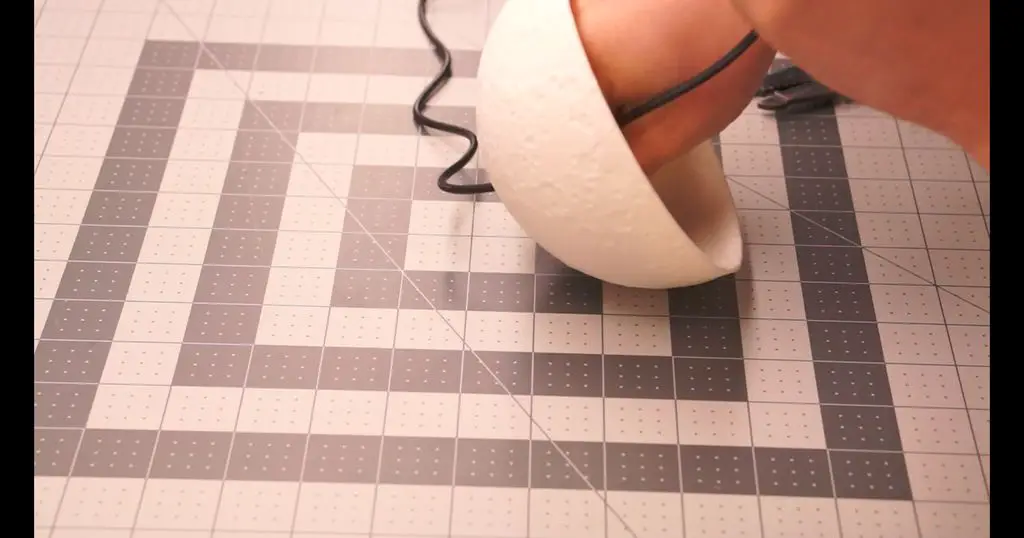
First you need to make the housing for the electronics for the LED string. Take a piece of foam from a shipping package and cut it to create a cylinder.

make the led storage container

Close it by taping the side and then cut out a circle to close off one end. A paper cup would work as well.

make the led storage container cylinder

Now you need to make the outside of the concrete mould using a piece of metal flashing. First mark the metal flashing for the bottom of the form,  12 centimeters or 5 inches tall. Next, mark 5 centimeters or 2 inches above the first line. At this point, you will have two parallel lines.

make the concrete form mould

Now wrap the metal flashing around the vase. Close the flashing by taping the loose end. Next, take two 2.5 centimeter or 1 inch rubber seals and follow the line going around the interior. Do this twice to give yourself a two-inch path around the interior of the flashing. This part will shrink the interior, which will make the glass fit over the concrete base.

make the concrete form mould part 2

Take a piece of aluminum foil, place it down on a flat surface. Then trace the vase and then the foam cup as shown.

make the concrete form mould part 3

Use hot glue to secure the cup then the flashing to the marking.

the complete concrete form mould

Mix concrete and pour it in the form.

casting the concrete form

After a few days remove the flashing and rubber seal.

the final conrete form before cleaning up

The bottom should be smooth but you will need to sand the top.

sanding the edges of the concrete

Preparing The Tree Branch

Choose a suitably size tree branch to fit into your vase, then spray it with black spray paint. Allow time to dry between coats until it is uniform and not blotchy.

spray the tree branch black

Depending on the size of tree branch you chose, use the appropriate size masonry bit to drill a hole for the branch into the concrete. A 12mm or 1/2 inch bit was used here to drill down into the foam cup.

drill a hole for the tree branch into the conrete

Test that everything fits nicely.

insert the tree branch and ensure that the glass vase fits over the branch

Install The LED Lights

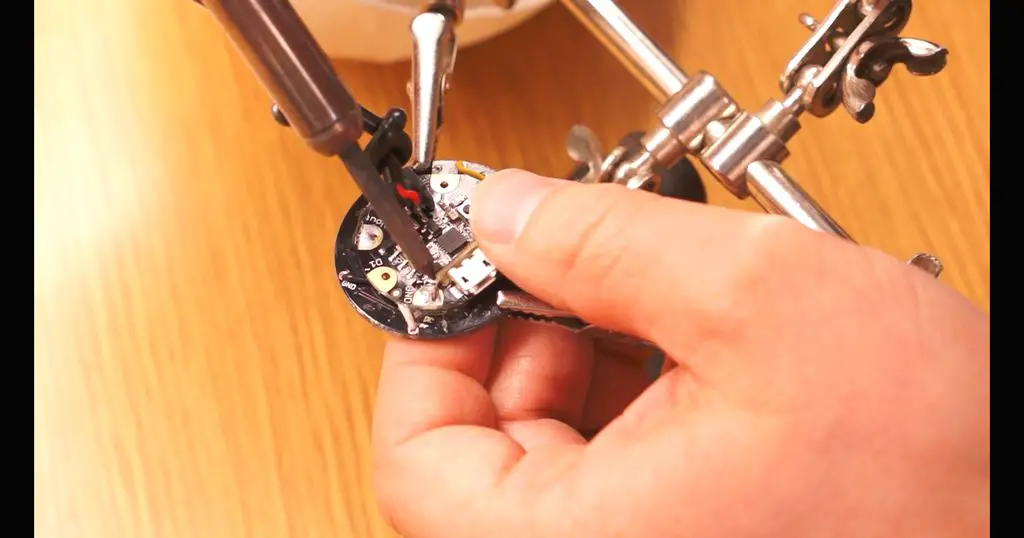
Drill a hole in the lower part of the concrete base for the LED power plug to pass through. Next, use hot glue to hold the plug in place.

drill a hole for the power cable for the led

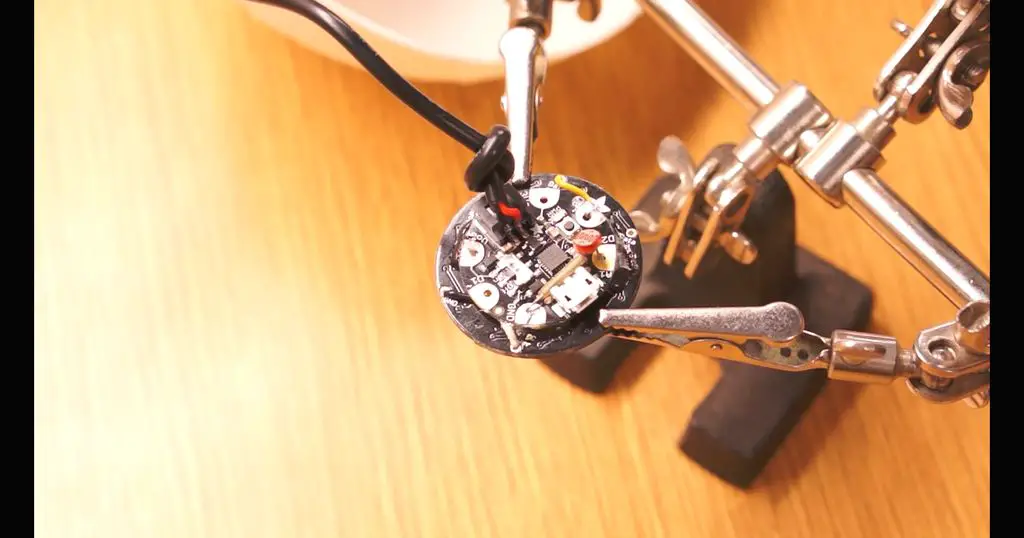
Pass the Led String light power end down through top then connect to the power cable.

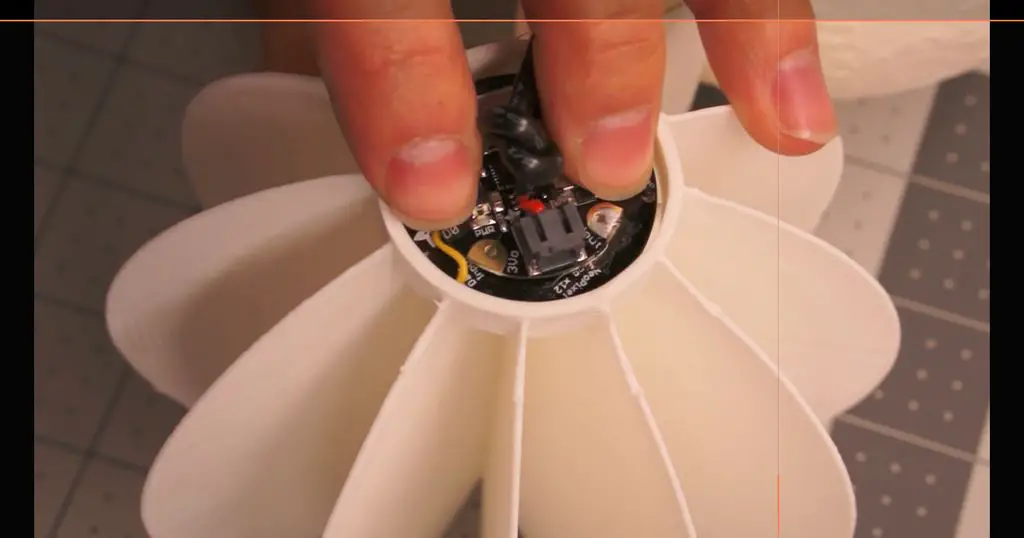
Next, feed a few feet of the led into the vase.

add the led lights

Then place the branch in the vase and feed more led as you proceed.

twist the lights around the branch

Now sit the vase on top of the concrete.

Cut out a felt pad and stick it onto the bottom to protect the surface it stands on as the concrete base is heavy and rough.

add felt to the bottom to stop it from scratch your furniture

Your lamp is now completed and can be plugged in.

completed led light 3

The Completed Lamp

completed led lightcompleted led light 2

This post is based upon DIY Indoor Outdoor Concrete Lamp 2 by diycreators and has been modified and used under the Creative Commons license CC-BY-NC-SA.


24 Tips On Becoming A Minimalist, Start Living The Simple Life

We tend to live an over complicated and certainly over cluttered life, here are 24 tips to get you started on decreasing your possessions and becoming a minimalist. It may be difficult to start with but you’ll soon find yourself feeling a little more liberated with each item you donate or sell. The best advice we can give is to take it slow, give yourself time to adjust to having less around the home, you’ll soon be wondering why you accumulated so much in the first place.

We’ve divided the list up into sections to make it easier to work through. Try to set a goal to knock one item off of each list each week, this way you’re giving yourself time to adjust and breaking the workload up.

Kitchen

  1. Throw out all your expired food. Go through your cupboard and your refrigerator and freezer and throw out all of your expired food. While you’re at it, throw out any food which your family isn’t going to eat.
  2. Get rid of cracked or chiped crockery. Chips in plates, mugs and dishes are a breeding ground for bacteria and look shabby.
  3. Don’t collect mugs. Mugs are often given out as gifts and freebies and we hoard them. Trim your mug collection down to a set of 10-12, you don’t really need any more than one per person and a few for guests.
  4. Donate your unused appliances. Everyone knows the story, we try out a juice diet or go vacuum sealer mad for a while but inevitably we land up with a cupboard full of unused appliances. Donate any you havent used in the last year.
  5. Throw out duplicates. You don’t need three knife blocks, four measuring jugs or two can openers. A minimalist only needs one of each.
  6. Throw out the broken things. As you’ve done with your broken crockery, get rid of broken knives, appliances etc.
  7. Invest in some good quality pots. This is the only items which includes buying something but it is for good reason. Get rid of your light aluminnium and teflon coated pots and pans and invest in about three stainless steel pots and two cast iron skillets.
  8. Organise your finances. This may be a strange inclusion here but the kitchen is often a dumping ground for bills, letters and payslips. Follow this guide to organsing your finances.

Bathrooms

  1. Throw out expired medicine. As you’ve done in the kitchen, throw out anything which has expired. Some areas require expired medicines to be disposed of through special programs, make sure to follow your local regulations.
  2. Cut down on toiletries. Go through your toiletries and throw out any products you don’t like using, including free samples and giveaways you’re never going to use. Go through your makeup while you’re busy.
  3. Donate your excess towels. You don’t need more than two towels per person, one for the bathroom and one clean one for the linen cupboard.
  4. Donate your unused appliances. Donate that old braider or curling iron you haven’t used in years.

Bedroom Closets

  1. Donate any clothing you haven’t worn in a year. If you haven’t worn it through a whole season. chances are you won’t wear it again.
  2. Sell anything that doesn’t fit. If it doesn’t fit you then there’s no point in keeping it.
  3. Cut down on clothing numbers. You may have a collection of t shirts or skirts which all fit you and aren’t too old but do you really need so many? Your minimalist closet shouldn’t contain more than 7 of any item.
  4. Toss any damaged clothing. If it’s got a rip or tear which you can’t see yourself fixing, throw it away or take it to be fixed immediately.
  5. Cut down on your shoe collection. You don’t need more than one of each type of shoe.
  6. Keep one weeks worth of underwear. Go through your underwear, including socks and pick out seven of each. Throw out all the old and worn out ones.

Living Room

  1. Stop using cable. Not much good comes from cable, you sit around wasting time and are fed hours of advertisements and rubbish. Stop using cable and switch to movies and a service like Netflix.
  2. Clean up your surface space. You may have one or two knick knacks which are sentimental but throw the rest out, they just gather dust and clutter surfaces, have a look at our guide on de-cluttering.
  3. Don’t keep a library. There really is no point to keeping a library of books, most are only read once. Donate them to your local library and you’ll still have access to them whenever you need it.
  4. Digitise your music and movie collection. Which the exception of vinyls, which are making a comeback. You should digitise all of your CDs and DVDs, you’ll save a whole cupboard and replace it with a single hard drive.

Kids Rooms

  1. Donate unused toys. If your kids haven’t used the toy in a month or so, get rid of it. Your kids grow up and toys become outdated and don’t stay age appropriate.
  2. Throw out the broken toys. Throw out any toys which are broken and can’t be immediately or easily fixed.
  3. Limited the stuffed animals. These seem to creep into any household and accumulate in numbers, limited each child to a few and make sure you donate the old ones often.

And that’s the list to get you started on becoming a minimalist. Print out this list and work through it over the next few months. You may also be interested in saving some money with a couple of tips on frugal living.

Do you have any other tips and tricks to becoming a minimalist? Let us know in the comments section below.

Share This Guide

24 Tips On Becoming A Minimalist, Start Living The Simple Life

How To Deep Clean Your Old Vinyl Records – Reduce Background Noise

With vinyl records making a comeback, people are looking for ways to get their dusty collection clean and ready to use again. To ensure the best sound and least amount of wear on your records, it is essential that they are kept clean.

We’re got two methods here, one to give your records a full deep clean and another which is great for removing thin layers of dust and reducing the background noise.

Remember, the best cleaning in the world just removes all the dust and dirt. Some records will have scratches and groove wear. No amount of cleaning will fix this. So after cleaning, some record may sound “perfect” and others maybe not so much.

Giving Your Vinyl Records A Deep Clean

What You’ll Need

  • A Basin of some kind – Buy Here
  • Dish soap (any kind will work) – Buy Here
  • A record cleaning brush/pad (Discwasher style) – Buy Here
  • A few washcloths – Buy Here
  • A source of warm water
  • Towels to dry off the records

Cleaning The Vinyl Records

small amount of dish soap

Put an extremely small about of soap in the basin, and then fill it with about 3-4″ of warm water. Stir up the soap by swirling it around with your hand while filling up the basin. Now place the basin on a counter top or other comfortable surface where cleaning your records.

washing the records

Put a record in the basin, and turn it around by moving the edge with the palms of your hands (as to not touch the grooves).
Once the whole surface of the record is wet, grab the record brush and get it wet. With one hand, hold the record (with your palm) and with the other, move the brush in a circular motion about 10 times. Try to do 5 counter-clockwise and 5 clockwise turns. If you’ve got heavy grime, you might want to do more.. After one side is clean, flip it over and repeat.

rinsing the records

After you’ve gotten the record clean, put it in a sink and run some cold water over it, and turn the record with the palms of your hand. After one side is clean, flip it over and do the other. Once it’s clean, turn off the tap and let the water run off.

drying the records

Now that most of the water has run off, put a wash cloth in your hand, and grab the record with it. Now put another washcloth in the other hand, and grab the record. With one had, hold the record, and with the other, dry it off. Once it’s dry, flip it over and do the other side (which should be most dry by now). Once the record surface is dry, put the washcloths on the labels and press against them with your hand. This should get the labels dry. After the record is mostly dry, set it on top of it’s cardboard sleeve, then place it somewhere and let it dry for several hours.

Giving Your Vinyl Records A Quick Clean And Reducing Background Noise

This is the second method we have used to clean vinyl records and it works well for lighter dust and dirt, the WD40 also lubricates the tracks, reduces friction, wear and background noise.

What You Need

  • WD40 specialist anti friction Dry PTFE Lubricant – Buy Here
  • Microfiber Dusting Cloth – Buy Here

How To Clean The Records

Squirt four small amounts equally spaced on the on the center of the tracks and clean in a circular motion with a soft microfiber cloth. You will notice the cloth will collect dirt so change to a new part of the cloth every few turns. Keep polishing until all trace of liquid has disappeared and the record is shiny black, the record will feel very slippery.

If the record is in reasonable condition background noises will be reduced. On the first play more dirt will pop out of the grooves after which it will stay clean for while with less static. This trick even reduces record wear as the WD40 reduces friction between the stylus and the record track.

Share This Guide

How to deep clean your old vinyl records and reduce background noise

This post is based on Cleaning Vinyl Records by mattdp and has been modified and used under the Creative Commons license CC-BY-NC-SA.