
Home Blog Page 59

Smoked Trout, Avo & Poached Egg On Rye

Trout, avo and a poached egg combine perfectly on a slice of toast for a delicious breakfast.

Makes 2 servings. Preparation time 15mins.

You Will Need:

  • 2 Slices Of Rye Bread
  • ½ Butter Avo
  • 60g (2oz) Smoked Trout Fillet
  • 2 Large Eggs

Toast the rye bread in a toaster or under the grill until the bread begins to darken on the edges. Thinly slice the avo and place half on the top of each bread slice. Next layout our half of the trout ribbons on the bed of avo. Poach the two eggs in boiling water for five minutes or to your liking. Top the trout with a poached egg, allowing the egg to cool off slightly before placing it onto the trout or it will cook the trout underneath the egg.

Garnish with basil leaves, dried basil and some cracked black pepper. For a slightly tangy taste, squeeze a little lemon over the trout before adding the egg.

Poached Egg

A poached egg makes the perfect breakfast topper for a fresh slice of toast. There is a bit of technique involved but it is not overly difficult, follow these instructions for a perfect poached egg.

Makes 1 Poached Egg. Cooking Time 10mins.

You Will Need:

  • 1 Large Egg
  • 1 Tbsp Salt
  • 2 Tbsp White Vinegar
  • 6 Cups of Water

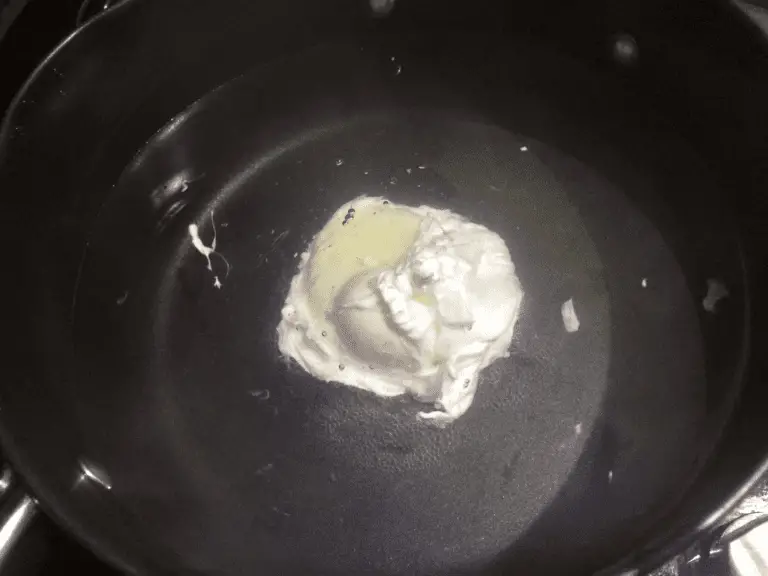
Boil the water in a medium sized pot over the stove. Add the salt and vinegar and turn the heat down until the water is simmering. Use a slotted spoon to gently stir the water in one direction so that it is smoothly spinning around the pot. Carefully crack one egg into the center of the whirlpool, the swirling water helps to keep the egg white from spreading out in the pot. After five minutes (or until cooked to your liking), gently lift the egg out of the water with the slotted spoon. Always cook eggs one at a time, they will not be able to be separated if two are dropped into the water together.

Poached eggs can be kept in cold water in the fridge for a day and can be heated up in warm water just before serving.

Install Laminate Wood Flooring Yourself

Laying laminate flooring is an affordable way to update a room in your home. This easy guide shows you how to lay laminate flooring to achieve a professional look without the expense of a flooring expert.

Laminate flooring can be laid over cement, brick or tiled surfaces however the floor needs to be clean, level and free from dirt. Laminate flooring is not recommended in bathrooms or laundry rooms where there is high humidity and moisture content as the boards will buckle and warp over time.

installing laminate flooring

What You Will Need To Lay Your Own Laminate Flooring

  • Laminate Flooring (10% More Than The Floor Area)
  • Underlay (10% More Than The Floor Area)
  • Quarter Round (Quadrant) Pine or Skirting (10% More Than The Perimeter Of The Room)
  • Hammer
  • Tapping Block
  • Jigsaw with Course Wood Blade
  • Laminate Guillotine or Circular Saw (Optional)

How To Lay Your Laminate Wood Flooring

Because laminate flooring is a wood product, it needs to acclimate before it can be installed. Leave the packaged laminate boards in the room where they are going to be installed for about 2-3 days to fully acclimate.

Next choose the lay of the floor. Decide in which direction the length of the planks will lie. Generally speaking, installing planks parallel to the longest wall in a room will make the room appear larger.

Prepare any doors which open over the laminate flooring. This is particularly important if you are laying the flooring over existing flooring such as tiles. The completed flooring will be between 10mm (1/3″) and 20mm (2/3″) higher than the previous flooring depending on what type of flooring you have bought. Check to see that the bottom of the doors in the room are high enough to clear the flooring. If they are not then use a vibratory saw to cut off the bottom section of the door to create the clearance. Alternately the door can be taken off its hinges and a circular saw can be used to cut the bottom of the door neatly.

laminate underlay

First begin by laying a section of underlay. The underlay is a foam type material which provides cushioning and sound absorption. Some manufacturers recommend taping adjacent sections of underlay with their provided tape or box tape. The underlay should cover the entire area on which the laminate flooring will be laid and should not overlap at any point.

wall spacer

Once the underlay is done, begin laying the boards. Lay the boards length ways in rows, one row the length of the room at a time. Laminate flooring is still a natural wood product and therefore expands and contracts with the humidity in the air. You need to allow a 10mm (1/3″) gap between the flooring and the walls around the perimeter of the room. This gap will then be covered by skirting or a quarter round (quad) of pine attached to the skirting.

cutting laminte

Adjacent rows should be staggered such that the joins along the boards lengths do not align in adjacent rows. To do this, cut the first plank of every second row in half using a circular saw or laminate flooring guillotine. Click each board into place as you work along completing the row.

tapping block

As you place boards, gaps may open up between boards and between rows. This must be checked continuously and a hammer and tapping block can be used to tap the boards back into place. The tapping block distributes the impact from the hammer along a portions of the board’s edge so that the face of the hammer doesn’t damage the edge.

At the corners, press the board up against the edge of the laid flooring and mark the width of the cut then press it up against the edge of the previous row and measure the length of the cut. Mark the cut area with a set square and ensure that a 10mm gap is left around the wall’s edge. To cut complex corners a jigsaw is the easiest tool to use as it has a narrow blade and provides visibility to the cutting area so that you can see your marked cutting lines.

quadrant over laminate

Once the flooring has been laid, install the skirting or quarter rounds of pine over the edge gaps. The skirting should just touch the top of the flooring and not be used to press down on the flooring. Cut the 45° corners with a mitre box. A nail gun can be used to attach the skirting or quarter rounds.  Finish off by painting the quarter rounds the same colour as the skirting or varnishing them in the same colour as the flooring.

If you’re installing laminate flooring to give your home and update, have a look at these 8 DIY projects to increase your home’s value.

What are your experiences with this project? Please share your comments, tips and advice with us in the comments section below, we would love to hear from you.
laminate flooring end

Share This Guide

How To Install Laminate Wood Flooring Yourself

White Chocolate Mousse & Jelly Dessert Cups

These colourful dessert cups make the perfect dessert for an outside summer lunch. They look fancy but are extremely easy to make and only require three ingredients.

Makes about 6 servings. Preparation time 15mins, setting time 180mins.

You Will Need:

  • 1 Box Store Bought Jelly Powder
  • 200g (7oz) White Chocolate
  • 1 1/2 Cups of Heavy Cream

Mix up the jelly according to the directions on the box. This usually involves dissolving the powder in boiling water and then adding cold water to assist with setting. When the mixture is cool, pour a third of a cup into a drinking glass, these will be used as your serving cups.

Place the glasses in the refrigerator, leaning them against the side or on a baking tray so that the jelly liquid is angled from the bottom edge to the top edge of the glass. Allow the jelly to set for about 4 hours before adding the mousse to the cups.

Use our two ingredient white chocolate mousse recipe to make the white chocolate mousse using the chocolate and heavy cream. Spoon the mixture into the cups on top of the jelly, you may need to tap the glass on a counter to get the mousse to settle on the jelly with no large air bubbles.

Place the mousse and jelly cups into the refrigerator for 2 hours to allow the mousse to fully set. Garnish the cups with fresh berries or grated dark chocolate.

Two Ingredient White Chocolate Mousse

This easy white chocolate mousse recipe is made using only two ingredients and takes about 5 minutes to make. Although the preparation time is only 5 minutes, allow for about two and a half hours to give the chocolate time to cool down and to set. These mousse cups keep in the refrigerator for up to three days.

What You Will Need To Make The White Chocolate Mousse

Makes about 6 servings. Preparation time 5mins, setting time 150mins.

You Will Need:

  • 200g (7oz) White Chocolate
  • 1 1/2 Cups of Heavy Cream

How To Make The Mousse

Place the chocolate in a microwaveable bowl. Melt the chocolate by microwaving on high for 15 second intervals, stirring in between until all of the chocolate is smooth and there are no lumps. Allow the melted chocolate to cool to room temperature for about 15 to 20 minutes.

With a electric beater, whisk the cream until thick and soft peaks form. Fold half of the cream into the melted chocolate and gently combine. Add the second half and again fold in gently until the mixture is combined.

Divide the mixture into cups and set in the refrigerator for 2 hours. Garnish with mint and berries or grated chocolate. Use grated dark chocolate for a contrasting topping.

Finish this mousse off by serving it in a decorative dessert cup with jelly.

DIY Hacks, Complete Your Projects Quicker & Easier

0

These simple hacks make doing your DIY projects around the house quicker and easier. Some of these ideas will help you with a single project and others can be used to make all of your projects easier.

DIY Soda Can Tab Picture Hanger

Make a simple picture or mirror hanger  with a soda can tab, its strong, functional and doesn’t get any cheaper.

Magnet On Hammer

Attach a magnet to the base of your hammer to make a clever storage place for the nails you are working with.

Cover Up Holes

Use a wax crayon to cover up small nail holes in wood or on the wall, you’ll hardly notice them with this 5 second trick.

pegboard bottle holders

Recycle old soda bottles to keep screws, nuts, bolts etc stored neatly on your peg board.

gluegun detail work

Modify your glue gun with a ball inflation needle to get a thin bead of glue for detail work.

wrench caddy

Use a carabiner clip as a useful wrench caddy to keep your wrenches in order and in one place.

battery caddy

Make a battery dispenser to keep your new batteries organised. Mount it on your wall in your workshop for easy access and to keep your batteries organised.

remove tool rust

Remove rust on your tools by soaking them overnight in vinegar and salt. The vinegar and salt help to remove the rust and prevent the tool from rusting further.

extension cord holder

Install a rope hook near your power outlets to ensure that your power tools don’t become unhooked while you are using them. Perfect for the lawn mower or edge trimmer.

plastic bottle cutter

Make a plastic bottle cutter and recycle your old plastic bottles into strong plastic rope.

credit card glue spreader

Recycle an old credit card and turn it into a handy glue spreader for your woodwork projects.

Once you’ve mastered these DIY hacks, you’ll want to put them to good use, have a look at our 10 weekend projects to seriously add value to your home, or if your have a bit more time, here are 8 more involved projects to increase your home’s value.

Repair A Car Tyre Puncture

A flat tyre on your car is one of the inconveniences of driving, fortunately it is a quick and relatively easy problem to fix. A puncture smaller than 7mm (1/4”) can be repaired with a plug, gashes or wide punctures should be repaired by a tyre dealer or the tyre may have to be replaced.

puncture repair kit

Tools Required For This Repair:

  • Car Jack
  • Wheel Spanner
  • Tyre Puncture Repair Kit
  • Soapy Water – Optional if the leak can’t be found

Firstly loosen the wheel nuts before you jack up the vehicle. You do this before jacking up the vehicle so that the vehicle’s weight prevents the wheel from turning when you turn the spanner. Do not remove any of the nuts at this stage, just loosen them about a quarter of a turn.

Once the nuts have been loosened, you will need to jack up the vehicle. This should be done on a hard and level surface with the hand or parking brake applied and the vehicle in gear or in park (in the case of an automatic). As an additional safety measure, stop blocks can be used on the non lifted wheels to ensure that the car remains stationary during jacking. Most vehicles have jacking pads underneath the vehicle on the door side of each wheel arch right near where the wheel arch begins. Check the vehicle’s service manual for details on the jacking points if you are not sure.

Loosen and remove the nuts. Once the nuts are removed, pull the wheel off of the wheel hub. You now need to find the puncture. Re-inflate the tyre using an air compressor or pump, a bicycle pump will also work as a last resort. If there is a fast leak, you will be able to hear the escaping air making a hissing sound. If the leak is a slow leak and is not immediately obvious, mix up a solution of dish soap and warm water. Carefully go around the perimeter of the tyre and apply the soapy water, the hole will cause bubbles to form in the soapy water on top of the puncture.

bubbles on tyre leak

If there is a nail, screw or other protruding object in the tyre, remove it using a pliers.

nail in tyre

Clean and open up the hole with the rasp tool included in the tyre kit. This is done by repeatedly inserting and removing the tool in a filing manner.

Thread a plug into the insertion tool. This can be tricky as the plug is usually very sticky. Squeeze one end flat and then force it through the eye on the insertion tool. If your puncture repair kit came with glue or rubber cement then apply this to the plug now, it will assist with lubricating the plug as it is inserted and will extend the life of the repair. Use the insertion tool to force the plug into the tyre, there should be about 10cm (1/2”) of the plug protruding from the tyre.

puncture repair

Inflate the tyre to the recommended pressure and retest the repaired area with soapy water. There should be no formation of soap bubbles around the repair. If the repair is leaking then either try adding some more rubber cement or remove the plug and start again.

Position the wheel back on the wheel hub with the studs or holes aligned with the holes on the rim. Thread the nuts back onto the hub and tighten them with your fingers. Lower the vehicle back onto the ground and then tighten the nuts to the torque specified in the service manual.

The tyre repair should last around 30 000km (18 000 miles) before the tyre will need to be replaced.

DIY Designer Mirror

A well placed large mirror becomes a feature in a room, giving it depth brightness and a more open feeling. Large mirrors work well at the end of a corridor, behind an item or furniture such as a couch or headboard or over a side console with a vase or tall décor in front of it.

For This Project You’ll Need:

  • Glass Mirror (To Suite Your Size)
  • 63x19mm (2 ½” x ¾”) Pine (Length To Suite Your Size)
  • 17mm (3/4”) Pine Half Rounds
  • 1 Can Black Spray Paint
  • 1 Pack of Two Part Epoxy
  • 2 Picture Hanging Hooks
  • Wood Glue
  • Mitre Box or Electric Mitre Saw
  • Dremel Multi Tool + Sanding Attachment
  • Staple Gun – Optional

First measure out the size of the mirror you’d like to make. I used 63x19mm (2 ½” x ¾”) pine wood for the frame. Allow for a 10mm (0.4”) mirror overlap onto the frame for the epoxy to set on.

mitre box cutting

Cut the pine at 45° with the inside edge (short side) of the sides 20mm (0.8”) shorter than your mirror dimensions using an electric mitre saw or a mitre box and handheld saw.  The 20mm (0.8”) will give you 10mm (0.4”) overlap on each side of the frame to epoxy onto the mirror.

Now glue the frame together. A corner clamp comes in handy to press the glued faces together and keep the edges of the frame square. Alternately put glue on the edges, press them together, ensure that they are square and then use a staple gun to staple along the back edge of the joint to keep it together while the glue dries. Do not staple along the front edge as these staples will be visible when the mirror is hanging.

frame layout

When the frame joints are dry, place the frame over some old newspaper and begin spraying the back of the frame. Pay particular attention to the edges. Although the back of the frame will be against the wall, the inside back edge of the frame which is epoxied onto the glass will be reflected in the mirror and show up as a light brown border right around the mirror and on the edges of the trim.

Once the back of the frame is painted and dry, paint the front of the frame.

mirror face down

The frame can then be attached to the mirror. Lay the frame down front first on a large work surface where you can get around all of the sides. Next lay the mirror face down on top of the frame. Make sure that the mirror is in the centre of the frame. Mix up some two part epoxy and begin epoxying along the edges. There does not need to be a continuous epoxy seam along the entire edge, a dot or line every 5-10cm (0.2”- 0.4”) is sufficient. Make a good epoxy seam along the edges near the corners. Leave the epoxy to cure as indicated on the packaging.

epoxied corners

Now turn the mirror over. Use 17mm (3/4”) pine half rounds. Size two rectangles or squares which proportionally fit into your frame. Again, cut the edges at 45° such that they join together neatly to form a frame corner. Spray the back and front of the individual pieces. When the paint is sufficiently dry, epoxy the pieces in their rectangular shape on the mirrored surface. It may help to plot out your design with a permanent marker beforehand so that the sections are aligned and square. Excess epoxy is difficult to get off of the glass afterwards so use it sparingly. Allow the rectangle sections to cure before starting on the straight pieces.

epoxied moulding

For the straight pieces, measure the distance between the edge of the half rounds and the frame. Add on half of the width of the half round and make a square cut. Use a Dremel sanding tool to round the underside of the straight half round where it meets the rectangular sections such that a neat overlap is formed. Now spray the front and back of the straight edges, allow to dry and then epoxy them in place.

picture hanging hook

To hang the mirror, screw in two brass or steel picture mounting hooks about two thirds of the way up the back vertical sides of the frame. Do not use picture hanging wire on a very large mirror as the wire places additional side loads on the frame which it is not able to take. The sides of the frame will collapse inwards when the mirror is hung and the glass will break. Alternately picture hanging hooks can be fitted to the vertical sides or the horizontal top edge of the frame.

completed mirror

Using Pop Rivets, Stable & Long Lasting Joints

Pop rivets are useful for joining sheet metal or thin materials together. A well installed pop rivet provides a stable joint and is not easily removed. The primary advantage in using rivets is that a strong and secure joint can be made without access to the rear of the joint, unlike with a bolted joint where you would need access to the nut in order to secure the joint.

What You Need To Install Pop Rivets

How To Install Pop Rivets


pop riveting

There are two important dimensions to consider when choosing a pop rivet, the diameter of the rivet section and its length. The rivet should fit snugly in the drilled holes and should protrude through the materials being riveted such that the head of the pin and a small section of the rivet sticks out on the other side.

Choose a rivet with a large enough diameter to secure the load it needs to bear and one who’s length is slightly longer than the total thickness of the materials which you are going to be joining.

Once you have selected a rivet, you need to drill a hole for the rivet to seat in. Use a drill bit slightly larger than the diameter of the rivet. The rivet should freely slide into the hole but should not be loose.

The rivet is then installed using riveting tongs.

rivet tongs

Riveting tongs are used to pull the pin through the rivet and expand its diameter in order to secure the materials. Insert the pin of the rivet into the tongs, the handles should then be compressed until the pin breaks off inside the rivet, leaving the head of the pin in the back end.

The rivet is now installed. Provided the loading is not high enough to deform the rivet, it will remain in place and secure indefinitely. If you have trouble with rivets working loose, it is likely that they are under sized. Replace the rivets with larger diameter ones for a more secure and longer lasting installation.

How To Remove Pop Rivets

Rivets are removed by drilling them out with an electric drill and a metal drill bit. The drill bit should be slightly smaller in diameter than the hole in which the rivet is secured. You only need to drill the head off the rivet, after which the back end of the rivet can be pushed out of the back of the hole.


Wiring A Plug

Wiring a plug is relatively easy once you have identified the wires by their color. Household plugs around the world have either two or three wires, the two main wires being live and neutral and the third optional wire being the earth wire.

The common wire colors for each of these are:

  • Earth: Green and yellow striped, green and brown striped or green
  • Live: Red, brown or white
  • Neutral: Blue or black

When opening the plug, there are letters marking each of the two or three terminals. These are E for earth (usually at the center top of the top), L for live and N for neutral.

stripped wire
Properly Stripped Wire

Use a wire stripper to cut off the end of the insulation on the wire to reveal the copper. Twist the copper gently together so that there are no stray strands and then insert the end into the screw terminal. Screw the terminal clamp down onto the exposed copper such that the insulation is not too far exposed. Screw both or all three wires into their respective terminals then screw cable clamp over the main cable insulation. Finally screw or clip the plug back together, depending on the plug type.

south african plug
South African Plug
american plug
American Plug
Note: Check with you local authorities on the regulations regarding doing your own electrical work. In some areas it is illegal to conduct electrical work in your home without certification.